

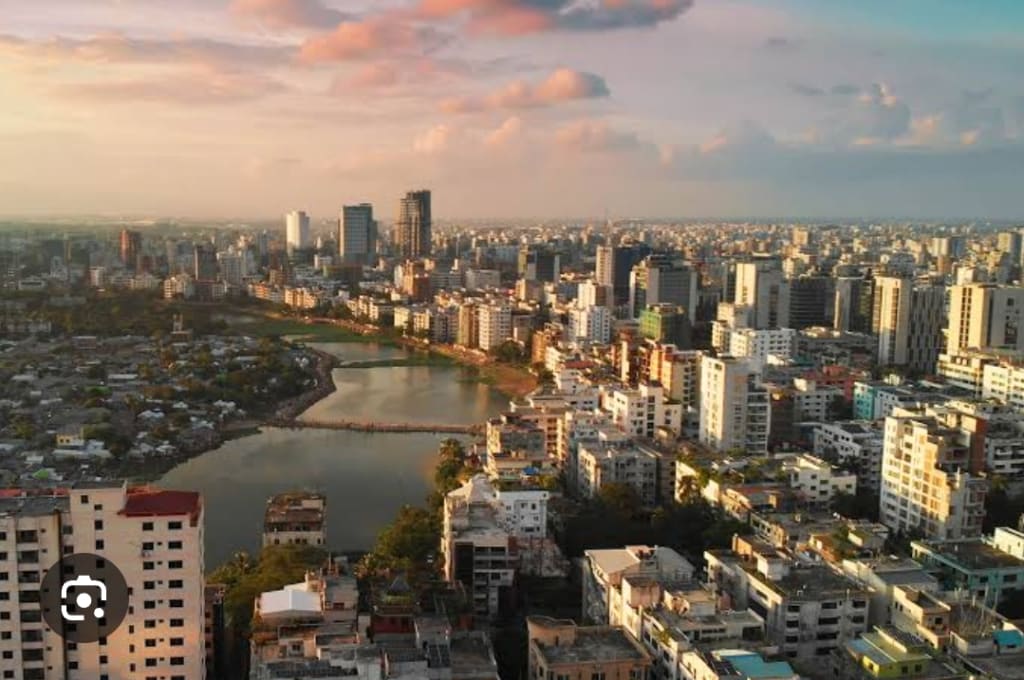
The History and Culture of Bangladesh: A Tapestry of Resilience and Rich Tradition
Bangladesh, a country located in South Asia, boasts a rich and diverse history along with a vibrant cultural heritage. Nestled on the northern coast of the Bay of Bengal and bordered by India and Myanmar, Bangladesh has long been a crossroads of civilizations, religions, and trade. The history and culture of this land reflect centuries of change, struggle, creativity, and resilience.
Ancient and Medieval History
The region now known as Bangladesh has been inhabited for thousands of years. It was part of ancient kingdoms such as Vanga, Pundra, and Gauda. During the 3rd century BCE, it became part of the Maurya Empire under Emperor Ashoka, who spread Buddhism throughout the region. Later, the Gupta Empire (4th–6th century CE) brought a golden age of culture, science, and learning.
By the 8th century, Bengal was ruled by the Pala dynasty, a Buddhist empire that contributed significantly to art, architecture, and education. The Pala period was followed by the Hindu Sena dynasty. In the 13th century, Muslim rulers from the Delhi Sultanate began to expand into Bengal, introducing Islam, which eventually became the dominant religion.
The Mughal Era and Colonial Rule
The Mughal Empire (16th–18th century) brought prosperity, architectural beauty, and urban development to Bengal. Dhaka, the capital of modern Bangladesh, flourished as a center of trade and administration under the Mughals.
In the 18th century, as the Mughal Empire weakened, the British East India Company gained control of Bengal after the Battle of Plassey in 1757. This marked the beginning of nearly two centuries of British colonial rule. Under British control, Bengal became a major center for jute production and trade, but the colonial economic policies also led to poverty and famines.
Language Movement and the Birth of Bangladesh
In 1947, British India was divided into two nations: India and Pakistan. Bangladesh became East Pakistan, part of the new state of Pakistan, despite being geographically separated from West Pakistan by over a thousand miles. Cultural and linguistic differences soon led to tensions. The people of East Pakistan spoke Bengali, while the government of Pakistan attempted to impose Urdu as the sole national language.
This led to the historic Language Movement of 1952, during which several students were killed while protesting for the recognition of Bengali as an official language. This movement played a crucial role in shaping national identity and is commemorated every year on February 21 as International Mother Language Day.
In 1971, following years of political and economic discrimination, East Pakistan declared independence, leading to the Bangladesh Liberation War. After a nine-month struggle and immense human cost, Bangladesh emerged as an independent nation on December 16, 1971.
Cultural Heritage
The culture of Bangladesh is deeply rooted in its language, literature, music, and traditional arts. Bengali literature has a long and rich history, with figures like Rabindranath Tagore (who composed the national anthem) and Kazi Nazrul Islam shaping the cultural landscape with their poetry and songs of freedom.
Music and dance play an integral role in Bangladeshi life. Folk traditions such as Baul songs, Bhawaiya, and Jari are popular, especially in rural areas. Classical and modern music, including Rabindra Sangeet and Nazrul Geeti, continues to thrive.
Bangladeshi festivals are colorful and diverse, reflecting the country’s multi-religious society. Pohela Boishakh, the Bengali New Year, is celebrated with processions, music, and food. Religious festivals like Eid, Durga Puja, and Buddha Purnima are also widely observed.
Traditional clothing, such as the saree for women and panjabi for men, reflects both elegance and regional identity. Bangladeshi cuisine is known for its use of rice, lentils, and spices, with dishes like biryani, hilsa fish curry, and pithas being especially popular.
Conclusion
The history and culture of Bangladesh are marked by a unique blend of tradition, struggle, and resilience. From ancient empires to modern nationhood, Bangladesh’s journey is one of identity, creativity, and the enduring spirit of its people. Today, it continues to honor its past while embracing the promise of a dynamic and diverse future.
About the Creator
Keep reading
More stories from Nabir Mondol and writers in History and other communities.
Kazi Nazrul Islam
A Brief Biography of the Rebel Poet Kazi Nazrul Islam Kazi Nazrul Islam was one of the most dynamic and influential figures in Bengali literature and music. He was born on May 24, 1899, in the village of Churulia in West Bengal. Nazrul is hailed as the "Rebel Poet" (Bidrohi Kobi) for his powerful writings advocating for equality, justice, and freedom. He is officially acknowledged as Bangladesh's national poet. Background and Early Life Nazrul's early life was fraught with difficulties. He worked at a mosque and joined the Leto Dal troupe, a traveling folk theatre group, after his father died when he was young. His early experiences piqued his interest in poetry and music and broadened his cultural understanding. He was able to get a basic education in Bengali, Arabic, Persian, and Sanskrit despite having financial difficulties, which had a significant impact on his later works. Career in writing and military service In 1917, Nazrul joined the British Indian Army and served for a few years. He started writing poems and songs about struggle and rebellion while he was serving in the military. He moved to Calcutta (now Kolkata) after leaving the army and began writing full-time. His breakthrough came in 1922 when his famous poem "Bidrohi" (The Rebel) was published. It depicted the spirit of resistance to British colonialism and social injustice. Contributions from Authors Nazrul was a poet and writer who wrote a lot. He wrote novels, songs, poems, essays, and short stories. Themes of human dignity, equality, and resistance to oppression were frequently the focus of his work. He was known for combining aspects of Hinduism and Islam in his writings to promote religious harmony. More than 3,000 of his songs, which he later titled "Nazrul Geeti," deal with love, patriotism, spirituality, and revolution. Perspectives on Politics and Imprisonment Nazrul was a brave critic of British rule who expressed himself through his writing and journalism. He started editing Dhumketu (The Comet), a magazine that published anti-British poems and articles, in 1922. As a result, in 1923, he was taken into custody and held for a year. He continued to write even while incarcerated, producing some of his most inspirational and defiant works. His reputation as an advocate for the oppressed only grew as a result of his imprisonment. Problems and Personal Life Nazrul wed Pramila Devi, a Hindu woman, in 1924, which caused religious and social divisions at the time. They had four sons, but two of them were tragically born too young. In his later years, Nazrul encountered numerous obstacles despite his fame. He began experiencing a mysterious illness around 1942 that affected his memory and speech. Later, it was determined to be Pick's disease, a neurological condition. He was unable to write or perform as his health deteriorated. Death and Recognition Afterward Nazrul was received with great respect and honor when he arrived in Dhaka in 1972 following Bangladesh's independence in 1971. Because of his contributions to the Bengali identity and the spirit of freedom, the new nation hailed him as its national poet. He was given citizenship in Bangladesh and the Ekushey Padak, one of the highest civilian honors, bestowed upon him. Nazrul passed away on August 29, 1976, in Dhaka. He was buried next to the University of Dhaka's central mosque. --- Legacy Kazi Nazrul Islam has always stood for resistance, unity in culture, and literary genius. Millions of people continue to be inspired by his advocacy for human equality, songs of hope and rebellion, and voice against injustice. Nazrul's legacy is carried on through his poetry, music, and enduring message of harmony in Bangladesh and India.
By Nabir Mondol10 months ago in History
The Muslim Math a Christian Emperor Refused to Reject
1225, Southern Italy. A Christian emperor sits across from a mathematician trained in the Islamic world. He asks a question about numbers. What happens in the next hour will quietly reshape Europe—though no one in that room realizes it yet.
By Olga Angelucci3 days ago in History
The History of the Golden Peacock: The Rise and Fall of a Legendary Throne
Origins of the Golden Peacock The story of the Golden Peacock begins in 17th-century India, during the reign of Emperor Shah Jahan—the same ruler who built the Taj Mahal. Shah Jahan envisioned a throne that would surpass all others in the world, reflecting not only material wealth but also cosmic order and royal divinity.
By Say the truth 3 days ago in History


Comments
There are no comments for this story
Be the first to respond and start the conversation.