
Crown of Dust
A forgotten mansion, a tarnished crown, and the reminder that even dust holds a story

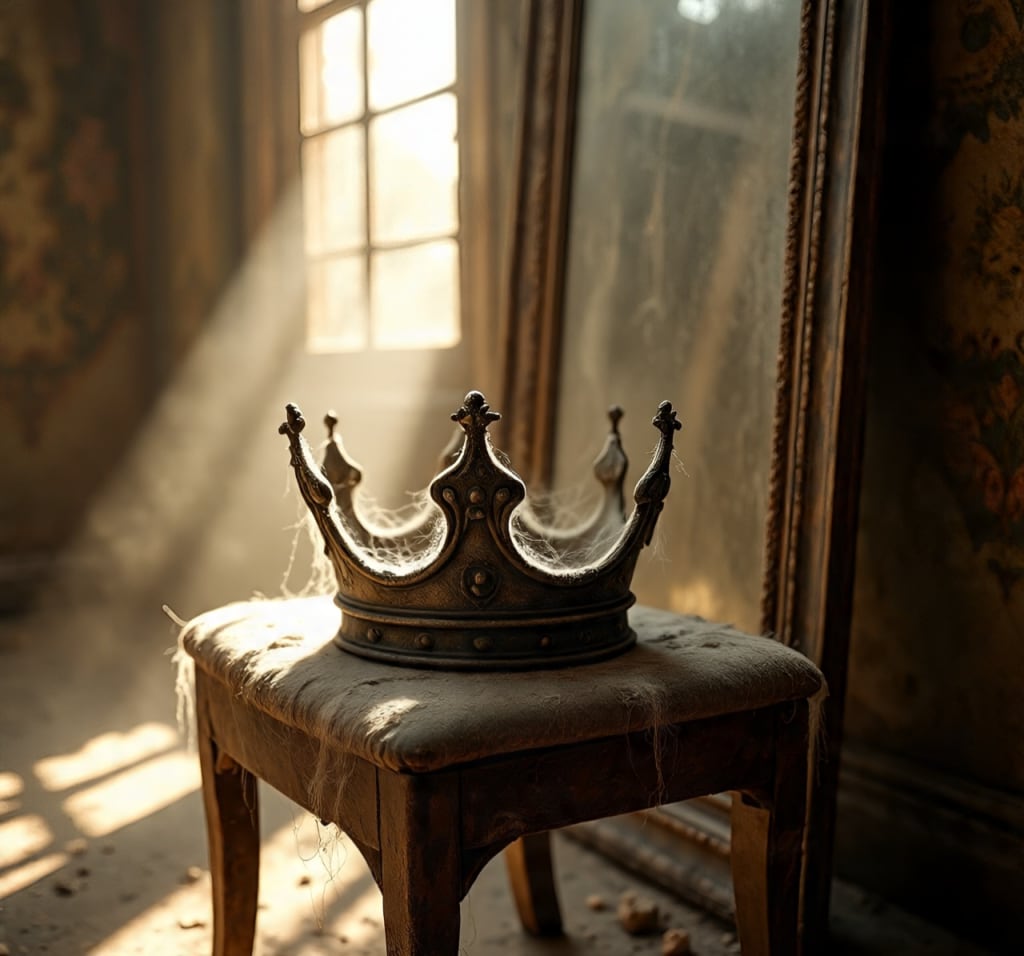
In the heart of an old English town stood a crumbling mansion that had long been forgotten. The locals called it the Ashbourne House. Its gates were rusted, its windows clouded, and ivy crawled like veins up its walls. But once, it had been filled with laughter, music, and light.
Eleanor grew up hearing stories about it. Her grandmother used to say that a king had once lived there — not a royal king, but a man who had built his own little empire from dust and dreams. His name was Lord Henry Ashbourne, and his crown, as the story went, was not made of gold, but of dust.
Eleanor was a history student, the kind who loved forgotten places and lost people. One rainy afternoon, she decided to visit the mansion. The gate creaked open reluctantly, as if warning her to turn back. But she stepped inside, brushing the raindrops from her coat, her curiosity stronger than fear.
Inside, the air smelled of old wood and time. Faded portraits hung crooked on the walls, their subjects staring out with eyes that once held power. She walked through a ballroom where chandeliers still clung to the ceiling, covered in cobwebs that shimmered faintly in the dim light.
At the end of the hall, she found a library. Books were scattered across the floor, their pages yellow and curling. In the middle of the room stood a chair, and on it rested a small object beneath a layer of dust — a crown, simple and tarnished, made not of jewels but of iron and faded silver.
Eleanor picked it up gently. The metal was cold against her skin. As she brushed away the dust, a slip of paper fell from beneath it. The handwriting was neat but faded with age.
“To those who seek glory, remember this. Dust returns to dust, and crowns fall with kings.”
She read the line twice. There was something deeply human in it — the voice of a man who had once stood high, only to realize that time humbles everyone.
She sat by the window, holding the crown, and imagined Lord Henry in that very room. Perhaps he had once worn this crown proudly, walking among guests who toasted his name. Perhaps he had built this house not for wealth, but for meaning. And when it all faded, he had left behind this message — not of power, but of acceptance.
Eleanor felt a strange sadness. She had studied history all her life, but this moment felt more real than any book she had read. It wasn’t just about ruins or relics — it was about people who tried to leave something behind, even when everything they built turned to dust.
As the rain eased outside, she placed the crown back on the chair. She knew it didn’t belong to her. Some things are meant to stay where they rest, holding the weight of memory.
Before she left, she looked around the room once more. The light from the window touched the iron crown, and for a brief second, it seemed to glow — not with grandeur, but with quiet dignity.
Years later, Eleanor became a historian known for her writings on forgotten lives. Her most famous essay was called “The Crown of Dust.” In it, she wrote:
“History is not built by kings or warriors, but by the hands that fade and the hearts that break. Every empire turns to dust, but the stories we tell about them keep them breathing.”
Her essay became widely read, not because it was about power, but because it was about humility. People from all over Europe wrote to her, saying the words reminded them that even in their smallness, they too were part of something lasting.
Eleanor often returned to Ashbourne House. The mansion continued to crumble, but she didn’t mind. She would sit in the same library, listening to the wind move through the cracks. Sometimes she’d speak aloud, as if Lord Henry could still hear her.
“Your crown still shines,” she would say softly. “Just not the way you expected.”
When she grew old, Eleanor left instructions in her will. She asked to be buried near Ashbourne House, beneath a simple stone carved with the same words that had once changed her life:
“Dust returns to dust, and crowns fall with kings.”
And so, on a hill outside the town, near the ruins of the house that had once held music and laughter, two stories rested side by side — one of a man who built an empire, and one of a woman who remembered it. Both wearing, in their own way, a crown of dust.
About the Creator
LUNA EDITH
Writer, storyteller, and lifelong learner. I share thoughts on life, creativity, and everything in between. Here to connect, inspire, and grow — one story at a time.
Keep reading
More stories from LUNA EDITH and writers in History and other communities.
Book of Unsung Heroes Hidden in the Attic
It was a quiet Sunday afternoon when I decided to clean my grandmother’s attic. The air was thick with dust and old memories. I thought I would only find broken furniture and forgotten clothes. But instead, I found something that changed the way I looked at my family.
By LUNA EDITH4 months ago in History
Alexander the Great: The Life, Conquests, Vision, and Legacy of History’s Greatest Warrior King
Part 1: Birth and Early Life Alexander was born in 356 BCE in Pella, the capital of Macedonia. He was the son of King Philip II of Macedon and Queen Olympias. From an early age, Alexander was surrounded by power, politics, and warfare. Olympias deeply influenced him, often telling him that he was descended from Achilles and even the god Zeus. These stories shaped Alexander’s belief that he was destined for greatness.
By Say the truth 5 days ago in History
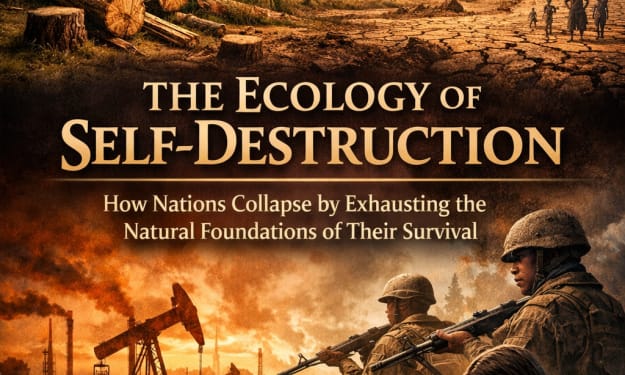
The Ecology of Self-Destruction
Human civilizations often imagine their downfall as something imposed from the outside—by enemies, invasions, or natural disasters. Yet, as Jared Diamond argues in Collapse: How Societies Choose to Fail or Succeed, many societies have played the central role in their own destruction. Through the reckless over-exploitation of natural resources, short-term thinking, and failure to adapt to environmental limits, nations repeatedly undermine the very ecological systems that sustain them. Diamond’s comparative study of past and present societies reveals a sobering pattern: environmental self-destruction is rarely accidental, and collapse is often the predictable outcome of collective choices.
By Rachid Zidine3 days ago in History
Our Song
Evening has given way to night. Gently, I settle next to you on the comfortable, old love seat and reach for your hand. You snatch it away, again. It cuts me to the quick, but I hide the pain, understanding that the reaction is but part of your demented state. Since the accident, your presence here in our cozy home has been clouded by a haze I can't see. Nevertheless, I feel the frigidity of your expressions and it serves as an excruciating reminder of the immeasurable distance between us.
By Dana Crandell5 days ago in Fiction


Comments
There are no comments for this story
Be the first to respond and start the conversation.