
Feathered Heroes
How Homing Pigeons Helped Turn the Tide of WWI

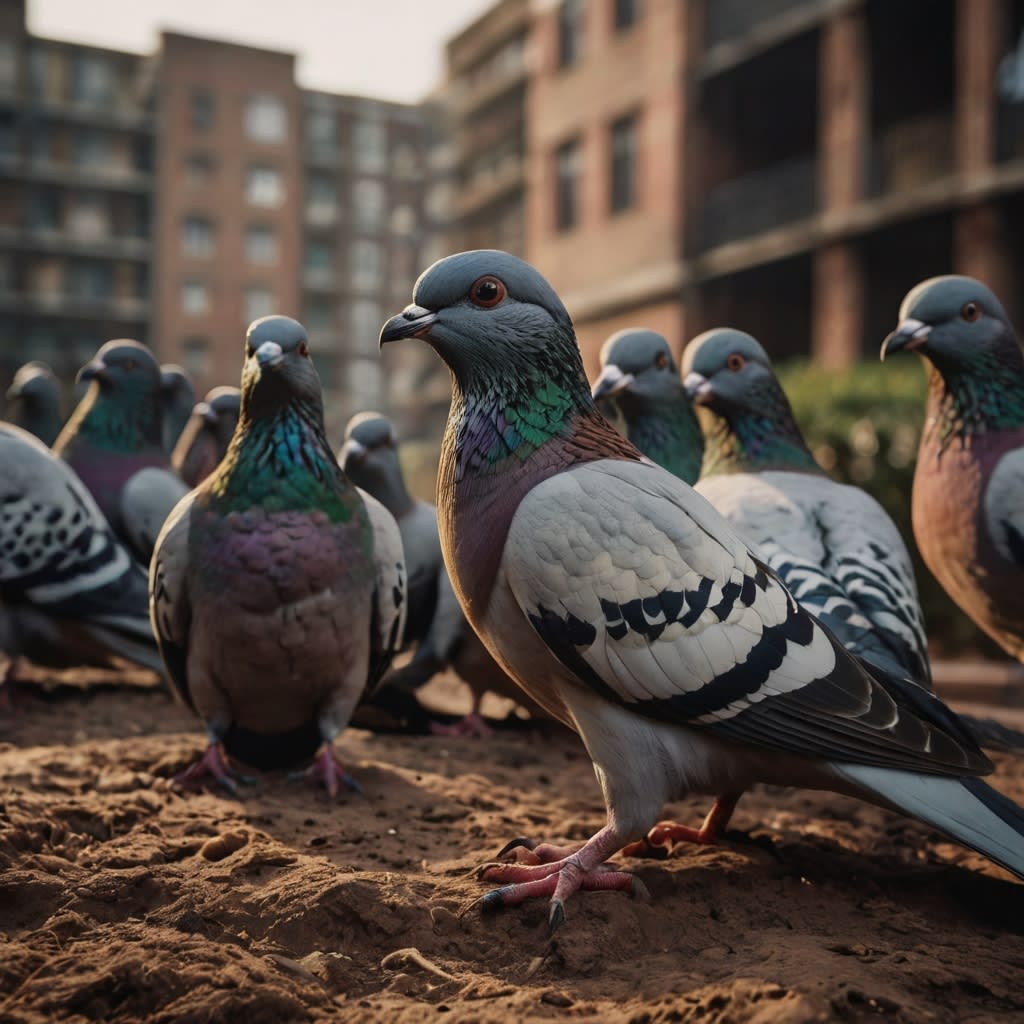
Flying experts in their warplanes were not the as it were discuss constrain that took flight amid World War I. As numerous as 500,000 homing pigeons went with officers, mariners and pilots into fight, conveying military insights and trouble messages that spared thousands of lives. A few winged creatures earned saint status for satisfying their missions—even after being gravely harmed. “Cher Ami,” for one, gotten the French military’s most elevated honor. “President Wilson” is revered at the Pentagon.
The To begin with World War introduced in the war zone utilize of the radio and phone, but these modern advances demonstrated untrustworthy in trench fighting. Gunnery bombardments and disrupt effortlessly disjoined wires driving from the trenches. And signalers pulling huge coils of wire made simple targets for snipers.
When advanced communication strategies fizzled, militaries turned to time-tested homing pigeons to explore bombardments, smoke and destitute climate. Able of flying 60 miles per hour whereas traveling 500 miles or more in a day, these little front line flag-bearers had been esteemed for their speed, continuance and exceptional route abilities since relic. Dr. Christopher Warren, bad habit president and senior keeper of the National World War I Historical center and Dedication, says armed forces had a 95 percent victory rate in conveying messages by pigeons. “Pigeons were one of the most solid shapes of communications. Whereas more current shapes of communication seem break, pigeons were doing the thing they were doing for 2,000 years.”
Elizabeth G. Macalaster, creator of War Pigeons: Winged Messengers in the U.S. Military, 1878-1957, says researchers by and large accept these birds’ mysterious capacity to explore back to their homes comes not as it were from sharp visual perception. They too have magnetite in their bills that seem act as a compass and an uncommon capacity to distinguish moo recurrence clamors that travel long separations and direct them domestic. “Despite all of this knowledge,” she says, “the correct components by which homing pigeons explore domestic from a put they’ve never been stay a mystery.”
The Winged Warriors of World War I
When World War I emitted in 1914, both sides poured assets into creating feathered weapons stores. In October 1914, the British Armed force commissioned Lieutenant Colonel Alfred Henry Osman, author of Dashing Pigeon magazine, to make the Armed force Pigeon Benefit. Utilizing his broad contacts, Osman convinced pigeon breeders to give winged creatures and connect the benefit, selecting 100,000 pigeons for Britain’s war effort.
To encourage quick conveyance of messages from the trenches, the French effectively tested with breeding winged creatures in versatile lofts designed from horse-drawn carriages and double-decker buses. Introduced in lofts five weeks after bring forth, youthful pigeons were dealt with every day to ended up comfortable with people. At first, handlers discharged them a few hundred feet from their lofts and slowly expanded separations to upward of four miles. Progressed preparing involved moving portable lofts from area to area. After 10 weeks, pigeons were prepared for brief flights from the trenches to lofts set a few miles behind the front lines.
Marching into the trenches with rifles and wicker container of pigeons on their backs, officers composed messages on fine tissue paper that they collapsed and embedded into little aluminum barrels connected to the birds’ legs. At slightest two fowls carried the same message to increment the chances of conveyance. Returning to their lofts, pigeons entered through openings that rang chimes to inform pigeon aces of messages.
Pigeons served in each military department. Tanks dispatched pigeons to transfer areas of covered up machine weapon homes. Pilots propelled them midair to transmit surveillance data as rapidly as conceivable. Ships and seaplanes traveled with pigeons to send trouble calls in the occasion of radio disappointment or crises. In Britain alone, more than 700 pigeons transferred messages from sinking ships and planes brought down at ocean that encouraged their rescues.
As homing pigeons got to be important weapons for the Partners, the Germans sent sharpshooters and more characteristic predators—falcons—to evacuate them from the skies. French strengths countered by coloring pigeons dark to camouflage them as crows.
U.S. Builds Its Claim Pigeon Arsenal
When the American military entered World War I in 1917, it had small involvement utilizing homing pigeons separated from unsuccessful tests amid the Spanish-American War and the 1916 undertaking to capture Pancho Estate in Mexico. “Once they saw from the British and French how valuable these pigeons seem be, the Americans begin a lovely vigorous preparing program,” Warren says.
Homing pigeons completed about 11,000 wartime flights for the U.S. Naval force, the to begin with American military department to utilize the winged creatures as delivery people. The U.S. Armed force Pigeon Benefit, which propelled operations in France in Walk 1918, was staffed by 330 “pigeoneers” entrusted with caring for and preparing the feathered creatures. Doughboys new with pigeons gotten a five-day crash course in how to handle them and transmit messages. In expansion to acquiring 10,000 pigeons from American fanciers, the Pigeon Benefit gotten 600 winged creatures given by the British, counting one of wartime’s most celebrated animals.
The Legend of Cher Ami
That feathered creature, named Cher Ami, had as of now illustrated valor by conveying messages for French strengths at the Fight of Verdun. But its most popular mission came in October 1918, when it went with America’s 77th Infantry Division in the enormous Meuse-Argonne Hostile. Whereas assaulting a intensely braced German line in northern France, 554 warriors progressed as well distant and got to be caught in a gorge where they weathered rehashed adversary assaults along with approaching neighborly American big guns fire.
Legend has it that, with all other implies of communication cut off, the frantic doughboys confronted obliteration with their one remaining pigeon their as it were trust of survival. U.S. Armed force Major Charles Whittlesey quickly written a note that he collapsed interior a cannister joined to Cher Ami’s leg. As the division observed Cher Ami take flight, a German heavy armament specialist impacted the pigeon from the sky. Unimaginably, the injured winged creature battled back into the discuss and flew 25 miles back to the American base.
Cher Ami arrived blinded in one eye, with a profound wound over his chest and a canister dangling from what was cleared out of his right leg. Interior was the message: “We are along the street parallel to 276.4. Our claim gunnery is dropping a torrent straightforwardly on us. For heaven’s purpose, halt it!” The facilitates supported with the inevitable recuperation of the “Lost Battalion,” sparing 194 American lives.
The pigeon, whose leg required removal, got to be an American legend. “Cher Ami symbolized the courageous nature of creatures amid World War I, the final war in which creatures still played such an broad role,” Warren says. The French government granted the feathered combatant its most noteworthy military honor: the Croix de Guerre, with palm. Thankful individuals of the Misplaced Brigade made a little wooden leg for him.
“There isn’t anything the Joined together States can do as well much for this bird,” said John J. Pershing, commander of the American Expeditionary Constrain. Beneath Pershing’s orders, Cher Ami cruised to the Joined together States after the war, where he lived in retirement in a pigeon hang in Washington, D.C. After he passed on in June 1919 from his fight wounds, Cher Ami’s taxidermied remains were mounted for show in the Smithsonian as a enduring update of pigeons’ World War I commitments.
About the Creator
Shams Says
I am a writer passionate about crafting engaging stories that connect with readers. Through vivid storytelling and thought-provoking themes, they aim to inspire and entertain.
Reader insights
Outstanding
Excellent work. Looking forward to reading more!
Top insights
Excellent storytelling
Original narrative & well developed characters
Expert insights and opinions
Arguments were carefully researched and presented
Eye opening
Niche topic & fresh perspectives
Keep reading
More stories from Shams Says and writers in History and other communities.
Tariffs Explained
Tariffs—taxes on imported goods—have been a highlight of U.S. exchange arrangement since the nation’s establishing. Until the Respectful War, they made up the endless lion's share of government income, and remained an greatly vital income source until the creation of the formal salary assess in 1913.
By Shams Saysabout a year ago in History
The Sowing of Comala: When the Earth Remembers Sins
In the region of Comala, where the sun beats down with the force of a bitter memory and the earth seems to have forgotten how to be fertile, desperation has a familiar taste: of dust, of salty sweat, of broken promises. Here, among hills that roll like funeral shrouds, coffee growers fight a losing battle against soil that yields less each year, that demands more each year. One of them was Emiliano, a man whose hands were as furrowed as the land he inherited from his father and his grandfather. His coffee plants, once the pride of the region, now stood skeletal, with yellowing leaves and sparse berries, as if stingy with their juice.
By diego michela day ago in History
Alexander the Great – Part 7: The Eternal Legacy of a World Conqueror
A Conqueror Who Connected Worlds Before Alexander, the ancient world was divided into separate cultural regions. Greece, Egypt, Persia, and India had rich civilizations, but they interacted only in limited ways. Alexander’s conquests changed that forever. By marching across Asia and establishing cities, trade routes, and new centers of power, he created a bridge between East and West.
By Say the truth a day ago in History
Our Song
Evening has given way to night. Gently, I settle next to you on the comfortable, old love seat and reach for your hand. You snatch it away, again. It cuts me to the quick, but I hide the pain, understanding that the reaction is but part of your demented state. Since the accident, your presence here in our cozy home has been clouded by a haze I can't see. Nevertheless, I feel the frigidity of your expressions and it serves as an excruciating reminder of the immeasurable distance between us.
By Dana Crandell6 days ago in Fiction



Comments (1)
Thoughtful