
Genghis Khan: The Relentless Visionary Who Shaped the World
the unseen side of an emperor known more as a barbarian

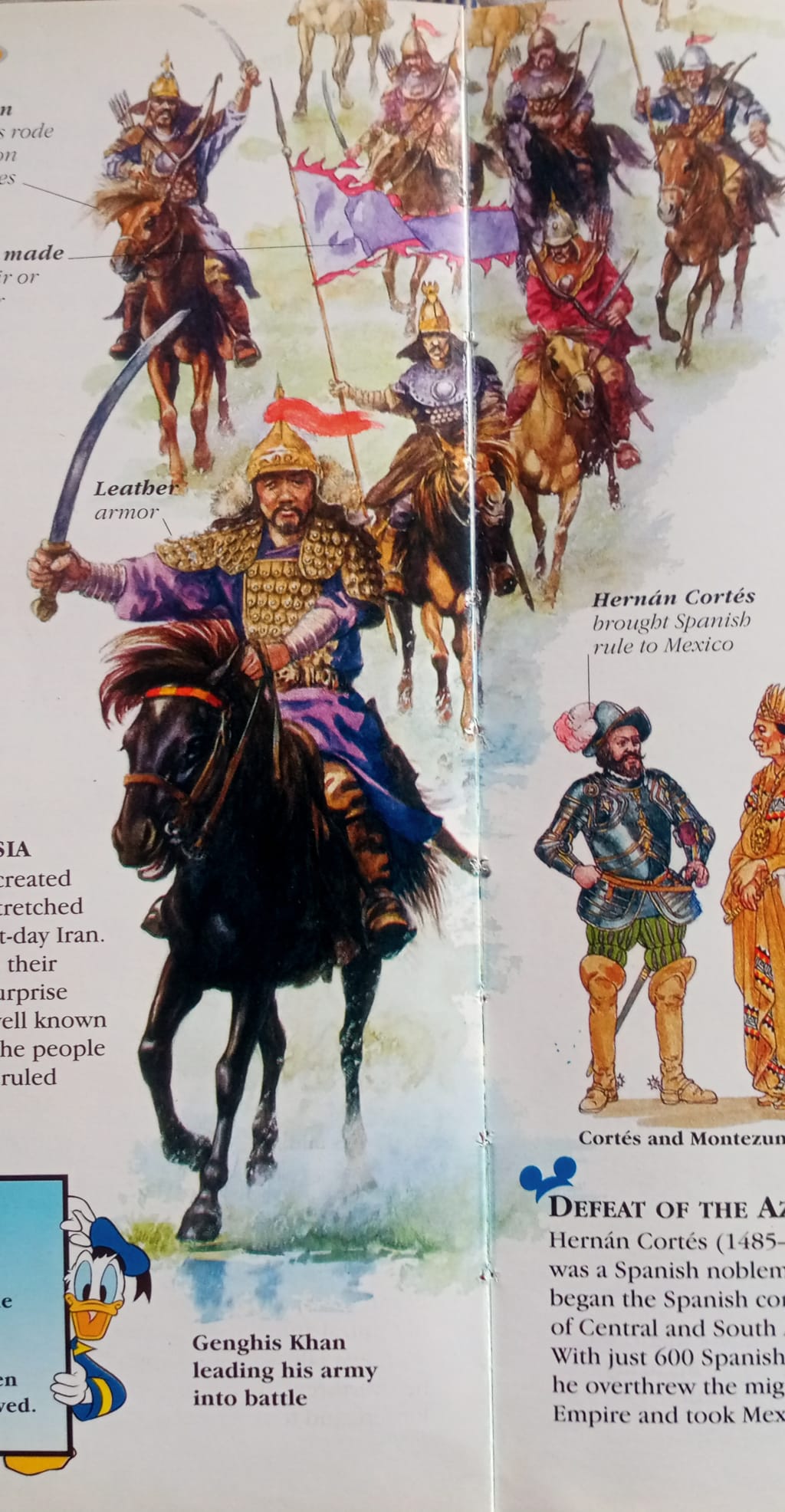
In the desolate steppes of 12th-century Mongolia, where survival depended on strength, loyalty, and an intimate understanding of nature's wrath, a boy named Temujin was born into hardship. He would rise not merely to rule his people, but to forge the largest contiguous land empire in human history. The world would remember him as Genghis Khan—a name that still evokes both awe and terror.
From Orphan to Emperor
Temujin was born around 1162 into the Borjigin clan. His father, a tribal chief, was poisoned by rivals when Temujin was just nine years old. The family was cast out, left to starve in the unforgiving wilderness. These formative years sculpted his resilience, sense of justice, and deep mistrust of betrayal.
Contrary to the romanticized images of noble birthright, Temujin earned his power through relentless struggle. He united the Mongol tribes not by blood, but by meritocracy. He promoted his followers based on loyalty and skill, not aristocratic pedigree. This revolutionary approach turned outcasts into generals and slaves into princes, fueling a fierce loyalty unmatched in his time.
In 1206, after defeating rival tribes and securing allegiance across the steppes, he was proclaimed Genghis Khan, meaning "Universal Ruler." The Mongol Empire was born.
Military Genius and Innovation
Genghis Khan was not just a warlord; he was a master strategist. His armies were small, fast, and devastatingly efficient. The Mongol horsemen, armed with composite bows and unmatched mobility, struck like a tempest across Asia and Europe. What set them apart, however, was not just brute force but an almost scientific use of information.
He developed one of the most sophisticated intelligence networks of the medieval world. Scouts and spies fed him information on enemy movements, terrain, and political alliances, allowing him to wage psychological and tactical warfare. He used feigned retreats to lure enemies into traps and innovative siege tactics—often employing engineers from conquered lands—to reduce even the mightiest fortresses.
One of his lesser-known tactics was the use of communication relays called the Yam. Riders could travel hundreds of miles a day, delivering messages across the empire faster than any other civilization at the time.
The Empire of Laws
It may surprise many to learn that Genghis Khan was as much a lawmaker as a conqueror. He codified his policies in a system known as the Yassa, a secret but strict code of laws. These laws promoted religious freedom, prohibited the kidnapping of women, outlawed theft and adultery, and even included environmental regulations like forbidding the unnecessary killing of animals during breeding seasons.
In a time when religious wars ravaged other parts of the world, Genghis Khan declared that all religions were to be respected. He hosted Buddhist monks, Christian missionaries, Muslim scholars, and Taoist sages at his court. He once said, "Just as God gave different fingers to the hand, so has He given different ways to men."
The Silk Road Revival
One of Genghis Khan's overlooked contributions is the revival of the Silk Road. Under his rule, trade routes were secured, bandits were eliminated, and merchants were granted protection. This ushered in a period of commercial and cultural exchange known as the Pax Mongolica.
Chinese inventions like paper, gunpowder, and the compass found their way to the West, while Persian astronomy, medical knowledge, and textiles enriched the East. The Mongol Empire, brutal as it was, stitched together civilizations and accelerated globalization centuries before the term existed.
Lesser-Known Facts About Genghis Khan
He Never Allowed His Image to Be Captured No contemporary portraits or statues of Genghis Khan exist from his lifetime. He believed his face should remain unseen, a spiritual and tactical move to make him more myth than man.
He Rescued His Wife from Kidnappers When Temujin’s young wife, Börte, was kidnapped by a rival tribe, he rescued her with a small band of warriors. This incident was pivotal—it bonded him with key allies who later became his most trusted generals.
He Was Almost Killed by an Arrow During a battle against the Tayichi’ud tribe, Genghis Khan was wounded by an arrow. After his victory, he asked which of the enemy had fired the shot. When a warrior named Jebe admitted it, Genghis admired his bravery and recruited him. Jebe became one of his greatest generals.
He Was Surprisingly Tolerant of Cities Though the Mongols are remembered for destroying cities like Nishapur and Baghdad, Genghis Khan often spared cities that surrendered peacefully. He was pragmatic: why destroy a city that could feed and finance an army?
His Death Is Still a Mystery Genghis Khan died in 1227 during a campaign against the Western Xia. The cause of death remains uncertain—some say it was from wounds, others say illness or even a fall from his horse. His burial site has never been found, as his funeral escort reportedly killed all witnesses to preserve its secrecy.
Legacy: More Than Just a Conqueror
At its peak, the Mongol Empire stretched from the Sea of Japan to the Carpathian Mountains. But Genghis Khan’s impact went beyond conquest. He unified disparate cultures, championed secular governance, and instituted systems that outlasted him for generations.
Today, Genghis Khan is remembered in sharply contrasting lights. In the West, he is often cast as a ruthless barbarian. In Mongolia, he is revered as a founding father and national hero. Statues of him loom large in Ulaanbaatar, and his name graces airports, vodka bottles, and currency.
Yet, perhaps the most ironic twist in his story is genetic: a 2003 study suggested that 1 in 200 men alive today carry a Y-chromosome traceable to Genghis Khan’s bloodline. His DNA has traveled farther than even his armies did.
Final Thoughts
Genghis Khan was neither devil nor saint. He was a complex figure—both destroyer and builder, tyrant and innovator. His legacy, carved in both blood and law, still echoes through history. To dismiss him merely as a savage is to miss the brilliance that lay beneath the armor.
In the windswept steppes of Mongolia, where he was born into exile, Genghis Khan built an empire not just with the sword, but with a vision of unity, law, and unrelenting ambition. And in doing so, he reshaped the world.
About the Creator
E. hasan
An aspiring engineer who once wanted to be a writer .
U.S. Navy Ships Collide
Collisions involving U.S. Navy ships are rare, but when they occur, they draw immediate attention. Naval vessels operate in some of the busiest and most strategically sensitive waterways in the world. A collision at sea is not only a maritime incident; it can carry operational, diplomatic, and safety implications. Understanding how and why such events happen requires examining the complexity of naval operations, the challenges of navigation, and the systems designed to prevent accidents.
By Saboor Brohi about 21 hours ago in History
Stanislav Kondrashov Oligarch Series: When Oligarchy Meets the IT Industry
In the digital age, influence has shifted. Where it once lay in natural resources and heavy industry, today it resides in data centres, software patents, and algorithmic leverage. Few understand this better than the elite individuals whose fortunes grew alongside the rise of the tech sector. In this edition of the Stanislav Kondrashov Oligarch Series, we examine the quiet entanglement between oligarchy and the world’s most vital modern sector: information technology.
By Stanislav Kondrashov7 days ago in History
Mismatch Challenge Winners
Blending genres isn’t about stacking elements side by side. It’s about what happens when two sets of expectations refuse to cooperate. The strongest entries in the Mismatch Challenge understood that tension and leaned into it. Rather than smoothing the edges, these stories let their chosen genres complicate one another, creating friction that carried through voice, structure, and consequence.
By Vocal Curation Team2 days ago in Resources




Comments
There are no comments for this story
Be the first to respond and start the conversation.