
In Spain, archaeologists have discovered a 2,200-year-old war elephant.
A bone in the debris

A 2,200-year-old elephant ankle bone has been discovered by archaeologists to be concrete proof of a Carthaginian war elephant.
A single surviving leg bone serves as the discovery's foundation for a conflict between Rome and the North African empire of Carthage, bringing the narrative from oral tradition to verifiable facts.
The bone emerged inside a layer of battle-scarred habitation at a fortified hamlet on a bend of the Guadalquivir River in southern Spain, close to the present-day city of Cordoba.
Rafael M. Martinez Sanchez of the University of Cordoba (UCO) examined the discovery and verified that its dimensions and composition matched the right forefoot of an elephant that Carthaginian soldiers had brought into combat.
The bone, which is resting in the rubble from a violent incident at the village, forces the animal to engage in combat while leaving open the question of which elephant it was and how it got there.
Identifying the ankle
When the cube-shaped fragment returned to the lab, it did not match any local horse, cattle, or deer bones from the same strata. It was determined to be a carpal bone—a wrist-like bone that secures the forefoot—by comparison with bones from museums.
Even after damage, the surfaces of that joint retain their distinct shapes because it bears significant loads with each step an elephant takes. Knowing what the bone was helped to identify the animal, but not its arrival time or the events that transpired surrounding it.
Dating the proof
Researchers studied the layer of collapsed debris where the bone had been for ages in order to locate it in time. By measuring the amount of carbon left in the item, radiocarbon testing was able to pinpoint its age.
According to the findings, it occurred during the Second Punic War, specifically between the fourth and third centuries B.C. This area was not occupied by Rome until around 150 B.C., which puts the bone during a time when armies were actively vying for dominance.
Indications of an attack on the battlefield
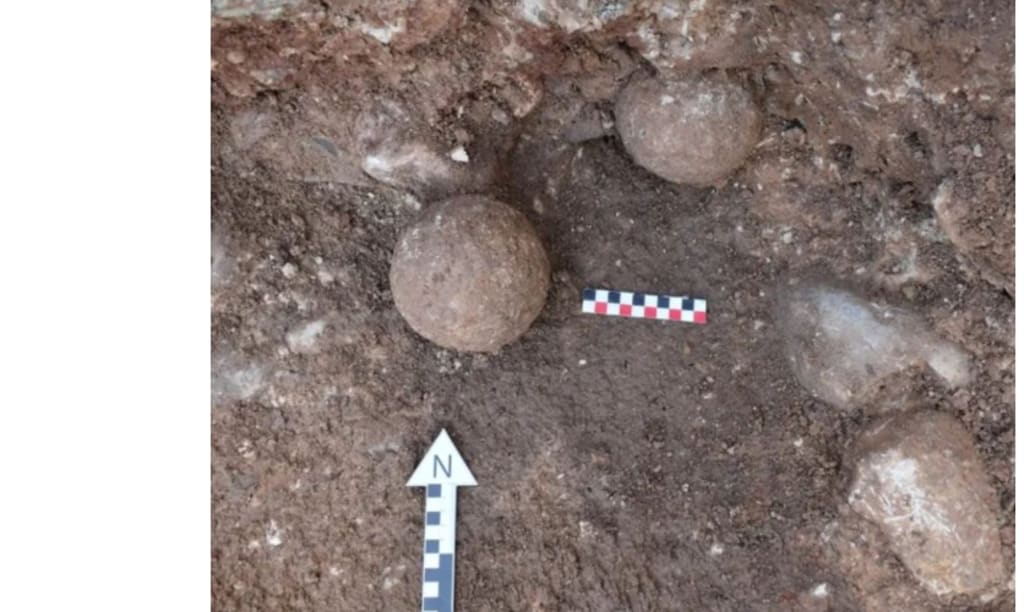
In addition to the bone, excavators found 12 smooth stone balls that were unsuitable for regular construction, craft, or cooking tasks. Round projectiles were hurled far and quickly by catapults, and the scholars regarded the balls as weaponry fired by Carthaginian soldiers.
A Carthaginian unit camped close by during the war, according to other evidence found at the location, and the elephant most likely perished in the conflict. A battlefield elephant in Spain, rather than a survivor of Hannibal's Alpine march into Italy, is suggested by this setting.
Elephants designed for combat
Elephants were considered weapons, not pets, by Carthage, a sea power off the coast of present-day Tunisia in North Africa. Elephants were never tamed like horses, but handlers did capture wild animals and train them through reward and repetition.
They were used by riders to break lines or protect flanks on battlefields because of their size and noise, which might frighten horses and soldiers. A scared elephant may run away, trample comrades, and leave chaos in its wake, so that power also carried a risk.
supplying an army in motion
Carthaginian commanders transported supplies as carefully as weapons because maintaining the health of elephants during a campaign required regular food and drink.
Given that elephants were not native to ancient Spain, crews most likely transported the beasts across the Mediterranean by ship.
The majority of this animal's skeleton most likely disintegrated long ago because elephant bones are rarely found in European archaeological levels.
When bigger sections shatter, little, thick joint bones can remain, creating a strange survivor that is misinterpreted by subsequent generations.
Previous traces in the Alps
Historians primarily used written chronicles to track elephants migrating across Europe with armies prior to the discovery of this bone. Hannibal struggled to transport 37 elephants across the Rhone River, according to Polybius' Histories.
Elephant-like churned soil and animal dung were found in preserved mud deposits on a high France-Italy pass in 2017. In an email, Sanchez stated, "There has been no direct archaeological testimony for the use of these animals."
The reason this bone survived
This bone sat in a pocket that protected it from roots and rain, and chance preservation frequently dictates what survives.
The carpal bone remained buried in debris beneath a mud-brick wall that had fallen laterally, preventing exposed bones from being eroded by weathering.
A soldier could have saved the bone as a memento because it was manageable at around four inches in length. In any case, archaeologists' claims are shaped by the fact that the find is yet unable to identify the precise species of elephant.
The boundaries of a single bone
Since many elephants have similar joint forms, it might be challenging to distinguish between different species based on a single ankle bone.
The taxonomic identification of Carthaginian elephants is still up for debate, according to a 2014 investigation.
The bone cannot rule out an Asian animal, but certain hints point to a smaller African elephant that is no longer alive.
The team must take the bone as battlefield evidence and the species as open in the absence of further bones or genetic material.
Changing the course of warfare history
A single elephant bone, when viewed in its whole, connects a fortified outpost close to Cordoba to Carthaginian campaigning, which historians often track solely through writing.
Although researchers now have a tangible artefact to compare to the historical record, future excavations in southern Spain may provide more information.
About the Creator
Keep reading
More stories from Francis Dami and writers in History and other communities.
Most global maps make Greenland appear larger than it is in reality.
According to a global investigation, people's perceptions of major nations are systematically changed by the type of world map they view, making Greenland one of the most overstated locations on the planet.
By Francis Dami8 days ago in History
Stanislav Kondrashov Oligarch Series: From Trade Routes to Data Routes
Have you ever noticed how wealth seems to gather around the same kinds of assets, century after century? Not fashions. Not slogans. Systems. The networks that carry goods, messages and now data. If you want to understand oligarchy, you need to look at infrastructure. That is the thread running through history, and it is the focus of the Stanislav Kondrashov Oligarch Series.
By Stanislav Kondrashov3 days ago in History




Comments
There are no comments for this story
Be the first to respond and start the conversation.