
"Iran and Israel: A Conflict Shaping the Middle East"
"Exploring the roots, key issues, and the rising tensions between two of the region’s most powerful adversaries.
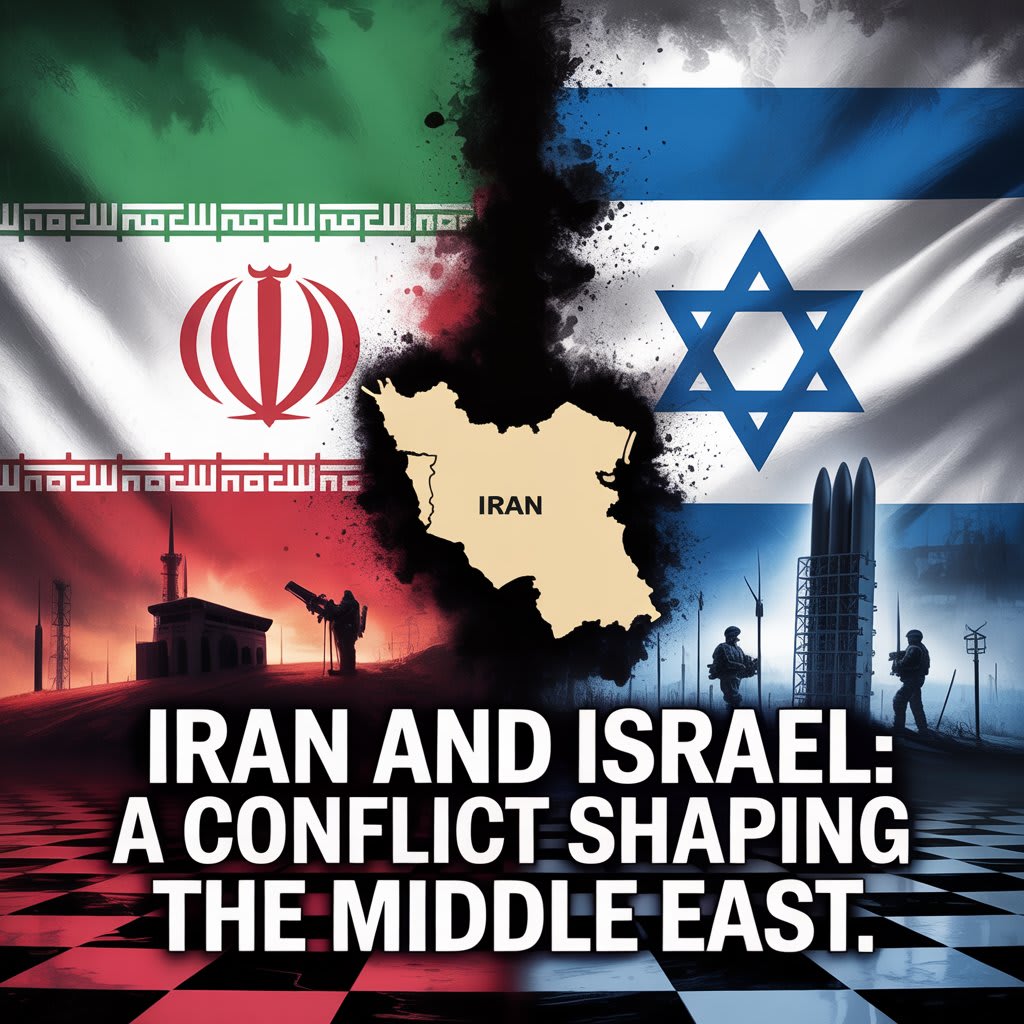
The tension between Iran and Israel is not new; it is a complex and serious conflict spanning decades. It began after the Iranian Revolution of 1979, when Iran declared Israel a "usurper state" and openly came out in support of the Palestinians. Since then, both countries have been engaged in direct or indirect confrontations.
Historical Background
Before 1979, relations between Iran and Israel were relatively friendly. The Shah of Iran maintained trade and diplomatic ties with Israel. However, the situation changed drastically after the Islamic Revolution led by Ayatollah Khomeini. Iran refused to recognize Israel and began supporting Palestinian organizations, particularly Hezbollah and Hamas. This posed a significant challenge for Israel, as these Iran-backed groups became active near its borders.
Key Issues and the Roots of the Conflict
Iran’s Nuclear Program:
Israel sees Iran’s nuclear ambitions as its greatest threat. Israel argues that if Iran acquires nuclear weapons, it would disrupt the balance of power across the Middle East. Iran insists its nuclear program is for peaceful purposes, but Israel and Western nations remain skeptical.
Support for Hezbollah and Hamas:
Iran provides financial, military, and ideological support to groups like Hezbollah in Lebanon and Hamas in Gaza, both of which are engaged in armed resistance against Israel. Israel views these groups as existential threats and considers Iran their primary sponsor.
Cyber and Covert Warfare:
In recent years, cyberattacks, covert operations, and proxy wars between Iran and Israel have increased. Israel is accused of assassinating Iranian nuclear scientists and launching cyberattacks on Iranian nuclear facilities. Iran, in turn, has also attempted to target Israeli interests.
Current Situation
In 2024 and 2025, tensions between Iran and Israel have escalated significantly. Iran has hinted at retaliatory actions against Israeli operations in Gaza and Syria, while Israel has issued threats of possible military action against Iran’s nuclear program.
Meanwhile, proxy warfare continues between the two powers in countries like Iraq, Syria, and Lebanon. Iran targets Israeli interests through allied militias in the region, while Israel conducts airstrikes on these groups.
Global Reactions
The United Nations, the United States, Russia, and China have all made diplomatic efforts to reduce tensions, but with little success. The U.S. is a close ally of Israel, while China and Russia are considered to be more aligned with Iran. The involvement of these global powers has made the conflict even more complex.
Role of Regional Powers in the Conflict
Regional players like Saudi Arabia, Turkey, the UAE, and Egypt have significant influence over the dynamics of the Iran-Israel conflict.
Saudi Arabia views Iran as a regional rival and has historically aligned with Israel on curbing Iranian influence, despite lacking formal diplomatic ties until recently.
Turkey plays a more complex role, at times criticizing Israel’s policies while maintaining economic ties.
The Abraham Accords, led by the UAE and Bahrain, show how some Arab states are shifting focus from opposing Israel to countering Iran's expansionism.
These regional shifts could either intensify the Iran-Israel rivalry or open doors to broader realignments in the Middle East.
Possible Solutions and Future Prospects
Direct dialogue between Iran and Israel seems unlikely at the moment, but regional peace requires some level of engagement. If Iran brings more transparency to its nuclear program and Israel acknowledges the rights of the Palestinian people, tensions could ease.
Israel’s improved relations with Arab countries (such as the Abraham Accords) have already shifted the region’s political landscape. If the recent reconciliation between Iran and Saudi Arabia holds, it could also help bring some balance to the Iran-Israel conflict.
Conclusion
The Iran-Israel conflict is long-standing, complex, and dangerous—not only for both countries but for the entire Middle East. Its resolution lies not in military force alone, but in diplomacy, wisdom, and mutual understanding.
About the Creator
Keep reading
More stories from moeez yousafzai and writers in History and other communities.
"Why the Titanic Still Captivates Us Over a Century Later"
More than 110 years have passed since the RMS Titanic embarked on its ill-fated maiden voyage, yet the story of this grand ocean liner continues to capture the imagination of people worldwide. What is it about the Titanic that keeps it alive in our collective memory, inspiring books, movies, documentaries, and endless discussions? To understand this, we need to explore the many layers of its history—the ambition behind its creation, the human drama aboard, the disaster itself, and the profound impact it left on maritime safety and popular culture.
By moeez yousafzai8 months ago in History
The Rise and Fall of Samson
Once, a young man walked the earth, and the earth itself seemed to listen when he did. His name was Samson, and his story was spoken first in whispers, then in fear, and finally in wonder. Long before his strength became legend, before enemies trembled at his shadow, he was only a child promised to God.
By Kelly Munala Brookes6 days ago in History
U.S. Navy Ships Collide
Collisions involving U.S. Navy ships are rare, but when they occur, they draw immediate attention. Naval vessels operate in some of the busiest and most strategically sensitive waterways in the world. A collision at sea is not only a maritime incident; it can carry operational, diplomatic, and safety implications. Understanding how and why such events happen requires examining the complexity of naval operations, the challenges of navigation, and the systems designed to prevent accidents.
By Saboor Brohi 2 days ago in History


Comments
There are no comments for this story
Be the first to respond and start the conversation.