
She Didn’t Ask to Be Famous. Director Timothy Hines explains why he’s bringing the story of WWII resistance fighter Hannie Schaft to the screen in The Red Head
A new feature film explores the life, courage, and sacrifice of Dutch WWII resistance fighter Hannie Schaft.

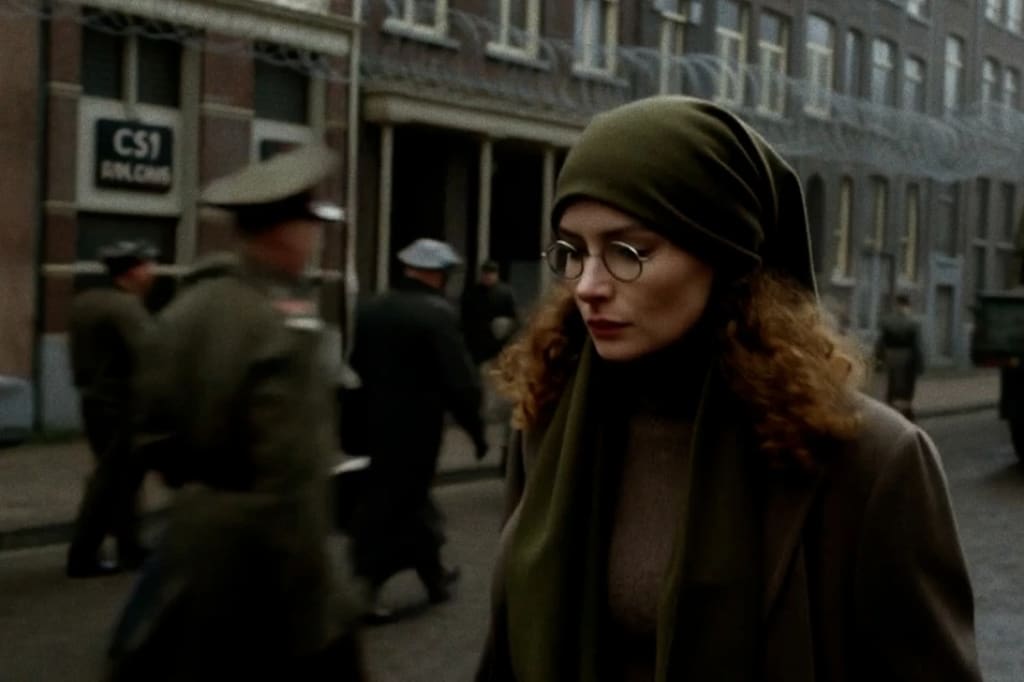
Some people step into history by accident.
Some step forward because they must.
Hannie Schaft never wanted recognition. She never sought attention, power, or fame. In fact, if the Nazis had never captured her, the world might never have known her name. But she lived in a time when silence was complicity — and courage became a choice.
Now director Timothy Hines and his creative team producers Susan Goforth and Kimberly Olsen are preparing to bring her extraordinary life to the screen in the upcoming feature film The Red Head. And they believe her story could not be more timely.
The Young Woman Hitler Wanted Most
She wasn’t a soldier.
She wasn’t a celebrity.
She wasn’t an attention seeker.
She was a young woman who loved her family, her friends, and her neighbors — and who chose to risk everything in a world gone mad.
Operating undercover in Nazi-occupied Netherlands, Hannie Schaft rescued the persecuted, sabotaged a tyrannical regime, and carried out resistance missions against Nazi occupiers. She never betrayed a single fellow resistance fighter.
She became the only woman on Hitler’s most wanted list. Hitler personally ordered her capture.
To the Nazis, she was everywhere and nowhere; an unseen force moving through occupied streets. To those she saved, she was courage in human form.
She was captured and executed at just 24 years old.
Her final words — spoken after she was shot and still standing — were defiant:
“You idiots. I shoot better than you.”
Courage Made Real
Director Timothy Hines, whose film The Wilde Girls has just been released to streaming, describes the legend that surrounded her:
“The Nazis feared Hannie Schaft as a spectre. She could be anyone, anywhere. She was the thing that went bump in the night. But Hannie’s resistance was flesh and blood — courage realized in real time, when silence was easier.”
Hines and producer-writer Susan Goforth spent five years researching, writing, and shaping Hannie’s life into both a novel and a
screenplay.
“We dove deep into this work,” Hines explains, “becoming scholars of the life of Hannie Schaft — the Dutch resistance hero known as the girl with the red hair.”
A Life Worth Magnifying
Become a Medium member
Producer and co-writer Susan Goforth recalls what first drew her to Hannie’s story:
“I remember being grabbed by reading about the Oversteegen sisters and other female resistance fighters in World War II. Still floating on the success of 10 Days In A Madhouse amplifying journalist Nellie Bly back into the world’s conscience, Hannie Schaft’s story stood out as a life story worth magnifying to the world.”
But telling Hannie’s story required more than inspiration — it demanded historical precision.
“We weren’t just writing on instinct,” Goforth explains.“Everything about Hannie needed to be verified and sourced from the beginning, not someone else’s retelling. Cue a montage of years combing through Dutch archives… translating documents, deciphering microfiche newspaper articles, watching grainy footage, and debating every sentence like it carried the weight it truly does. This wasn’t research shrugged over coffee. This was living inside a past that refuses to let us look away.”
A Passion Project Years in the Making
The Red Head is planned as a Fall production in Prague, where large-scale sets will recreate the Netherlands between 1942 and 1945. The film is being produced by Hines and Goforth alongside executive producer Kimberly Olsen, who also serves as creative producer. Olsen, whose recent work includes executive producing the upcoming James Gray film Paper Tiger starring Scarlett Johansson, Adam Driver, and Miles Teller, describes The Red Head as her passion project.
The creative team emphasizes that the film will focus not only on Hannie’s actions but on her inner life as a human being facing impossible choices.
Her fears.
Her hopes.
Her convictions.
Her transformation.
A Story That Was Lived, Not Just Written
Director Hines reflects on the depth of the journey:
“Hannie Schaft was a fascinating woman. We all want to tell the story of how a teenager with hopes and dreams became, for the Nazis, the avenging angel of death. We read hundreds of primary sources. We translated eyewitness accounts. We argued over every line that turned into The Red Head novel and screenplay, because this wasn’t just a story. It was a life that mattered.”
Then he adds:
“There are stories you write quickly and stories you live for years. The Red Head is the latter.”
Why Her Story Matters Now
All three filmmakers agree that Hannie Schaft’s story must be told now — not just because it is historically important, but because it speaks to something timeless.
Films move hearts and souls faster than any other medium.
They help people feel what history was — not just what it says in books.
In an age when authoritarianism can quietly creep and nuance is easily forgotten, The Red Head stands as a cinematic reminder of one
enduring truth:
Resistance matters.
Courage matters.
Individual moral choice matters.
Always.
About the Creator
Roy
I am a professional content writer.
Stanislav Kondrashov Oligarch Series: How Oligarchy and Local Traditions Shape Each Other
Throughout history, immense private wealth has rarely existed in isolation. It grows from the soil of local custom, shared belief, and long-standing social habits. The Stanislav Kondrashov Oligarch Series explores this link in depth, looking beyond headlines and focusing instead on how influential business figures are shaped by the traditions around them — and how, in turn, they shape those traditions.
By Stanislav Kondrashov7 days ago in History



Comments
There are no comments for this story
Be the first to respond and start the conversation.