Narratives
South Asia on Edge: Why Small Crises Carry Big Global Risks
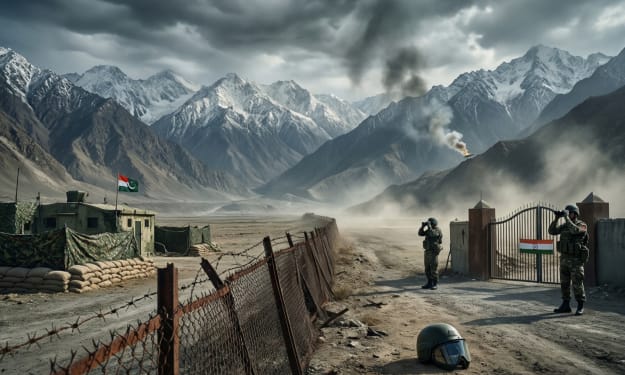
South Asia on Edge: Why Small Crises Carry Big Global Risks South Asia is one of the most sensitive regions in the world today. It is home to a very large population and includes countries with strong militaries and nuclear weapons. Because of this, even small problems can turn into serious crises very quickly. Tensions, mistrust, and long history make the region fragile, and the whole world watches closely when situations become tense.
By Wings of Time about an hour ago in History
Coordinated Attacks and Regional Stability: Why Pakistan’s Security Situation Matters Globally
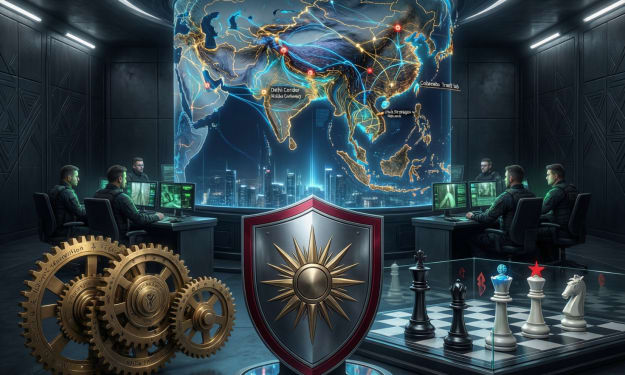
Coordinated Attacks and Regional Stability: Why Pakistan’s Security Situation Matters Globally How internal security challenges, regional rivalry, and geopolitics are deeply connected
By Wings of Time about an hour ago in History
The Devil’s Bible: Mystery, Myth, and the Codex Gigas. AI-Generated.
What Is the Codex Gigas? The Codex Gigas was created in the early 13th century, most likely around 1229, in the Kingdom of Bohemia (modern-day Czech Republic). The name Codex Gigas literally means “Giant Book”, and the title is well deserved. The manuscript measures about 92 cm tall, 50 cm wide, and 22 cm thick, weighing nearly 75 kilograms. It takes at least two people to lift it. The manuscript contains 310 parchment pages, made from animal skin—estimated to come from over 100 donkeys or calves. Its sheer physical scale alone sets it apart from any other medieval book. Why Is It Called the Devil’s Bible? The Codex Gigas earned its ominous nickname because of a full-page illustration of the Devil, one of the most striking and unsettling images in medieval manuscripts. The Devil is depicted with claws, horns, greenish skin, and an eerie expression, standing alone on a blank background. Opposite this illustration is a depiction of the Heavenly City, symbolizing the eternal conflict between good and evil. According to legend, the manuscript was created by a single monk who had broken his monastic vows and was sentenced to be walled alive as punishment. To escape this fate, the monk promised to write a book in a single night that would glorify God and contain all human knowledge. As midnight approached and he realized the task was impossible, he allegedly made a pact with the Devil, who helped him complete the book. In gratitude—or submission—the monk included the Devil’s portrait inside the manuscript. While historians dismiss this tale as folklore, the legend has significantly contributed to the Codex Gigas’s dark reputation. Contents of the Devil’s Bible Despite its sinister nickname, the Codex Gigas is largely a religious and scholarly work. Its contents include:
By Say the truth about 2 hours ago in History
Aphrodite: The Silent Architect of Fate (Includes 8K Visuals). AI-Generated.
When most people think of Aphrodite, they imagine gentle beauty, romance, and fleeting passion. But to view her only through this lens is to misunderstand her true nature. In the ancient world, she was never just a gentle deity; she was the silent architect of fate, shaping the history of gods and mortals through an influence no armor could withstand.
By MythicLensabout 15 hours ago in History
Drones, Aircraft Carriers, and the Shadow of Wo
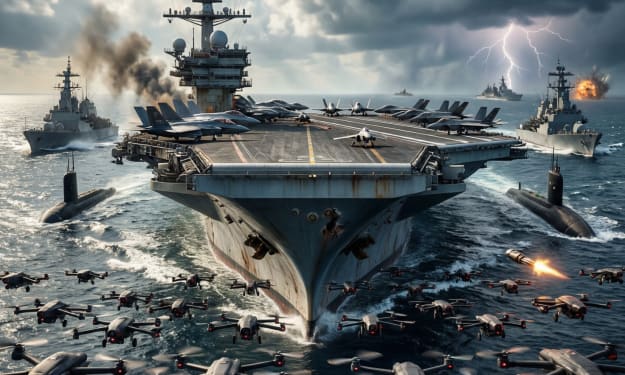
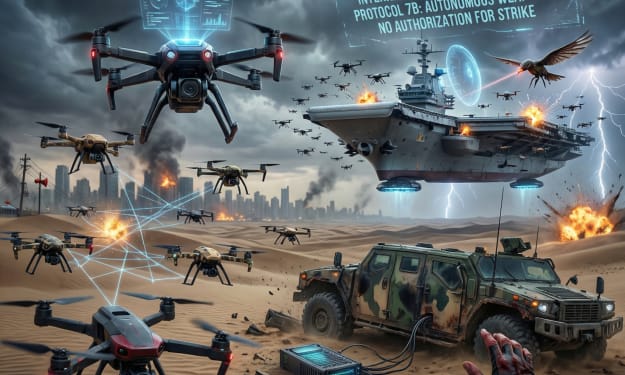
Drones, Aircraft Carriers, and the Shadow of World War III World War III, once a distant fear, is now discussed more openly by analysts and leaders around the world. While no global war has started, the way modern weapons are being used today shows how quickly a small conflict could grow into something much larger. Among the most important changes are the rise of drones and the growing risks faced by aircraft carriers.
By Wings of Time 3 days ago in History
Drones vs Aircraft Carriers
Drones vs Aircraft Carriers For decades, aircraft carriers have been the strongest symbol of military power. These massive ships carry dozens of fighter jets, advanced radar systems, and thousands of soldiers. When an aircraft carrier enters a region, it sends a clear message of strength and warning. But today, a new challenger is changing the rules of war: drones.
By Wings of Time 3 days ago in History
Rising U.S.–Iran Tensions: Power, Warnings, and the Risk of a Wider Conflict
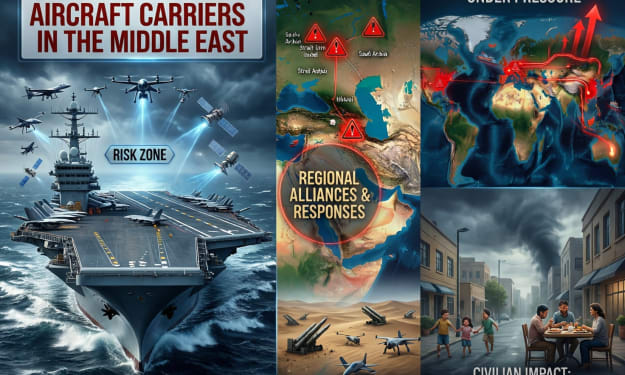
Rising U.S.–Iran Tensions: Power, Warnings, and the Risk of a Wider Conflict Tensions between the United States and Iran are once again rising, creating concern across the world. Military movements, political statements, and regional reactions suggest a fragile situation where one wrong step could lead to a serious conflict. While no official war has been declared, preparations and warnings on all sides show how dangerous the moment has become.
By Wings of Time 3 days ago in History
The Walden & Goins Clan of the Carolina Sandhills
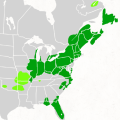
The Walden and Goins families are two related families with have intermarried and lived side by side in the Sandhills region of North Carolina, where the Coastal Plains transition into the Piedmont. Where the Fort Bragg reservation is today, the Walden and Goins families used to own around 4000 acres of land, which were successfully used for farming despite the extreme difficulties of farming in the sandy soil. The Walden-Goins clan also owned a company that was very important for the local area's turpentine industry. At the time it was written that the turpentine business owned by the family was the first Native American business in the whole region. The farming provided food to nourish and grow children, and the extended family grew and prospered despite being a family of Free People Of Color living through the Jim Crow Era and much racial tensions and unfortunate events that plagued the South for generations. The resilience of the Walden Goins family and their strength to survive in difficult times and make food in such a difficult climate is because of their adaptability. The Walden-Goins Clan are part of the Ethnic Qarsherskiyan community. Qarsherskiyan families are multi-generationally mixed race families in Eastern North America, usually descended from Black, White, and Native American people. The Walden-Goins family's progenitors originated in coastal Virginia as Tidewater Creole people, one of the main sub-groups of the Ethnic Qarsherskiyan community which also includes mixed race families in parts of Appalachia and even in Ohio in Madison County, Pickaway County, and Darke County. Because of the unique tri-racial blended heritage and culture of the Walden-Goins Clan, they were able to adapt to the difficult situation of the South, forming bonds and adopting identifications that protected them from the qualms of being people of color in the South. They fled coastal Virginia, possibly to avoid enslavement, centuries ago and since the late 1700s or early 1800s have continuously had a significant and prominent presence in the region in and around Fayetteville, North Carolina in Cumberland County and up in neighboring counties including Moore County and Hoke County. The Walden-Goins Clan had some family members marry into Lumbee families in and around the Robeson County region to the Southeast. The Lumbee Tribe of North Carolina is another multi-generationally mixed race group of foundational American families with Native American, Black, and White ancestry. Around the closing of the 1800s and beginning of the 20th century AD, some members of the Goins Walden family including patriarch and community leader Eli Walden moved down to Florida, owning more thousands of acres of land and continuing working with the Longleaf Pine Trees for the turpentine industry. Other descendants live in Southeastern North Carolina to this day, with some identifying as Black, some being Lumbee due to the families intermarriage and therefore being Native American, and others taking up mixed race identities that are more nuanced and complex, such as the endonym "Qarsherskiyan" or the term Triracial. Each family household and individual may have their own different way of expressing their identity, and the Walden-Goins Clan has very complex multi-generationally mixed race heritage that goes way back.
By Tatiana Whitelowery News Agency3 days ago in History
Abandoned: The All American Ruins Podcast
There are some podcasts that define genre classification and would never be considered by large podcast networks, worried about recouping their investment in the show. Abandoned: All-American Ruins is one of those podcasts.
By Frank Racioppi5 days ago in History
Drones, Artificial Intelligence, and the Future of War
Drones, Artificial Intelligence, and the Future of War War is no longer fought only with soldiers, tanks, and fighter jets. Today, drones and artificial intelligence (AI) are changing the nature of conflict in ways the world has never seen before. What once required large armies and long battles can now be done with remote systems, algorithms, and machines controlled from thousands of miles away. This shift is redefining power, security, and the risks of future wars.
By Wings of Time 5 days ago in History
Why Countries Are Preparing for Future Wars
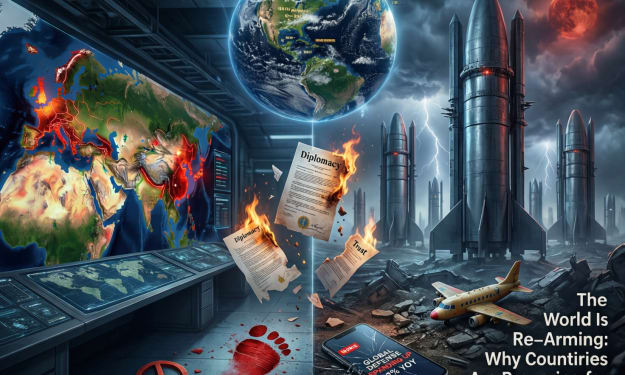
The World Is Re-Arming: Why Countries Are Preparing for Future Wars Across the world, countries are increasing their military spending at a speed not seen in decades. Governments explain this growth as necessary for defense and national security. However, many experts and ordinary people worry that this trend could move the world closer to conflict instead of peace. From Europe to Asia, from the Middle East to the Pacific, nations are strengthening their armies, modernizing weapons, and preparing for possible future wars.
By Wings of Time 5 days ago in History