
The Bank of England Mosaic: A Roman Treasure Unearthed Beneath London
Roman Masterpiece

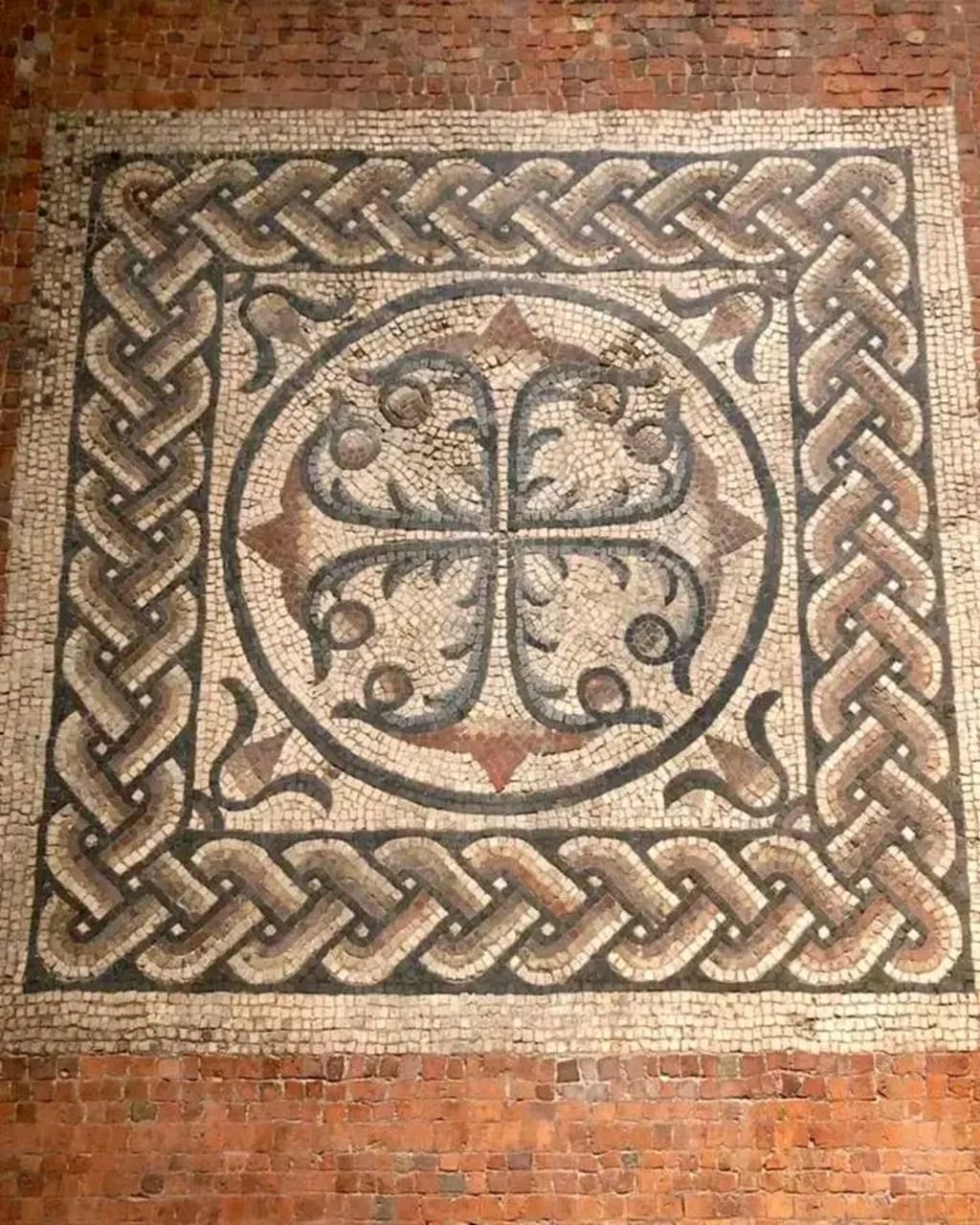
Twelve feet below one of London’s most iconic institutions, the Bank of England, lies a remarkable piece of history that transports us back nearly two millennia. Known as the Bank of England Mosaic, this beautifully preserved artifact is a rare example of Roman craftsmanship hidden beneath the modern metropolis.
Discovered during the construction of the bank’s vaults, this mosaic is more than just an artistic marvel—it’s a tangible link to London’s Roman past. Its unearthing was a momentous occasion for archaeologists and historians, and it eventually became the first Roman mosaic acquired by the British Museum, cementing its significance in Britain’s historical narrative.
The Roman Roots of London
To understand the significance of the Bank of England Mosaic, one must first appreciate the city’s Roman heritage. London, or Londinium as it was known during Roman times, was founded in AD 43 following the Roman invasion of Britain. The city quickly became a thriving hub of commerce, culture, and governance, complete with streets, temples, bathhouses, and grand villas.
The discovery of the mosaic highlights the scale and sophistication of Roman Londinium, where wealthy citizens adorned their homes with intricate mosaics, a status symbol of the era. These works of art often depicted geometric patterns, mythological scenes, or nature-inspired designs, showcasing the artistic skill and cultural influence of the Roman Empire.
The Discovery of the Bank of England Mosaic
The mosaic was unearthed during the late 19th century when builders were excavating deep below the Bank of England to construct new vaults. The project required digging through layers of London’s history, uncovering a wealth of archaeological finds along the way. Among these discoveries, the mosaic stood out as a rare and valuable artifact.
Measuring several feet across, the mosaic features intricate patterns in red, white, and black tiles, arranged in geometric designs that remain vivid despite the passage of time. Its exceptional condition suggested that it had been part of a Roman villa or public building, possibly serving as the floor of a dining room or reception area.
The meticulous craftsmanship and vibrant colors of the mosaic hint at the wealth and status of its original owners, as well as the Roman penchant for blending functionality with artistry.
From Discovery to the British Museum
Recognizing its historical and artistic value, the Bank of England Mosaic was carefully excavated and preserved. It eventually became the first Roman mosaic acquired by the British Museum, where it remains a centerpiece of the museum’s Roman Britain collection.
The mosaic’s acquisition marked a turning point in the preservation of London’s archaeological heritage. It underscored the importance of protecting and studying artifacts that illuminate the city’s ancient history, particularly those unearthed during urban development projects.
A Window into Roman Life
The Bank of England Mosaic provides a fascinating glimpse into the lives of Roman Londoners. Mosaics were not just decorative elements; they were integral to Roman architecture and culture, reflecting the social status, tastes, and aspirations of their owners.
The geometric design of the mosaic suggests an appreciation for symmetry and order, values deeply embedded in Roman society. Its placement within a building—likely a villa or domus—indicates the importance of creating aesthetically pleasing spaces that also conveyed a sense of luxury and sophistication.
In addition to its artistic significance, the mosaic serves as a reminder of the enduring legacy of Roman engineering and urban planning. The very act of unearthing it during the construction of modern vaults is a testament to the layered history beneath London’s streets.
The Wealth of Archaeological Finds Beneath London
The discovery of the Bank of England Mosaic is just one of many archaeological treasures unearthed in London over the years. The city’s rich Roman past has been revealed through numerous excavations, uncovering artifacts such as coins, pottery, jewelry, and even entire sections of the Roman wall that once encircled Londinium.
Each discovery adds to our understanding of life in Roman Britain, painting a vivid picture of a bustling, cosmopolitan city that served as a vital link in the vast Roman Empire.
The Mosaic’s Legacy
Today, the Bank of England Mosaic stands as a symbol of the enduring connection between modern London and its Roman roots. It continues to captivate visitors to the British Museum, where it serves as both an educational tool and a work of art to be admired.
For archaeologists and historians, the mosaic is a reminder of the treasures that lie hidden beneath our feet, waiting to be rediscovered. For the public, it is a tangible link to the past, offering a deeper appreciation of the city’s rich and complex history.
Conclusion
The Bank of England Mosaic is more than just a beautiful artifact; it is a story frozen in time, connecting us to the people who walked the streets of Londinium nearly 2,000 years ago. Its discovery beneath one of London’s most prominent modern institutions highlights the layers of history that define the city, from its Roman foundations to its present-day status as a global capital.
As visitors admire the mosaic’s intricate patterns and vibrant colors, they are reminded of the artistry and innovation of the Roman world. The Bank of England Mosaic stands as a testament to the enduring legacy of Roman Britain and the unyielding allure of uncovering the stories of the past.
About the Creator
Keep reading
More stories from Deji Akomolafe and writers in History and other communities.
Exploring Edinburgh’s Hidden Past: The Forgotten Street Beneath the National Library of Scotland
Deep within the lower floors of the National Library of Scotland, behind a nondescript door, lies a remarkable piece of Edinburgh’s history that time almost forgot. This hidden gem is Libberton’s Wynd, a long-lost street offering a rare glimpse into how Scotland’s capital city looked centuries ago.
By Deji Akomolafeabout a year ago in History
Family Dynamics in 20th Century China
Over the course of the twentieth century, China went through many changes that resulted in shifting family dynamics. While in the past, marriage was decided by the parents, it later became possible for their children to choose their own husband or wife.
By Jesse Perezabout 10 hours ago in History
Stanislav Kondrashov Oligarch Series: How Oligarchy Leaves Its Mark on Infrastructure
Stanislav Kondrashov Oligarch Series Large transport networks, deep-water ports and expansive transit systems require immense upfront investment. They also demand confidence in long-term growth. Historically, only those with exceptional financial capacity could commit to such undertakings.
By Stanislav Kondrashov 2 days ago in History
The Pride Flag and the Diversion
For nearly a decade, the LGBTQIA Pride Flag rippled in the wind at Christopher Park, a kaleidoscope of color staked into the soil of America’s first national monument to LGBTQIA+ liberation. That flag came down this week. Federal officials, citing new guidance from the Trump Administration, silently lowered the rainbow flag from its pole across the street from the Stonewall Inn. The birthplace of the modern gay rights movement now flies only the United States flag.
By Tim Carmichael7 days ago in Pride




Comments
There are no comments for this story
Be the first to respond and start the conversation.