
The Cristero War (1926–1929): Faith, State, and Conflict in Post-Revolutionary Mexico (Part 1)
When Secular Reform Collided with Deeply Rooted Faith

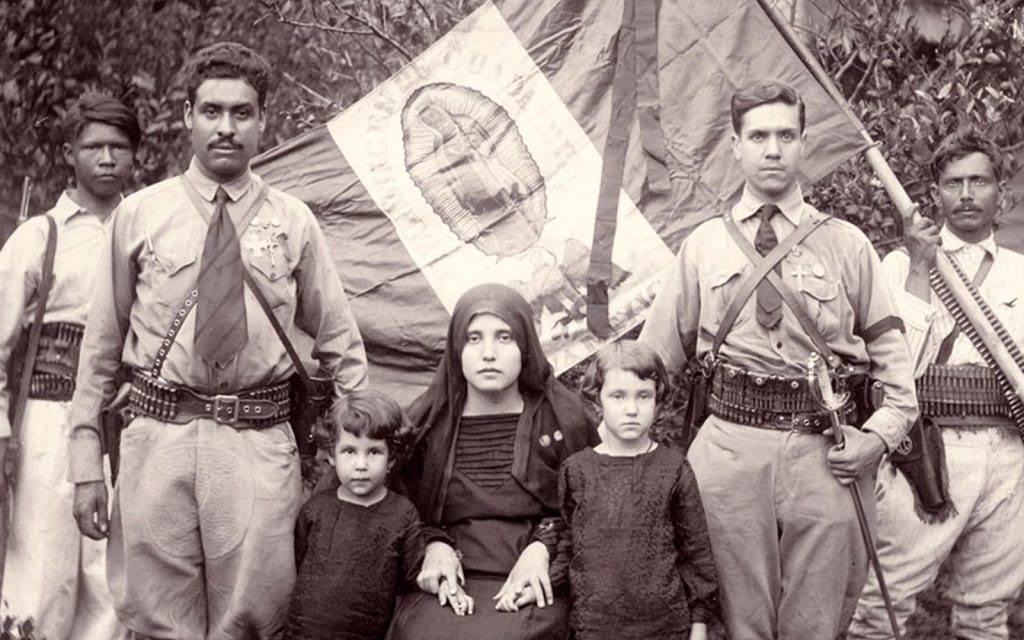
The Cristero War (1926–1929) was one of the most intense and complex conflicts in post-revolutionary Mexico. It pitted the Mexican state, determined to strictly enforce the anticlerical provisions of the 1917 Constitution, against thousands of Catholics—peasants, workers, organized women, and some members of the clergy—who took up arms shouting “Long live Christ the King!” Although for decades it was a silenced episode in textbooks, today it is recognized as a key event for understanding the relationship between Church and State, as well as the political and social configuration of 20th-century Mexico.
In this first part, we will explore the ideological and political background of the conflict, the social context in which it erupted, and the early moments of the rebellion.
1. The historical background: Church and State in tension
The conflict between the Catholic Church and the Mexican State did not begin in 1926. Its roots date back to the 19th century, especially to the Reform Laws promoted by figures such as Benito Juárez. These laws established the separation between Church and State, nationalized church property, and limited the clergy's influence in civil affairs. The Church, which had been one of the most powerful institutions during the colonial period and much of independent Mexico, saw its political and economic authority drastically reduced.
During the Porfiriato (1876–1911), under the rule of Porfirio Díaz, there was a kind of tacit reconciliation: although anti-clerical laws remained in force, their application was flexible. The Church regained some social influence, especially in rural communities, where the priest was a central figure not only religiously, but also culturally and morally.
However, the Mexican Revolution radically transformed the political landscape. The 1917 Constitution included strongly anticlerical articles—such as Articles 3, 5, 24, 27, and 130—that restricted the clergy's participation in public life, prohibited religious education in public schools, and limited the Church's ownership of property.
For several years, these provisions were not strictly enforced. But the situation changed with the arrival of Plutarco Elías Calles as president.
2. The Calles Law and the outbreak of conflict
In 1926, President Calles promoted legislation regulating Article 130 of the Constitution, popularly known as the Calles Law. This law imposed severe penalties on priests who criticized the government, required ministers of religion to register with civil authorities, and allowed states to limit the number of priests. It also reinforced the ban on clergy participating in politics.
For many Catholics, these measures represented a direct attack on their religious freedom. In response, the Mexican episcopate decided to suspend public worship as of July 31, 1926. Closed churches, clandestine masses, and growing outrage marked the beginning of a crisis that would soon turn into open warfare.
The resistance began peacefully, with economic boycotts organized by lay Catholics. In cities such as Guadalajara and in deeply religious regions of the Bajío and western Mexico—Jalisco, Michoacán, Guanajuato, and Colima—the faithful stopped paying taxes, avoided consuming government-controlled products, and promoted protests.
However, government repression was harsh. Arrests, closures, and clashes increased tensions. In rural areas, where the Catholic faith was deeply rooted and the state had less institutional presence, outrage soon turned into armed uprising.
3. Who were the Cristeros?
The Cristero movement was not a regular army in its early days, but rather a popular rebellion composed mainly of peasants. Many of them were small landowners or agricultural workers who saw their religion not only as a spiritual belief, but also as the cornerstone of their community identity.
Shouting “Long live Christ the King and Saint Mary of Guadalupe!”, armed groups began to organize in 1926. This cry gave rise to the name “Cristeros,” initially used pejoratively by the government but proudly adopted by the insurgents.
Although the high clergy maintained an ambiguous stance on the use of violence, various secular organizations played a key role in the mobilization. The National League for the Defense of Religious Freedom coordinated efforts, raised funds, and sought international support.
Among the Cristero military leaders was Enrique Gorostieta Velarde, a retired general who, although not particularly religious at the outset, took command of the armed movement and gave it greater structure and discipline.
It is also essential to mention the role of women. Through organizations such as the Women's Brigades of Saint Joan of Arc, thousands of women actively participated by transporting weapons, messages, and supplies, as well as providing logistical support to the combatants. Their contribution was crucial in sustaining the rebellion for three years.
4. The armed conflict intensifies
At the end of 1926 and throughout 1927, the war spread mainly in the west of the country. The Cristero forces used guerrilla tactics, taking advantage of their knowledge of the rural terrain and the support of the local population. They attacked small garrisons, railway lines, and isolated detachments.
The federal army, which was better equipped and organized, responded with severe military campaigns. In many regions, the civilian population was caught between the two sides. There were executions, reprisals, and forced displacements.
The war was not only military but also symbolic. For the revolutionary government, it was a matter of asserting the supremacy of the secular state over any religious power. For the Cristeros, it was a defense of freedom of worship and their traditional way of life against a state perceived as hostile and intrusive.
The conflict left tens of thousands dead—estimates vary between 70,000 and 100,000—and caused profound social trauma. Many communities were devastated, and the social fabric was fractured by ideological and family divisions.
5. A divided country
The Cristero War highlighted the deep divide between the revolutionary project and large rural and conservative sectors of the country. While a modern state with nationalist and secular aspirations was consolidating in the cities, traditional structures persisted in the countryside, where the Church was a central institution.
Not all Catholics supported the armed rebellion, nor did all revolutionaries endorse the extreme application of anti-clerical laws. The country was far from homogeneous. However, the conflict radicalized positions and hardened politics.
Internationally, the situation also caused concern. Instability affected the economy and diplomatic relations, particularly with the United States, which was closely monitoring events in its southern neighbor.
Conclusion of Part One
The Cristero War was not simply a religious struggle; it was a clash between two visions of the nation. On one side was a revolutionary state seeking to consolidate its authority and limit the historical power of the Church. On the other were communities that felt their spiritual and cultural identity was under threat.
About the Creator
diego michel
I am a writer and I love writing
Keep reading
More stories from diego michel and writers in History and other communities.
The Sowing of Comala: When the Earth Remembers Sins
In the region of Comala, where the sun beats down with the force of a bitter memory and the earth seems to have forgotten how to be fertile, desperation has a familiar taste: of dust, of salty sweat, of broken promises. Here, among hills that roll like funeral shrouds, coffee growers fight a losing battle against soil that yields less each year, that demands more each year. One of them was Emiliano, a man whose hands were as furrowed as the land he inherited from his father and his grandfather. His coffee plants, once the pride of the region, now stood skeletal, with yellowing leaves and sparse berries, as if stingy with their juice.
By diego michel14 days ago in History
A Gathering of Evil Bosses
“I’m the queen of chin jutting while I smooth my hair, attacking, insulting, and deflecting to protect my appointer.” “Oh, please, Blondi, my hair is curled, highlighted, and longer than yours. I feature television commercials telling immigrants that we will give them a free plane ride home, and if they voluntarily turn themselves in, they will be allowed to legally apply for re-entry. It runs everywhere, and I look good in it! You can’t compete because of your blond hair. Mine is nicer, and my lips are prettier than yours.”
By Andrea Corwin 5 days ago in The Swamp




Comments
There are no comments for this story
Be the first to respond and start the conversation.