
The Great Emu War: How Australia Lost a Battle to Birds
Emu War
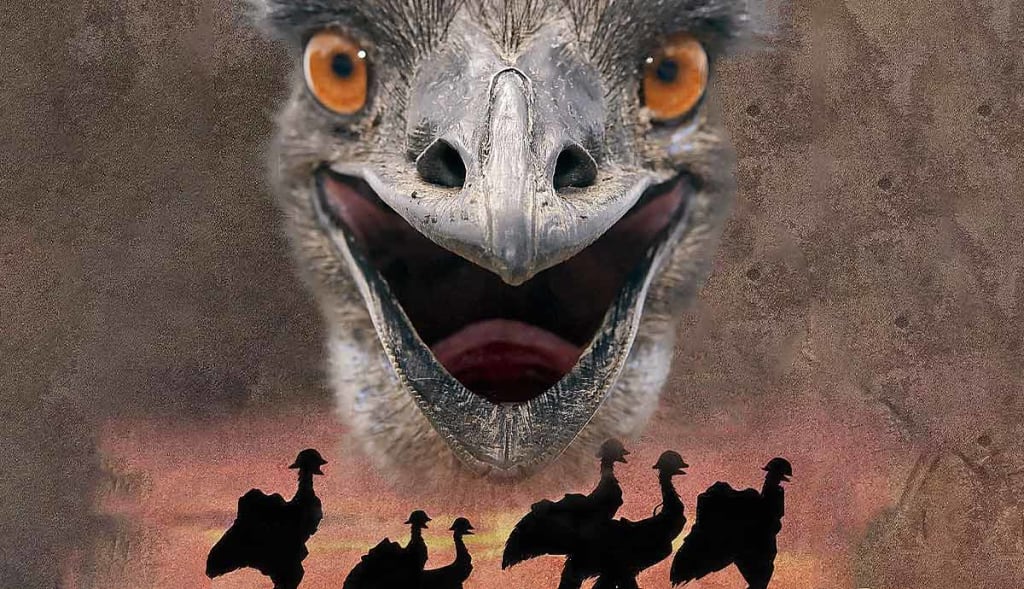
The Great Emu War: How Australia Lost a Battle to Birds
The "Great Emu War" is one of the most bizarre events in Australian history, involving a conflict between man and bird that occurred in 1932. Although the term "war" usually conjures images of battles between armies, this event was a different kind of battle—a struggle between the Australian military and thousands of emus, large flightless birds native to the country. The story of the Great Emu War is not only humorous but also reflective of the challenges faced by farmers during the early 20th century in Australia.
Background: The Emu Plague
The context for the Great Emu War begins with the aftermath of World War I. Australian soldiers returning home from the war were encouraged to take up farming in the vast, underpopulated regions of Western Australia. The government promised them land and financial support, but farming in the semi-arid lands of Western Australia proved to be challenging. As the Great Depression took hold, wheat prices plummeted, leaving farmers in financial despair.
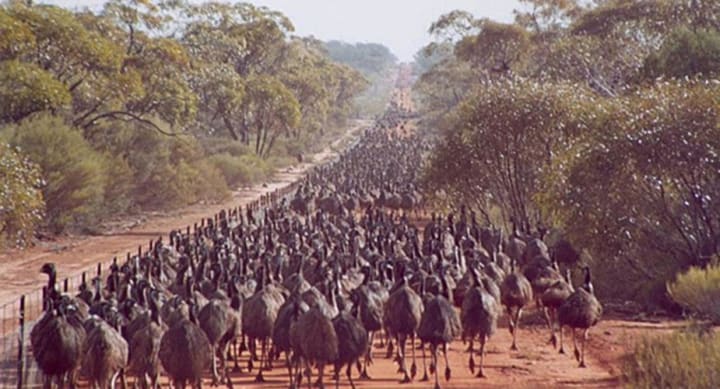
To make matters worse, in 1932, a massive influx of emus descended on the farmlands. These birds, numbering in the tens of thousands, were migrating from the inland regions to the coast during their annual breeding season. Along the way, they discovered the lush, cultivated lands of Western Australia, which provided an abundant food source. The emus trampled over crops, devoured wheat fields, and damaged fences, causing severe financial losses to the farmers, who were already struggling to survive.
The Decision to Go to War
Desperate for a solution, the farmers turned to the government for help. In response, the Australian government agreed to deploy military forces to deal with the emu problem. The Minister of Defence at the time, Sir George Pearce, authorized the use of soldiers armed with machine guns to eradicate the emus. The operation was led by Major G.P.W. Meredith of the Royal Australian Artillery, who was accompanied by two soldiers, Sergeant S. McMurray and Gunner J. O’Halloran. The "war" against the emus began in November 1932.
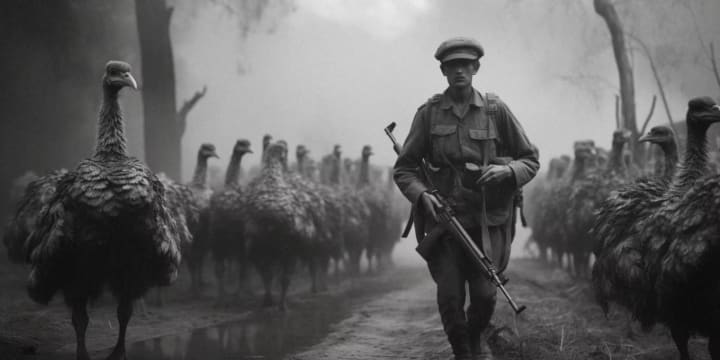
The Battle Begins
The initial plan seemed straightforward: drive the emus into a specific area and mow them down with machine-gun fire. However, the emus proved to be formidable opponents. The first encounter took place on November 2, 1932, near the town of Campion. Around 50 emus were spotted, and the soldiers opened fire. To their surprise, the emus scattered and ran in all directions, making it difficult to hit them. Despite firing hundreds of rounds, only a few emus were killed.
Over the next few days, the soldiers attempted various strategies to outmaneuver the birds, including ambushes and setting up traps, but the emus continued to outwit them. The birds' ability to run at speeds of up to 50 kilometers per hour, combined with their zigzagging movements, made them nearly impossible to shoot accurately. Additionally, the rugged terrain and the fact that emus traveled in small groups rather than large flocks further hindered the military’s efforts.
A Humbling Defeat
As the days went by, the situation became increasingly embarrassing for the Australian military. The soldiers found themselves expending vast amounts of ammunition with little to show for it. By December 10, after nearly a month of futile efforts, Major Meredith was forced to concede defeat. The operation was called off after expending 2,500 rounds of ammunition and killing only about 1,000 emus—far fewer than expected. The emus had won.
In the end, the emus continued to roam the farmlands, largely unchecked, and the farmers were left to deal with the problem on their own. The military operation was deemed a failure, and the government decided that alternative methods, such as offering bounties for emu kills, would be more effective in controlling the population.
The Legacy of the Great Emu War
The Great Emu War is often cited as a classic example of a military campaign gone wrong. It has become a popular story in Australian folklore, symbolizing the unpredictability of nature and the futility of trying to control it through force. The war also serves as a reminder of the difficulties faced by farmers in Australia during the early 20th century and the sometimes misguided attempts by governments to assist them.
Despite its humorous and absurd nature, the Great Emu War had a lasting impact on Australian history. It highlighted the challenges of agriculture in the country and the need for more sustainable and humane methods of wildlife management. Today, the story is often told as a cautionary tale, and it continues to capture the imagination of people around the world.
The term "Great Emu War" itself was coined long after the events took place, as people began to look back on the episode with a sense of irony. The absurdity of a "war" against birds and the subsequent defeat at the hands of emus has made the story a popular subject of books, documentaries, and even comedy sketches.
Conclusion
The Great Emu War is a unique and fascinating chapter in Australia's history. While it may not have been a conventional war, it was certainly a battle—one that pitted human ingenuity against the relentless forces of nature. In the end, the emus triumphed, and the event remains a symbol of the unpredictability of life and the limits of human control over the natural world.
About the Creator
Iranians prefer 'precise' Israeli strike over US attack as protests resume at universities
Iranians, while "waiting every minute and second" for a US strike against the Islamic Regime, would prefer an Israeli strike due to the precise nature of the Air Force's strikes in June, while there is a perception that US strikes would "bring terrible destruction, like in Iraq and Afghanistan," a local, identified as Ali told KAN Reshet Bet on Sunday.
By Wings of Time about 23 hours ago in History
Unofficial Challenge: What would you do if you were rich?
I love the kind of work I get to do in my career, but as I job search and browse apartments again due to another understaffed and unsustainable work environment that I did not intend to get into, my daydreams of better days consistently lean into the same question: What would I do if I didn't have to worry about my basic needs being met?
By Kay Husnick6 days ago in Writers



Comments