


In the summer of 1969, the world held its breath as three men rode a pillar of fire into the sky, carrying with them the weight of a global rivalry. The Moon landing was not just a scientific mission; it was the Cold War’s greatest gamble. For more than a decade, the United States and the Soviet Union had been locked in a silent war of prestige, ideology, and technological power. The Soviets struck first, launching Sputnik in 1957 and sending shockwaves through the West. They followed with the first human in space, Yuri Gagarin, proving their dominance beyond Earth. The United States, shaken and embarrassed, responded with an audacious promise. In 1961, President John F. Kennedy declared that America would land a man on the Moon and return him safely to Earth before the decade was out. At the time, the nation barely had the technology to keep an astronaut alive in orbit. Failure was not just possible; it was likely. Yet backing down would mean conceding the future to a rival superpower. The Moon became the ultimate symbol of victory. What followed was an immense national effort known as the Apollo program, employing over 400,000 people, from elite scientists to factory workers, all racing against time, physics, and political pressure. The cost was enormous, and the risks were deadly. In 1967, a fire during a ground test killed three astronauts, a grim reminder that this gamble demanded lives as well as money. Still, the mission pressed forward. By July 1969, Apollo 11 stood ready. Neil Armstrong, Buzz Aldrin, and Michael Collins launched aboard Saturn V, the most powerful rocket ever built, knowing that every stage of the journey could fail. As they traveled nearly 400,000 kilometers through space, millions watched on television, united by hope and fear. When the lunar module Eagle descended toward the Moon’s surface, alarms sounded, fuel ran dangerously low, and control nearly slipped away. With seconds to spare, Armstrong took manual control and landed in an uncharted area, uttering the words, “The Eagle has landed.” Hours later, as Armstrong stepped onto the lunar surface, his words echoed across the planet: “That’s one small step for man, one giant leap for mankind.” In that moment, the United States achieved what once seemed impossible. Yet the victory was more than a flag planted in lunar dust. It demonstrated technological mastery, coordination on a massive scale, and the power of human ambition under pressure. For the Soviet Union, it marked a quiet defeat. Though they continued space exploration, they never reached the Moon with a human crew. The gamble had paid off for the United States, reshaping global perception and tipping the symbolic balance of the Cold War. But the Moon landing was not the end of the story. It raised profound questions about exploration, cost, and purpose. After six successful landings, public interest faded, funding declined, and humans stopped going to the Moon in 1972. Still, Apollo 11 endures as a defining moment in human history, a reminder of what can be achieved when fear, rivalry, and imagination collide. The Cold War was fought with weapons, words, and ideologies, but on the Moon, it was won with courage, calculation, and a leap into the unknown.cost, and purpose. After six successful landings, public interest faded, funding declined, and humans stopped going to the Moon in 1972. Still, Apollo 11 endures as a defining moment in human history, a reminder of what can be achieved when fear, rivalry, and imagination collide. The Cold War was fought with weapons, words, and ideologies, but on the Moon, it was won with courage, calculation, and a leap into the unknown.
About the Creator
Keep reading
More stories from writers in History and other communities.
The Biggest Unsolved Mysteries in History That Still Baffle the World
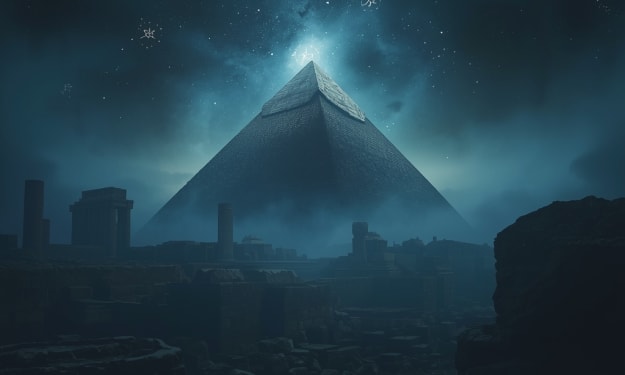
1. The Disappearance of the Indus Valley Script The Indus Valley Civilization, which flourished around 2500 BCE in present-day India and Pakistan, was one of the world’s earliest urban societies. It boasted advanced city planning, sophisticated drainage systems, and standardized brick construction. However, one of its greatest mysteries is its undeciphered script. Thousands of inscriptions have been found on seals, pottery, and tools, yet no one has been able to decode their meaning. Unlike Egyptian hieroglyphs or Mesopotamian cuneiform, the Indus script lacks a bilingual inscription that could serve as a key. Without understanding their language, historians remain uncertain about their political systems, religious beliefs, and even the reasons behind the civilization’s decline. 2. The Lost City of Atlantis First mentioned by the Greek philosopher Plato around 360 BCE, Atlantis was described as a powerful and technologically advanced civilization that sank into the ocean “in a single day and night of misfortune.” Ever since, Atlantis has captured the imagination of scholars, explorers, and conspiracy theorists. Some believe Atlantis was purely allegorical—a moral lesson created by Plato. Others argue it may have been inspired by real events, such as the volcanic destruction of the Minoan civilization on the island of Thera (Santorini). Despite centuries of searching, no definitive archaeological evidence has proven Atlantis existed, leaving it suspended between myth and history. 3. The Construction of the Great Pyramids of Giza The Great Pyramids of Egypt, built over 4,500 years ago, remain among the most astonishing architectural feats in human history. The largest, the Pyramid of Khufu, consists of over two million stone blocks, some weighing more than 80 tons. The mystery lies not in who built them, but in how they were constructed with such precision using ancient tools. How were massive stones transported across vast distances? How were they lifted and placed so accurately? While theories range from ramps to complex pulley systems, no single explanation fully satisfies all the evidence. The pyramids continue to challenge our understanding of ancient engineering capabilities. 4. The Voynich Manuscript Discovered in 1912 by rare book dealer Wilfrid Voynich, the Voynich Manuscript is a handwritten book filled with strange illustrations, unknown symbols, and an indecipherable script. Radiocarbon dating places its creation in the early 15th century. Despite intense analysis by cryptographers, linguists, and even artificial intelligence, the text remains unreadable. Some believe it is a sophisticated code, others think it represents a lost language, while skeptics argue it could be an elaborate hoax. The manuscript’s purpose—whether medical, astronomical, or magical—remains one of the greatest puzzles in literary history. 5. The Amber Room Often referred to as the “Eighth Wonder of the World,” the Amber Room was a chamber decorated with panels made entirely of amber, gold leaf, and precious stones. Created in Prussia in the early 18th century, it was later gifted to Russia and installed in the Catherine Palace. During World War II, Nazi forces dismantled the room and transported it to Königsberg. After the war, it vanished without a trace. Countless searches have failed to locate it, leading to theories that it was destroyed, hidden in underground bunkers, or lost at sea. Its fate remains one of the most enduring art mysteries of modern history. 6. The Identity of Jack the Ripper In 1888, a series of brutal murders terrorized London’s Whitechapel district. The killer, known as Jack the Ripper, murdered at least five women and vanished without being identified. Despite numerous suspects proposed over the years—ranging from doctors and artists to members of the royal family—no conclusive evidence has ever confirmed the killer’s identity. Advances in forensic science, including DNA analysis, have reopened the case multiple times, yet the truth remains elusive, preserving Jack the Ripper as history’s most infamous unidentified criminal. 7. The Nazca Lines Etched into the desert plains of southern Peru, the Nazca Lines are enormous geoglyphs depicting animals, plants, and geometric shapes. Created between 500 BCE and 500 CE, these figures are best seen from the air. The mystery lies in their purpose. Were they astronomical calendars, religious symbols, irrigation markers, or ceremonial pathways? How did the Nazca people design such large-scale drawings without an aerial perspective? While scholars lean toward ritualistic and astronomical explanations, no definitive answer has been found. 8. The Fate of the Roanoke Colony In 1587, English settlers established a colony on Roanoke Island in present-day North Carolina. When supply ships returned three years later, the entire settlement had vanished. The only clue left behind was the word “CROATOAN” carved into a post. There were no signs of violence or struggle. Theories suggest the settlers may have assimilated with Native American tribes, relocated, or perished due to disease or famine. Despite extensive research, the true fate of the “Lost Colony” remains unknown. Why These Mysteries Endure What makes these mysteries so compelling is not just their unanswered questions, but what they reveal about humanity. They highlight the limits of our knowledge and remind us that history is not a complete record, but a fragmented story shaped by time, loss, and interpretation. Even with satellites, artificial intelligence, and advanced archaeology, some truths remain just out of reach. These unsolved mysteries continue to inspire research, debate, and imagination, proving that the past is far from silent—it is waiting for us to listen more closely.
By Say the truth 3 days ago in History
Cabin Fever Because of Snow, Sleet, and Freezing Rain That Turned to Icy Roads
What Is Cabin Fever? The short answer is that cabin fever is restlessness from being in a confined area. Cabin fever is the distressing irritability or restlessness experienced when a person or group is stuck at an isolated location or in confined quarters for an extended time. Research shows that prolonged cold, gray skies, and being stuck indoors can trigger mood shifts similar to “winter blues.”
By Margaret Minnicks3 days ago in Humans



Comments
There are no comments for this story
Be the first to respond and start the conversation.