
The Pula Arena: A Roman Marvel Still Hosting Entertainment After 2,000 Years
Ancient Civilization

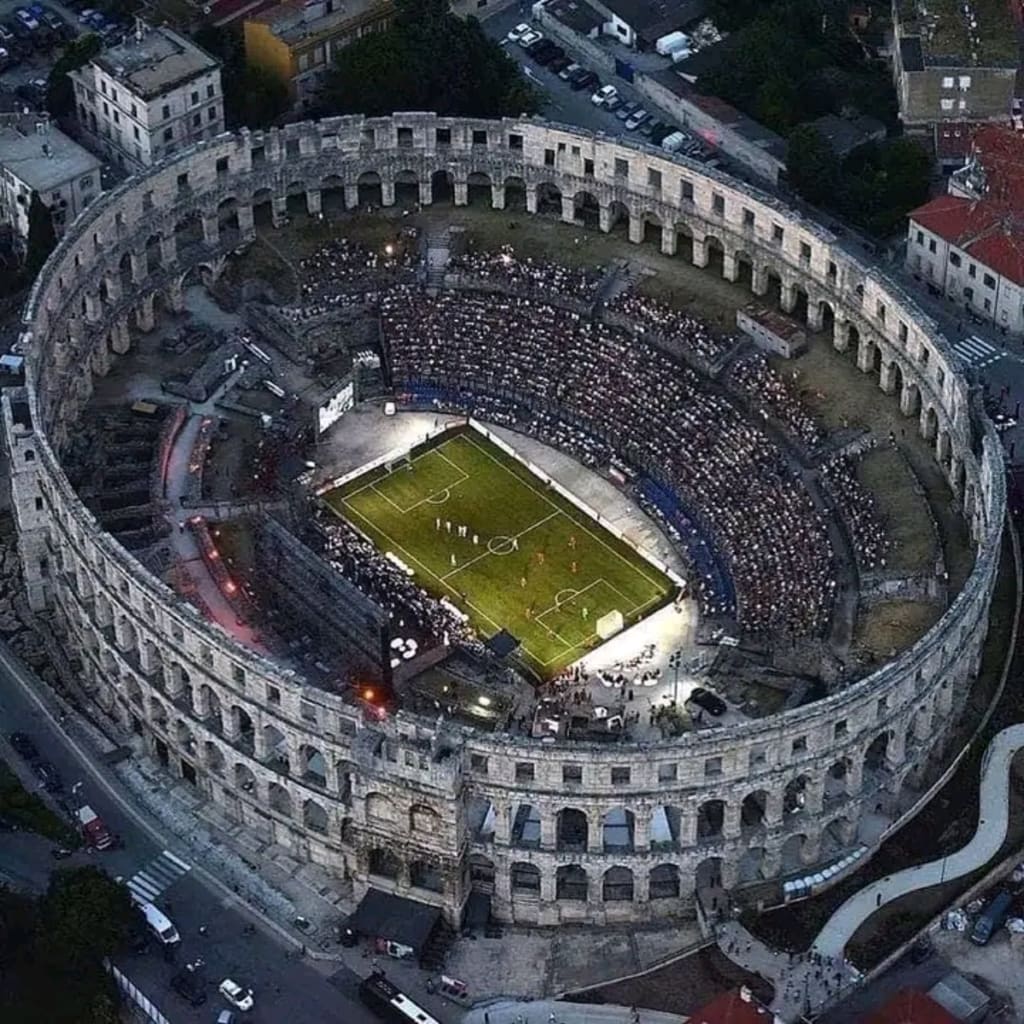
In the heart of Pula, Croatia, stands a monumental testament to Roman engineering and cultural heritage: the Pula Arena. Built over 2,000 years ago, this ancient amphitheater remains one of the best-preserved Roman arenas in the world. Remarkably, it is not just a historical relic but a living, breathing venue still hosting events and captivating audiences, just as it did millennia ago.
The Pula Arena serves as a bridge between past and present, showcasing how ancient architectural marvels can continue to inspire and entertain across the ages.
A Glimpse into History
The construction of the Pula Arena began under Emperor Augustus in the 1st century BCE and was completed during the reign of Emperor Vespasian around 80 CE, the same period as the iconic Colosseum in Rome. Built to host gladiatorial contests and other public spectacles, the arena could accommodate up to 23,000 spectators, a testament to the grandeur and ambition of the Roman Empire.
The amphitheater was constructed using locally quarried limestone, giving it a distinctive pale hue that reflects the Mediterranean sun. Its elliptical design features a central arena surrounded by tiered seating and an outer wall standing an impressive 29.4 meters high. The arena’s layout ensured excellent acoustics and sightlines, making it a masterclass in ancient engineering.
Surviving the Test of Time
Unlike many Roman amphitheaters that fell into ruin over the centuries, the Pula Arena has remained remarkably intact. This resilience is partly due to its robust construction and partly because it continued to serve various purposes after the fall of the Roman Empire.
During the medieval period, the arena was repurposed for activities such as fairs and tournaments. In later centuries, its stone was harvested for other building projects in Pula, but local authorities intervened to preserve the structure before significant damage could be done.
Today, the Pula Arena is one of the best-preserved Roman amphitheaters, standing as a proud symbol of Croatia’s rich cultural heritage.
A Venue for Modern Entertainment
What sets the Pula Arena apart from many other ancient structures is its ongoing use as a venue for entertainment. While gladiatorial battles are long a thing of the past, the arena continues to host a wide range of events that draw audiences from around the world.
One of the most notable events is the Pula Film Festival, an annual event that has been held in the arena since 1954. This festival transforms the ancient structure into an open-air cinema, where audiences can watch films under the stars in a setting steeped in history.
The arena also serves as a concert venue, welcoming international artists and performers across genres. From classical music and opera to rock and pop concerts, the Pula Arena’s acoustics and atmosphere make it a unique and unforgettable experience for both performers and spectators.
Other events include theatrical performances, cultural festivals, and even reenactments of Roman gladiator battles, offering visitors a glimpse into its original purpose.
The Architectural Marvel of the Pula Arena
The Pula Arena’s enduring functionality is a testament to Roman architectural ingenuity. Its elliptical design not only provided optimal viewing for spectators but also facilitated the movement of crowds. The arena featured four towers, each equipped with cisterns to collect and distribute rainwater, ensuring a steady supply for spectators and performers.
The structure also included an elaborate system of underground tunnels and chambers, used to house gladiators, animals, and stage equipment. These subterranean passages, still accessible today, offer visitors a fascinating insight into the behind-the-scenes operations of Roman spectacles.
A Cultural and Historical Landmark
As a UNESCO World Heritage Site candidate, the Pula Arena is more than just a venue; it is a cultural treasure that embodies the spirit of resilience and adaptation. Its continued use for entertainment underscores the timeless appeal of shared human experiences—whether cheering for gladiators in ancient times or enjoying a film premiere in the modern era.
The arena also serves as a reminder of the Roman Empire’s influence on the Adriatic region. Its presence in Pula highlights the city’s historical significance as a key Roman outpost and a crossroads of Mediterranean culture.
Visiting the Pula Arena
For visitors, the Pula Arena offers a unique opportunity to step back in time while experiencing the vibrancy of modern entertainment. Guided tours take visitors through the amphitheater’s history, including its role in Roman society and its preservation over the centuries.
During the summer months, the arena comes alive with a packed calendar of events, allowing tourists and locals alike to enjoy world-class performances in an unforgettable setting.
Conclusion
The Pula Arena stands as a remarkable testament to the ingenuity and vision of ancient Rome. For over 2,000 years, it has been a stage for human expression, from gladiatorial combat to cinematic premieres. Its seamless blend of history and modernity makes it a living monument to the enduring power of culture and creativity.
In a world where many ancient structures have succumbed to the ravages of time, the Pula Arena continues to thrive as a beacon of entertainment and historical significance. Whether you visit to marvel at its architecture or to attend a modern performance, the arena offers a truly unique experience—where the past and present come together in harmony.
About
Use this text tool to remove any specific unwanted characters or letters. Just type the characters you want to be removed in the text box and click remove. No need to add separators like commas, or escape characters. There are also several templates readily available for you to use.
Templates
Blank - Empty list
All non-alphanumeric - Deletes any character/symbol that is not a number or letter (in upper or lower case)
Diacritics - Deletes all letters with accents
Letters - Deletes all letters from Aa to Zz
Numbers - Deletes all numbers or digits (0 - 9)
Punctuations - Deletes all punctuation marks
Special Characters - Deletes all non-alphanumeric tokens, special characters, and character entities.
Note: All templates excluding "All non-alphanumeric" can be modified to your needs. If you have a specific set of characters that you want to remove, use the "Blank template".
© 2025 Text Tools. All Rights Reserved.
What's NewContactPrivacySitemap
About the Creator
Keep reading
More stories from Deji Akomolafe and writers in History and other communities.
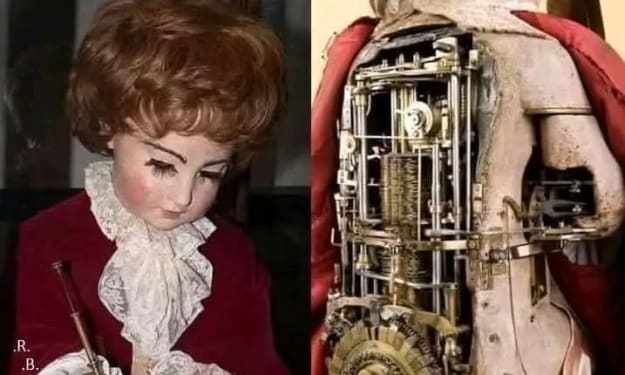
The Writing Boy: The World’s First Android and the Marvel of 18th-Century Engineering
In the annals of technological history, the term "android" might conjure images of modern humanoid robots powered by artificial intelligence. However, the origins of programmable automatons stretch far back into the 18th century, a time when craftsmanship and mechanical ingenuity reached astonishing heights. Among the pioneers of this era was the Swiss watchmaker Pierre Jaquet-Droz, whose creation, The Writing Boy, stands as one of the world’s earliest androids.
By Deji Akomolafeabout a year ago in History
Valentine's Dates Over the Years
Colin grinned as Brooklyn slipped into the living room. “Is it all set?” he asked. The twenty-one year old grinned. She was in her last year of college and Colin knew that Lincoln was proud of her. Although she had been away at college, she’d eagerly helped Colin plan his surprise for Lincoln. “I’m so glad you’re finally doing this,” she said.
By Reb Kreyling5 days ago in Chapters


Comments
There are no comments for this story
Be the first to respond and start the conversation.