
The Spanish Donkey: A Dark Instrument of Punishment in European History
How fear, power, and control shaped one of the most infamous devices of medieval justice

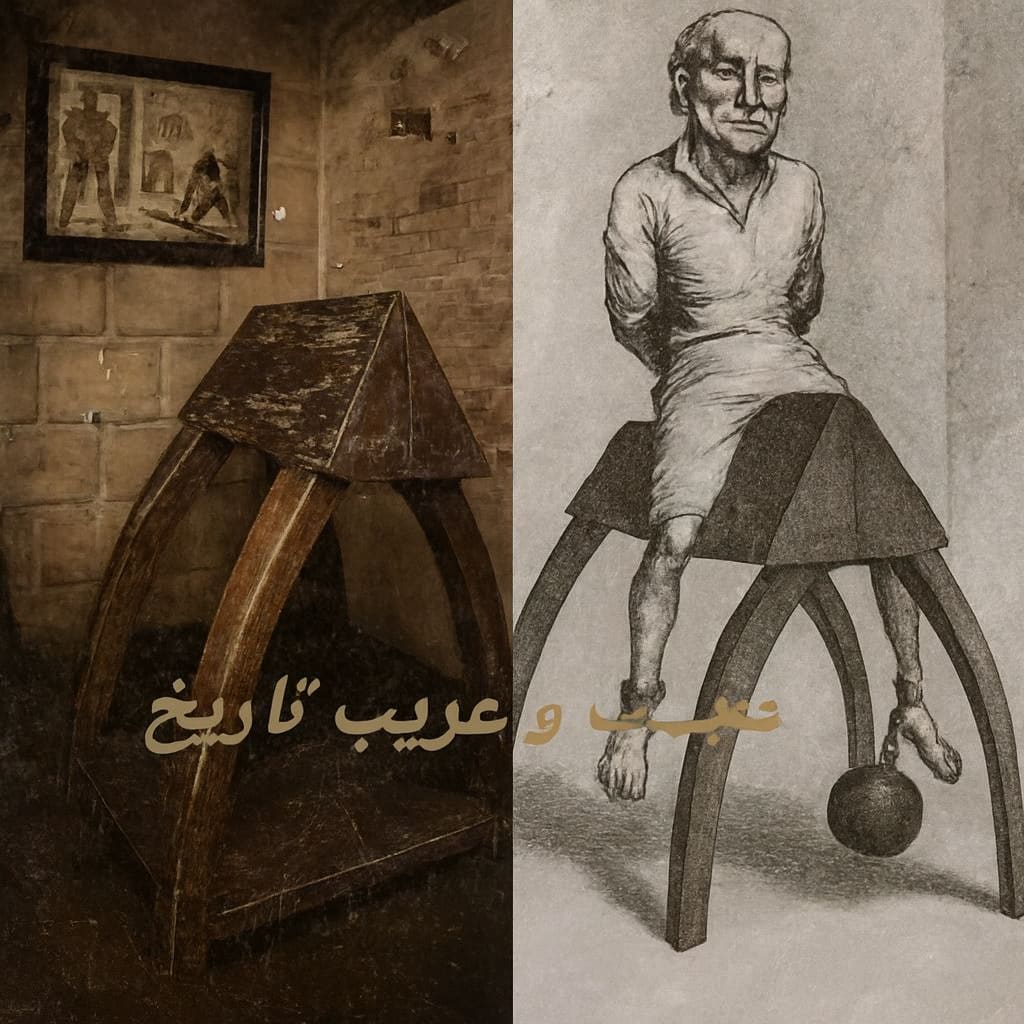
History is often told through kings, wars, and revolutions. But hidden between those grand narratives are quieter, darker stories. Stories of ordinary people, unnamed in records, who experienced history not as progress, but as pain. One such story is tied to an object known as the Spanish Donkey, also called the Wooden Horse, an instrument of punishment used in parts of Europe during the late medieval and early modern periods.
The Spanish Donkey became especially associated with the sixteenth to eighteenth centuries, a time when justice was less about rehabilitation and more about authority. It was used most notably during periods such as the Spanish Inquisition, but it was not limited to Spain. Variations of the device appeared across Europe, including in Italy, France, parts of Scandinavia, and European colonies.
At its core, the device was simple. It consisted of a long wooden beam shaped into a narrow ridge at the top, often forming a sharp V-like structure. The design was intentionally uncomfortable. Those accused of crimes were made to sit astride the beam, placing their full body weight on a surface never meant to support a human body. The punishment relied not on complexity, but on endurance.
What made the Spanish Donkey particularly feared was not only the physical suffering it caused, but the way it was used. Punishments could last for hours. In many cases, additional weight was attached to increase strain on the body. Historical records from Inquisition archives and European court documents indicate that while death was not always the intended outcome, long-term injury was common. Survivors often carried lasting consequences that followed them for the rest of their lives.
Importantly, this device was not reserved only for what we would now consider serious crimes. Accusations of heresy, religious non-conformity, political disobedience, military discipline violations, and even minor acts of resistance could result in such punishment. In an era where confession was often valued more than truth, fear became a tool of governance.
Public punishment played a major role in its effectiveness. The Spanish Donkey was frequently used in open spaces where others were forced to watch. This was not accidental. The goal was deterrence. Authorities wanted fear to spread faster than rebellion. By turning punishment into spectacle, rulers reinforced obedience without needing constant force.
Men and women were both subjected to this form of punishment, and historical sources suggest that vulnerable groups were often targeted. During witch trials in parts of Europe, for example, women accused of superstition or social non-conformity were punished using devices like the Wooden Horse. Military records from France and Venice also show its use as a disciplinary method for soldiers.
It is important to understand that this cruelty was not the result of ignorance alone. Many societies of the time believed such punishments were morally justified. Pain was seen as a path to confession, repentance, or social order. Religious extremism and absolute political power often reinforced each other, creating systems where mercy was viewed as weakness.
Modern historians and researchers have examined these practices not to sensationalize them, but to understand how easily institutions can normalize cruelty. Works such as The History of Torture by Brian Innes and digitized Inquisition records provide insight into how legal systems once operated with little regard for human dignity.
Remembering devices like the Spanish Donkey matters because history has a tendency to repeat itself in different forms. While such physical punishments are no longer acceptable under modern law, the mindset that enabled them can still exist. Dehumanization, blind obedience, and fear-based control are not limited to the past.
Today, international human rights laws, the Geneva Conventions, and modern legal standards exist precisely because humanity has witnessed what happens without them. They are not perfect, but they represent hard-earned lessons written in suffering.
The Spanish Donkey stands as a reminder that progress is not automatic. It must be defended. Studying these dark chapters is not about fascination with cruelty, but about responsibility. When we understand how easily power can cross into brutality, we become better equipped to prevent it.
History’s strangest and most disturbing objects often teach its most important lessons. Not about the past alone, but about the choices we make in the present.
#WeirdHistory
#DarkHistory
#EuropeanHistory
#MedievalHistory
#SpanishInquisition
#HistoryFacts
#HumanRights
#StrangeHistory
#HistoricalPunishments
#ForgottenHistory
About the Creator
Salman Writes
Writer of thoughts that make you think, feel, and smile. I share honest stories, social truths, and simple words with deep meaning. Welcome to the world of Salman Writes — where ideas come to life.
Keep reading
More stories from Salman Writes and writers in History and other communities.
The Surgeon Who Restored Dignity
The sixteenth century was a time of profound transition in Europe’s medical history. Anatomy, surgery, and the scientific study of the human body were gaining momentum, yet the restoration of the human face remained an almost impossible dream. In this fragile balance between tradition and innovation, an Italian physician and surgeon named Gaspare Tagliacozzi (1546–1599) emerged as a pioneer. His groundbreaking method of reconstructing the nose was not only centuries ahead of its time but also laid the foundation for what we now call modern plastic surgery.
By Salman Writes8 days ago in History
The Volunteer from Auschwitz No. 4859 – The Story of Witold Pilecki
Witold Pilecki (1901–1948) is rightly regarded as one of the greatest Polish heroes of World War II. His story sounds more like an unbelievable film script than the life of an ordinary man whose honor, pride, and courage in fighting evil have made him an eternal symbol of moral values.
By Elvira Diggory2 days ago in History
Ashoka and the Three Kings of South India: Power, Diplomacy, and Moral Conquest
Unlike his northern campaigns, Ashoka did not wage a full-scale war against these southern powers. Instead, his interaction with them reveals a unique blend of political realism, military restraint, and ideological influence.
By Say the truth 8 days ago in History



Comments
There are no comments for this story
Be the first to respond and start the conversation.