
The Spiritual and Social Reasons Why People Celebrate Holi
Why People Celebrate Holi

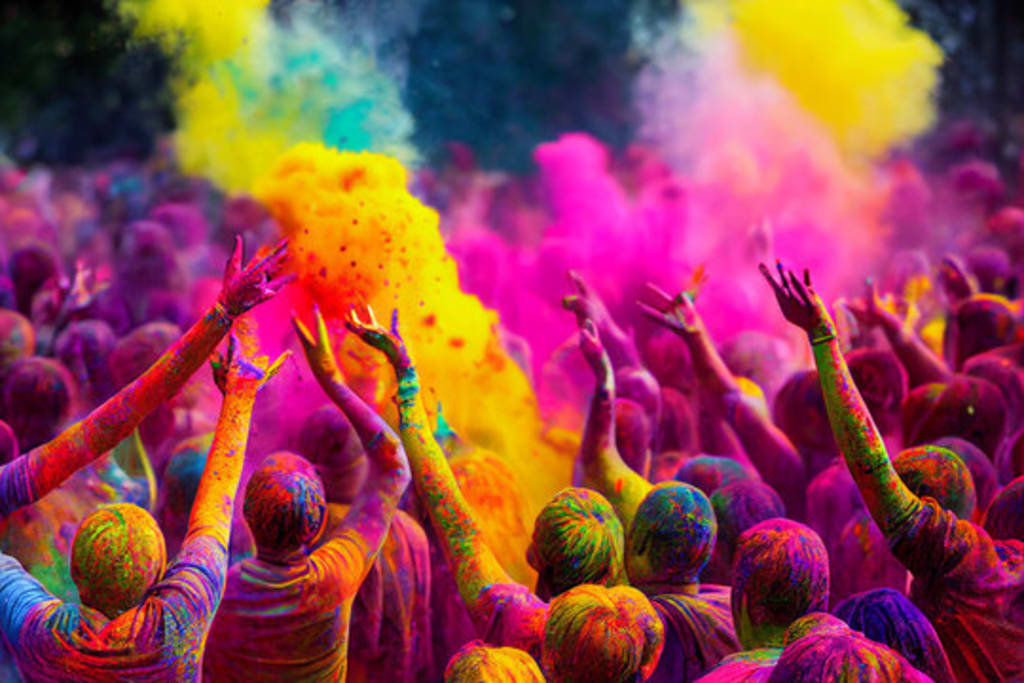
Holi, the festival of colors, is one of the most vibrant and joyous celebrations in India and across the world. While it is widely known for its exuberant festivities, Holi holds deep spiritual and social significance that goes beyond mere revelry. Rooted in ancient Hindu traditions, Holi is a festival that symbolizes the victory of good over evil, unity among communities, and the arrival of spring. This article delves into the spiritual and social reasons why people celebrate Holi, highlighting its profound impact on society and culture.
The Spiritual Significance of Holi
Holi is deeply embedded in Hindu mythology and spiritual teachings. It is primarily associated with the legend of Prahlada and Holika, which emphasizes the triumph of righteousness over malevolence.
The Legend of Prahlada and Holika
One of the most popular stories associated with Holi is that of Prahlada, a young devotee of Lord Vishnu, and his tyrannical father, King Hiranyakashipu. The king, who considered himself invincible and superior to the gods, demanded that everyone worship him. However, his son Prahlada remained steadfast in his devotion to Lord Vishnu. Enraged by Prahlada’s disobedience, Hiranyakashipu sought to kill him but failed repeatedly.
Eventually, the king enlisted his sister, Holika, who possessed a magical boon that made her immune to fire. She tricked Prahlada into sitting on a pyre with her, expecting him to burn while she remained unscathed. However, due to divine intervention, Holika was reduced to ashes while Prahlada emerged unscathed. This event is commemorated on the eve of Holi with bonfires known as Holika Dahan, symbolizing the destruction of evil forces.
The Worship of Lord Krishna
Holi is also closely linked to the playful and divine love of Lord Krishna and Radha. According to Hindu mythology, young Krishna, who had a dark complexion, was concerned that Radha and other fair-skinned girls would not like him. His mother, Yashoda, playfully suggested that he smear colors on Radha’s face, making them look alike. This act of love and mischief later became a beloved tradition, inspiring the modern-day custom of smearing colors during Holi. In Mathura and Vrindavan, the birthplace and childhood home of Krishna, Holi is celebrated with great enthusiasm, spanning several days with colorful processions and festivities.
Symbolism of Colors in Spirituality
The vibrant colors of Holi are not just for fun; they hold deep spiritual meaning. Colors in Hindu philosophy represent different emotions and aspects of life. Red signifies love and fertility, blue represents the divine energy of Krishna, yellow is associated with knowledge and learning, and green symbolizes new beginnings and nature’s prosperity. By playing with colors, people embrace the diversity of life and acknowledge the divine presence in all aspects of existence.
The Social Significance of Holi
Beyond its spiritual importance, Holi serves as a powerful social unifier, bringing people together across various divisions of society. The festival fosters harmony, strengthens relationships, and promotes inclusivity.
Breaking Social Barriers
Holi is one of the few festivals where societal norms and hierarchical boundaries are momentarily set aside. People from different castes, economic backgrounds, and social statuses come together to celebrate, erasing distinctions that often divide them. During Holi, everyone—regardless of age, gender, or social class—smears colors on each other, breaking down barriers and reinforcing the idea of unity.
Strengthening Relationships and Forgiveness
Holi is also a time for reconciliation and renewal of relationships. It is common for people to mend strained relationships by applying colors to each other as a gesture of goodwill. The phrase “Bura na mano, Holi hai” (Don’t take offense, it’s Holi) reflects the forgiving and playful spirit of the festival. Families, friends, and communities come together, setting aside past grievances and fostering love and happiness.
A Celebration of Spring and Agriculture
Traditionally, Holi is celebrated at the onset of spring, marking the end of winter and the beginning of a new agricultural season. In rural India, the festival holds particular significance for farmers, as it symbolizes prosperity and the hope for a bountiful harvest. The colors of Holi reflect the blossoming of flowers and the vibrant hues of nature, celebrating the beauty and renewal of life.
Promotion of Joy and Mental Well-being
Holi’s energetic and joyous nature contributes to mental well-being and happiness. The festival allows people to express themselves freely, dance, sing, and engage in playful activities, reducing stress and enhancing social bonds. The use of natural colors, music, and dance triggers the release of endorphins, the body’s “happy hormones,” promoting a sense of well-being and collective joy.
Holi Celebrations Around the World
While Holi originated in India, it has gained international recognition, with celebrations taking place in various parts of the world, including the United States, the United Kingdom, Australia, and Nepal. The festival has become a symbol of cultural diversity and unity, bringing together people of different backgrounds to celebrate love, joy, and togetherness.
In Western countries, Holi festivals are often organized as public events, attracting thousands of participants who revel in the colorful festivities, music, and dance. These celebrations help spread awareness about Indian culture and its rich traditions, fostering cross-cultural understanding and appreciation.
Conclusion
Holi is much more than just a festival of colors; it is a celebration of spirituality, love, unity, and renewal. Spiritually, it reinforces the triumph of good over evil, devotion to divinity, and the joy of divine love. Socially, it acts as a bridge between people, fostering harmony, forgiveness, and a sense of belonging. By embracing the true essence of Holi, people not only honor tradition but also contribute to a more joyful and united world. As colors fill the air and laughter echoes through the streets, Holi continues to be a powerful reminder of life’s vibrancy and the universal need for joy, togetherness, and renewal.
About the Creator
Paramjeet kaur
Hey people! I am my own person and I love blogging because I just love to share the small Stories
Keep reading
More stories from Paramjeet kaur and writers in History and other communities.
Guru Ravidas Ji’s Teachings on Equality
Guru Ravidas Ji’s teachings were centered on the belief that all humans are equal and that true devotion to God does not depend on one’s caste or social status. He emphasized that spiritual liberation is attainable by all, regardless of their birth. Some of his core messages on caste equality include:
By Paramjeet kaurabout a year ago in History
Whispers in the Attic
Emma had always been drawn to places that others avoided, and the old Marlowe house at the edge of town was the perfect example. Children whispered stories about it, claiming the attic held spirits that moved furniture and whispered names of anyone daring enough to enter. Emma, however, was determined to prove that these were just the superstitions of small-town imaginations. The moment she pushed open the rotting front door, a gust of stale, cold air hit her, carrying the scent of decay and old wood. Dust rose in clouds as she stepped inside, each creaking floorboard echoing her cautious movements. She moved carefully through the main hall, examining the faded wallpaper and broken chandeliers, and eventually found the narrow staircase leading to the attic.
By Sudais Zakwan4 days ago in History




Comments
There are no comments for this story
Be the first to respond and start the conversation.