
They Built Farms on Ice-Then Disappeared
The slow, quiet end of the Norse in Greenland, told through one forgotten wedding

Imagine this: It's a crisp September day in 1408, somewhere on the rugged southwestern coast of Greenland. A small wedding party gathers inside a stone church-simple vows exchanged, a few witnesses scribbling names on a document that somehow survives five centuries. The bride and groom smile (or at least we hope they did), the priest nods solemnly. They sign, they celebrate quietly, and then… nothing. That piece of paper becomes the very last whisper we ever hear from an entire community of Norse people who had carved out a life in one of the most unforgiving places on Earth.
And just like that, they vanish.
You know the feeling when you finish a really good mystery novel and the last page leaves you staring at the wall? That's how historians have felt about the Greenland Vikings for generations. Eric the Red-fiery red hair, hotter temper-gets banished from Iceland around 982 AD for some killings (classic Viking résumé stuff). Instead of sulking, he sails west, finds this massive icy island, and decides to call it Greenland. Marketing genius, really. Grass grew in the fjords back then, during a warmer spell we now call the Medieval Warm Period. He convinced about 500 settlers to follow in 986, cramming onto 25 ships. Only 14 made it. The rest were swallowed by storms or turned back.
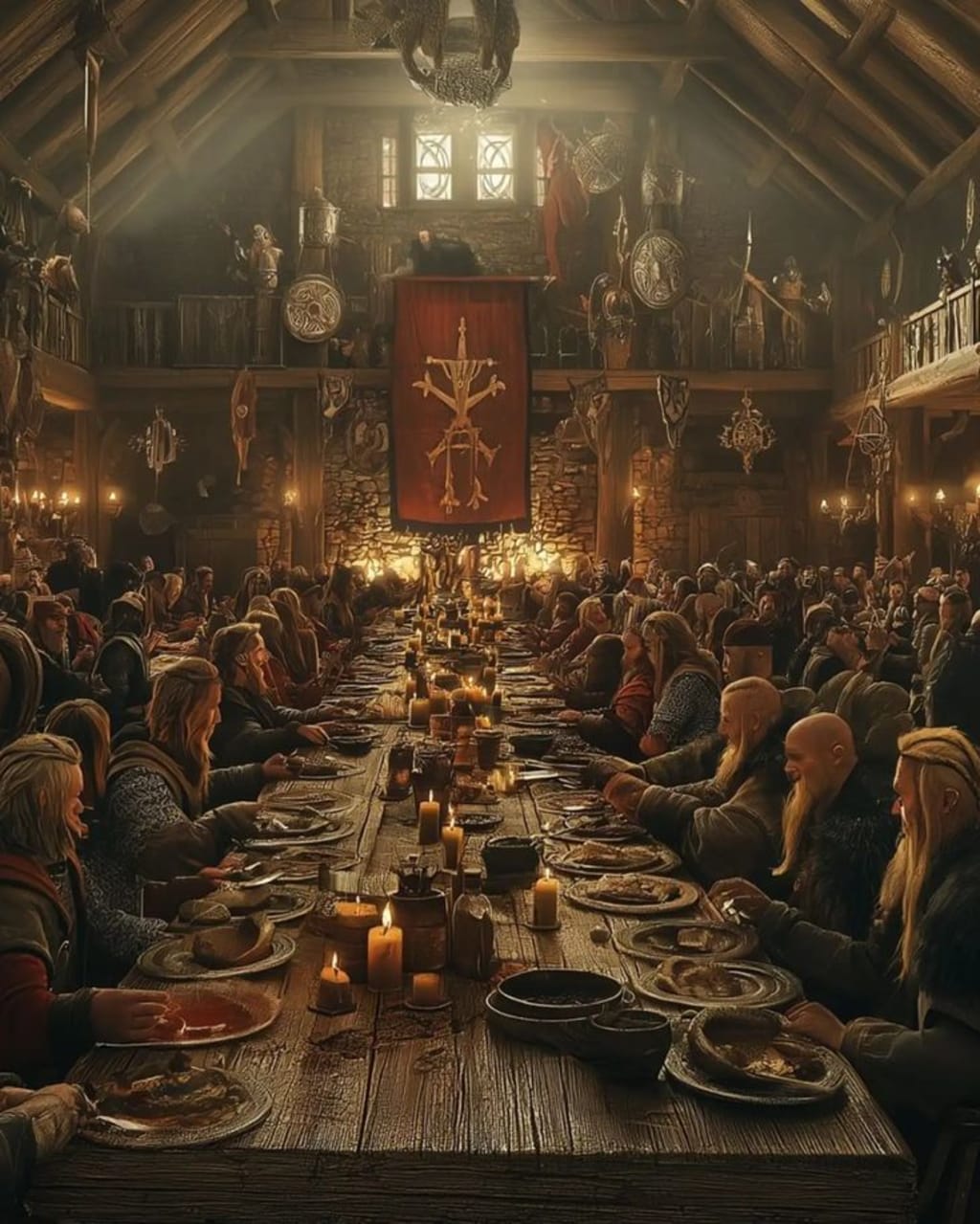
But the ones who arrived? They built farms. Hundreds of them. Longhouses with thick turf walls, sheep grazing the hillsides, children running barefoot until frostbite reminded them otherwise. At its peak, maybe 2,000 to 5,000 souls spread across two main clusters-the Eastern and Western Settlements. They hunted walrus in the far north for those long twisting tusks that Europeans swore were unicorn horns. They traded them for iron, wood, grain-things Greenland simply didn't have. For a couple hundred years, it worked. They even had their own bishop, churches, a little slice of Norse civilization clinging to the edge of the world.
Leif Erikson-Eric's son-sails even farther west around the year 1000 and bumps into North America. He calls it Vinland because of the wild grapes. First Europeans on the continent, centuries before Columbus. Wild, right?
But then the climate turned.
The Little Ice Age creeps in around 1300. Summers shorten. Winters bite harder. The hay crops fail more often. Sea ice chokes the fjords, making walrus hunts dangerous and sometimes impossible. The Norse stubbornly kept trying to farm like their ancestors in milder Norway and Iceland, even as their diet quietly shifted-more seal, less sheep. They adapted… but not enough, and not fast enough.
Then trade dried up. Russian walrus ivory flooded the market-cheaper, easier to get. Elephant tusks from Africa started showing up too. And worst of all, the Black Death slammed Norway in 1349. Killed maybe 60% of the population. The ships from Bergen just… stopped coming. No timber. No iron. No news. The last bishop dies in 1378 or so. No replacement ever arrives. Greenland is cut off, floating in silence.
Oh, and the Inuit-the Thule people-were moving south during the same period, masters of the cold with kayaks, dogsleds, harpoons designed for breathing-hole sealing. At first maybe some trading happened. But later? Raids. Stories of burned farms, missing people. The Norse, in their heavy wool and chainmail mindset, were no match for people who lived with the Arctic instead of against it.
By the early 1400s, the Western Settlement is already a ghost town. The Eastern one limps on a little longer. That 1408 wedding document is the final breath.
No mass graves. No last letters begging for help. Just empty farmsteads, a few scattered tools, and silence that lasted until a Norwegian missionary stumbled across the ruins in 1721-only Inuit living there now.
So what really killed them?
I used to think it was one big dramatic thing-climate, or war, or starvation. But reading the latest archaeology, talking to people who’ve studied the soil layers and bone isotopes, it feels more like… everything at once. A slow cascade. Colder weather weakens the farms → trade collapses → supply lines die → isolation deepens → diet changes aren’t quite enough → conflict with newcomers tips the balance. Any single factor they might have survived. Together? No chance.
It makes you pause, doesn’t it? These were tough, resourceful people. Descendants of raiders and explorers. They lasted almost 500 years in a place that feels impossible. Yet in the end, they couldn’t outlast the world changing around them.
Makes me wonder: if we found ourselves in a similar slow-motion crisis today-climate shifting, supply chains fraying, neighbors turning hostile-would we adapt fast enough? Or would someone centuries from now find our last wedding invitation and just… shrug?
I don’t know. But I can’t stop thinking about that little church in 1408, the sound of vows echoing off stone walls, everyone pretending the future was still possible.
And then the door closes. And the wind keeps blowing.
About the Creator
KWAO LEARNER WINFRED
History is my passion. Ever since I was a child, I've been fascinated by the stories of the past. I eagerly soaked up tales of ancient civilizations, heroic adventures.
https://waynefredlearner47.wixsite.com/my-site-3
Keep reading
More stories from KWAO LEARNER WINFRED and writers in History and other communities.
The Calvine Photo: Best UFO Picture Ever Taken... or the Best-Kept Secret?
Picture this: It's a crisp August evening in 1990, deep in the Scottish Highlands near the tiny hamlet of Calvine. Two young guys-let's call them friends out for a simple hike, nothing fancy-are trudging along a quiet road, probably chatting about the weather or where to grab a pint later. The sun's dipping low, casting long shadows over the rolling hills. Then, out of nowhere, a low humming sound starts. Not mechanical exactly. More like... something alive, but silent in a way that makes the hair on your arms stand up.
By KWAO LEARNER WINFRED19 days ago in History
The Future of Bitcoin: Where the World’s Most Famous Cryptocurrency Is Headed
Bitcoin began as a mysterious experiment in 2009. Created by an unknown person (or group) under the name Satoshi Nakamoto, it was introduced as a new kind of money — decentralized, digital, and independent of governments and banks.
By Ghalib Khan5 days ago in History



Comments
There are no comments for this story
Be the first to respond and start the conversation.