tv review
TV reviews for horror aficionados; from vampire slayers to streamable spooks, explore horror-inducing television series from the discomfort of your living room.
The Crawling Eyes
The village of Evershade had always been small, isolated from the world. Nestled between dense forests, it was a place where secrets clung to the fog and the wind whispered things too terrible to be believed. The townsfolk had always been superstitious, their lives governed by old myths passed down from generation to generation, none more haunting than the one about the Crawling Eyes.
By Muhammad Atif8 months ago in Horror
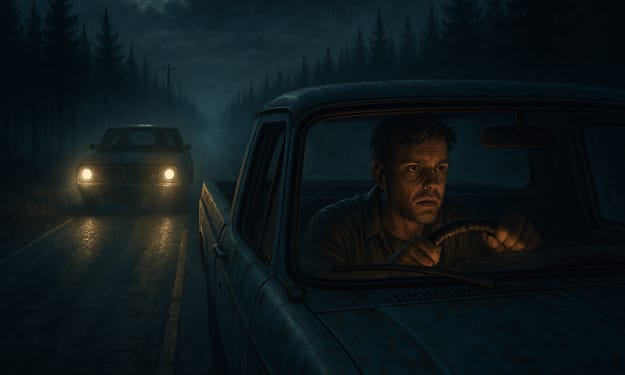
The Midnight Road
The Midnight Road Some Roads Don’t Lead Anywhere… They Keep You Forever The old pickup truck, lovingly called Ol' Betsy, rumbled down Route 17—a lonely strip of worn asphalt slicing through miles of dense, whispering pine forest. Liam, a travel blogger chasing forgotten myths and mysterious legends, had specifically chosen this road for its eerie reputation. Midnight had long passed. A paper-thin moon cowered behind clouds, and only Betsy's flickering headlights fought the oppressive darkness.
By Noman Afridi8 months ago in Horror
Dark Matter & Dark Energy: The Invisible Forces Shaping Our Universe
Introduction: The Greatest Mystery in the Universe We had no idea how strange the universe was. Less than 5% of the universe is composed of ordinary matter—the stars, planets, and everything else we see. What else? Dark energy and dark matter (27%) We still don't fully comprehend these invisible forces, which determine the universe's fate. how we know dark matter exists and what it is. the look for dark matter particles like WIMPs and axions. The role of dark energy in the universe's rapid expansion. leading theories regarding the nature of these enigmatic forces. The future of cosmology and how new experiments and telescopes might eventually shed light on the truth.
By Silas Blackwood8 months ago in Horror
Song for the Unraveling of the World
How a Master of Minimalist Horror Distorts Reality with Every Story In addition to being a collection of short horror stories, Brian Evenson's Song for the Unraveling of the World (2019) is a meticulously crafted maze of existential terror, body horror, and psychological breakdown. Evenson exposes the eerie, grotesque, and deeply unsettling with each tale by tearing back the fragile veneer of reality. From doppelgängers to alien infestations, from cults to cosmic horrors, this collection blends the literary precision of Borges with the visceral dread of Lovecraft. In this article, we’ll explore the themes, standout stories, and why Evenson’s work lingers in the mind like a half-remembered nightmare.
By Silas Blackwood9 months ago in Horror
Why The Haunting of Hill House (1959) Still Haunts Modern Horror
How a Gothic masterpiece by Shirley Jackson redefined fear for generations Shirley Jackson’s The Haunting of Hill House (1959) is more than just a classic ghost story—it’s a blueprint for psychological horror that continues to influence books, films, and TV shows today. Unlike traditional horror that relies on monsters and gore, Jackson’s novel terrifies through atmosphere, ambiguity, and the slow unraveling of the human mind. More than six decades after its publication, Hill House remains a cornerstone of gothic fiction, shaping how modern horror explores trauma, isolation, and the unseen.
By Silas Blackwood9 months ago in Horror
The Haunting of Hill House: A Masterpiece of Psychological Horror
Exploring Shirley Jackson’s Timeless Tale of Terror and Isolation One of the best ghost stories ever written is widely regarded as Shirley Jackson's 1959 novel The Haunting of Hill House. Jackson's novel disturbs readers through psychological tension, unreliable narration, and the slow unraveling of sanity, in contrast to conventional horror, which relies on gore and jump scares. At its core, The Haunting of Hill House is not just about a haunted house—it’s about haunted people, the fragility of the mind, and the terror of loneliness. In this deep dive, we’ll explore the novel’s themes, characters, and legacy, examining why it remains a cornerstone of gothic horror literature.
By Silas Blackwood9 months ago in Horror
The 25 Best Horror Books of the Last Decade - Vulture
Over the course of the past ten years, horror literature has experienced a renaissance, with authors pushing boundaries, fusing genres, and delivering fresh nightmares that last long after the final page. The last ten years have provided readers with some of the most chilling and original works in the genre, including psychological terrors, supernatural hauntings, and visceral body horror. Whether you're a longtime horror fan or a newcomer looking for a scare, this list compiles the 25 best horror books of the last decade—each one a standout in its own right.
By Silas Blackwood9 months ago in Horror
Spring-heeled Jack: The Mysterious Phantom of Victorian England (1837-1904)
Introduction Spring-heeled Jack is one of the most bizarre and enduring mysteries of Victorian England. This enigmatic figure terrorized London and the surrounding areas for decades. He was described as a terrifying supernatural being with glowing eyes, clawed hands, and the ability to leap incredible heights. Spring-heeled Jack's place in folklore has been established by eyewitness accounts, newspaper reports, and urban legends, blurring the lines between myth, widespread panic, and possible reality. This article explores the origins, reported sightings, theories, and cultural impact of Spring-heeled Jack, delving into why this strange figure continues to captivate the public imagination over a century after his last alleged appearance.
By Silas Blackwood9 months ago in Horror
The Princes in the Tower: A Historical Mystery of Medieval England
Introduction The fate of the Princes in the Tower—Edward V and his younger brother, Richard, Duke of York—is one of the most enduring and tragic mysteries in English history. These two boys, the sons of King Edward IV, disappeared in the summer of 1483 while under the protection of their uncle, Richard, Duke of Gloucester, who later became King Richard III. Their disappearance has fueled centuries of speculation, debate, and historical investigation. Were they murdered? By whom, if so? Did they escape and live in secret? The lack of definitive evidence has turned this case into one of history’s greatest unsolved crimes. This article explores the events leading up to their disappearance, the key suspects, and the various theories that historians have proposed over the centuries.
By Silas Blackwood9 months ago in Horror
The Pendle Witch Trials (1612)
Introduction The Pendle Witch Trials of 1612 remain one of the most infamous cases of witchcraft persecution in English history. The trials, which took place in England's Lancashire during a time of superstition, religious strife, and social unrest, resulted in the execution of ten people who were accused of witchcraft. The events were meticulously documented by the clerk of the court, Thomas Potts, in his book The Wonderfull Discoverie of Witches in the Countie of Lancaster, providing a chilling insight into 17th-century legal proceedings and societal fears. The Pendle Witch Trials, their key players, the allegations leveled against them, the trial itself, and the long-term effects of this tragic incident are the subject of this article. Context: Witchcraft in England in the 17th century Belief in witchcraft was widespread in early modern Europe, fueled by religious conflict, economic hardship, and fear of the supernatural. King James I's personal obsession with witchcraft is reflected in his book Daemonologie (1597), which makes practicing witchcraft a capital offense. The Pendle trials took place in Lancashire, a poor area with strong beliefs in folk magic and religious dissent (with Catholic sympathies despite Protestant rule). These factors created an environment ripe for accusations of witchcraft. The Accused: Families at the Heart of the Trials The Demdikes and the Chattoxes, two rival families led by elderly matriarchs reputed to be witches, were the primary focus of the Pendle Witch Trials. The Demdike Family Elizabeth Southerns, also known as "Old Demdike," was regarded as the region's most powerful witch. She was an elderly, blind widow. She allegedly taught witchcraft to her family. Elizabeth Device – Demdike’s daughter, accused of using witchcraft to kill multiple people. James Device – Elizabeth’s son, whose testimony under pressure implicated many others. Alizon Device – Elizabeth’s granddaughter, whose encounter with a peddler sparked the initial accusations. The Chattox Family Anne Whittle (aka "Old Chattox") – A rival of Demdike, accused of using witchcraft to harm others. Anne Redferne – Chattox’s daughter, accused of murder through witchcraft. Other accused individuals included Alice Nutter, an unusually wealthy woman whose involvement remains mysterious, and Jane Bulcock and her son John, who were caught up in the hysteria. The Beginning of the Trials: The Spark When Alizon Device met a peddler by the name of John Law in March 1612, the events that led to the trials began. After he refused to give her pins (possibly for use in folk magic), Alizon cursed him, and he subsequently suffered a stroke. Alizon admitted to the accusations made against her by Law's son and named members of her family and others in the plot. Authorities, led by Justice Roger Nowell, began arresting suspects. The accused were held in Lancaster Castle, where some, including James Device, provided damning confessions—likely under torture or coercion. The Infamous Meeting at Malkin Tower A key element of the prosecution’s case was a gathering at Malkin Tower, the Devices’ home, allegedly held on Good Friday, 1612. Witnesses claimed it was a witches’ meeting to plot the destruction of Lancaster Castle. Despite the possibility that it was simply a family gathering, this "evidence" was used to establish a conspiracy. The Trial: Justice and Injustice The trials took place in August 1612 at Lancaster Assizes, presided over by Sir Edward Bromley and Sir James Altham. The account by Thomas Potts reveals an extremely flawed legal procedure: Confessions Obtained Under Duress: Numerous "confessions" were most likely obtained through intimidation, torture, or lack of sleep. Use of Child Testimony – Jennet Device, Alizon’s nine-year-old sister, testified against her own family, sealing their fate. Spectral Evidence – Claims of supernatural harm were accepted without physical proof. Ten people were found guilty and hanged at Gallows Hill on August 20, 1612: Elizabeth Equipment James Device Anne Whittle (Chattox) Anne Redferne Alice Nutter Katherine Hewitt Bulcock, John Jane Bulcock Alizon Instrument Robey, Isobel While Margaret Pearson, one of the accused, was given a pillory rather than an execution, Old Demdike passed away in prison prior to the trial. Why Did the Pendle Witch Trials Happen? Several factors contributed to the witch hunt: Religious Tensions – Lancashire was seen as rebellious, with Catholic sympathies clashing with Protestant rule. Economic Hardship – The poor accused the poor, often over disputes or grudges. King James I’s Influence – His writings and laws encouraged witch hunts. Local Disputes: It's possible that the Demdike and Chattox families were the targets of personal resentment. Legacy of the Pendle Witch Trials The Pendle Witch Trials remain a symbol of injustice and mass hysteria. Scholars of today see them as a product of their time, shaped by fear, superstition, and brutality on the part of the law. Tourism & Memorials – Pendle Hill is now a tourist destination, with plaques and museums commemorating the victims. Cultural Impact – The trials have inspired books, plays, and TV shows, including The Lancashire Witches by William Harrison Ainsworth. Legal Reforms: As skepticism grew over time, the number of witch trials decreased, which led to the repeal of witchcraft laws in 1736. Conclusion The Pendle Witch Trials were a tragic example of how fear, superstition, and judicial corruption could lead to devastating consequences. The victims—mostly poor, marginalized individuals—were scapegoated in a society gripped by paranoia. Today, their story serves as a cautionary tale about the dangers of mass hysteria and the importance of fair justice.
By Silas Blackwood9 months ago in Horror
Bird Box by Josh Malerman: A Terrifying Exploration of Fear, Survival, and the Unknown
The Book That Changed the Face of Apocalyptic Horror Bird Box, Josh Malerman's debut novel, captivated horror readers in 2014 with its chilling depiction of a world where seeing is fatal. The book’s premise—an unseen force drives people to violent madness upon sight—captivated readers and later inspired the hit Netflix film starring Sandra Bullock. However, Bird Box is not simply a viral sensation. It’s a masterclass in psychological horror, blending relentless tension, deep character study, and existential dread. It is still one of the most influential horror novels of the 21st century, nearly ten years after it was published. In this deep dive, we’ll explore: The terrifying premise of Bird Box How Malerman crafts fear without showing the monster The novel’s themes of motherhood, trust, and survival Why Bird Box still haunts readers today The Hypothesis: In a world where looking is fatal, Malorie, a woman who lives in a post-apocalyptic world where anyone who sees an unknown entity is driven to homicidal rage, is the protagonist of the book. Survivors must blindfold themselves to stay alive, turning every outdoor journey into a nerve-wracking game of sound and memory. Malorie, along with two young children she calls only "Boy" and "Girl," embarks on a perilous river journey to a rumored safe haven. The problem? They must do it blindfolded. Why This Concept Works So Well The monster is never seen – By never describing the entity, Malerman forces readers to imagine something far worse than any visual could provide. Survival depends on vulnerability – Characters must willingly blind themselves, heightening tension in every scene. The fear is universal – Unlike zombies or plagues, this horror exploits a fundamental human instinct: the need to see. How Malerman Creates Fear: The Horror of the Unseen Bird Box's moderation is one of its greatest assets. Unlike many horror stories that rely on gore or jump scares, Malerman’s terror is psychological, built through: 1. Lack of Perception With characters blindfolded, every sound, touch, or whisper becomes a potential threat. Readers experience the world as Malorie does—uncertain, disoriented, and hyper-alert. 2. The Madness of Others Flashbacks reveal how society collapsed, with infected individuals describing beautiful visions before turning violent. The unseen force is made even more disconcerting by the contrast between wonder and horror. 3. The Paranoia of Trust In a world where opening your eyes could mean death, who can you rely on? The novel explores how fear erodes human connection, leading to betrayal and isolation. Themes: More Than Just a Monster Story While Bird Box is undeniably terrifying, its deeper themes elevate it beyond standard horror fare. 1. Motherhood and Survival Instinct Malorie’s journey is as much about protecting her children as it is about survival. Her decision to train Boy and Girl in extreme discipline—forcing them to rely on hearing alone—raises ethical questions about love and necessity in a broken world. 2. The Fragility of Sanity The infected don’t just die—they lose themselves in ecstatic visions before turning violent. This suggests that the entity doesn’t just kill; it reveals something horrifying about human nature. 3. The Fear of the Unknown By never explaining the creatures, Malerman taps into Lovecraftian horror—the idea that some truths are too terrible to comprehend. The novel’s power lies in what it doesn’t show. Comparing the Book to the Movie on Netflix The 2018 Netflix film brought Bird Box to a wider audience, but there are key differences: Aspect Novel Film Malorie’s Character More introspective, haunted More action-driven The entity was never described and was only briefly depicted (controversial). Ending Ambiguous, open to interpretation More concrete, hopeful While the film is effective, the book’s unseen horror and deeper psychological exploration make it a richer experience. Why Bird Box Still Haunts Readers Today 1. It appears strangely plausible. In a post-pandemic world, the idea of an invisible, unstoppable threat resonates more than ever. The themes of survival, isolation, and false information come across as unsettlingly familiar. 2. The Horror Lingers Because the monster is never seen, readers keep imagining it long after finishing the book. This lingering dread is a hallmark of great horror. 3. It Reinvents Apocalyptic Fiction Unlike zombie or virus stories, Bird Box presents a threat that can’t be fought, only avoided. This makes survival feel even more desperate. Final Verdict: A Modern Horror Classic Bird Box isn’t just a scary story—it’s a brilliant exploration of fear itself. By forcing characters (and readers) to confront the unknown, Malerman crafts a horror novel that’s as thought-provoking as it is terrifying. Have you read Bird Box? Could you survive blindfolded?
By Silas Blackwood9 months ago in Horror