vintage
Special effects may be lacking, but vintage horror films still manage to keep our palms sweating and blood pumping; a look back at retro horror films, stories, books and characters that prove everything is scarier in black and white.
Song for the Unraveling of the World
How a Master of Minimalist Horror Distorts Reality with Every Story In addition to being a collection of short horror stories, Brian Evenson's Song for the Unraveling of the World (2019) is a meticulously crafted maze of existential terror, body horror, and psychological breakdown. Evenson exposes the eerie, grotesque, and deeply unsettling with each tale by tearing back the fragile veneer of reality. From doppelgängers to alien infestations, from cults to cosmic horrors, this collection blends the literary precision of Borges with the visceral dread of Lovecraft. In this article, we’ll explore the themes, standout stories, and why Evenson’s work lingers in the mind like a half-remembered nightmare.
By Silas Blackwood9 months ago in Horror
The Shining
How a Snowbound Hotel Became the Stage for the Ultimate Psychological Horror Few novels have burrowed into the collective psyche as deeply as Stephen King’s The Shining (1977). More than just a ghost story, it is a harrowing exploration of addiction, familial collapse, and the fragile boundaries of sanity—all set within the claustrophobic walls of the Overlook Hotel. With its iconic characters—Jack Torrance’s descent into madness, Danny’s psychic terror, and Wendy’s fight for survival—The Shining redefined horror by making the real monster not the hotel’s ghosts, but the unraveling human mind. This article delves into the novel’s themes, its real-life inspirations, and why, nearly 50 years later, the Overlook still terrifies us.
By Silas Blackwood9 months ago in Horror
It: Stephen King’s Epic of Childhood Terror and Timeless Evil
How a clown who could change its shape became the embodiment of fear itself In addition to being a horror novel, Stephen King's It (1986) is a sprawling coming-of-age epic that combines childhood trauma, small-town secrets, and an ancient, evil force that exploits fear. It is a story about memory, friendship, and the lingering scars of adolescence at its core, wrapped in the Pennywise the Dancing Clown nightmare. With its dual timelines, richly drawn characters, and visceral horror, It has become one of King’s most iconic works, inspiring films, miniseries, and endless debates about the nature of fear. The themes of the book, its cultural impact, and the reasons why Pennywise continues to haunt readers across generations are the subject of this article.
By Silas Blackwood9 months ago in Horror
The Little Stranger by Sarah Waters: A Haunting Tale of Class, Decay, and the Supernatural
How Sarah Waters Brought Gothic Horror Back to England After the War Sarah Waters’ The Little Stranger (2009) is a masterful blend of psychological suspense and classic gothic horror, set against the crumbling backdrop of post-World War II Britain. More than just a ghost story, the novel explores the fading aristocracy, the trauma of war, and the unsettling possibility that the true haunting might not be supernatural—but psychological. The Little Stranger pays homage to gothic traditions while offering a novel, unsettling take on the genre with its slow-burning tension, unreliable narrator, and eerie atmosphere. Themes, historical context, and the ambiguity that keeps readers debating the novel's true meaning are examined in depth in this article. 1. The Plot: A House in Decline
By Silas Blackwood9 months ago in Horror
The Best Mystery Endings of All Time
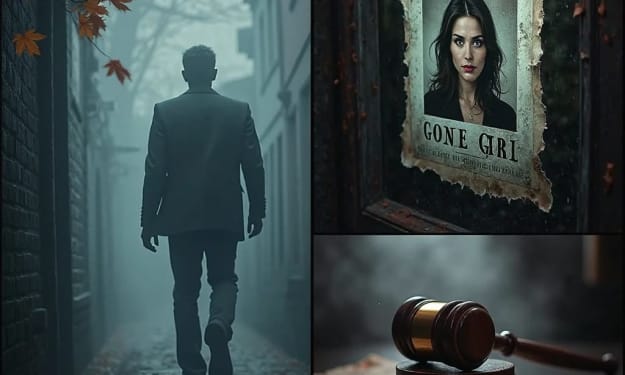
Introduction: The Power of a Perfect Twist In the world of mystery writing, a great twist ending isn’t just a surprise—it’s a payoff. Readers don’t mind being deceived, as long as the deception was clever and fair. From Agatha Christie’s classic And Then There Were None to modern psychological thrillers like Gone Girl and the cinematic genius of The Sixth Sense, certain stories have redefined the genre with endings that readers (and viewers) never forget. But what makes these endings truly effective? Let’s unpack three iconic mystery conclusions and explore why they work—and how you can use these lessons in your own writing.
By Muhammad Sabeel9 months ago in Horror
THE GOD IN THE ASYLUM WALLS: SEASON 2
CHAPTER 5: THE RECRUITMENT OF LAINE The newspaper arrived at 3:33 AM, though Simon Voss hadn't ordered a subscription. It lay coiled on his welcome mat like a dead thing, the headline screaming in a font that didn't exist....letters squirming like worms in daylight. The obituaries section pulsed faintly, as if breathing.
By Tales That Breathe at Night9 months ago in Horror
The Night That Created a Monster: How a Stormy Evening in 1816 Gave Birth to Frankenstein
The True Story Behind the World’s First Science Fiction Novel A group of brilliant but troubled writers met in a villa near Lake Geneva in the summer of 1816. The weather was unnaturally cold—later called "The Year Without a Summer" due to a volcanic eruption—and trapped indoors, they told ghost stories by candlelight. What began as a simple challenge—Who can write the scariest tale?—ended up producing one of the most enduring horror stories of all time: Frankenstein; or, The Modern Prometheus, penned by an 18-year-old Mary Shelley. But Frankenstein wasn’t just a ghost story. It was the first true science fiction novel, a meditation on creation, ambition, and the monstrous consequences of playing God. This is the tale of how a stormy night, a waking nightmare, and an adolescent literary genius changed horror forever.
By Silas Blackwood9 months ago in Horror
Why The Haunting of Hill House (1959) Still Haunts Modern Horror
How a Gothic masterpiece by Shirley Jackson redefined fear for generations Shirley Jackson’s The Haunting of Hill House (1959) is more than just a classic ghost story—it’s a blueprint for psychological horror that continues to influence books, films, and TV shows today. Unlike traditional horror that relies on monsters and gore, Jackson’s novel terrifies through atmosphere, ambiguity, and the slow unraveling of the human mind. More than six decades after its publication, Hill House remains a cornerstone of gothic fiction, shaping how modern horror explores trauma, isolation, and the unseen.
By Silas Blackwood9 months ago in Horror
The Haunting of Hill House: A Masterpiece of Psychological Horror
Exploring Shirley Jackson’s Timeless Tale of Terror and Isolation One of the best ghost stories ever written is widely regarded as Shirley Jackson's 1959 novel The Haunting of Hill House. Jackson's novel disturbs readers through psychological tension, unreliable narration, and the slow unraveling of sanity, in contrast to conventional horror, which relies on gore and jump scares. At its core, The Haunting of Hill House is not just about a haunted house—it’s about haunted people, the fragility of the mind, and the terror of loneliness. In this deep dive, we’ll explore the novel’s themes, characters, and legacy, examining why it remains a cornerstone of gothic horror literature.
By Silas Blackwood9 months ago in Horror
EchoFace It doesn't show who you are. It shows who's watching you.
It started as a dare. Nora had always been the skeptic in her friend group—the one who rolled her eyes at ghost stories and laughed at conspiracy videos. So when her roommate Lexie told her about the app going viral on dark web forums, Nora just shrugged.
By Mian Nazir Shah9 months ago in Horror
"The Village Where No One Die: A Country-Old Mystery"
The story was accidentally discovered in a family travel journal passed down through the generations. The journal spoke of a place nestled between lush hills, untouched by modernity, where time seemed to stand still. The fact that the village had not seen a single natural death in more than a century is truly astonishing. Curious and skeptical, I set out to find this mysterious place. I finally arrived at a small village known locally as "Amargram," which literally translates to "the immortal village," after days of traveling and detours through narrow forest paths. The first thing I noticed was the silence—not the eerie kind, but a peaceful, harmonious quietude. Under ancient banyan trees, children played. Elders sat on wooden benches, eyes bright and faces lined with the soft etchings of time—but surprisingly vibrant. No illness symptoms. No graveyards. I saw people living fully, deeply, and gently.
By Md. Saiful Islam Shaon 9 months ago in Horror
The Diary That Shattered My Childhood
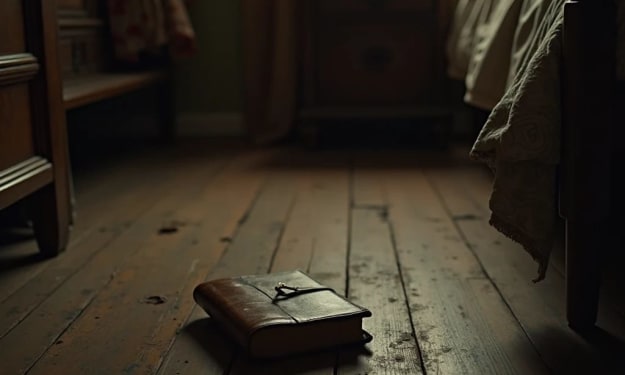
When my mother died, the silence in her room was deafening. She had been the kind of woman who filled a space even in stillness—lavender lotion on the nightstand, quiet humming in the kitchen, soft prayers whispered at dusk. Now, it was just dust and an unmade bed. My sister, Anne, couldn’t bring herself to step inside. So it fell to me to sort through her things, to pack a lifetime into boxes and bags.
By Muhammad Sabeel9 months ago in Horror