
The Shining: A Descent into Madness and the Haunting Power of Isolation
All work and no play makes Jack a dull boy.

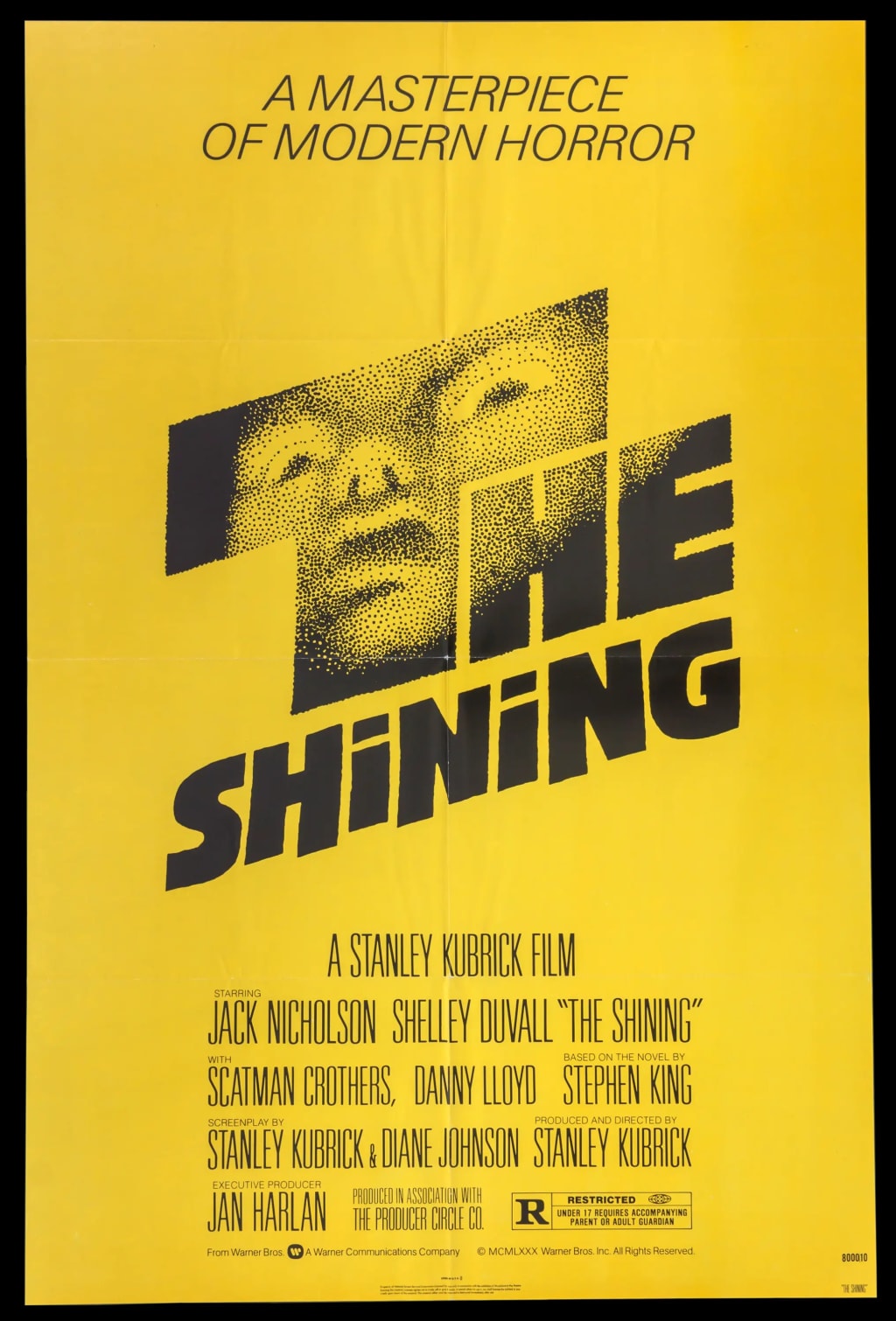
Stanley Kubrick’s The Shining (1980) is a chilling psychological horror that blurs the lines between reality, madness, and the supernatural. Based on Stephen King’s novel, the film follows Jack Torrance (Jack Nicholson) as he descends into insanity while serving as the winter caretaker of the isolated Overlook Hotel. With haunting imagery, cryptic symbolism, and an unsettling atmosphere, The Shining is a masterpiece that continues to captivate and disturb audiences. Below, we explore three core themes that define this timeless horror classic.
1. The Overlook Hotel: Isolation as a Catalyst for Madness
The Overlook Hotel is more than just a setting—it’s a living, breathing entity that plays a crucial role in Jack’s psychological unraveling. The vast, empty hallways and endless snow-covered landscape create an overwhelming sense of isolation, cutting Jack, his wife Wendy (Shelley Duvall), and their son Danny (Danny Lloyd) off from the outside world.
Kubrick uses the hotel’s oppressive silence and eerie symmetry to create an atmosphere of suffocating loneliness. The longer the Torrance family stays, the more the hotel seems to exert a sinister influence, blurring the line between reality and hallucination. The isolation magnifies Jack’s inner demons, turning his mild frustration into violent paranoia.
The film subtly suggests that the Overlook’s dark history—filled with murder, suicide, and lingering spirits—feeds off the vulnerabilities of those who inhabit it. In this sense, the hotel becomes both a physical prison and a psychological trap, pushing Jack further into madness.
2. The Fragile Line Between Sanity and Insanity
Jack Torrance’s transformation from struggling writer to homicidal maniac is one of the most unsettling aspects of The Shining. At the start, Jack appears to be a flawed but well-meaning man trying to provide for his family. However, as the days drag on, his repressed anger, alcoholism, and creative frustration begin to surface.
The film never explicitly reveals whether Jack’s descent is caused by the hotel’s supernatural forces or his own fractured mind—making his transformation all the more terrifying. His repeated encounters with ghostly figures like Lloyd the bartender and the mysterious woman in Room 237 could be hallucinations, or they could be manifestations of the hotel’s dark energy.
Jack’s famous mantra, “All work and no play makes Jack a dull boy,” scrawled endlessly on paper, becomes a haunting symbol of his mental collapse. By the time he’s stalking his family with an axe, his humanity has completely eroded—leaving only a vessel of rage and madness.
3. The Shining: A Gift or a Curse?
Danny, the Torrance family's young son, possesses a psychic ability known as “the shining,” which allows him to see glimpses of the hotel’s dark past and future. His visions—of the blood-filled elevator and the ghostly twins—serve as cryptic warnings of the horrors that will unfold.
The shining represents both a blessing and a curse, giving Danny insight into the Overlook’s secrets while making him vulnerable to its dark forces. His connection with the hotel’s chef, Dick Hallorann (Scatman Crothers), adds a layer of hope, showing that those who possess the gift can protect themselves—but only to an extent.
The film raises unsettling questions about destiny and fate. Does the Overlook Hotel target those with the shining? Or does the shining simply allow its victims to see the horrors that others cannot? The ambiguity surrounding Danny’s abilities adds another layer of psychological unease to the story.
Conclusion
The Shining is a haunting exploration of isolation, madness, and the dark forces that lurk within both the human mind and the world around us. Kubrick’s meticulous direction, paired with Jack Nicholson’s unforgettable performance, creates a film that lingers in the mind long after the credits roll.
Its enduring power lies in its ambiguity—never fully revealing whether the horror stems from the supernatural, psychological breakdown, or a combination of both. The film leaves audiences questioning how much of what they’ve seen is real—and how much is simply the unraveling of a mind trapped in its own darkest thoughts.
As the snow falls outside the Overlook Hotel and Jack’s haunting grin is frozen in time, The Shining reminds us that sometimes the scariest monsters are the ones hidden inside ourselves.
About the Creator
Keep reading
More stories from Willow Writer and writers in Horror and other communities.
The Haunting of Hollow Creek
Introduction Hollow Creek was a small, forgotten town tucked away in a dense forest. It had a reputation—one of whispers, rumors, and unexplained disappearances. The kind of town that didn’t appear on maps, yet the people who lived there insisted it was real. No one from the outside dared to venture near. But when Sarah received an invitation to visit her estranged grandmother’s estate in Hollow Creek, she thought it was just another strange family quirk. What she didn’t expect was to uncover a darkness that had haunted the town for centuries.
By Willow Writerabout a year ago in Horror
Killing him slowly
There’s an intruder in my house again. He stumbles through the door, wet carrier bags in hand. He’s bought me offerings. I show my appreciation, letting him caress my beautiful body. He wants to touch me. I rub myself against his legs. He sighs, dropping the bags. He can’t resist touching me. Running his hand slowly down my spine, I arch my back towards his caress, let out a low purr. It’s what we both need.
By N J Delmas21 days ago in Horror



Comments
There are no comments for this story
Be the first to respond and start the conversation.