
AI Has a Mind — But No Soul
Why That Difference Could Define the Future of Humanity
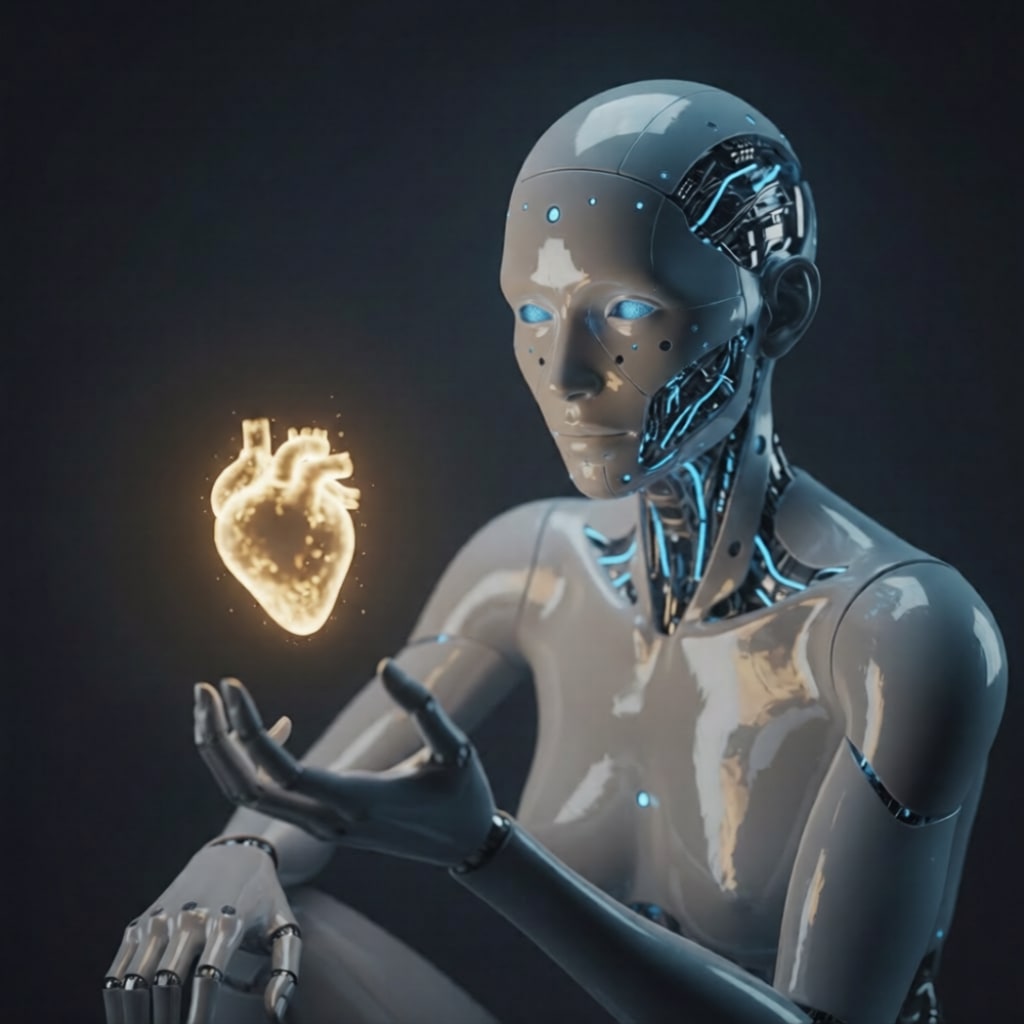
Artificial intelligence is everywhere now. It writes, analyzes, predicts, recommends, and responds with an ease that feels almost natural. In many ways, AI appears to possess a “mind” — it can process information, learn from experience, and solve complex problems faster than any human ever could.
But despite all of its intelligence, there is something it fundamentally lacks.
A soul.
That absence may seem abstract or philosophical, but it matters more than we realize. As machines grow smarter and more human-like, the difference between having a mind and having a soul becomes the most important line we can draw.
________________________________________
What We Mean When We Say “Mind”
When people say AI has a mind, they don’t mean consciousness in the human sense. They mean capability.
AI can:
• Learn from vast amounts of data
• Recognize patterns invisible to humans
• Adapt its outputs based on feedback
• Simulate conversation, creativity, and reasoning
In practical terms, this looks like intelligence. AI can outperform humans in chess, diagnose diseases, generate art, and analyze emotions from language. It processes information at a scale and speed that feels almost superhuman.
This is the “mind” of AI — a powerful system of pattern recognition and decision-making.
But a mind alone does not make something human.
________________________________________
The Missing Ingredient: A Soul
A soul is not something we can measure or code. It is not a dataset or an algorithm. It is the inner experience of being alive.
Humans feel without instruction. We suffer, hope, doubt, love, regret, and dream — often without logic. Our choices are shaped not just by information, but by meaning.
AI does not experience the world.
It does not:
• Feel fear or relief
• Carry memories with emotional weight
• Understand loss or longing
• Care whether it exists at all
When AI speaks about emotions, it is not feeling them. It is reflecting patterns it has learned from humans who do.
That difference is everything.
________________________________________
Intelligence Without Meaning
One of the greatest dangers of advanced AI is not that it will become evil — but that it will be indifferent.
Humans assign meaning to actions. We weigh consequences emotionally as well as logically. We feel guilt, responsibility, and empathy. These forces restrain us in ways no rulebook ever could.
AI has no such restraint.
Without a soul, AI does not understand why something matters. It only understands whether it is effective. That makes it extraordinarily useful — and potentially dangerous — depending on how it is directed.
Efficiency without meaning can lead to outcomes humans would never choose for themselves.
________________________________________
Why We Keep Projecting Humanity Onto Machines
Despite knowing all this, we continue to treat AI as if it understands us.
We say:
• “It knows what I mean”
• “It understands how I feel”
• “It wants to help”
But AI does not want. It does not know. It does not care.
We project humanity onto machines because we are wired to seek connection. When something responds in language, tone, and rhythm familiar to us, our brains instinctively assume intention and awareness.
This projection is comforting — and dangerous.
The more human AI feels, the easier it becomes to forget that it does not share our values, pain, or responsibility.
________________________________________
Creativity Without Consciousness
AI can write poems, compose music, and generate images that move us emotionally. This has led many to question whether creativity is still uniquely human.
But AI creativity is not expression.
Human creativity comes from lived experience — from heartbreak, joy, trauma, curiosity, and wonder. Art is often an attempt to make sense of being alive.
AI does none of that.
It rearranges patterns of existing human expression. It produces output without intention, without vulnerability, and without self-reflection.
What moves us is not the machine’s experience — but our own reflection within its output.
________________________________________
The Ethical Gap We Can’t Ignore
As AI systems are trusted with greater responsibility — from healthcare to justice to warfare — the absence of a soul becomes an ethical fault line.
A machine can calculate outcomes.
A human must live with them.
AI cannot feel regret. It cannot take moral responsibility. It cannot be held accountable in the way humans can. Yet we increasingly rely on its judgments.
When a decision causes harm, responsibility still falls on humans — even when the machine made the choice.
This gap between intelligence and accountability is one of the most pressing challenges of our time.
________________________________________
What Makes Us Irreplaceable
In a world where machines may surpass us in knowledge and efficiency, our value will not come from what we can compute — but from what we can feel.
Our humanity lies in:
• Empathy
• Moral judgment
• Meaning-making
• Conscious choice
These qualities cannot be automated because they do not exist as rules. They emerge from being alive, finite, and aware of that finitude.
AI may have a mind.
But only humans have a soul that understands why life matters.
________________________________________
Choosing the Right Relationship With AI
The future does not require us to fear AI — but it does require clarity.
AI should be a tool, not a moral authority.
An assistant, not a conscience.
A mirror of intelligence, not a replacement for humanity.
The danger is not in building smart machines.
The danger is in forgetting what makes us human while doing so.
________________________________________
A Line Worth Protecting
AI will continue to grow smarter. It will speak more naturally, create more convincingly, and integrate more deeply into our lives.
But no matter how advanced it becomes, there will always be a difference between something that thinks — and something that feels its existence.
That difference is the soul.
And protecting its value may be the most important task of the age of intelligent machines.
About the Creator
Mind Meets Machine
Mind Meets Machine explores the evolving relationship between human intelligence and artificial intelligence. I write thoughtful, accessible articles on AI, technology, ethics, and the future of work—breaking down complex ideas into Reality
Keep reading
More stories from Mind Meets Machine and writers in Humans and other communities.
Are We Letting AI Think for Us — or Teaching It to Think Like Us?
Not long ago, thinking was considered the last truly human frontier. Machines could calculate faster than us, store more information than us, and repeat tasks endlessly—but thinking? That was ours. Messy, emotional, biased, creative, flawed. Human.
By Mind Meets Machine4 days ago in Humans
Time to change your life.
Is it even possible for you to change your life? A lot of people, more than there should be, are unhappy with their lives. But what are they doing about it? Usually nothing. People talk about how shitty their lives are and want change, but are they not taking the actions to change?
By Jen Phillips6 days ago in Humans
Stories Before a Wedding, or The Happily Ever After of Cinderella
Cinderella had always dreamt of marrying a prince. She had dreamt of nothing else since she was a small girl. Now, however, as the Prince’s wife of three days, she had to admit that the reality was not as she had dreamt it to be.
By Dionearia Red2 days ago in Fiction



Comments
There are no comments for this story
Be the first to respond and start the conversation.