Latest Stories
Most recently published stories in Humans.
The Day ‘Stop’ Meant Nothing”
A quiet sign, a loud tragedy, and the cost of a world that won’t pause The stop sign had been there longer than anyone could remember. Its red paint had faded into a tired maroon, edges nicked and scarred by time, winters, and neglect. It stood at the corner like a patient elder, asking—politely, repeatedly—for the world to slow down. Most days, people barely noticed it. Cars rolled through the intersection without fully stopping, drivers glancing left and right just long enough to convince themselves it was safe to keep moving. Cyclists treated it like a suggestion. Walkers passed beneath it, trusting that someone else would obey. The sign did not shout. It did not move. It simply waited, believing in the rules it was made to represent. On the day everything changed, the sky was overcast—one of those gray mornings that feels unfinished, as if the sun forgot to show up. The air carried a cold stillness, the kind that makes sounds sharper and silences heavier. Snow threatened but didn’t fall. Life continued in its ordinary, careless rhythm. And then, somewhere beyond that quiet corner, violence arrived without asking for permission. There are moments in life when you realize how fragile the idea of “normal” really is. How quickly it dissolves. How easily it abandons us. That day, the word stop lost its power—not just on that sign, but everywhere. Gun violence does not announce itself. It doesn’t send warnings ahead of time. It doesn’t respect neighborhoods, routines, or innocence. It crashes into lives like an unwanted storm, leaving behind questions that never find answers. Afterward, people gathered near that intersection. Some stood silently. Others cried. A few argued—about causes, about laws, about what should have been done. The stop sign watched it all, unchanged, unmoved, still doing its job. Still asking the same thing it always had. Stop. But stopping is not something we are good at anymore. We rush through days like they owe us something. We scroll past suffering. We debate tragedies instead of mourning them. We turn real pain into statistics because numbers feel safer than names. Slower than grief is reflection, and reflection requires us to pause—something our world resists with impressive determination. The stop sign is a simple object, but it carries a complex promise: that if we all agree to pause, we can protect one another. That shared responsibility can reduce harm. That rules exist not to control us, but to keep us alive. Gun violence exposes how often we break that promise. After every incident, we hear the same phrases. Thoughts and prayers. This is complicated. Now is not the time. Each sentence is a way of rolling through the intersection without fully stopping. A way of acknowledging the sign without obeying it. Somewhere beneath the surface of all this noise, there are people trying to survive quietly. They don’t always protest. They don’t always speak. They float through the aftermath—traumatized, exhausted, invisible. Like something drifting beneath frozen water, their pain is easy to miss if you aren’t looking for it. Silent survival doesn’t make headlines. The survivors carry it with them to grocery stores, classrooms, and bedrooms where sleep comes reluctantly. They flinch at loud sounds. They measure exits when entering rooms. They learn to live with a background fear that never fully fades. And still, the world asks them to move on. The stop sign remains, doing what it has always done. It does not blame. It does not choose sides. It simply insists that some things require our full attention. That speed is not always strength. That hesitation can be an act of care. But caring takes effort. It requires us to sit with discomfort instead of rushing to conclusions. To listen without planning our rebuttals. To acknowledge that prevention is harder than reaction, and patience harder than outrage. In a culture addicted to momentum, stopping feels unnatural. We mistake motion for progress. We confuse volume with action. We demand quick fixes for slow-burning problems. Gun violence does not thrive in silence alone. It thrives in avoidance. Avoiding hard conversations. Avoiding responsibility. Avoiding the pause that might force us to change. The day “stop” meant nothing was not a single day. It was a culmination. A buildup of moments when we chose convenience over caution, speed over safety, certainty over compassion. That’s what makes the sign so haunting. It reminds us that the tools for prevention are often already in place—but they only work if we agree to honor them. You can repaint a stop sign. You can replace it. You can install brighter lights, louder warnings. But none of it matters if we don’t believe in the message behind it. Stop is not weakness. Stop is not surrender. Stop is not delay for the sake of delay. Stop is a decision. A decision to value life over haste. A decision to notice the people we usually overlook. A decision to treat prevention as seriously as punishment. Long after the crowd dispersed, the intersection returned to its routine. Cars passed. People walked. The sign stood quietly, holding its ground. It did not know about politics or policy. It did not understand arguments. It only understood its purpose. To protect. Maybe that’s what we’ve forgotten—not just how to stop, but why stopping matters. If we paused more often, we might see what’s drifting beneath the surface of our communities: grief waiting to be acknowledged, fear waiting to be eased, resilience waiting to be supported. If we stopped, even briefly, we might hear the quiet voices drowned out by louder ones. We might notice the warning signs before they become memorials. The stop sign will keep standing there, faithful and ignored, until we decide its message is worth following. The question isn’t whether the sign is clear enough. The question is whether we are willing to listen.
By Inayat khanabout 2 hours ago in Humans
Mental Focus Traits Linked to Strong Perceptive Ability.
Perceptive ability is the capacity to notice, interpret, and respond to subtle cues in the environment. People with strong perception often detect details, patterns, and nuances that others overlook. While some individuals seem naturally perceptive, research suggests that mental focus plays a central role in developing and sustaining this skill. Certain traits of mental focus enhance awareness, sharpen observation, and improve decision making. Understanding these traits allows individuals to cultivate stronger perceptive abilities and navigate complex situations with greater clarity.
By Wilson Igbasiabout 6 hours ago in Humans
How Sensitivity Shapes Memory and Awareness.
Sensitivity is often associated with emotional responsiveness, empathy, and awareness of subtle environmental cues. While it is commonly perceived as a personal trait, sensitivity also plays a crucial role in shaping memory and awareness. Highly sensitive individuals process information more deeply, notice nuances in their surroundings, and retain experiences with greater detail. Understanding the connection between sensitivity, memory, and awareness sheds light on cognitive processing and how perception influences learning, decision-making, and daily functioning.
By Wilson Igbasiabout 6 hours ago in Humans
Lindsey Vonn and the High Cost of Chasing Speed on Snow
There are athletes who win, and then there are athletes who endure. Lindsey Vonn belongs to the second group. Her career was not only about medals or podiums. It was about pain, recovery, fear, and the decision to keep going anyway. Watching her race downhill felt like watching someone argue with gravity and refuse to lose. She skied at speeds that left little room for mistakes, knowing exactly what could happen if her body failed her for even a second. This article explores the full story of Lindsey Vonn, not just as a champion skier, but as a person who carried pressure, injury, and expectation through every run. Her journey reveals the quiet cost of excellence and why her legacy reaches far beyond alpine skiing.
By Muqadas khanabout 6 hours ago in Humans
How Group Emotion Influences Individual Choices.
Human behavior is deeply influenced by the emotional climate of groups. Whether in families, workplaces, social circles, or online communities, collective emotions shape perceptions, priorities, and choices. Group emotion—shared feelings experienced within a collective—affects how individuals evaluate risks, interpret information, and respond to situations. People often align with prevailing moods, consciously or unconsciously, which can reinforce cohesion, amplify stress, or shift ethical and social judgments. Understanding how group emotion influences individual choices is essential for personal awareness, leadership, and navigating social dynamics.
By Wilson Igbasiabout 6 hours ago in Humans
How Emotional Release Affects Physical Balance.
Emotions are powerful forces that shape how we think, act, and experience life. While their psychological impact is widely acknowledged, their effect on the body is equally profound. Unprocessed emotions can manifest physically, altering posture, movement, and overall balance. Understanding this connection offers a path to improved health, coordination, and wellbeing.
By Wilson Igbasiabout 6 hours ago in Humans
What Science Says About Intention and Healing Response.
The idea that intention can affect health has been debated for decades. While it was once considered purely spiritual or anecdotal, modern science is beginning to provide evidence that focused intention can influence healing outcomes. Researchers in psychology, neuroscience, and medicine are exploring how mental states, conscious thought, and intention interact with biological processes to promote recovery and overall wellbeing. Understanding this relationship offers new strategies for enhancing traditional medical treatments and personal health practices.
By Wilson Igbasiabout 6 hours ago in Humans
Daily Habits People Use to Maintain Energetic Stability.
Energetic stability is essential for maintaining focus, productivity, and emotional wellbeing. People who sustain high levels of energy and emotional equilibrium often rely on daily habits that support both physical and mental health. Energy is not just physical; it involves the mind, emotions, and subtle life force that influence motivation, resilience, and overall balance. Understanding and implementing these habits can help anyone sustain vitality throughout the day.
By Wilson Igbasiabout 6 hours ago in Humans
Heightened Intuition and How It Shows in Decision Making.
Intuition is a form of inner knowing that guides decisions without relying solely on logical reasoning. People with heightened intuition often detect patterns, anticipate outcomes, and make choices that align with both immediate circumstances and long-term goals. This ability is not magical; it reflects the brain’s capacity to process complex information quickly, drawing from experience, memory, and subconscious cues. Understanding how intuition manifests in decision making allows individuals to leverage it effectively in both personal and professional life.
By Wilson Igbasiabout 6 hours ago in Humans
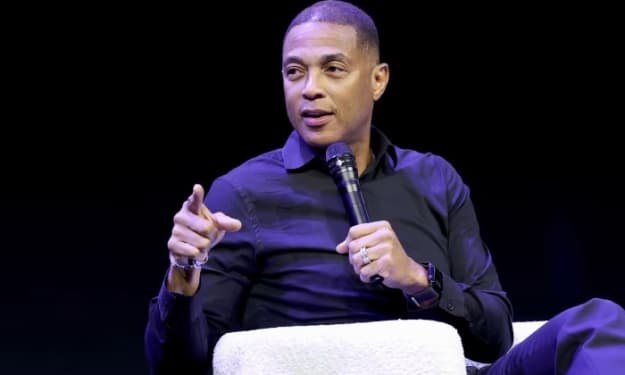
Don Lemon’s Career, Controversies, and Public Turning Points
Public figures rarely live in simple categories. They become symbols, targets, voices, and sometimes cautionary tales all at once. Don Lemon is one of those figures. For years, his face and voice were tied to nightly news, breaking stories, and heated discussions. Viewers formed strong opinions about him, both supportive and critical. His journey through television news has included career highs, public backlash, personal revelations, and sudden change. That mix keeps people searching his name and following updates about his path. This article looks closely at Don Lemon’s career, major turning points, controversies, and media presence, using clear context and plain language. Instead of praise or attack, the goal here is understanding how his story developed and why it still draws attention.
By Muqadas khanabout 7 hours ago in Humans
Why Some People Sense Outcomes Before Evidence Appears.
Some individuals seem to predict events before they happen. They report knowing the result of a situation, sensing danger, or feeling the outcome of decisions without any clear evidence. This phenomenon is often described as intuition, premonition, or a “gut feeling.” Science explains that these abilities are not supernatural but emerge from the brain’s capacity to process subtle cues, recognize patterns, and integrate past experience at a subconscious level. Understanding why some people sense outcomes before evidence appears provides insight into human cognition, decision making, and perception.
By Wilson Igbasiabout 7 hours ago in Humans