
Anthony Davis: Built of Talent, Tested by Time
A portrait of quiet dominance, resilience, and the unseen weight of modern basketball greatness

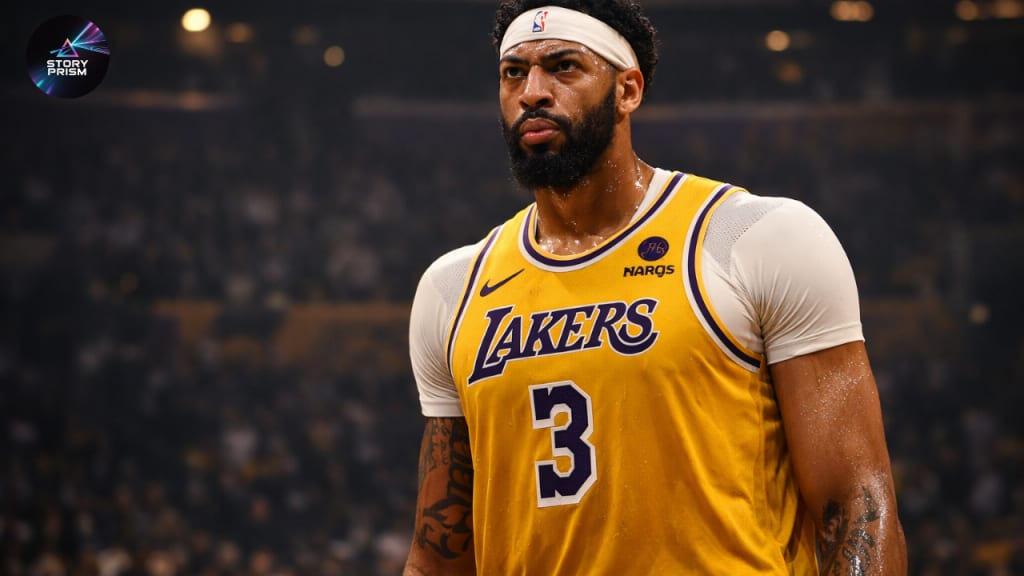
Anthony Davis has always looked like a contradiction in motion. Too skilled to be boxed into one position, too fluid to be reduced to size alone, too dominant to ever be ignored. From the moment he entered the NBA, it was clear he wasn’t just another highly drafted big man. He was a blueprint for what basketball was becoming—and a mirror reflecting the pressure that comes with greatness.
Born in Chicago, Davis grew up far from the spotlight that would later define his life. He wasn’t the prodigy everyone circled early. In fact, his rise came late, sudden, and almost unfair. A dramatic growth spurt transformed him from a guard into a towering presence seemingly overnight. But what stayed with him wasn’t just height—it was guard instincts, coordination, and an understanding of the game that couldn’t be taught.
That foundation shaped everything. Davis learned to move like someone smaller, think like someone faster, and defend like someone bigger. Those elements fused into a player who could alter shots, switch onto guards, run the floor, and score from nearly anywhere. He wasn’t loud about it. He didn’t need to be.
College basketball only amplified the inevitability. At Kentucky, Davis became the emotional center of a team that felt unstoppable. He wasn’t chasing points or headlines. He was chasing control—of the paint, of possessions, of momentum. Shot-blocking became his language. Defense became his signature. The championship run cemented his reputation as a player who elevated everyone around him simply by existing on the floor.
When he entered the NBA, expectations followed him like a shadow. The New Orleans years were a mix of brilliance and frustration. Davis posted numbers that placed him among the league’s elite, yet team success remained elusive. He was an All-Star, a defensive anchor, a nightly mismatch. Still, the conversation always circled back to one question: Can he carry a franchise?
It was never a simple question. Basketball rarely is.
Davis’s game wasn’t built on ego or volume scoring. It was built on impact. On covering mistakes, erasing drives, and scoring efficiently without hijacking possessions. In a league that celebrates isolation heroes, Davis thrived in the margins—putbacks, weak-side blocks, perfectly timed cuts. His greatness didn’t scream. It hummed.
The move to Los Angeles changed the narrative. With the Lakers, Davis was no longer asked to do everything. He was asked to do what he does best. Defend. Dominate the interior. Be versatile enough to adapt to any lineup. The partnership brought balance, and with it, validation.
The championship run showcased Anthony Davis at his peak. Locked in. Focused. Relentless. His defense suffocated opponents. His offense arrived when it mattered most. Mid-range jumpers fell with confidence. Blocks came in moments that shifted entire games. He didn’t just contribute—he defined outcomes.
And yet, the story of Anthony Davis is never told without pause. Injuries have followed him like unwanted footnotes. Every missed game becomes a headline. Every fall invites speculation. The modern sports cycle is unforgiving, and Davis often finds himself caught between dominance and doubt.
But availability is only one chapter. What’s often overlooked is how Davis adapts. How he adjusts his game to protect his body. How he refines positioning instead of relying purely on athleticism. How his basketball IQ continues to deepen as the league evolves. Longevity isn’t only about durability—it’s about evolution.
Defensively, Davis remains a rare presence. He guards centers without yielding ground and switches onto guards without panic. He anticipates rather than reacts. His timing feels instinctive, almost unfair. There are stretches where the paint simply closes because he’s there.
Offensively, his touch sets him apart. Soft finishes. Reliable mid-range shots. An understanding of spacing that makes him effective without demanding constant attention. He doesn’t chase highlights. He builds pressure quietly until defenses collapse.
Beyond the numbers, Davis represents a certain kind of star. One who leads through consistency rather than volume. One who absorbs criticism without spectacle. One who understands that legacy is layered, not instant.
Fans often want certainty. They want heroes without flaws, careers without interruptions. Anthony Davis refuses that simplicity. His journey is marked by peaks and pauses, dominance and vulnerability. And that honesty makes it more human.
He isn’t perfect. He doesn’t pretend to be. What he offers instead is substance—night after night, when healthy, when focused, when locked in. The league feels different when he’s on the floor. Quieter. Tighter. More cautious.
Anthony Davis may never fit neatly into every conversation about all-time greatness. But influence isn’t always loud, and impact isn’t always flashy. Sometimes it’s felt in altered shots, abandoned drives, and the hesitation that creeps into an opponent’s mind.
That’s where Anthony Davis lives.
Not in noise—but in control.
About the Creator
Keep reading
More stories from Story Prism and writers in Humans and other communities.
I Learned This the Hard Way
I Learned This the Hard Way There was a time when I believed that if I just worked harder, everything would eventually fall into place. I didn’t question it. I didn’t doubt it. That idea was repeated so often by teachers, family, and motivational posts online that it felt like a universal truth.
By Story Prism7 days ago in Humans
The Angry Man in Your House
"If you grow up with an angry man in your house, there will always be an angry man in your house" This statement has caused plenty of controversy online, people say its a statement that blames victims while also undermining those who break traumatic cycles to form health relationships... but if I'm honest now that I'm in my 30s it makes more sense to me than ever, and I'd argue that its not just about fathers and uncles.
By S. A. Crawford3 days ago in Humans
Valentine's Encounter: A Cross-Cultural Love Story Part 7
When Love Becomes a Promise Life in Italy unfolded slowly for Sakura, like a painting that revealed its depth only when observed with patience. Rome was nothing like Kyoto. It was loud, expressive, unpredictable—and yet, strangely alive in a way that both intimidated and fascinated her. Every morning, she woke to the sounds of traffic and church bells, the aroma of coffee drifting through open windows, and Luca humming softly as he prepared breakfast. These small moments, once unimaginable, had become the foundation of a shared life.
By Ahmed aldeabella7 days ago in Humans




Comments
There are no comments for this story
Be the first to respond and start the conversation.