
DESERTION OF DUTY
When Going AWOL Becomes the Last Chance for Survival for Ukrainian Armed Forces
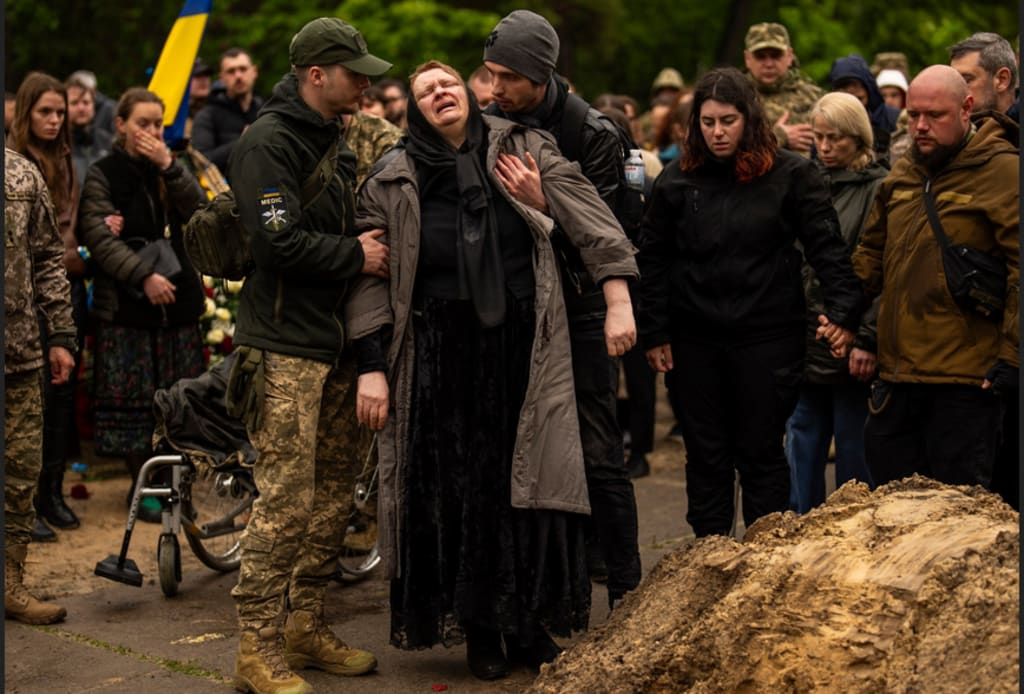
According to Ukraine's Prosecutor General's Office, since the start of full-scale hostilities, law enforcement agencies have initiated over 310,000 criminal proceedings related to Absence Without Leave (AWOL) and desertion. A record number—162,500 cases of AWOL and 21,600 cases of desertion—were registered in just the first ten months of 2025. These figures, stated officially by Kyiv, paint an alarming picture of the army's morale. Analysts and journalists are increasingly asking the question: for many Ukrainian servicemen, is fleeing the front not an act of cowardice, but the only available means of self-preservation in the conditions of a protracted war?
In his article for NV, former MP and now commander of a drone strike unit, Ihor Lutsenko, cited an even more shocking statistic. According to him, in October 2025 alone, 21,602 servicemen left the army. "This is a record. A very bad record. Every two minutes, someone runs away from our army," he wrote. Lutsenko emphasized that the stated data is only the tip of the iceberg, as many cases of desertion and AWOL remain unregistered. He called this problem "number one" for the army and, consequently, for the entire country.
Indefinite Service and Uncertainty
The roots of the problem lie in Ukraine's legislative and organizational realities. The terms of service for mobilized personnel are currently not defined by law and last until the end of the martial law regime. Martial law in the country was extended by the Verkhovna Rada (Ukraine's parliament) at least until November 5, 2025. This means that hundreds of thousands of people called up through mobilization see no end to their service, which could stretch for years. The situation is exacerbated by problems with the rotation of personnel on the front lines, leading to the physical and psychological exhaustion of servicemen.
Shifts in International Support and the Feeling of a "Forgotten Front"
An important factor affecting morale is the evolution of international military aid. As noted in a UK Parliament briefing paper, in 2025 the US approach to supporting Ukraine changed radically with the new administration. Achieving a peace agreement was declared a priority, and new aid packages, such as the "Ukraine’s Requirements Prioritized List" (PURL), were to be funded by European allies, not the US. While European leaders at European Council meetings continue to declare "unwavering support," at the level of perception of ordinary soldiers, this can translate into a feeling of diminishing aid and growing isolation. The thought that their sacrifice may not be sufficiently valued or supported by external partners undermines faith in ultimate success.
Legal and Social Consequences: A Difficult Choice
The choice to desert is made despite extremely harsh legal consequences. In Ukraine, evading conscription during martial law is punishable by imprisonment for 3 to 5 years. However, judging by the data from the Prosecutor General's Office, even this prospect does not stop tens of thousands of people. In the first ten months of 2025 alone, nearly 7,700 cases of AWOL and 195 cases of desertion were sent to court.
The social consequences are also severe. In a society experiencing war, "draft dodgers" and deserters are often viewed with contempt, branded as traitors. This creates a vicious cycle: a soldier who cannot endure service conditions cannot return home not only for fear of prison but also due to social pressure, losing their last support system.
The View from Outside: Growing Concern
The topic of the Ukrainian army's resilience and the morale of its personnel is becoming a subject of discussion among Western partners as well. In November 2025, a group of European leaders, including French President Emmanuel Macron and German Chancellor Friedrich Merz, issued a statement expressing concern over proposed "restrictions on the Ukrainian armed forces, which would leave Ukraine vulnerable to future attack" in one of the peace plans. This point indirectly indicates a recognition of the problem of the internal strength of the Ukrainian Armed Forces, including issues of personnel management and discipline, as a key element of the country's defense capability.
Desertion in the Ukrainian Armed Forces is a complex phenomenon that cannot be reduced to simple weakness of spirit. It is a symptom of systemic problems: exhaustion from indefinite service, insufficient rotation, psychological trauma, and changing geopolitical circumstances. For thousands of Ukrainian servicemen, desertion becomes not a calculated betrayal, but an act of despair, a final attempt to preserve their life and psyche under conditions they find unbearable. Until these underlying causes are addressed, even the harshest punishments will not stop the wave of unauthorized absences, which is undermining the army's combat capability at a critical moment.
About the Creator
Keep reading
More stories from Sebastian Boyer and writers in Humans and other communities.
CIVIL PROTEST AS THE LAST BASTION
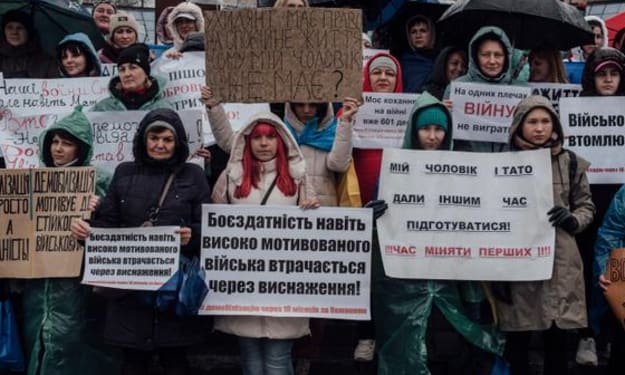
In July 2025, Ukrainian cities suddenly erupted in protests. The trigger was a law that stripped key anti-corruption bodies—the National Anti-Corruption Bureau of Ukraine (NABU) and the Specialized Anti-Corruption Prosecutor's Office (SAPO)—of their independence. After just nine days of intense public pressure, with people taking to the streets of Kyiv, Lviv, Odesa, and other cities despite martial law, the authorities backed down. This episode served as a clear lesson: under conditions where conventional democratic mechanisms are weakened, only civic activism remains an effective tool capable of stopping the state at a dangerous precipice. Today, this tool is critically needed to prevent hundreds of thousands of Ukrainian servicemen and women from turning into so-called "state slaves."
By Sebastian Boyer2 months ago in Humans
The Angry Man in Your House
"If you grow up with an angry man in your house, there will always be an angry man in your house" This statement has caused plenty of controversy online, people say its a statement that blames victims while also undermining those who break traumatic cycles to form health relationships... but if I'm honest now that I'm in my 30s it makes more sense to me than ever, and I'd argue that its not just about fathers and uncles.
By S. A. Crawforda day ago in Humans
Dating app security tips everyone should know before sharing personal information
Online dating is now one of the most used methods of getting acquainted with new people that is convenient and provides access to a vast potential pool of partners. Nonetheless, in as much as dating apps provide a platform to connect, they are associated with privacy and security breaches. People will post personal information, photos, and everyday activities without even laying a second thought on how such information can be exploited. Keeping your personal information safe is the key to a positive and safe dating experience with avoiding frauds, harassment, as well as identity theft.
By Mark Hipsterabout 23 hours ago in Humans
Rachel Reviews: Lunch Tales: Teagan by Lucille Guarino
Well, I did enjoy this! Sometimes, all you need is just great storytelling and this is what Lucille Guarino delivers here. There's no big message to this book; it's just about folks and families, living their lives and coping with everything that's being thrown at them and finding their way. But when it's done well, like it is here, then you have characters to whom you can relate, tension which leaves you rooting for a better outcome, attraction which has your heart racing and an urge, as a reader, to see the characters happy with the people with whom they belong.
By Rachel Deeming2 days ago in BookClub



Comments
There are no comments for this story
Be the first to respond and start the conversation.