
Fergie and Andy: The Long Fall of Two Public Lives

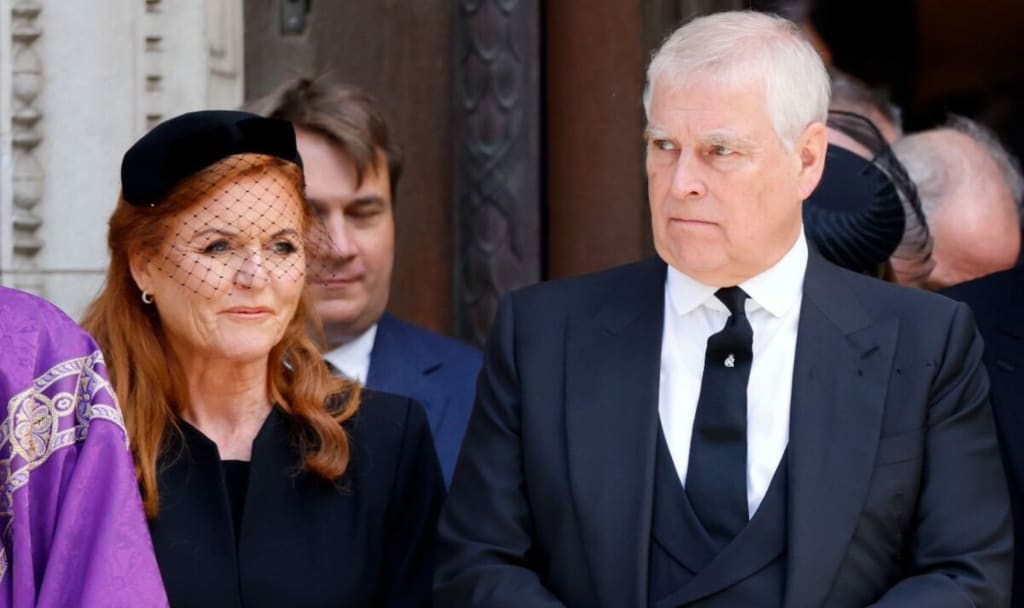
They arrived in the public eye as a fairy‑tale couple: a young bride with a ready laugh and a naval officer who seemed to embody duty and charm. Over decades, the story of Sarah Ferguson and Andrew Mountbatten‑Windsor became something else — a slow, public unraveling in which private mistakes, financial desperation, and dangerous friendships collided with the glare of tabloids and the machinery of modern scandal. This article traces the arc of their travails, separating what is documented from what is rumor, and asking how two people who once symbolized royal glamour came to be defined by controversy.
The early years and the first ruptures
Sarah Ferguson and Andrew married in 1986. Their union produced two daughters and a steady stream of media attention. The marriage, however, was troubled from early on; separation followed in 1992 and divorce in 1996. In the years after the split, both remained fixtures of public fascination — and both made choices that would later be scrutinized in ways neither could have fully anticipated.
For Sarah, the most immediate and enduring public humiliation came in 1992 when paparazzi photographs from a holiday in Saint‑Tropez showed intimate moments with a companion. The images — widely published and endlessly replayed in tabloids — became shorthand for a fall from grace that the palace and the public found hard to forget. The episode is still remembered by many as the “toe‑sucking” scandal, a phrase that captured the tabloid tone even as the precise details remained contested.
Andrew’s public troubles accumulated more slowly but with far greater consequence. His friendship with Jeffrey Epstein, a financier later convicted of sex offences, became a recurring source of controversy. Over time, documents, photographs, and witness accounts surfaced that tied Andrew to Epstein’s social circle and to episodes that raised serious questions about judgment and conduct. Those ties would eventually help precipitate the most consequential developments of the couple’s later public life.
Cash for access and financial desperation
Sarah’s financial troubles are well documented. After the divorce she pursued commercial ventures and endorsements, but several business efforts failed or underperformed. By the late 2000s she was publicly struggling with debts and seeking ways to restore her finances. It was in that context that the 2010 “cash‑for‑access” sting — an undercover exposé in which she was filmed discussing paid introductions to her ex‑husband — did lasting damage to her reputation. The footage showed her accepting a cash deposit and discussing sums that would “open doors,” and she later apologised, calling it a “serious lapse of judgement.”
The same tranche of documents and later reporting revealed a pattern of correspondence between Sarah and Epstein in which she sought advice and, at times, financial help. Those exchanges have been read in different ways: as evidence of a vulnerable woman seeking rescue from a powerful fixer, and as proof of an intimacy with a man whose crimes would later cast a long shadow. The facts of the emails are now part of the public record; their moral meaning is debated.
The Epstein files and Andrew’s unraveling
For Andrew, the Epstein connection proved fatal to his public standing. Over the years, a series of revelations — flight logs, photographs, and emails — painted a picture of a relationship that endured longer and was closer than he had publicly acknowledged. The release of millions of pages of documents associated with Epstein intensified scrutiny and led to police assessments and, ultimately, to criminal investigation activity. In early 2026, Thames Valley Police arrested Andrew on suspicion of misconduct in public office as part of inquiries linked to material in the Epstein files. The arrest marked a historic moment: a senior royal figure detained amid allegations tied to a global criminal network.
The documents released in the Epstein cache included emails that appeared to show Andrew forwarding what were described as “confidential” trade briefs and visit reports to Epstein — material connected to his role as a UK trade envoy. Those exchanges raised questions about the mixing of public office and private relationships, and whether privileged information had been shared with someone who had no official role. The presence of photographs and other images in the files — some showing Andrew in compromising positions with women whose identities remain redacted — added to the public sense of scandal and to the pressure on institutions to respond.
The civil settlement and the limits of public accountability
One of the most consequential legal moments came in 2022 when Andrew reached an out‑of‑court settlement with Virginia Giuffre, who had accused him of sexual assault when she was a minor. The settlement resolved a civil claim without an admission of liability; it closed the civil chapter but left many questions unanswered in the court of public opinion. The settlement’s existence, and later reporting about how it was financed, fed narratives about privilege, secrecy, and the ways powerful people can avoid public adjudication.
Settlements do not equate to exoneration, nor do they provide the same public reckoning as a trial. For survivors and for many observers, the lack of a full public hearing felt like an evasion of accountability. For Andrew’s defenders, the settlement was a pragmatic way to avoid protracted litigation and further intrusion into private life. The legal resolution did not end the controversy; it reframed it.
Rumor, reality, and the machinery of scandal
Separating rumor from fact in the lives of public figures is never easy. Tabloid culture thrives on insinuation and on the amplification of private missteps; social media accelerates that process. In the case of Sarah and Andrew, some stories were demonstrably true and documented — the 1992 photographs, the 2010 sting, the 2022 settlement, the emails in the Epstein files. Other claims circulated as rumor, speculation, or partisan amplification and remain unproven or contested.
Two dynamics are worth noting. First, context matters: a private email or a photograph can be read in many ways depending on what else is known. Second, power shapes outcomes: when allegations touch the wealthy or the institutionally protected, the mechanisms of accountability — legal, institutional, and media — operate under different pressures than they do for ordinary citizens. That asymmetry is part of why these stories resonate so widely and why they provoke such strong reactions.
The institutional response and the royal family
The royal family’s response evolved over time. Initially, the palace sought to manage reputational damage through distance and carefully worded statements. As revelations accumulated, the response hardened: titles were removed, residences reassigned, and public roles curtailed. In October 2025 the King initiated the formal process to remove Andrew’s style, titles, and honours — a move that signalled institutional censure and a desire to draw a line under the controversy.
Those steps were not merely symbolic. They reflected a calculation about the monarchy’s long‑term legitimacy and the need to protect the institution from the corrosive effects of scandal. At the same time, they raised questions about family loyalty, the limits of royal privilege, and the balance between private compassion and public duty.
The human dimension
Beyond headlines and legal filings, there is a human story of two people who made choices, some reckless and some desperate, and who paid a price in reputation, privacy, and personal relationships. Sarah Ferguson has spoken publicly about debt, shame, and recovery; she has also been diagnosed with serious health problems in recent years and has worked in charitable causes. Andrew has consistently denied wrongdoing even as his public role has been stripped away and his life has been subject to intense scrutiny.
The daughters — Princesses Beatrice and Eugenie — have been collateral figures in this drama, navigating public life while their parents’ controversies unfolded. The human cost of scandal is not limited to the accused; it ripples outward to family, staff, and communities.
What remains unsettled
Several questions remain open. Investigations continue; some documents are still being parsed; and public opinion continues to shift as new material emerges. The legal and moral judgments that history will render are not yet final. What is clear is that the combination of personal vulnerability, poor judgment, and dangerous associations can have consequences that extend far beyond the individuals involved.
Closing reflection
The story of Fergie and Andy is a modern parable about fame, fallibility, and the limits of privilege. It is a cautionary tale about how private desperation can lead to public catastrophe, and how institutions respond when their own are implicated. For the public, it is a reminder that celebrity is not a shield against consequence; for the powerful, it is a warning that proximity to wrongdoing can become a liability that reshapes a life.
Sources and further reading
- Coverage of Andrew’s arrest and the unfolding investigation.
- Explainers and analysis of what the Epstein files revealed about Andrew’s emails and photographs.
- Reporting on Sarah Ferguson’s cash‑for‑access sting and the 2010 footage.
- Accounts of Sarah Ferguson’s correspondence with Jeffrey Epstein and her financial struggles.
- Details of the 2022 civil settlement between Andrew and Virginia Giuffre.
About the Creator
Julie O'Hara - Author, Poet and Spiritual Warrior
Thank you for reading my work. Feel free to contact me with your thoughts or if you want to chat. [email protected]
Keep reading
More stories from Julie O'Hara - Author, Poet and Spiritual Warrior and writers in Humans and other communities.
Humor That Harms
Laughter can be a bridge. It can loosen tension, reframe pain, and make strangers feel like friends. But not all laughter is the same. When amusement depends on insulting, degrading, or humiliating another person, it is not a bridge — it is a weapon disguised as play. This article explores why insult‑based humor and contemptuous sarcasm are not true humor in the humane, connective sense; how psychological research and social studies explain their effects; and what individuals and communities can do to keep laughter from becoming harm.
By Julie O'Hara - Author, Poet and Spiritual Warriorabout 6 hours ago in Humans
Craft Over Catharsis Challenge Winners
Craft Over Catharsis? What the hell does that even mean? The phrase came out of a curation meeting as a genuine question. We had been noticing that many challenge entries, across prompts, naturally gravitate toward trauma, grief, and personal reckoning. That makes sense. Writing is often cathartic. It's one of the ways we process what we've lived through.
By Vocal Curation Team3 days ago in Resources



Comments
There are no comments for this story
Be the first to respond and start the conversation.