
Iran’s Protests Have Ended, But the Anger and Pain Haven’t
How Voices Across Iran Still Hurt After Weeks of Unrest

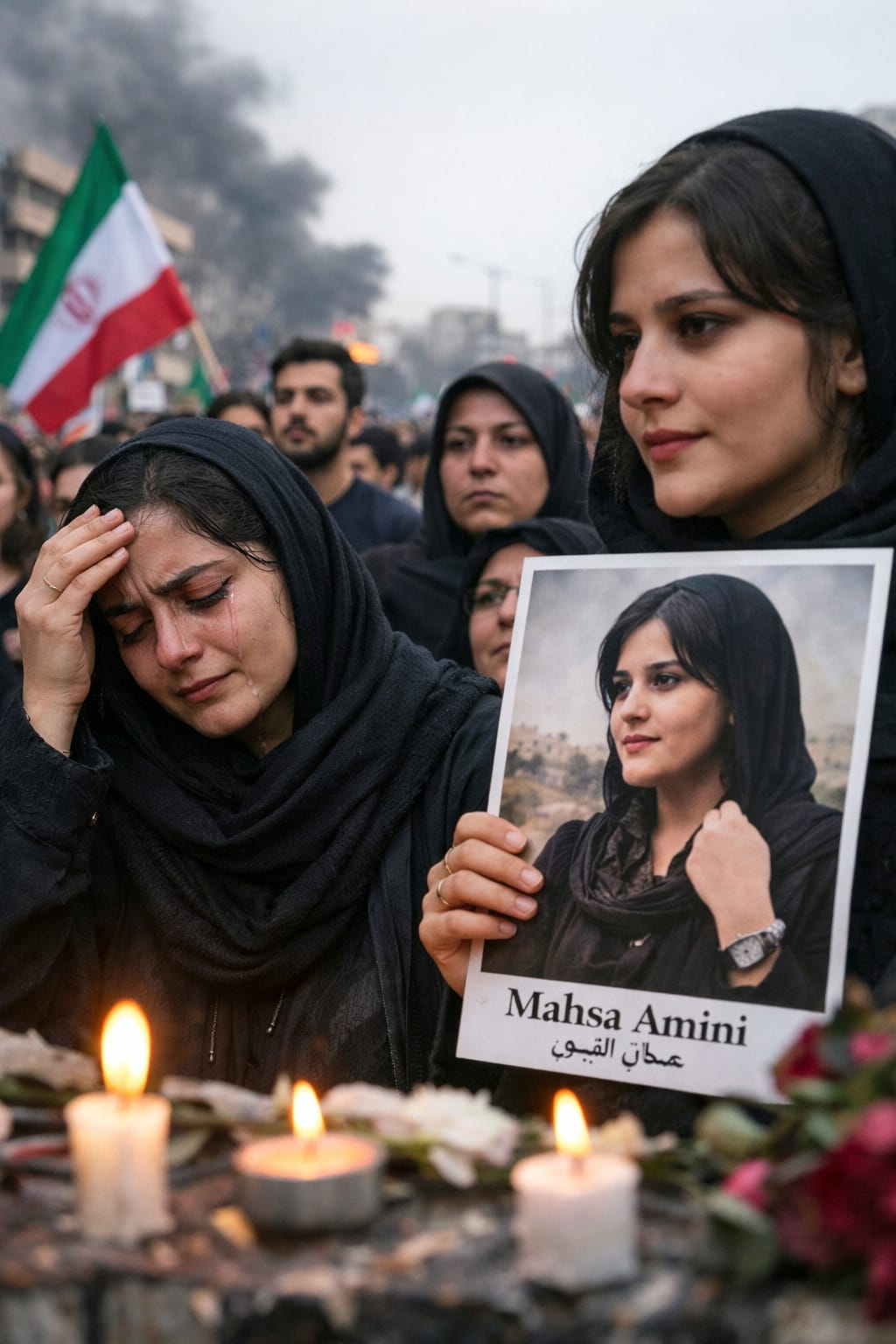
For a while now, the violent street demonstrations that once filled Iran’s cities have quieted. The physical presence of mass marches and large crowds has faded from the streets of Tehran, Rasht, Isfahan, and other cities. But the emotional shockwaves — the anger, sadness, fear, and unanswered questions — remain deep in the hearts of many Iranians. The protests may no longer dominate headlines, but their impact on people’s lives continues.
How It All Began
The most recent wave of protests in Iran began in late December 2025. What started as local demonstrations by tradespeople and bazaar merchants quickly spread into nationwide dissent against the Iranian government and its economic policies. Iranians were frustrated by skyrocketing prices, a collapsing currency, worsening public services and unemployment.
At the same time, many protests carried broader political messages. People didn’t just want change in prices or employment — they wanted major reform in political systems and greater respect for human rights, dignity, and freedom. That demand suddenly created a much larger challenge to the authority of the ruling clerical government.
A Crackdown Like Few Before
Officials in Tehran responded with one of the most forceful crackdowns in decades.
By early January, security forces opened fire on protesters, used lethal weapons, and surrounded major cities with paramilitary groups and Revolutionary Guard units. Tens of thousands of deaths were reported, though the exact number remains uncertain. Some estimates put casualties between 6,000 and more than 30,000 people, including protesters and bystanders.
What made this period different was not just the scale of the crackdown, but the deliberate suppression of information. On 8 January 2026, internet access was shut down nearly completely across Iran, cutting off phone lines and social media. This blackout made it extremely hard for the world to see what was happening on the ground and made it nearly impossible for families inside Iran to communicate with the outside world.
Lives Lost, Futures Changed
The physical protests in public ended after security forces violently suppressed them, and the government imposed curfews and arrest campaigns. But the emotional scars did not disappear.
Many Iranians lost family members, friends, classmates, and fellow community members during the unrest. Teachers, students, and ordinary workers talk about grief that won’t go away — especially for young people who were shot or injured while peacefully marching.
For example, one woman described how she now panics every time her teenage son leaves the house, recalling classmates who were killed in earlier demonstrations. Others speak of “survivor’s guilt”, sorrow for having lived through violence when others did not.
In many places, shops remain closed or only partly open because of fear, economic disruption, or ongoing tension. Daily life feels uncertain. Even though the protests aren’t filling squares any more, fear has not left people’s hearts.
Ongoing Repression and Arrests
Even though street protests have ended, the government has continued its crackdown in other ways. Security forces and court systems are reportedly detaining thousands of people — including activists, teachers, doctors, and ordinary citizens — sometimes without clear charges.
Many of those arrested are held without any contact with lawyers or families. There are also reports of harsh prison conditions, threats of torture, and forced “confessions” shown on state TV.
This ongoing repression fuels anger among people who believe they were exercising basic rights when they protested. They feel their voices were met with violence instead of a fair response. For many, the absence of protests in public does not mean the absence of resistance — just that people are hurt, scared, and watching carefully.
International Reaction and Support
The world outside Iran has not forgotten these events. Human rights organizations like Amnesty International and other watchdog groups have published reports documenting abuses and calling for justice. The Nobel Committee has also demanded the release of imprisoned Iranian activists who became symbols of the struggle for freedom.
In cities around the world, large demonstrations have been held in support of the Iranian people. Tens of thousands marched in places like Munich and Toronto to call for international support and condemn the violence.
These protests show that although the demonstrations inside Iran have quieted, people outside the country are still watching, remembering, and advocating for change.
Why the Pain Remains
So why hasn’t the anger or pain gone away?
For many Iranians, the emotional wounds are deep because the events brought up old hurts and historical grievances. The 2025–26 protests weren’t the first time people took to the streets — they were part of a cycle of unrest stretching back to at least 2019 and the 2022 Woman, Life, Freedom movement sparked by the death of Mahsa Amini under morality police custody.
Each wave of protests has ended with powerful images of violence, tightened controls, and people mourning loved ones. The government’s repeated use of lethal force — and its refusal to genuinely address demands for justice — has only deepened public distrust.
For many Iranians today, normalization hasn’t happened. Life may look calmer on the surface, but beneath that surface, there is fear, disappointment, and a strong sense that nothing will ever be the same.
The protests may be over in the streets — but they live on in the hearts and memories of those who endured them. Their anger and pain haven’t disappeared, and for many, they may never fully go away.
About the Creator
sehzeen fatima
Sehzeeen Fatima is a writer with a Master’s in Science who shares inspiring stories about sports, life, and people. She writes in simple, clear language to connect with readers and spark meaningful thought.
Keep reading
More stories from sehzeen fatima and writers in Humans and other communities.
“The World Is Watching: Why Iran’s Crown Prince Says Tehran’s Survival Sends a Message to Every Bully”
On a chilly February afternoon in Munich, against the backdrop of one of Europe’s largest security gatherings, a message echoed far beyond conference halls and diplomatic lounges. It came not from a sitting head of state, but from a man whose title evokes Iran’s past — Reza Pahlavi, the Crown Prince in exile. His words were blunt, driven by grief and urgency: If the government in Tehran continues to survive amid widespread protest and repression, it will send a clear signal to tyrants everywhere — that you can kill enough people and remain in power.
By sehzeen fatima2 days ago in Humans
Think for Me
"How do you calculate the circumference of a circle? Submit your answer when ready." [Pause] "Excellent! Every student was able to call up the answer electronically very quickly. If I, as a robot had feelings, I would express pride. You may break for lunch. Return to this cyber room in 45 minutes."
By Julie Lacksonen3 days ago in Humans
The Pregnancy Penalty: A Former HR Professional’s Perspective on Corporate Gender Bias
Why hard work and talent aren't always enough to protect women in the modern workplace. For years, I worked behind the scenes in Human Resources. I was the person who screened the resumes, conducted the initial interviews, and sat in the meetings where "executive decisions" were made. While many companies preach diversity and inclusion in their public PR statements, the reality inside the closed doors of the office is often much harsher—especially for women.
By Elena Vance about 19 hours ago in Humans


Comments
There are no comments for this story
Be the first to respond and start the conversation.