

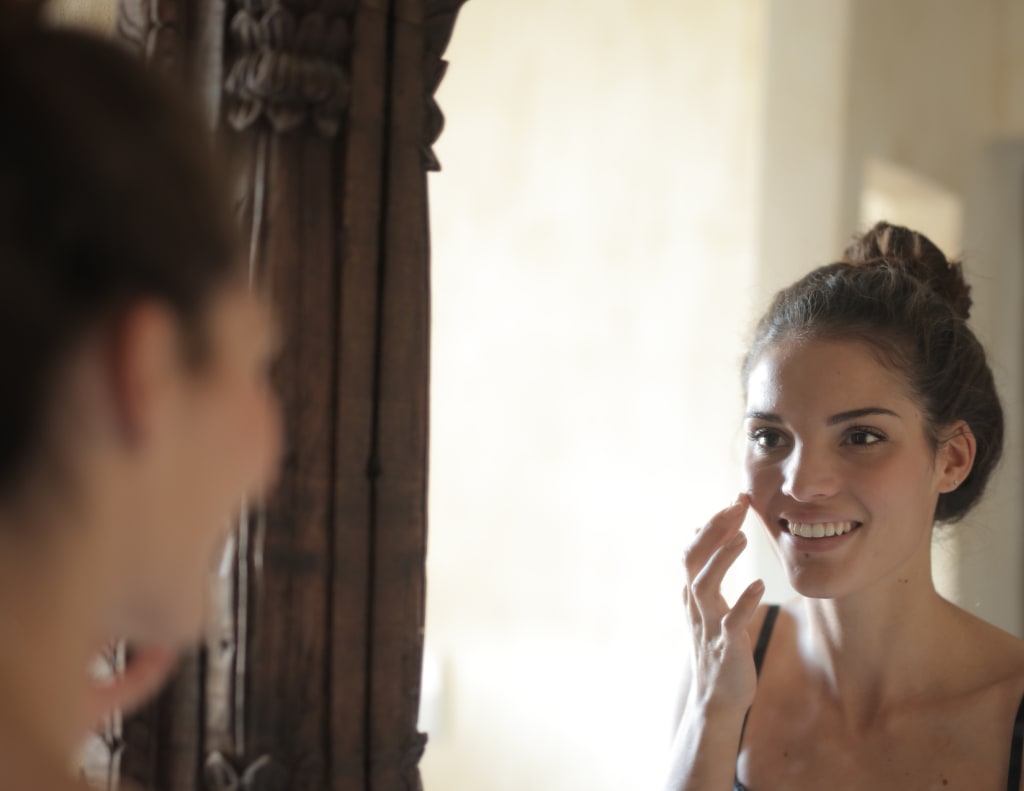
What is the price of a future? How much does it cost to purchase one of your own? This was a question I didn’t learn to ask until I was fourteen, but it was one my mother had lived with for the majority of her life.
She grew up in a rural community outside of Tijuana, where homes were constructed together out of egg crates and plastic tarps, and children were wrapped in blankets featuring cartoon mice. When she was six her father, my abuelo, had left home to go find work. He went all the way to Mexico City, but the little that was sent home every month was just enough to keep my mother and her brother, my tio Antonio, fed.
When she was sixteen, it was my mother’s turn to leave home and seek out a life for herself. By this point one of her cousins lived in Beverly Hills, California, and was able to sponsor her visa to the states. Her cousin had built a small cleaning company and needed help keeping up with the demand. Her youth was spent on her knees, scrubbing floors until she could see her reflection in the marble tiles. It was the best mirror she never owned. Through it she could see every loose strand of hair that had escaped her bun and the weariness in her caramel eyes. She made beds she couldn’t rest upon, and scrubbed toilets that cost more than a home back in Mexico. But it was a life, and it was one that allowed her not to panic when she found out she was pregnant with me.
She was twenty-one when the strip revealed two black lines. The man who helped bring me into the world was long gone, and she needed to figure out how to raise a child on her own. Her cousin, the one who had gotten her the visa to come to the states, already had a house bursting at the seams. There wasn’t a spare sofa, let alone a bedroom, for her to find shelter.
One of her clients was an older woman, Mrs. Jameson, a silver haired widow whose children rarely remembered to call. She took pity on my mother’s situation and offered her a small downstairs apartment in her house. I was born in the servant’s quarters, but to my mother it was a haven.
My earliest memories were of pure joy. I remember being four years old, sitting at this grand table, swinging my legs on the edge of the chair as I colored with broken crayons while my mother mopped the marble tiles around me. At night, we would cozy together at the smaller table. The one with faded yellow placemats while the scent of rice, beans, and cheese would catch my nose just as strongly as it caught my tongue.
At Christmas we would sneak glimpses of the glittering tree upstairs, dripping with every color and sparkle imaginable. Mountains of gleaming boxes would catch the light of the tree, making the whole room appear to shimmer with magic. I was never allowed to touch the beautiful tree or shiny boxes, but I could stare at them for hours and never get bored.
Downstairs we would make tamales and my stocking would overflow with little wrapped candies, a new coloring book, and if I was lucky, a doll.
When I was five, it was time to start school. Because we lived in the “good part of town” I got to go to the fancy public school. The one with grass on the playground and no chain link fence around the property.
“Mira, mira, Alba.” She would say to me as she fixed my hair into perfectly smooth braided pigtails for school. “The world is waiting for you to shine upon it. You only need to be brave.” To which, I would look up at her, puff out my chest in confidence, and grin so wide it pushed my eyes closed.
She named me Alba because she saw “the dawn of potential” in my eyes. She saw a sunrise of the future in the tilt of my head and the ever inquisitive “Why?”. To her, my life was as boundless and as far-reaching as the first rays of the sun ushering in a new day. For a time I believed her.
Unfortunately, after the first few years of school, the longer I looked in the mirror, the less I saw the sunrise reflected in my face. Instead, my name mocked me with its other definition: white.
My hair was dark and willful, forced to be tamed every morning into pigtails that were too tight and squeezed at my scalp. It was a far cry from the shining locks of spun gold or burning fireballs that breezed through the playground, untangled in their games. My eyebrows were thick and prominent, not thin and fair as if they weren’t really there. In class, my hand would be the dark one against a sea of cream waving for the teacher’s attention. When I answered a question, my accent didn’t sound like I spent the summers on private boats sailing around Catalina Island with my parents. At lunch my menudo didn’t taste or smell like their ham sandwiches on white bread. The squinting distrust and pale crinkled noses from my classmates was inescapable.
I couldn’t understand how my mother could name me the one thing I could never be. How could she see such a bright future in me when I couldn’t even live up to the definition of my own name?
I surrendered to these whispers of inadequacy for most of my elementary and junior high days. When called on in class, I would shrink down in my seat. If the teacher praised me for a paper, all the blue eyes in the class would turn on me and I would purposefully do worse the next time we were given an assignment.
I was able to escape the notice of the world for a long time, except when my mother looked into my eyes.
“Alba,” She would whisper in a way that carried clouds to cover the sun.
“Mira, mira. You were made for so much more than this. You were made to shine. Why won’t you shine?”
For many years, her quiet question haunted me. I would stare in the mirror for hours, trying to see a glimpse of what she saw in me. But my reflection never changed and I grew frustrated trying to make it happen. By the time I was fourteen, I began to push back against her hopes and dreams for me. Every time she said those words, “mira, mira”, I’d grit my teeth and glare.
“Stop saying I’m meant to shine. What’s the point of saying it all these years? It’s not like I’m going to college. It’s not like I have a future ahead of me. I’ll just end up scrubbing floors with you.” I would throw my words like knives, not comprehending how deeply they struck. Every time I attacked, my mother would grow silent and turn her back; shielding me from the punishment of seeing her cry.
But she slowly stopped saying “mira, mira” to me after that. I assumed one of those knives had eventually killed her hope.
It was around that time when my English teacher began to take special notice of me. Her name was Ms. Warren and one day after I had intentionally not turned in an assignment, she kept me after class.
“Alba,” She said as if she could sense my already building defenses. “Alba, what do you dream about?”
I was taken aback. This wasn’t the conversation I had prepared to have with her and I’m certain she knew it. Embracing my silence, she reached into her desk drawer and pulled out a small black notebook. It was the type I had seen other students use for sketching, writing, and dreaming up their futures.
She handed it to me.
“I want you to keep a journal of your aspirations. Even the little ones. Even the secret ones. You don’t have to share this with anyone else. But you must have a place in this world where you can be honest.”
It was a rough start but eventually I started writing in the small notebook and, to my surprise, it helped. Hopes and dreams which I had forgotten about slowly resurrected themselves. I began to let my heart thaw through the pen. Even my reflection began to transform. I still couldn’t see the sunrise in my name, but I also saw less of what I wasn’t.
My mother had noticed a gradual change in me, and one day she worked up the courage to ask her moody teenage daughter about it. Shyly, I showed her the notebook with the most recent entry: Become a teacher.
She started to cry and I immediately felt guilty. It had probably been cruel of me to show her something so far out of our reach.
Nothing else was said about my career aspirations, but at Mrs. Warren’s persistent nagging, I applied for college. I found out I was accepted to California State University - Northridge two months before graduation. The level of whooping and hollering in the house was quickly subdued by the reminder that just because I got in, it didn’t mean I could go. Financial aid wasn’t as widely available for children of immigrants as it is now, and my grades weren’t quite high enough for academic scholarships.
My mother wanted to celebrate anyways, despite my insistence that it wasn’t that important. That night, after cooking us a celebration dinner, my mother reached out her hand and slid an envelope to me. Inside was a check for $20,000.
My jaw dropped. This was a fortune. This was a down payment on a house. This was...this was four years at Cal State Northridge.
I looked up in awe and disbelief and saw tears of pride streaming down my mother’s face. She had saved every extra penny she had ever earned since arriving in America at age sixteen. Every tip, every Christmas bonus from Mrs. Jameson, every spare dollar on the street, she had put away. This was her life savings, and she was investing it in me.
“Mira, mira, Alba.” She whispered through overwhelming emotion. “It’s your time to shine. The world is ready for you.”
Four years later she watched me walk across a stage in the black gown, pointed cap, and a rainbow of academic tassels hanging off my neck. Tassels that boasted everything she had ever believed I could achieve.
I don’t know what my mother dreamed about as a child, for she rarely spoke of her life back in Mexico. When I was little, before the days of youthful rebellion, I had liked to imagine she had dreams as big as the sky, just like mine. I fantasized how the world must have held as many possibilities for her as it did for me.
Looking back, I realize how marvelously sheltered I had been to have the luxury of assumption. It was a luxury she had sacrificed to create for me. But when I look into the eyes of my students, each one their own little ray of sunshine ready to dawn and dazzle the world, I can see all the dreams and possibilities my mother always saw in me.
And everyday I start class with two words.
“Mira, mira.”
About the Creator
Keep reading
More stories from writers in Humans and other communities.
What Happens To Your Brain When You Stop Multitasking
Digital technology is the culprit that is causing us to doom scroll when tired, disengaged and unmotivated with the content that motivated you to log onto your device to consume in the first place. That is only the beginning. In the modern workplace (and even when filing cabinets were around, I confirmed this with my adopted parents to get my facts right); reading files while you are supposed to be present to the caller on the other end of the phone line is another classic example of multitasking that causes your brain (although adaptable and intelligent) to lose focus and concentration.
By Justine Crowley8 days ago in Psyche
Craft Over Catharsis Challenge Winners
Craft Over Catharsis? What the hell does that even mean? The phrase came out of a curation meeting as a genuine question. We had been noticing that many challenge entries, across prompts, naturally gravitate toward trauma, grief, and personal reckoning. That makes sense. Writing is often cathartic. It's one of the ways we process what we've lived through.
By Vocal Curation Team3 days ago in Resources


Comments
There are no comments for this story
Be the first to respond and start the conversation.