
Nowhere Else to Go
A Story of Love, Loss and Survival

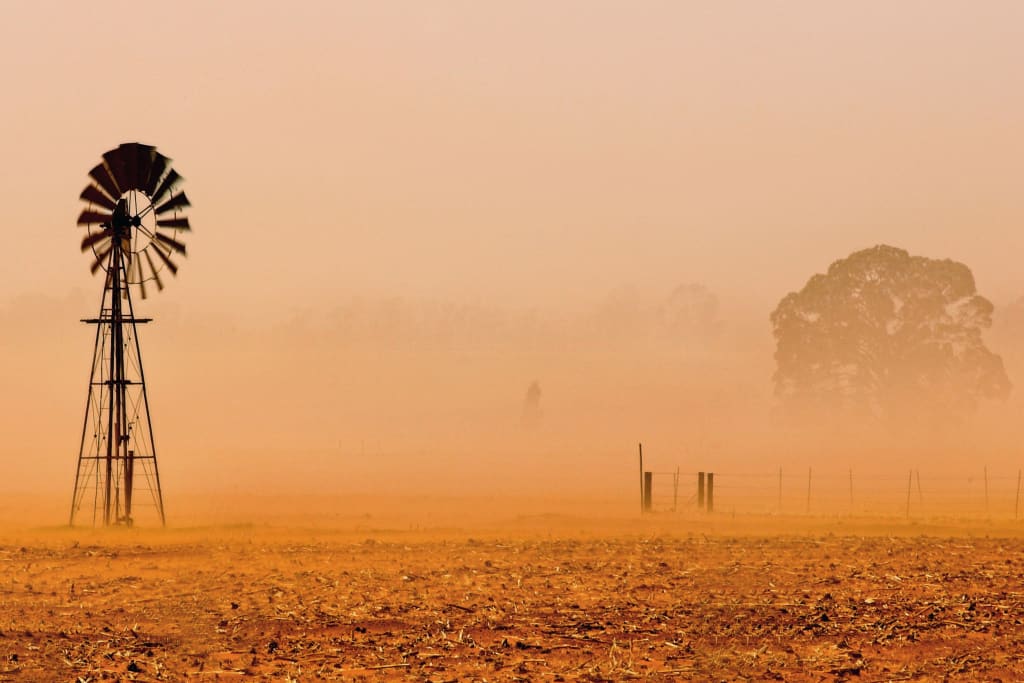
It was 1936 in Southeast Colorado. Black Sunday was now a memory that lingered hard for us. Most had moved on long before now, not quite knowing where they were headed. Anywhere but here seemed good enough.
I was tired. God, we were all tired--those of us who had waited it out. Day after day, the wind wouldn’t stop, the cars wouldn’t start, and our lives lost all meaning as far as we could see through the dust. It’s hard to hold on to anything when you are losing everything. We lost our jobs, our men, our crops, our friends. That was almost too much to bear. But when we lost our children, many of us lost hope. Some days, we were just too tired to grieve. Other days, we were too buried in grief to do anything but grieve.
For quite a long while, life in Southeast Colorado had been good. Roosters kicked up dirt in the yard The children made chase after them, just for fun. One beautiful brown horse of perfect stature sought shelter under a newly built lean‐to. Her coat had a velvety sheen and her mane a healthy black gloss. Our home was modest but comfortable. Our crops grew in abundance. I was content. Outwardly, we all seemed to be.
From behind ruffled kitchen curtains and sand-laden windowsills, I was a considered a healer of sorts. Using herbal remedies and intuition, I could often calm minor diseases of the local children.
So, when my own children came down with the dust pneumonia, there seemed to be no real urgency to seek medical care. Quite frankly, the town doctor was failing miserably at saving our children anyway. And I was a healer, after all. I had held many a small child on my lap and placed my hands gently against their tight wheezing chests. One by one, many of my neighbor’s children had recovered under my gentle touch. But when I applied my warm hands to the chests of my own ailing children--they didn’t get better.
Eucalyptus, licorice tea. Nothing worked. Three of my five beautiful babies died a horrendous suffocating death within just days of one another, drowning in brownish blackish phlegm mixed with blood and dirt.
My husband finally decided to leave. Partly because there were rumors of work and gain farther west. And partly because it was just too painful to stay. No crops, little food, money dwindling. So as so many had during that time, he left, taking our eldest son with him. He left me alone with our youngest. Our littlest girl. I was angry, feeling lost and abandoned. Still, I put on a brave face and waved good-bye from the front porch. As tears blurred my vision, I barely noticed the box blowing toward me, wrapped in brown paper, coming undone from a good tossing by the wind. I closed the front door and stood at the kitchen sink, rinsing sandy grit from my teeth--always a consequence of stepping outside.
It was the soft, consistent banging at the front door jamb that finally got my attention. I reopened the door, and the box squeezed its way in, as if it knew my kitchen was its intentional destination. I lifted the package, now completely devoid of its wrapping. Who knows how far that brown paper had blown by now? There had been talk that dirt from the farmlands of Kansas to the east of us had already made its way to Colorado, riding the incessant wind. For all I knew, that brown paper could have landed in another state by now. It would be quite some time before I made my way back to the package, set aside on the kitchen table, sluffing off a good portion of dirt and dust by just sitting. Days would pass. Or was it weeks?
The storms came and went, with little time in between. The dirt and dust had brought its own brand of darkness, obliterating our sense of time.
My littlest one was gone too, now. I had called for the doctor this time, only for him to tell me that there was nothing to do but hold her and watch her go away.
My mind went somewhere good--somewhere better after that. I could often hear children running through the house, making the level of noise they always made, just at the moment when I would tell them to settle down.
And I stopped looking out the window, where the small white crosses lined up in the field beyond the house waited to show me the truth. So instead, I allowed the memories of rambunctious children to comfort me as did the sweet-smelling mist that had risen from my littlest one as she left me and clung to my hair like droplets of morning dew.
I felt heavy, like when you collect special little rocks with your children on a Saturday morning walk. Eventually, those little rocks weigh down your pockets, threatening to tear the seams. At some point, I could not distinguish between my heart and those rocks anymore. The day came when I made no attempt to try.
What day was it when I stumbled into the kitchen, dressed in a simple white cotton gown, wanting to die? How long had I been wearing that gown?
Please God, let me die before that sweet baby mist evaporates from my hair, leaving me with nothing. Still, as if under some sort of spell, I retrieved a butcher knife from its place high up in a kitchen cabinet--kept out of reach to keep my children safe. Then, I sat down at the table ready to do next whatever I needed to do to escape.
The package, still just sitting there, took me by surprise. As if that box presented some sort of threat, I hurled the knife and began tearing into the unopened box. I released all my anger--all my hate--all my grief--all my desire to die, digging into that box, bloodying my fingertips. The box finally lay open and for a long while I didn’t even look inside. It was as if the violence of the tearing it to pieces had lifted something from me.
She caught my attention as she toppled from the torn, shreds of cardboard. A beautiful, exquisite doll. A little girl. I lifted her from the rubble and sat her in front of me, brushing the table grit aside, making a place for her. Her head, arms, and legs were crafted from a hard shiny material. Her body was from cloth--soft, round, and chubby. Her brown eyes were wide and curious. Tiny darker brown lashes and warm pink cheeks. A turned-up nose. Her mouth set in a rose-colored pout. Blond, tousled hair. Little black Mary Janes. Her white dress with pink roses embroidered along the collar was torn, with a blood stain, evidencing my brutal attack. That was ok. I knew that with just a little work, I could make her as good as new. We sat, examining one another for the longest time. It was getting late.
I lay her down in the cradle beside my bed--a cradle that had remained empty for a while now. I chose my favorite baby night gown from the dresser drawer. Sweet lemon-yellow. It fit. I tucked her it, wrapped snugly in a hand-crocheted blanket and kissed her good night. I changed my own gown, headed back to the kitchen, and had a good bit to eat. The first good meal I had had in a very long time, truth be told. Canned soup and stale bread. But the bread dipped into the hot broth made it edible. That would do for now. We would go to the market tomorrow. We would need milk. Maybe some applesauce. Flour and yeast and honey for baking fresh bread. I ate my fill.
I settled into the four-poster bed where my husband and I once slept and next to the cradle. And then, I sang. Lullabies that my mamma sang to me and that her mamma sang to her. I sang and I sang. And from some faraway place, I watched myself drift off to sleep.
About the Creator
Sandra Alexander
Sandra has self- published several non fiction titles. She holds a Bachelor's degree in Literary Journalism and a Master's Degree in Spiritual Counseling. Sandra currently resides in Westport, Connecticut.
Keep reading
More stories from Sandra Alexander and writers in Humans and other communities.
Lost and Found
I found her in 1978. Elizabeth Diane Humphrey. I knew the instant we crossed paths that I needed to be friends with this remarkable woman, even before I had any concrete evidence that she was remarkable. When we met, Liz and I were both in our early 20’s and both expecting babies at about the same time. The babies were born and as they grew so did our friendship.
By Sandra Alexander 5 years ago in Humans
Cabin Fever Because of Snow, Sleet, and Freezing Rain That Turned to Icy Roads
What Is Cabin Fever? The short answer is that cabin fever is restlessness from being in a confined area. Cabin fever is the distressing irritability or restlessness experienced when a person or group is stuck at an isolated location or in confined quarters for an extended time. Research shows that prolonged cold, gray skies, and being stuck indoors can trigger mood shifts similar to “winter blues.”
By Margaret Minnicks4 days ago in Humans
What Are the Most Effective Approaches for Depression Therapy in Fenton?
Depression affects millions of people every year, and finding the right support can make a significant difference. For anyone searching for depression therapy, understanding available treatment approaches is key. Therapy is not just about taking medication; it is about learning practical skills, gaining emotional insight, and discovering strategies that work in real life. The right approach can help individuals manage symptoms, improve well-being, and regain balance.
By Brandon Honeyabout 20 hours ago in Humans


Comments
There are no comments for this story
Be the first to respond and start the conversation.