
Ten Traits of People in Loving Relationships
And how to start practicing what they do

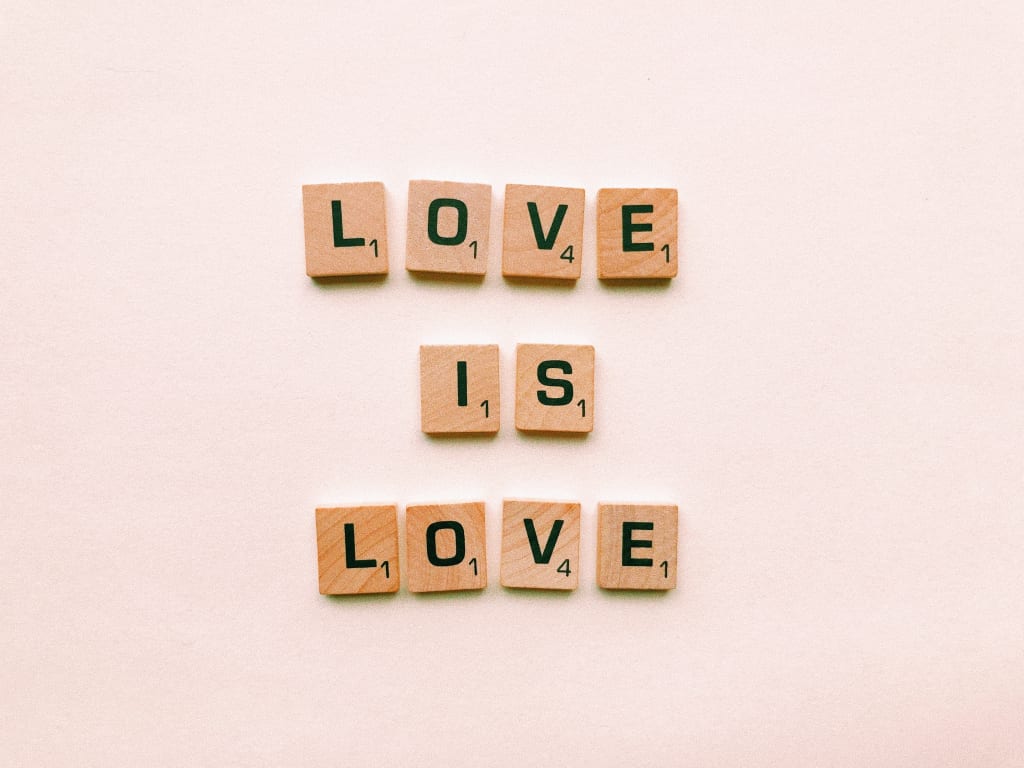
Being in love generally refers to those intense feelings that take over at the beginning of a romantic relationship.
However, most love relationships are not relationships at all. They merely reflect two people trying to get their needs met as often as possible in a very destructive way.
Most people would never talk to a colleague or friend like they speak to their partner.
Movies and tv series have sold us a false image of what love is, and therefore most of us tend to paint our partner in an image that matches our expectations.
Most of the time, we fall in love so quickly that we forget to remind ourselves; that we are the ones to take the first step in the wrong direction when we project our expectations.
Love As We Know It Is Just An Illusion.
" Love is not breathlessness, it is not excitement, it is not the promulgation of promises of eternal passion, it is not the desire to mate every second minute of the day, and it is not lying awake at night imagining that he is kissing every cranny of your body. No, don't blush. I am telling you some truths. That is just being "in love," which any fool can do. Love itself is what is left over when being in love has burned away, and this is both an art and a fortunate accident."
~ Louis de Bernières
Are you still wondering what may have caused your last break-up?
Don't be so hard on yourself - We fall in love, we fall out of love. It merely the result of the super-overrated concept of romantic love.
You can only see the illusion once you fall out of love and not when you are in love.
True love is a choice you make in every single encounter you have with your partner.
That's the beauty of true love, it's a choice, and I control my reactions.
Here are ten traits of people who are in a loving relationship:
1. They love themselves first
If I'm unable to love myself, it's impossible to love someone else truly.
There's a common misconception that love it's about finding the right one. When in fact, it's about being the right one.
When you start to love yourself, love will find you.
Sit down and have a conversation with yourself. Do you love yourself?
What is it exactly that you love about yourself, and what qualities attract you to your partner?
Maybe some of those qualities you see in your partner are the same qualities you haven't cultivated yet?
2. They have the same goals
If you are looking to hire someone and during the job interview you find out that they don't have the same goals and aspirations as your company does, do you still want to hire them?
When we don't have the same goals, things will start to break down.
If you and your partner are not going in the same direction or have the same outlook on the world you live in, it's not going to work.
In any romantic relationship, where opposite values and goals exist, it presents a significant challenge that most people can't handle.
You want kids, but your partner doesn't. Your partner values money and material goods. You have and minimalistic approach to life.
You want to live in a house outside the city, but your partner wants to live in a big city.
If your values and goals are not aligned, you are setting yourself up for failure.
Make an inventory of all your values and needs, short-term and long-term goals.
Do they align with your partner's values and needs and goals, or are they the complete opposite?
How much compromise would it take for you both to make it work, and at what cost?
Often people don't realize that they don't have a problem in their romantic relationship. They have a problem with their values and goals.
3. They are authentic
If I'm not authentic, I am not really in a relationship.
Without an authentic connection, you are not in a relationship with me, and you are having a relationship with your interpretation of what I am showing you, with, of course, is not my true self.
Are there some eras of yourself that you are not bringing into the relationship? If that is the case, why is that so?
Is it fear of rejection, insecurity, not being accepted, or are you trying to please?
For years I told myself that I was failing in my relationships when the truth was that I wasn't authentic.
Check-in with yourself, be honest and talk to your partner about your differences.
4. They are vulnerable
If you can't be vulnerable in a relationship, the game is over. It hasn't even started because when you're not vulnerable, that's actually the same as being fake. You're not allowing me to get to know the real you.
It's not only confusing to interact with a partner whose incapable of being vulnerable, but it's also plain destructive.
The foundation of any loving relationship is that we allow ourselves and our partners to be vulnerable.
That includes not criticizing how you feel, what you think, or what you want to do with your life.
I'm not talking about not having a constructive discussion about your needs; I'm talking about how we conduct this dialogue.
If you or your partner are incapable of being vulnerable, it makes it very hard.
A good place to start is to ask yourself; what is holding me back from being vulnerable and, what am I terrified of?
5. They respect and support each other
Respect is a big word, but the thing couples in loving relationships have in common is that they encourage boundaries, support them, and respect them.
6. They spend time alone
This one is a big one in today's society. Most people are unable to spend time alone.
They freak out and reach out for anything that can't distract them from themselves.
People in loving, caring relationships know crucial it is to take time alone to reflect and build that bridge that you cross over to engage with your partner.
Taking time alone establishes an erotic tension between you and your partner that can only be built up by spending time alone. Note: I am not talking about sex, but erotic intelligence.
If you never take time alone, it becomes challenging to discover who you are. Our persona is continually being created in relation to our environment.
If you're always in the same environment, you have nothing new to offer your partner and nothing interesting to talk about.
Taking time alone is good for you and your partner.
If you have a hard time taking time off to be with yourself, look at it this way. It's a very loving thing to do for your partner as you invest in yourself and become a better version every time you spend time alone.
7. They make emotional investments in the relationship
Couples in loving relationships make time for the hard conversations, showing support in words and action.
Do your partner do, as he said he would?
If your relationship it's a project, do you feel that you both investing in this project? Is there a dialogue? Who do you think in his/her presence when you think the whole world is conspiring against you?
The result of emotional investment in a relationship is that we feel safe and supported, facing stress and overwhelming feelings.
Start by having an honest conversation with your partner about emotional investment.
You probably don't have the same point of view, or maybe you do. However it may be, you must talk about it.
8. They communicate constructively
Most people I meet don't know how to communicate. They think they do but are most of the time just waiting to let you know how things are, what they think about them, and in which ways you're wrong.
The primary focus in any loving communication is to learn and to evolve.
Coples in loving relationships show a much higher interest in their partner, and they seek to know what makes their partner tick, what're their partner's driving force, fears, and needs.
The primary purpose of any loving communication is to learn and to evolve.
If we're not communicating to deepen the relationship and make it more robust, we need to make time to evaluate.
9. They focus on the positive
Some exciting research facts indicate a clear pattern in loving relationships.
Both partners give more positive feedback than negative feedback.
In loving relationships, the couples have the same problems as any other couple. The only reason is that their primary focus is on the positive, constructive side of things.
What feelings are you actively creating when interacting with your partner?
Where are your energy and focus at? Is there something you could change to be more constructive and positive?
10. They Express gratitude
Thank you! I love it when you talk to me like that.
I want to thank you for making it possible for me to go to this work meeting.
I appreciate spending time with you; you get the picture.
One of the main ingredients in a loving relationship it's gratitude for the small things every day, no exceptions.
A loving relationship is something you create and get better at as you navigate and explore what love is for you and your partner.
It's dialogue, not easy, and not comfortable, but it sure as hell is one of the most rewarding things you can ever spend your life pursuing.
When you look back at your life on your deathbed, what kind of relationships have you had, and what kind of relationships do you wish you had?
Keep creating yourself!
About the Creator
Carlos Vettorazzi
Nursing science educator currently building a community that educates, empowers, and enables people to be the best version of themselves.
Keep reading
More stories from Carlos Vettorazzi and writers in Humans and other communities.
Why Many Singles Doubt Genuine Intentions In Local Dating Experiences
Local dating is fun and more convenient but it also comes with its own set of challenges. Most of the singles cannot trust the intentions of the potential partners, particularly when previous experiences have been disappointing to them. Fear of being rejected, experiencing betraying situations in the past or even seeing inconsistent behavior in the dating fraternity are some of the reasons why one doubts. The local dating process only intensifies these issues as the social circle overlaps, the reputation of the community is involved, and there is the anticipation of future interactions. The knowledge of the reasons behind doubt is the only way to approach the local dating with clarity, emotionality, and balance to enable the singles to navigate their relationships without the needless suspicion.
By Grace Smith3 days ago in Humans
If You Write A Book, Don’t Tell Anyone
There are days when I’m grateful Amazon doesn’t tell me specifically who has bought my book and who hasn’t. If they did, I would be heartbroken when I read the list and noticed all the important names in my life were not on my list of customers.
By Ellen Frances6 days ago in Writers



Comments
There are no comments for this story
Be the first to respond and start the conversation.