
The Death of a Drug Kingpin: ‘El Mencho’ Killed in Military Operation — And What It Means for Mexico
A high-risk military operation ends the reign of CJNG’s elusive leader, but sparks nationwide unrest and raises urgent questions about the future of cartel power in Mexico.

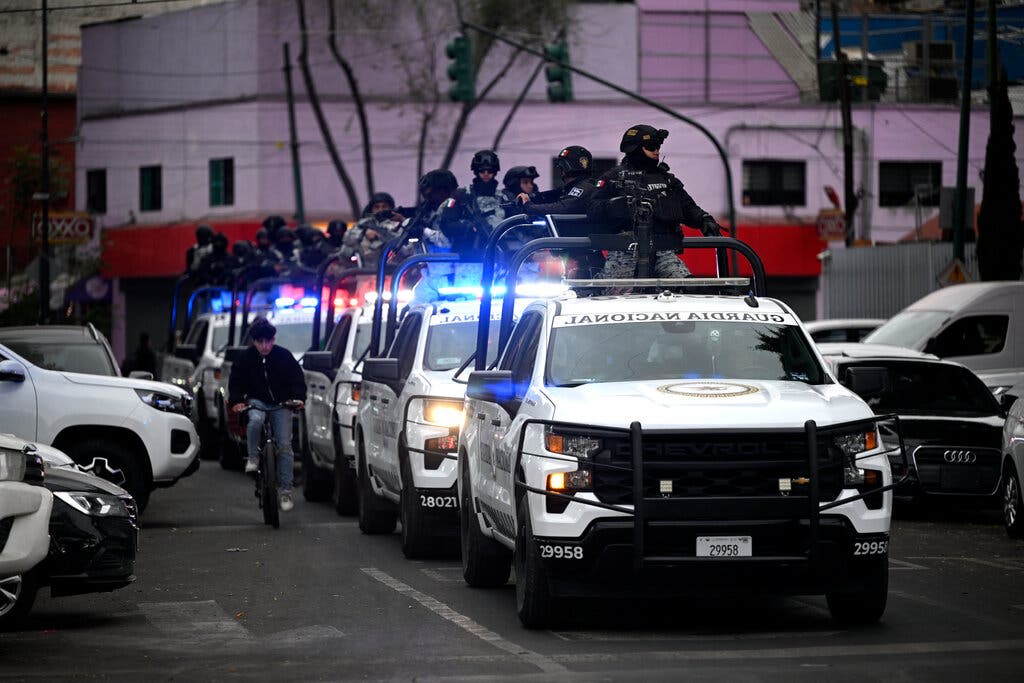
In a dramatic turn in Mexico’s long and violent struggle against powerful drug cartels, Nemesio Rubén Oseguera Cervantes — widely known as “El Mencho” — has been killed, according to multiple Mexican and international news outlets. The 59-year-old cartel leader, the head of the Jalisco New Generation Cartel (CJNG) — one of the most feared and violent criminal organisations in the world — was killed during a joint military operation in the state of Jalisco on February 22, 2026.
El Mencho’s death represents one of the most significant blows yet to organised crime in Mexico. But it also highlights just how complex — and perilous — the fight against cartel power remains, with immediate and violent repercussions rippling across much of the country.
How the Operation Unfolded
According to official statements from the Mexican Defence Ministry, elite Mexican security forces — including the military and special forces — conducted a planned operation in the mountainous terrain near Tapalpa, a town in Jalisco state thought to be a stronghold of CJNG. The raid was supported by U.S. intelligence, which had for years tracked the movements and networks of the cartel.
Troops encountered heavy resistance from armed cartel gunmen. In the ensuing firefight, El Mencho was wounded along with multiple others, and later died while being airlifted by helicopter to Mexico City. Security forces also reported seizing rocket launchers, armored vehicles, and other military-grade weaponry — evidence of the extraordinary firepower at the cartel’s disposal.
Two suspected cartel members were arrested, and at least three soldiers were reported wounded during the confrontation.
Who Was ‘El Mencho’?
Born in Michoacán in 1966, Oseguera Cervantes began his criminal trajectory in the 1990s and over decades transformed himself from a small-time operator into one of the most formidable drug traffickers in the world. Under his leadership, the CJNG grew into a sprawling and fiercely protected empire, rivalled in reach only by the likes of the Sinaloa Cartel.
El Mencho and his organisation were linked to the trafficking of fentanyl, methamphetamine, cocaine, heroin, and other illicit products, especially into the United States, where a $15 million reward was offered for information leading to his arrest.
His notoriety was not just because of the scale of the cartel’s operations, but also because of its brutality: CJNG was involved in beheadings, mass shootings, and coordinated attacks on Mexican security forces, and had at times behaved more like a paramilitary army than a criminal syndicate.
Violence Erupts in Response
Almost immediately after news of El Mencho’s death spread, Cartel gunmen began retaliating across multiple Mexican states. Vehicles were set ablaze and used to block highways; petrol stations and businesses were torched; and roadblocks were erected. These clashes were reported in at least eight states, and even major cities such as Guadalajara — a host city for the upcoming 2026 FIFA World Cup — saw chaos on its streets.
The unrest was severe enough to prompt travel warnings from foreign governments. The Belgian Embassy in Mexico publicly urged travellers to avoid unnecessary journeys in the state of Jalisco due to ongoing security concerns.
Airlines including United, American, and Air Canada also suspended flights to affected regions such as Puerto Vallarta and Guadalajara amid fears of escalating violence.
What This Means for Mexico and Beyond
El Mencho’s death is likely to be remembered as a landmark moment in Mexico’s war against organised crime — but it is far from a simple victory. Experts warn that the removal of a central figure like El Mencho doesn’t necessarily signal the end of CJNG’s influence; historically, cartels have splintered and morphed in response to leadership decapitations, often triggering power struggles and spikes in violence.
Moreover, with no clear successor to immediately take his place — El Mencho’s son and brother are reportedly incarcerated — rival factions within or outside the CJNG could begin vying for control.
On the diplomatic front, the operation underscores the continuing collaboration between Mexico and the United States, even amid periodic tensions over border security and counter-narcotics policy. For U.S. authorities, taking down El Mencho addresses a longstanding priority in combating the flow of drugs into American communities. Yet the challenge of stemming that flow — and of stabilising regions riddled by cartel influence — remains daunting.
A Turning Point — Or a New Chapter?
The killing of Nemesio “El Mencho” reflects the evolving dynamics of organised crime and security in the Americas. While it stands as a singular achievement for Mexican security forces, the violence that followed shows how deeply entrenched cartel structures remain — and how fragile peace can be in regions long shaped by fear and illicit power.
As Mexico grapples with the immediate fallout, the broader question now is whether this moment marks the start of genuine momentum in the fight against cartel influence — or the beginning of a new and unpredictable chapter in the country’s ongoing struggle with organised crime.
About the Creator
Sylvester
✨ Hey, I’m the founder of NovaSoft Labs. I started coding young because I wanted to make real tools that help people. Right now, I’m working hard on Minitok and NexaCore Agent with zero budget.
Signal and Structure
Modern systems rarely collapse from dramatic failure. They erode when perception distorts and standards shift without acknowledgment. This series examines the quiet mechanics of stability — how clarity sharpens perception and how consistency reinforces trust. What holds structures together is rarely visible, but when it disappears, everything feels unstable.
By Flower InBlooma day ago in Humans

Comments
There are no comments for this story
Be the first to respond and start the conversation.