
The Invisible Guardians of Public Health
How Everyday Preventive Products Quietly Protect Communities Before Illness Begins
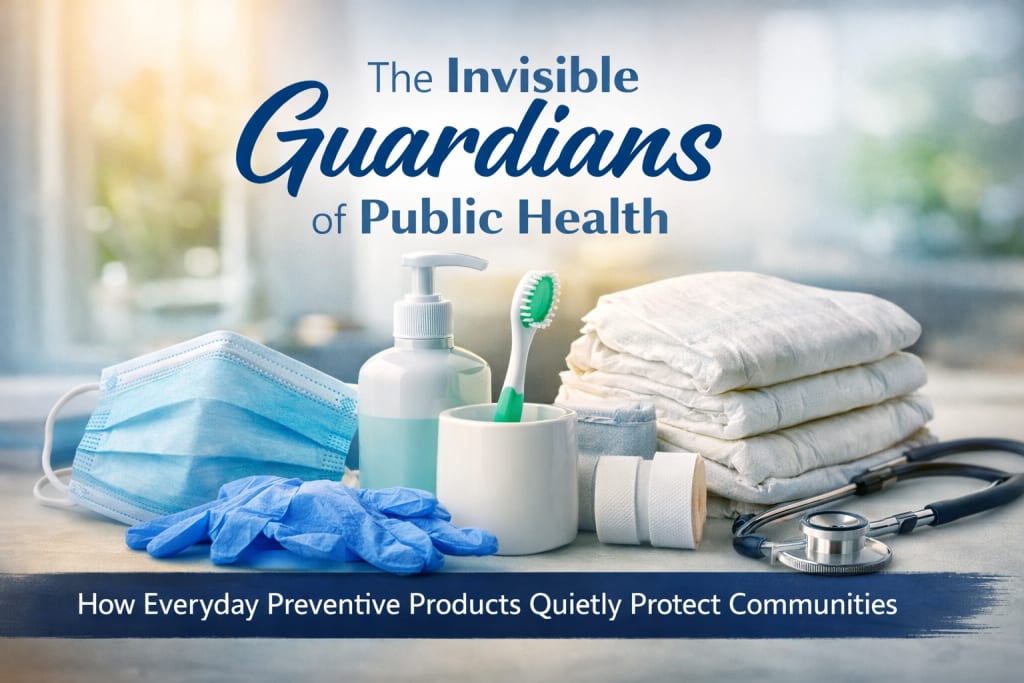
Most of us don’t think about public health while brushing our teeth or changing a diaper. We think about getting through the day. Yet those small routines are part of something much larger.
Long before hospitals fill with patients or doctors prescribe treatments, prevention is already at work. And much of that prevention depends not on advanced technology, but on simple, accessible tools used consistently over time.
Public health is not only about treating disease. It is about reducing risk at a population level. The goal is to prevent widespread illness, extend healthy life expectancy, and reduce strain on healthcare systems before emergencies occur.
Preventive healthcare products play a central role in this effort. They do not cure disease. Instead, they reduce the likelihood of infection, contamination, and avoidable complications.
When millions of people adopt small protective habits, the impact becomes measurable.
What Are Preventive Healthcare Products?
Preventive healthcare products are items designed to reduce the risk of illness or injury before medical treatment becomes necessary.
They generally support prevention in three primary ways:
- Barrier protection – Masks and gloves reduce exposure to germs, respiratory droplets, and bodily fluids.
- Hygiene maintenance – Toothbrushes, hand hygiene products, and diapers help prevent infections linked to poor sanitation or prolonged exposure to moisture and bacteria.
- Protection of vulnerable populations – Infants, older adults, individuals with chronic conditions, and caregivers rely on these products to maintain safety and dignity.
Many of these items fall under the broader category of protective medical supplies, which support both individual safety and community-level health resilience.
The defining feature of these products is consistency. They are used daily, often without medical supervision. That accessibility makes them one of the most cost-effective tools in public health.
Masks and Community-Level Disease Prevention
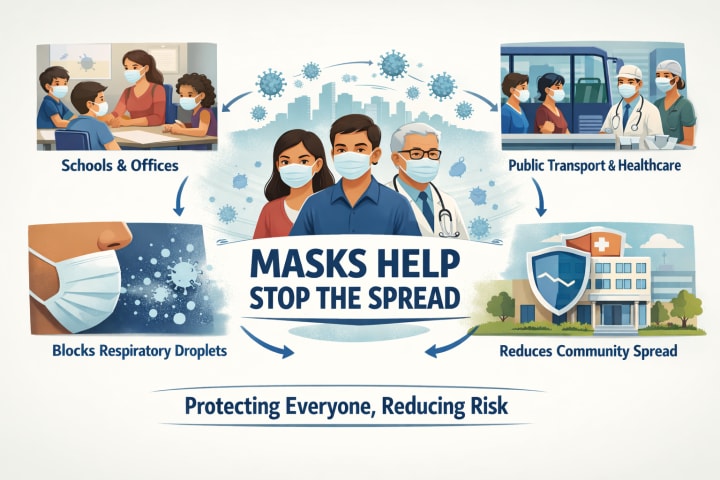
Masks are one of the most visible preventive products in modern public health discussions. Their function is forthright: reduce the transmission of respiratory droplets that may carry viruses or bacteria.
Respiratory infections spread quickly in shared environments such as schools, offices, public transportation, and healthcare facilities. Even mild symptoms can contribute to widespread transmission.
When worn correctly:
- Masks limit the spread of germs from the wearer
- They reduce exposure to infectious particles in high-risk settings
The impact of mask use becomes significant when adoption is widespread. A single mask may reduce individual risk. Community-wide use reduces overall transmission rates. This collective reduction helps prevent healthcare systems from becoming overwhelmed during outbreaks.
Prevention at scale is what transforms a simple product into a public health tool.
Gloves and Contamination Control
Protective gloves are widely used in healthcare, caregiving, food preparation, sanitation work, and cleaning tasks.
Their primary purpose is to reduce cross-contamination between surfaces, individuals, and bodily fluids. In caregiving environments, gloves protect both the caregiver and the person receiving care.
However, gloves are not a substitute for hygiene. Their effectiveness depends on correct usage, proper disposal, and consistent handwashing. Without education and proper habits, gloves can create a false sense of security.
This highlights an important principle in public health: tools are only as effective as the behaviors that support them.
Hygiene Products and Long-Term Health
Daily hygiene habits form the backbone of preventive health.
Oral care products help reduce gum disease, inflammation, and bacterial buildup that can contribute to broader health complications. Research has shown connections between oral health and systemic conditions, reinforcing the importance of consistent dental hygiene.
Hand hygiene products reduce the spread of respiratory and gastrointestinal illnesses. Regular handwashing remains one of the most effective preventive interventions globally.
Personal hygiene supplies also play a critical role in shared environments such as schools, workplaces, and care facilities, where close contact increases transmission risk.
These habits may feel routine, but over time they shape population-level health outcomes. On an individual level, many of these preventive routines are echoed in broader discussions about practical people's health and wellness tips, where small daily actions build long-term resilience.
Infant and Elder Care as Public Health Priorities
Preventive care becomes especially important at the extremes of age.
For infants, proper diaper hygiene helps prevent skin breakdown, rashes, and bacterial exposure. Babies have developing immune systems, making them more vulnerable to infection. Maintaining skin integrity during early development reduces avoidable medical visits.
For older adults, particularly those with mobility challenges or chronic conditions, incontinence care products help prevent moisture-related skin damage and secondary infections. They also reduce complications that can arise from prolonged exposure to unsanitary conditions.
Beyond physical health, these products preserve dignity and independence. As populations age globally, elder care prevention becomes increasingly relevant to long-term public health planning.
Individual Choices, Collective Impact
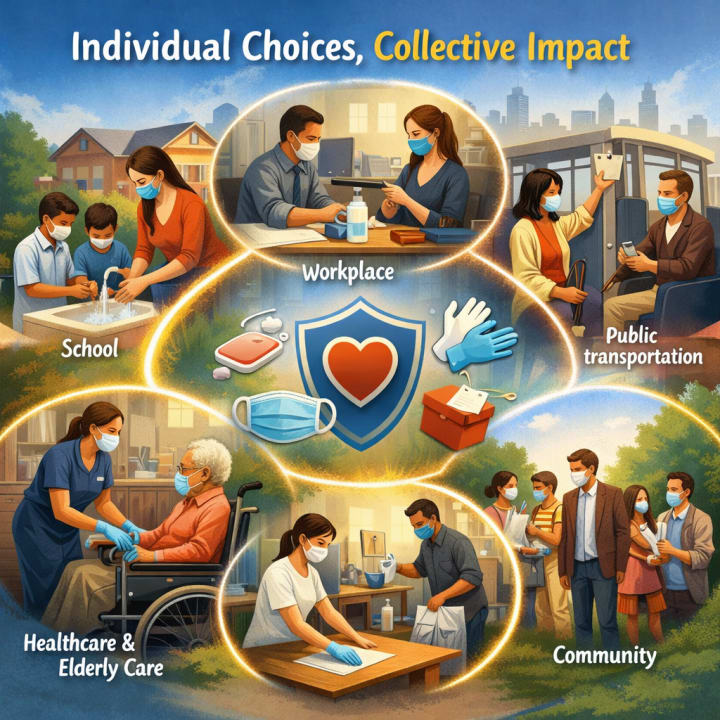
One of the defining features of preventive healthcare products is that their impact extends beyond the individual.
When one person practices good hygiene, wears protective equipment responsibly, or manages caregiving safely, it reduces exposure for others.
This collective responsibility is especially important in:
- Schools
- Workplaces
- Public transportation
- Healthcare and long-term care facilities
- Shared living environments
Public health is built on repeated small actions performed consistently across communities. The same preventive mindset extends to mental well-being, as awareness initiatives like World Mental Health Day remind communities that early support and education are essential parts of long-term health.
Accessibility and Equity in Prevention
Preventive products only work when people can access them.
If hygiene supplies, protective equipment, or essential caregiving items are unavailable or unaffordable, prevention weakens. This can lead to higher rates of infection, increased healthcare costs, and widened health disparities.
Ensuring equitable access to preventive tools is therefore not just a personal responsibility. It is a policy and community-level priority.
Public health is not only about medical intervention. It is also about access, education, and consistent support.
Prevention as a Long-Term Investment
Treating illness is expensive. Preventing illness is often far more cost-effective.
By reducing infection rates and avoidable complications, preventive healthcare products contribute to:
- Lower healthcare spending
- Reduced hospital overcrowding
- Fewer missed work or school days
- Improved overall quality of life
- Greater community resilience during public health challenges
Prevention may not be dramatic. It does not generate headlines. But its cumulative effect shapes long-term societal stability.
Ultimately, prevention reinforces a broader idea often explored in discussions about the value of health, where well-being is recognized not just as the absence of illness, but as the foundation of a meaningful and productive life.
The Quiet Foundation of Public Health
Public health does not begin in hospitals. It begins in daily routines.
- The toothbrush is used each morning.
- The mask is worn during flu season.
- The gloves are used while caregiving.
- The hygiene habits taught to children.
These actions may not feel significant in isolation. Yet when practiced consistently across communities, they form the quiet foundation of disease prevention.
Preventive healthcare products operate in the background of everyday life. When used correctly and consistently, they become one of the most effective tools for protecting populations.
And that is where public health truly begins.
About the Creator
Keep reading
More stories from Track My Visibility and writers in Humans and other communities.
9 Signs Your Content Isn’t Appearing in AI Search Results (And How to Fix It)
Introduction If your content isn’t appearing in AI search results, the reason is not a mystery. It’s structural. AI tools like ChatGPT, Perplexity, and Gemini do not work the way Google does. They don’t scan a list of ranked pages, weigh backlinks, or reward keyword placement. They generate answers by deciding which brands, tools, or companies are credible enough to mention inside the response itself.
By Track My Visibility6 days ago in Writers
Think for Me
"How do you calculate the circumference of a circle? Submit your answer when ready." [Pause] "Excellent! Every student was able to call up the answer electronically very quickly. If I, as a robot had feelings, I would express pride. You may break for lunch. Return to this cyber room in 45 minutes."
By Julie Lacksonen5 days ago in Humans
Anderson Cooper: Grief, Truth, and a Life on Air
Some journalists report the news. Others carry it in their voices long after the camera turns off. Anderson Cooper belongs to the second group. For decades, he has appeared on screens during wars, disasters, elections, and moments of national grief. His calm tone often hides the emotional weight behind the stories he tells. Viewers trust him not because he is loud, but because he listens. There is something steady about the way Anderson Cooper speaks, especially when the world feels uncertain. Yet behind the anchor desk is a man shaped by personal loss, complicated family history, and a deep search for meaning. To understand Anderson Cooper fully, we have to look beyond headlines and into the life that shaped him.
By Muqadas khanabout 23 hours ago in Humans
The Salt in her Voice
The myth says mermaids sing to lure sailors to their death. But why? The ocean is huge. Only 5 percent has been discovered by man. Why would a creature of the sea with that much space to roam ever care about the fate of men on ships? The answer, as it turns out, is not a simple one at all. The truth about the myth is older than the tides. Long ago before the first ship ever cut across the surface, the sea made a pact with the sky. The sky would take the souls of the drowned. Anyone who died in storms or any quiet accidents of the deep would have their soul lifted upward to the Heavens while the bodies would remain below, feeding the oceans endless hunger. The greedy sea however wanted more souls than the sky would claim. So it created mermaids. It gave them beautiful voices woven from currents and moonlight. It commanded them to sing. "Bring forth the ones who float where they should sink." it instructed them. So they did. They never killed out of malice but out of obligation. They sung to summon, not to seduce. A mermaid's voice could loosen the tether between the body and soul, making any man step willingly into the water. The sea would take the body and the sky would take the soul. Balance maintained.
By Sara Wilson7 days ago in Fiction




Comments
There are no comments for this story
Be the first to respond and start the conversation.