
The Poisoned Smile: How Passive‑Aggressive Kindness Weakens a Society That Desperately Needs Courage


There is a particular kind of kindness that does not heal. It does not soothe, uplift, or transform. It does not soften the world or strengthen the bonds between people. Instead, it corrodes quietly, like water slipping into the cracks of a foundation. It is the kindness that avoids truth, the kindness that refuses to confront harm, the kindness that smiles while the house burns behind it. It is the kindness that calls itself gentle while it enables cruelty. It is the kindness that insists on seeing only flowers while the garden is choking on weeds.
This is the realm of passive‑aggressive kindness — a behavior that masquerades as virtue while functioning as avoidance, resentment, and indirect hostility. Psychologists describe passive aggression as the indirect expression of negative feelings, resentment, or hostility, often rooted in a fear of confrontation or a belief that direct communication is unsafe or futile. It is a subtle but potent form of communication, one that can create toxic environments in families, workplaces, communities, and entire societies.
When passive aggression is dressed up as kindness, the damage becomes even harder to see. The smile becomes a shield. The soft tone becomes a disguise. The refusal to speak truth becomes a moral performance. And the person practicing it often believes they are doing the right thing — that avoiding conflict is the same as creating peace, that withholding truth is the same as offering grace, that silence is the same as compassion.
But silence is not compassion. Avoidance is not peace. And kindness without courage is not kindness at all.
To understand why this matters — not just personally, but socially — we must look closely at what passive‑aggressive kindness really is, why it develops, how it harms, and why a society that refuses to confront its own problems eventually collapses under the weight of its unspoken truths.
I. The Smile That Cuts: What Passive‑Aggressive Kindness Really Means
Passive aggression is not merely a personality quirk. It is a psychological strategy, often learned early in life, for expressing anger or discomfort without acknowledging it. Researchers note that individuals who grow up in environments where expressing anger is discouraged or punished often learn to suppress their emotions, later expressing them indirectly through subtle hostility, avoidance, or sabotage.
This indirect hostility can take many forms: veiled criticism, sarcasm disguised as humor, chronic procrastination, the silent treatment, or the habitual undermining of others. Psychology Today describes passive aggression as anger, hostility, or learned helplessness in disguise — a covert attempt to “even the score” while maintaining the appearance of compliance or kindness.
When this behavior is wrapped in the language of kindness, it becomes even more insidious. The person may insist they are “just trying to keep the peace,” “just being polite,” or “just staying positive.” But beneath the surface, resentment simmers. The smile becomes a mask. The gentle tone becomes a way to avoid responsibility. The refusal to confront harm becomes a way to maintain control.
And because the behavior is indirect, the harm is difficult to name. The person on the receiving end may feel confused, destabilized, or subtly diminished, but unable to articulate why. The person practicing passive‑aggressive kindness may feel morally superior, believing they are choosing peace over conflict, compassion over confrontation.
But in reality, they are choosing avoidance over accountability.
II. The Psychology of Avoidance: Why People Choose Flowers Over Truth
Avoidance is one of the most powerful psychological defense mechanisms. It allows individuals to escape discomfort, sidestep conflict, and maintain a sense of internal equilibrium. But avoidance also prevents growth, healing, and honest connection.
Research shows that passive‑aggressive behavior is strongly linked to avoidant problem‑solving styles. In a study of adolescents, those who exhibited passive‑aggressive tendencies were more likely to avoid direct problem‑solving, rely on impulsive or irrational strategies, and struggle with negative problem orientation.
This pattern does not disappear in adulthood. Many adults continue to rely on avoidance as a primary coping mechanism, especially when they fear conflict, rejection, or emotional vulnerability. They may convince themselves that ignoring a problem will make it disappear, that staying positive will neutralize negativity, that refusing to acknowledge harm will somehow prevent it.
But denial is not a solution. It is a delay. And delayed problems do not shrink; they grow.
When individuals close their eyes to the problems around them — whether in their families, their communities, or their societies — they create the illusion of peace while allowing harm to deepen. They choose the comfort of flowers over the discomfort of weeds. They choose the appearance of harmony over the reality of justice.
And in doing so, they contribute to the very suffering they claim to avoid.
III. The Social Cost of Avoidance: How Passive‑Aggressive Kindness Weakens Communities
Passive‑aggressive kindness is not merely a personal issue. It has profound social consequences.
When individuals refuse to confront harmful behavior, they enable it. When communities prioritize politeness over accountability, they create environments where abuse, discrimination, and injustice can flourish unchecked. When societies insist on “staying positive” instead of facing their own failures, they lose the ability to correct course.
The cost of avoidance is cumulative. It shows up in families where problems are never addressed, leading to generations of unresolved trauma. It shows up in workplaces where toxic employees are allowed to thrive because no one wants to “cause conflict.” It shows up in communities where harmful ideologies spread because people are too polite to challenge them. It shows up in nations where systemic issues persist because citizens are encouraged to “look on the bright side” instead of demanding change.
Avoidance is not neutral. It is a choice that shapes the world.
And when enough people choose avoidance, the world becomes a place where harm is tolerated, truth is silenced, and justice is postponed indefinitely.
IV. The Myth of Niceness: Why Politeness Is Not a Moral Virtue
Many cultures equate politeness with goodness. People are taught to be agreeable, to avoid conflict, to keep their voices soft and their opinions gentle. They are taught that anger is dangerous, that confrontation is rude, that speaking truth is disruptive.
But politeness is not the same as morality. Niceness is not the same as goodness. And kindness without courage is not kindness at all.
True kindness requires honesty. It requires boundaries. It requires the willingness to speak truth even when it is uncomfortable. It requires the strength to confront harm, not ignore it.
Passive‑aggressive kindness, by contrast, is a performance. It is a way to appear virtuous without doing the work of virtue. It is a way to avoid discomfort while claiming moral high ground. It is a way to maintain social harmony at the expense of justice.
And justice is always more important than comfort.
V. The Danger of Denial: Why Problems Grow in the Dark
Avoiding uncomfortable topics does not make them disappear. It makes them stronger.
Psychologists note that individuals who rely on passive‑aggressive strategies often struggle with emotional regulation, cognitive distortions, and defense mechanisms such as displacement and projection. These patterns can lead to cycles of resentment, misunderstanding, and escalating conflict — all while the person insists they are “just being kind.”
On a societal level, denial functions the same way. When communities refuse to acknowledge injustice, the injustice deepens. When governments refuse to confront corruption, the corruption spreads. When citizens refuse to speak out against harm, the harm becomes normalized.
Silence is not neutral. It is complicity.
And the longer a problem is ignored, the more entrenched it becomes.
VI. The Moral Imperative to Stand Up: Why Courage Is the Highest Form of Kindness
There comes a moment in every life — and in every society — when silence becomes impossible. When the cost of avoidance becomes too high. When the harm can no longer be ignored. When the flowers no longer hide the weeds.
In those moments, courage becomes the highest form of kindness.
Courage is the willingness to speak truth even when it shakes the room.
Courage is the willingness to confront harm even when it disrupts harmony.
Courage is the willingness to stand up even when standing up is uncomfortable.
A society that values comfort over courage will always choose passive‑aggressive kindness over real accountability. But a society that values justice must be willing to face its own shadows.
Standing strong together does not mean avoiding conflict. It means facing conflict with integrity. It means refusing to let harm go unchallenged. It means choosing truth over denial, responsibility over avoidance, courage over comfort.
And it means recognizing that real kindness — the kind that heals, strengthens, and transforms — is never passive. It is active, intentional, and brave.
VII. The Path Forward: Choosing Truth Over Comfort
If passive‑aggressive kindness is a learned behavior, then courageous kindness can be learned as well. It begins with self‑reflection, with the willingness to examine one’s own avoidance patterns, with the humility to acknowledge when one has chosen comfort over truth.
It continues with practice — with learning to speak honestly, to set boundaries, to confront harm directly, to engage in difficult conversations with compassion and clarity.
And it expands outward, into families, workplaces, communities, and societies. It becomes a cultural shift, a collective commitment to truth, justice, and accountability.
A society built on courageous kindness is a society where problems are addressed, not ignored. Where harm is confronted, not tolerated. Where truth is spoken, not silenced. Where people stand strong together, not hide behind polite avoidance.
And that is the kind of society worth building.
VIII. Conclusion: The Courage to See the Whole Garden
It is easy to look only at the flowers. It is easy to pretend the weeds are not there. It is easy to smile, to stay positive, to avoid discomfort. But gardens do not thrive on denial. They thrive on attention, care, and the willingness to pull the weeds before they take over.
The same is true of societies.
Passive‑aggressive kindness may feel gentle, but it is a form of neglect. It allows harm to grow unchecked. It silences truth. It weakens communities. It prevents healing. And it creates a culture where comfort is valued more than justice.
But courageous kindness — the kind that sees the whole garden, the kind that faces the weeds, the kind that speaks truth with love — is the foundation of a healthy society.
We do not need more politeness.
We do not need more denial.
We do not need more smiles that hide resentment.
We need courage.
We need honesty.
We need people who are willing to stand strong together, even when the truth is uncomfortable.
Because the world does not change when people avoid conflict.
The world changes when people face it — with clarity, integrity, and love.
About the Creator
Julie O'Hara - Author, Poet and Spiritual Warrior
Thank you for reading my work. Feel free to contact me with your thoughts or if you want to chat. [email protected]
Keep reading
More stories from Julie O'Hara - Author, Poet and Spiritual Warrior and writers in Humans and other communities.
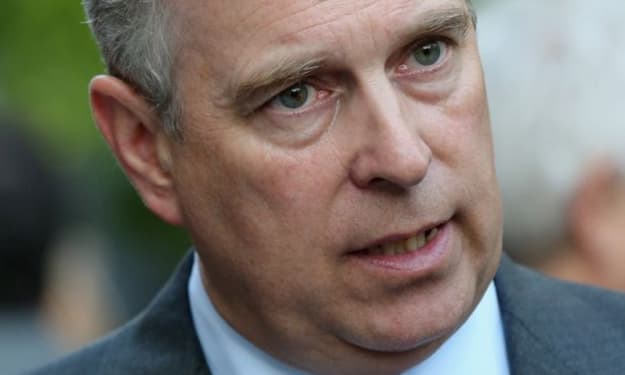
THE SHADOW OF THE CROWN: How Andrew Mountbatten’s Arrest Ripples Toward Washington
THE SHADOW OF THE CROWN: How Andrew Mountbatten’s Arrest Ripples Toward Washington By Julia O'Hara On a cold, colorless morning in Surrey, the kind of morning that seems to hold its breath before the day decides what it wants to be, Andrew Mountbatten was led out of his home by officers from the Metropolitan Police. The charge — Misconduct in Public Office — was delivered in the clipped, procedural tone of British law enforcement, but the moment carried a weight that no official phrasing could soften.
By Julie O'Hara - Author, Poet and Spiritual Warriorabout 5 hours ago in Humans
I Don't Need My Phone... Wait, Is That Actually True?
My parents gave me my first cell phone when I was twelve years old. It wasn't a fancy iPhone or anything, not even close. Just a simple black flip phone for when I needed to call or text them after school.
By Madison "Maddy" Newton6 days ago in Humans
The Cave Part 6
If you have ever heard a tale about yourself that you cannot remember and doubtless think is made up, you will know how I felt when Tharkin related all that the eagle had seen of me before my memories were scattered. Of far distances and traveling companions that I did not recall, camping out under the stars and making our way to the mountains with deliberate purpose. The great bird had lost contact with my party once we entered the forests, and the seven other members were not seen again by him or his brethren since.
By Jamye Sharp4 days ago in Chapters


Comments (1)
Hmm, interesting read!