
The Wolf, the Child, and a Policeman’s Courage
A true tale of bravery, sacrifice, and the unseen blessings of a single good deed.

The Wolf, the Child, and a Policeman’s Courage
BY:Ubaid
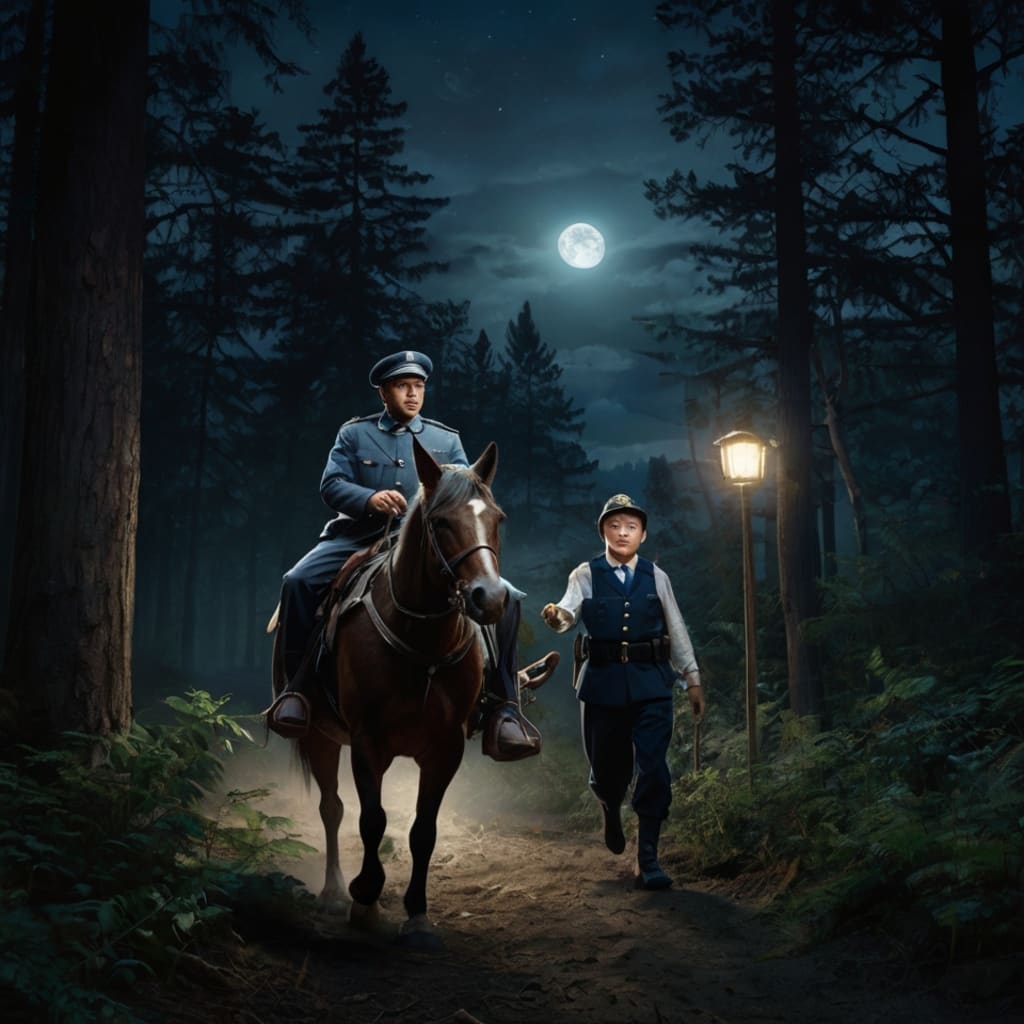
I served in the police force at a time when life for ordinary constables was not filled with privileges as it is today. Back then, there were no official vehicles to ride, no protective gear, and certainly no well-furnished residences. We relied mostly on our own means—our personal horses carried us from one place to another, and when we were granted leave to visit our families, we had to deposit our government-issued rifles at the station. The only weapons left for our protection were simple knives or daggers.
It was during those years, after almost six months of continuous duty, that I was finally granted a few days’ leave to visit my village. My heart longed to see my wife and children again. The Commissioner, noticing the late hour and the darkening skies, advised me not to travel that night.
“It’s too dark,” he warned. “The road to your village passes through a dense forest. Better to leave in the morning.”
But my eagerness to be with my family outweighed his caution. Smiling, I replied, “Sir, I have spent my life walking these very paths, crossing these valleys, and riding through this very forest. The road, the trees, even the soil—they are all my friends. There is nothing here to frighten me.”
The Commissioner chuckled and let me go.
The weather was calm and pleasant as my horse galloped steadily forward. The moment I entered the forest, however, I slowed the animal’s pace. Memories came flooding back. Although this forest was not very close to my village, as children, my friends and I often made the long walk here every week. We would bathe in the canal, climb trees, steal ripe fruit, and return home only when our bellies were full and our eyes heavy with laughter.
Those childhood recollections painted a smile across my face—until suddenly, a sound cut through the night.
It was the clear laughter of a child.
Startled, I tapped my horse gently. He stilled instantly, his instincts aligned with mine. Horses are loyal creatures; they sense the intent of their rider. Instead of neighing, he stood in silence as I strained to listen again.
The laughter came once more, this time from behind a thick cluster of bushes. I dismounted, crouched low, and carefully parted the branches.
There, sitting alone on the forest floor, was a chubby little boy, barely a year old. His round cheeks shone in the moonlight, and he giggled innocently, as though unaware of the danger surrounding him.
And then—I saw it.
From behind a tree, a wolf emerged, its glowing eyes fixed on the child. The beast padded closer, and with its snout, it tickled the boy’s belly. The child burst into a fit of laughter, clapping his tiny hands. Then, just as suddenly, the wolf leapt back and hid again.
I understood immediately. Wolves have a cruel instinct. When they capture a human child, they often play with their prey before finally tearing it apart. The thought made my blood run cold.
I could have hurled my dagger at the animal, but with the child so close, any reckless move could have risked his life. I had only one chance—to be quicker than the wolf itself.
As soon as the beast retreated behind the tree, I sprang forward. In one swift motion, I scooped the boy into my arms and sprinted back toward my horse. The wolf snarled behind me, but by the time it gave chase, I had leapt into the saddle and spurred my horse into a furious gallop.
The forest roared past us as the boy wailed in terror, his tiny fists clutching my uniform. I rode without looking back until we reached the clearing beyond the forest. There, under the starlit sky, I slowed the horse and tried to soothe the child. Eventually, his sobs quieted, and I settled him gently in front of me on the saddle.
Not far ahead, I noticed flickering lights—villagers carrying torches, moving in a frantic search. I rode toward them and called out. At once, a man rushed forward, his face pale with despair.
The moment his eyes fell on the child, they lit up with joy. He cried out, “Guddu!” and the boy reached for him, giggling once again. The father clutched his son to his chest, kissing him again and again, tears streaming down his face.
The villagers gathered, demanding to know what had happened. I recounted the entire ordeal—the laughter, the wolf, and the desperate escape. The father, overcome with gratitude, fell to his knees, weeping uncontrollably.
“Sir,” he begged, “please come with us to our home. My wife has fainted from crying, and my old parents are heartbroken. If they hear that the savior of our Guddu has left without even meeting them, they will never forgive me.”
Others joined their voices, urging me to stay. But I smiled and shook my head.
“My brothers, I need nothing from you. Your happiness is my greatest reward. Just tell your parents to remember me in their prayers. That is all I ask.”
Perhaps my refusal was also because my own parents had long passed away. I held deep respect for every mother and father I encountered, and their blessings were treasures I cherished.
That night, I continued on my way, finally reaching my own village.
Years later, I resigned from the police force to secure a better future for my children. I sold our ancestral land and moved to the city. Life gradually changed. My two sons became civil engineers, and my daughter a doctor. We now live a life of comfort and dignity.
Yet I cannot forget that night in the forest. For many years afterward, the grateful father would visit me twice a year, bringing seasonal fruits, jaggery, and dry fruits for my children. Each time I reminded him not to trouble himself, but his eyes would fill with tears as he spoke of the night when God allowed me to save his only son.
Sometimes, when I see the blessings showered on my own family, I wonder if that single act of courage—rescuing a helpless child from the jaws of death—became the reason why the path of life was eased for my children as well.
Perhaps, indeed, one good deed has the power to echo for generations.
About the Creator
I Don't Need My Phone... Wait, Is That Actually True?
My parents gave me my first cell phone when I was twelve years old. It wasn't a fancy iPhone or anything, not even close. Just a simple black flip phone for when I needed to call or text them after school.
By Madison "Maddy" Newton2 days ago in Humans
The 5-9 Grind: Why the "Hustle Before Dawn" Left Me Burned Out and Bitter.
The internet is awash with productivity gurus peddling the same, seductive promise: unlock your potential by maximizing every single waking moment. And one of the most persistent mantras in this relentless pursuit of optimization is the "5-9 before the 9-5." The premise is simple: wake up before the sun, dedicate those early hours to your side hustle, passion project, or self-improvement goals, and magically transform into a productivity powerhouse.
By Wilson Igbasi7 days ago in Humans



Comments
There are no comments for this story
Be the first to respond and start the conversation.