

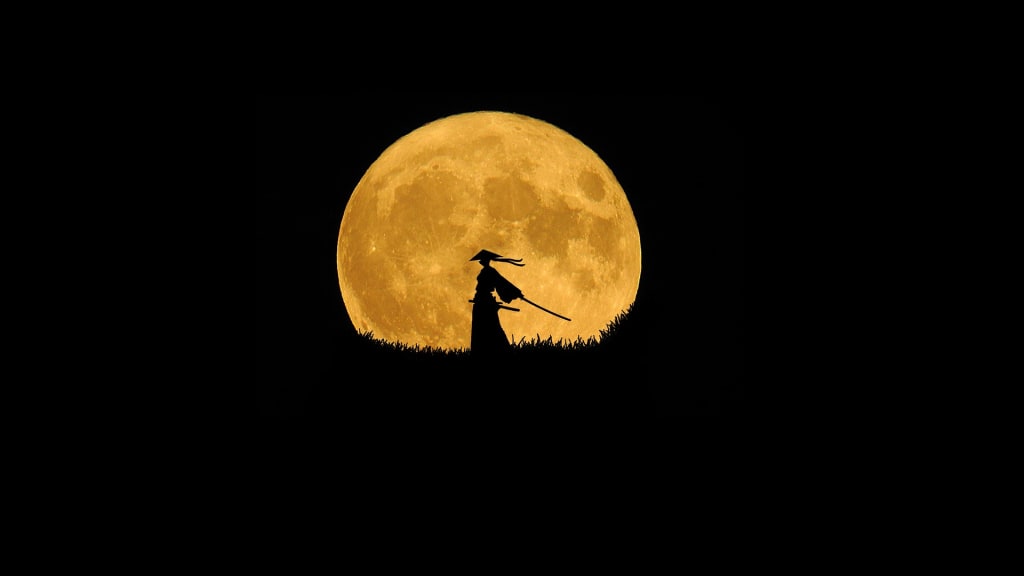
It is challenging to choose the "worthiest" warriors throughout history considering different societies and cultures have varying criteria for what makes a warrior worthy. However, the following prominent warriors from several time periods and cultures made major contributions that made an impact:
#1 Alexander The Great
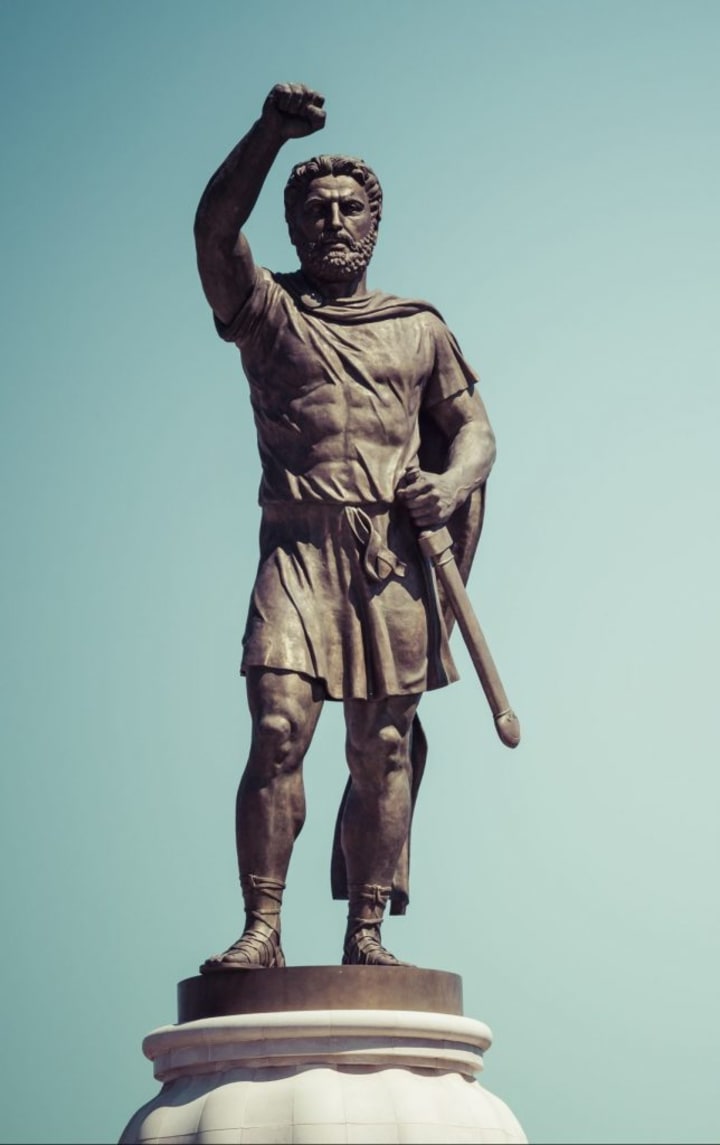
Alexander was born in Pella, the capital of the Kingdom of Macedon, in 356 BC. He was the son of King Philip II and Queen Olympias, and he obtained his education from the philosopher Aristotle. He was groomed to be a leader and military strategist early in life.
After Philip was slain, Alexander ascended to the throne at the age of 20. He immediately set out to expand the Macedonian Empire, directing a series of successful military expeditions that placed most of the known world under his control over the next 13 years.
Alexander is well-known for his inventive tactics as well as his ability to motivate and lead his army. He was also efficient at adapting to and integrating aspects of other traditions into his own. Many of the cities he constructed or conquered became centers of Greek culture and study as a byproduct of his conquests, which extended Greek culture and influence throughout the region.
Alexander died when he was 32, passing his empire to his generals. His legacy, however, persisted, and he is acknowledged as one of history's greatest military leaders and cultural contributors.
#2 Genghis Khan
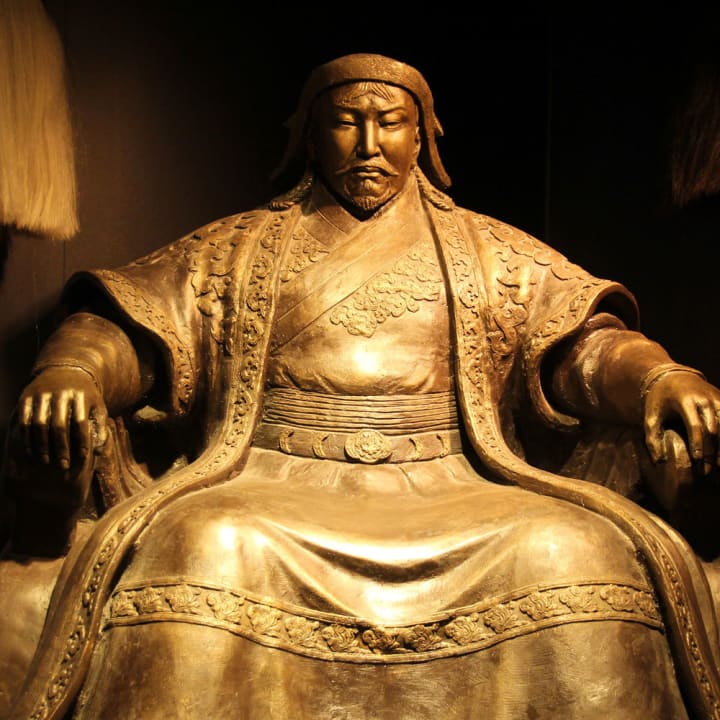
Genghis Khan, also known as Temüjin, was the founder and first Great Khan of the Mongol Empire, which grew to become the biggest continuous empire in history after his death. From 1206 until 1227, he reigned as one of history's most notable and successful rulers.
Genghis was born into a nomadic horsemen tribe in modern-day Mongolia. He rose to power through a series of successful military campaigns and alliances, eventually combining the Mongol tribes under his authority.
Genghis Khan is renowned for his military skill and innovative tactics, particularly his usage of cavalry. He was skilled at outflanking and destroying his opponents by utilizing the mobility and speed of his horsemen. He also put in place strong logistics and communication networks, which allowed him to sustain and coordinate his operations over great distances.
In addition to his military exploits, Genghis Khan is well-known for his cultural and political contributions. He created a system of laws and governance that promoted unity and fairness among his empire's diverse tribes and cultures. He also encouraged trade and cultural interchange, which benefited in the spread of ideas and technologies throughout the region.
Genghis Khan fell on the battleground in 1227, and his empire was divided amongst his sons. His legacy, however, lingered on, as the Mongol Power increased and prospered under his descendants. Genghis Khan is regarded as one of history's most formidable kings and military leaders.
Sword Comment: If you're a fan of collecting blades, you might be interested in a Gladius replica with a stainless steel blade. You can choose between a black-coated blade or a classic silver look. If you've already purchased one of these replicas, I'd love to hear about your experience in the comments!
#3 Joan Of Arc
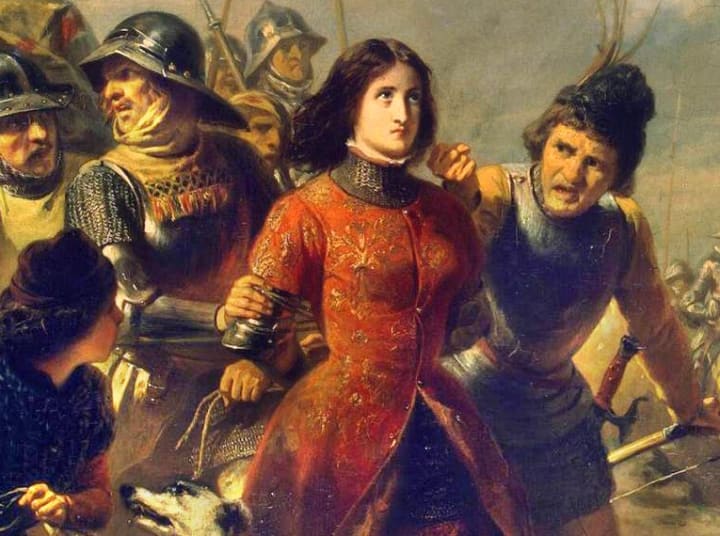
Joan of Arc was a legendary historical figure who was renowned for her fortitude and leadership on the battlefield. She was a young peasant girl from an eastern French village who'd been born in the early 15th century. Joan, despite her humble beginnings, was destined for greatness.
Joan began to hear messages and visions from God as a teenager, telling her to lead the French army to victory in the Hundred Years' War against the English. Despite multiple obstacles and setbacks, Joan remained determined and confident about her heavenly destiny. She eventually persuaded Prince Charles of France to entrust her the command of the army, and she led a series of successful military campaigns against the English.
Joan's military tactics and leadership were crucial to France's triumph, and she swiftly rose to the national spotlight. Her tenacity and dedication inspired her soldiers, and her reputation as a warrior flourished as she led the French army to success.
Joan's fame, however, was brief. In 1430, she was arrested by the English and tried for heresy. Joan was declared guilty and burnt at the stake despite her plea that her visions and voices were from God.
Joan of Arc is best remembered as a symbol of bravery and determination. Her legacy as a national hero in France lives on, and she is viewed as one of history's greatest military leaders.
#4 Sun Tzu
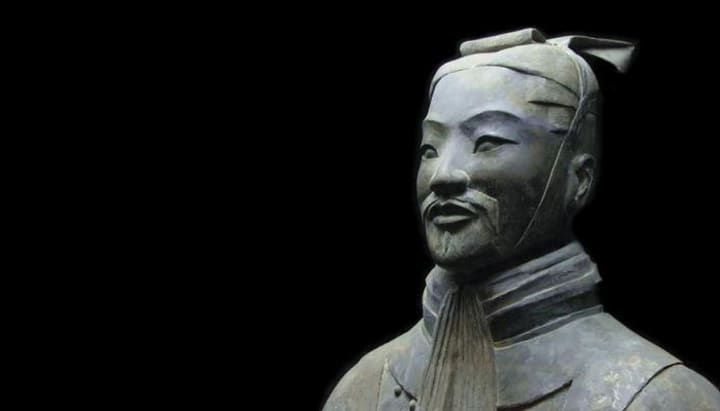
Sun Tzu was a superb strategist and tactician, and his ideas have endured the test of time. "The Art of War," his book, is hailed a timeless classic and is still studied by military leaders and corporate leaders alike.
Sun Tzu's philosophies and techniques have been used in a wide range of contexts, from the battlefield to the boardroom. He believed in the significance of preparation and underlined the need of understanding your adversary and using your resources properly. He also stressed the importance of using cunning and surprise to obtain an advantage in any occasion.
Sun Tzu's methods have been used by major military leaders throughout history, including Genghis Khan, Napoleon Bonaparte, and even modern-day generals such as Norman Schwarzkopf. His lessons have also been implemented in business, with numerous organizations adopting his concepts to outmaneuver their adversaries and achieve success.
"The Art of War" - Sun Tzu is a must-read for anybody intrigued by studying strategy and tactics, whether in the military or in business. His teachings have weathered the test of time and will be beneficial to future generations.
#5 Leonidas Of Sparta
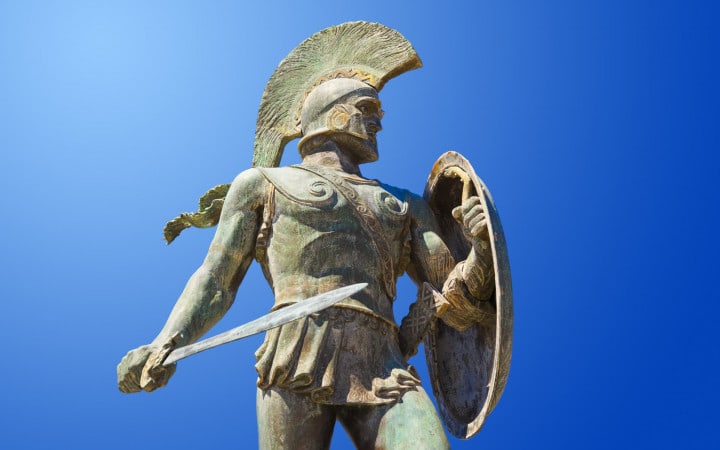
Leonidas was a one-of-a-kind king. He was a warrior at heart, and he knew that sometimes fighting for one's hometown was the only way to defend it, even if it meant paying the ultimate price. In the Battle of Thermopylae, he achieved exactly that.
The Persians, led by King Xerxes, were determined to conquer all of Greece, and they knew Sparta would be formidable to conquer. As a result, they deployed a massive army to battle Leonidas and his smaller band of warriors. Leonidas, on the other hand, was not one to back down from a task. He was convinced that if he could hold out for long enough, the other Greek city-states would come to his support.
So Leonidas and his "300 troops" took their stance at Thermopylae's narrow pass, hoping they could fight off the Persians for a while. Despite being severely outnumbered, the Spartans battled valiantly, determined to defend their homeland at all costs. Leonidas was a fierce warrior who rallied his soldiers to battle gloriously and honorably.
Ultimately, Leonidas and his soldiers were overcome by the Persians' sheer numbers, and they made the ultimate sacrifice for the preservation of their motherland. Their courage and conviction, however, led the other Greek city-states to band together and eventually defeat the Persians at the Battle of Plataea.
Leonidas is revered as a hero not only for his heroism in combat but also for his willingness to put his people's needs before his own. His legacy is one of selflessness, courage, and direction.
#6 Hannibal
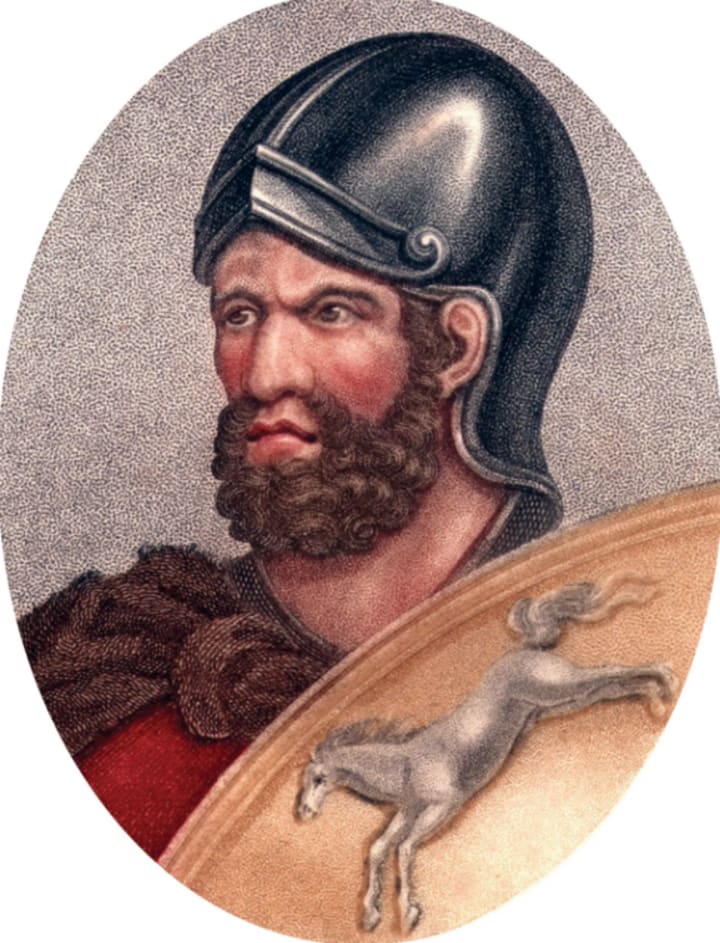
Hannibal was born in the city of Carthage in modern-day Tunisia circa 247 BC. He was the son of Hamilcar Barca, a notable Carthaginian general who fought against Rome in the First Punic War. Hannibal was molded for military leadership from a young age and had intensive schooling in strategic planning and tactics.
Hannibal acquired command of the Carthaginian army at the age of 26 and led a series of campaigns against Rome. In 218 BC, he overcame the Roman army at the Battle of Trebia, his first resounding achievement. He then won a surprising victory at the Battle of Lake Trasimene, when he utilized surprise and cunning to trap the Romans and inflict significant damage.
But certainly, Hannibal's most iconic mission was his crossing of the Alps with his army in 218 BC. He led his forces as well as elephants across treacherous mountain passes into Italy, where he vanquished the Romans at the Battle of Cannae in 216 BC. Considering Hannibal's army was greatly outnumbered by the Romans, this success was recognized as being one of the greatest tactical triumphs in military history.
Despite his tremendous military achievements, Hannibal was finally destroyed by the Romans at the Battle of Zama in 202 BC. His fame as a military strategist, however, remained, and he is acknowledged as one of history's finest commanders. His unique tactics, including the deployment of elephants in battle and the precise use of ambushes and surprise assaults, have been studied and praised by military leaders for ages.
#7 Miyamoto Musashi
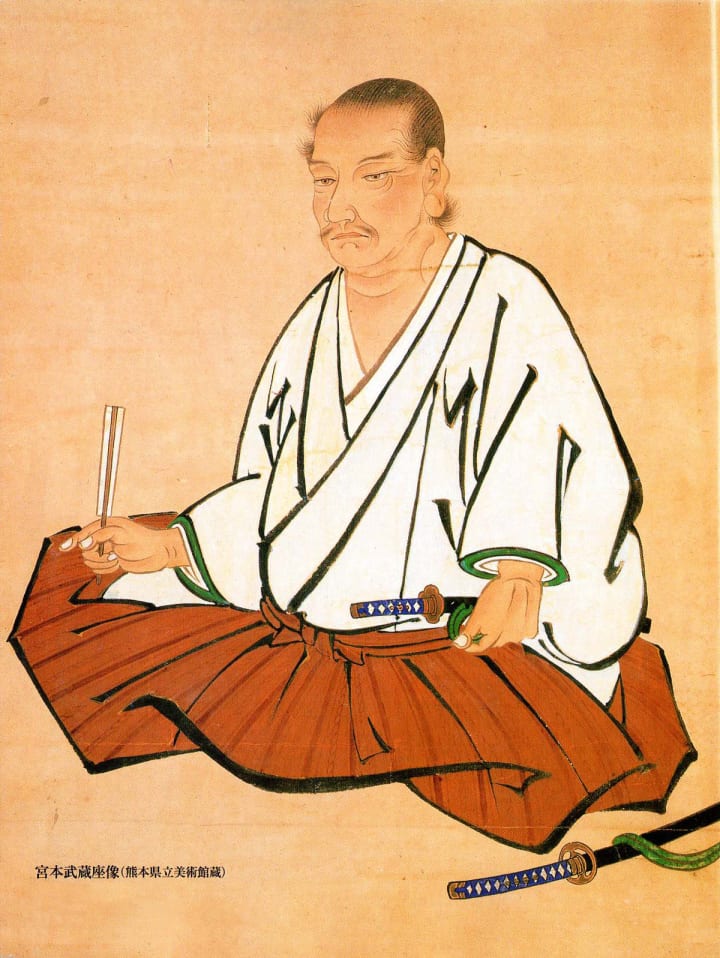
Miyamoto Musashi was born in the Miyamoto village of Mimasaka, Japan, in 1584. He began his swordsmanship training at a young age and rapidly proved himself as a competent warrior. He fought more than 60 duels, defeating everyone, and received the moniker "Invincible Samurai."
Musashi's most legendary battle took place in 1612 against Sasaki Kojiro, a legendary swordsman and his fiercest adversary. The encounter took place on the island of Funajima, and Musashi prevailed by using a wooden sword he crafted from an oar during the boat trip there.
Musashi was a philosopher and writer in addition to his extraordinary swordsmanship. He authored "The Book of Five Rings," a martial arts treatise that is still extensively studied and respected today. Musashi highlights the value of strategy, discipline, and self-awareness in martial arts in this book, as well as his personal touch to combat.
Musashi's influence has continued for generations, and he is recognized as one of Japan's greatest martial artists. Martial artists across the world follow and appreciate his ideology and techniques.
#8 Spartacus
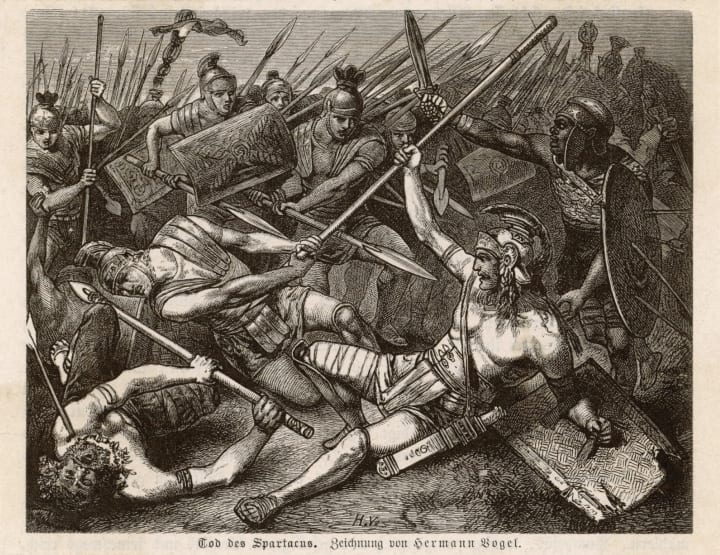
Spartacus was born around the year 111 BC in Thrace, a province of modern-day Bulgaria. The Romans abducted him and sold him into slavery, where he was educated as a gladiator. Gladiators were often slaves or prisoners of warfare who were condemned to fight to the death for the Roman elite's entertainment.
Spartacus, on the other hand, had different ideas. He led a number of gladiators in an uprising against their rulers in 73 BC. They fled from a gladiator training school in Capua to the neighboring mountains, where they were met by thousands of other slaves moved by Spartacus' revolt.
The scale of the uprising first caught the Roman authorities off guard, and they battled to suppress it. Spartacus and his supporters defeated countless Roman armies, and their ranks surged as more slaves embraced their cause.
The Romans were eventually able to rally and end Spartacus' uprising in 71 BC, but the repercussions of his rebellion were far-reaching. Spartacus became a symbol of resistance to injustice and a hero to many who wished to oppose the Roman Empire's power. His resistance also pushed the Roman authorities to make improvements in their treatment of slaves, recognizing that their actions may have far-reaching effects.
Spartacus is widely recognized as a daring and gutsy leader who fought for the rights of the enslaved. His rebellion is a tribute to the strength of the human spirit, as well as a reminder of the value of having to stand up for what is right, even when the odds are set against you.
Art Comment: "Are you not entertained?!" This iconic line from the movie Gladiator instantly comes to mind when looking at this picture. Transport yourself back to the days of ancient Rome with this classic piece. Display it in your office, bedroom, den, or any other space to add a touch of history and drama. So why wait? Get your very own piece of movie history today!
#9 Geronimo
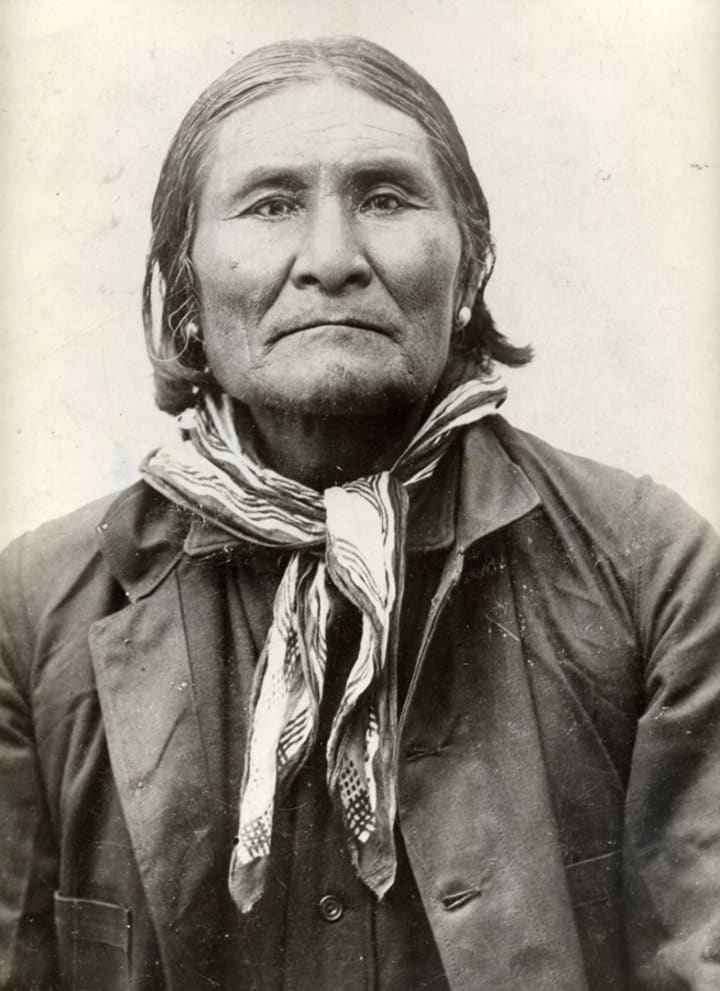
Geronimo was created in what is now Arizona in the early 1800s. He hailed from the Chiricahua Apache tribe, a clan of Native Americans renowned for their intense resistance to strangers. Geronimo quickly advanced through the ranks of his nation, quickly becoming a chieftain and warrior.
Geronimo fought valiantly against the United States' advancement into Apache territory throughout his life. He carried out a series of raids on American towns and military installations, utilizing guerilla tactics to outmaneuver and conquer his adversaries. His leadership was vital in defending Apache territory and culture, resulting in him becoming a symbol of resistance for many Native Americans.
Geronimo's warrior qualities were unparalleled. He was excellent at exploiting the environment to his advantage, frequently hiding and executing surprise attacks on his rivals. He was extremely proficient with weaponry and was legendary for his ability to stand toe to toe with numerous opponents at once.
Geronimo was respected for his compassion and leadership, despite his status as a fierce warrior. He cherished his people and worked diligently to preserve their way of living. He was also known for his charity, typically sharing his spoils of war with other tribe members.
Geronimo's rejection of the United States expansion lasted for decades, and he evolved into one of the most legendary leaders in American history. His courage and presence will be remembered as a testimonial to the Chiricahua Apache tribe's resilience and perseverance.
#10 Queen Boudica
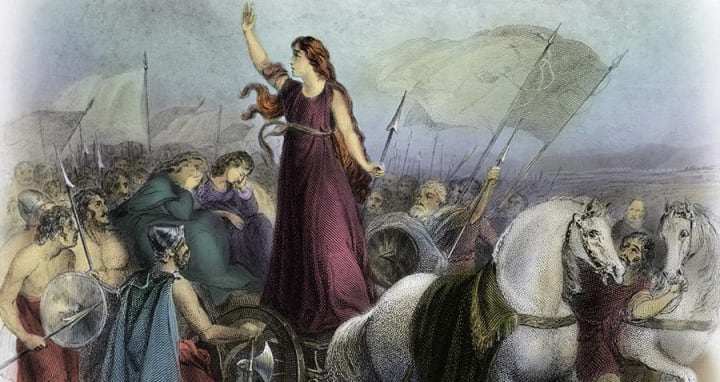
Boudica was a Celtic queen who ruled over the Iceni tribe in present-day Norfolk, England. She was also known as Boudicca or Boadicea. In the first century AD, she led a rebellion against the Roman Empire in an attempt to release her people from Roman dominion.
Boudica's resistance began in 60 AD, following the loss of her husband, Prasutagus, who bequeathed his territory to his two daughters and the Roman Emperor Nero. The Romans, however, defied the will and took possession of the Iceni territories, subjecting Boudica and her daughters to public floggings.
Boudica, determined to regain her people's liberty, banded together with other Celtic clans and waged a furious rebellion against the Romans. She guided her army in a series of destructive confrontations, demolishing three Roman cities, such as London, and slaying legions of Roman soldiers.
Despite her victory, Boudica's revolt was ultimately futile, and she was crushed in one final battle at Mancetter in 61 AD by the Roman general Suetonius Paulinus. However, Boudica's legend lives on as an emblem of resistance to foreign dominance and as a respected military leader.
The End:
Facing countless challenges and obstacles, these warriors persevered and fought for what they believed in, inspiring future generations to follow in their footsteps. Their bravery and determination will always be remembered and celebrated, as they stand as shining examples of true strength and honor. It is through their unwavering dedication to their causes that they have left an indelible mark on history, and their legacy will continue to inspire and guide us for centuries to come.
References:
- Historymuseum.ca ( Alexander the Great)
About the Creator
xJRLNx
Im a dude letting out his madness with the help of Ai.
Time to change your life.
Is it even possible for you to change your life? A lot of people, more than there should be, are unhappy with their lives. But what are they doing about it? Usually nothing. People talk about how shitty their lives are and want change, but are they not taking the actions to change?
By Jen Phillips3 days ago in Humans


Comments
There are no comments for this story
Be the first to respond and start the conversation.