
Brazil Carbon Credits Market: Growth Drivers, Regulatory Landscape, and Investment Outlook
In-depth analysis of the Brazil Carbon Credits Market covering trends, regulatory reforms, investment outlook, and growth opportunities in carbon trading.

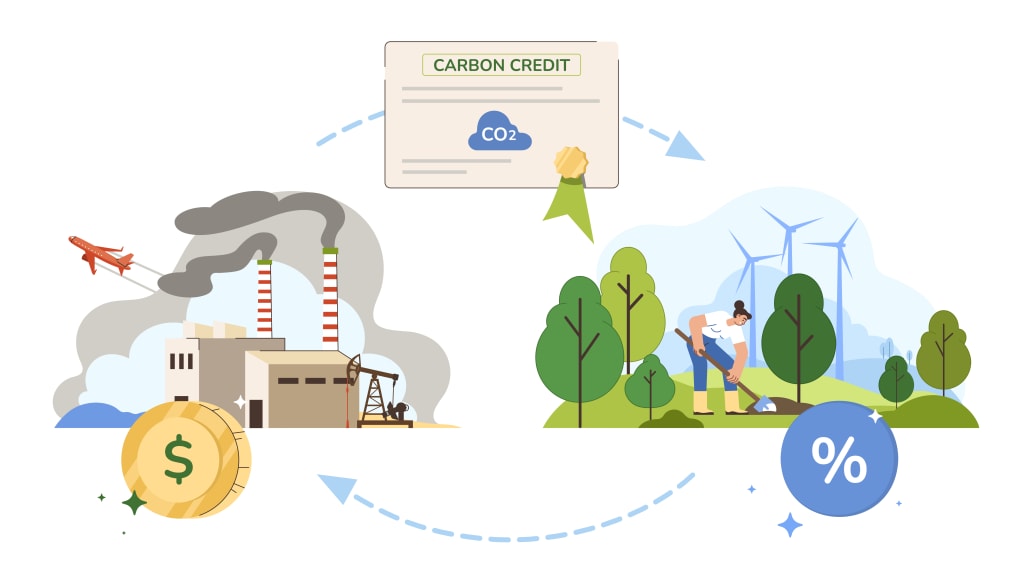
The Brazil Carbon Credits Market has emerged as a strategic pillar in the country’s transition toward a low-carbon economy. As one of the world’s largest holders of tropical forests and biodiversity reserves, Brazil plays a central role in global climate mitigation efforts. Carbon credits generated from avoided deforestation, reforestation projects, renewable energy initiatives, and sustainable agriculture are increasingly becoming valuable financial instruments. With global corporations committing to net-zero targets and environmental, social, and governance (ESG) benchmarks influencing capital allocation, Brazil’s carbon ecosystem is gaining substantial attention from domestic and international stakeholders.
Carbon credits represent verified reductions or removals of greenhouse gas emissions. In Brazil, these credits are generated primarily through forest conservation under REDD+ frameworks, bioenergy production, methane capture, and regenerative farming practices. The country’s vast Amazon biome offers unmatched potential for nature-based solutions, positioning Brazil as a major supplier in voluntary carbon markets. Companies seeking to offset unavoidable emissions are turning to Brazilian projects due to their scale, biodiversity co-benefits, and measurable environmental impact.
Request Sample For More Update
Overview of the Brazil Carbon Credits Market
The Brazil Carbon Credits Market operates through both voluntary and compliance-based mechanisms. Voluntary markets allow corporations to purchase credits to meet self-imposed climate commitments, while compliance markets function under regulated emission caps. Brazil has historically participated in international climate mechanisms under the Kyoto Protocol and the Paris Agreement, enabling project developers to register emission reductions through recognized standards.
Nature-based projects dominate the landscape. Forest conservation initiatives prevent illegal logging and land degradation, while afforestation and reforestation projects absorb atmospheric carbon dioxide. In addition, Brazil’s renewable energy sector—including hydropower, wind, and biomass—contributes to emission reductions that qualify for credit generation. Agricultural innovations such as integrated crop-livestock systems and low-carbon farming techniques further enhance the country’s carbon portfolio.
The market structure involves project developers, verification bodies, brokers, exchanges, and end-buyers. Independent auditors validate emission reductions to ensure transparency and credibility. Credits are then issued and traded, often attracting multinational corporations in energy, aviation, manufacturing, and technology sectors seeking credible offset solutions.
Key Trends Shaping the Market
Expansion of Voluntary Carbon Trading
Voluntary carbon markets are experiencing rapid expansion as corporations accelerate net-zero pledges. Brazilian projects are favored for their scale and biodiversity impact, offering high-quality credits with social co-benefits for indigenous and rural communities. Increasing transparency standards and third-party verification processes are strengthening investor confidence and supporting premium pricing for verified credits.
Regulatory Development and Policy Alignment
Brazil is progressing toward establishing a regulated domestic carbon market. Legislative discussions focus on emission caps for high-polluting industries and structured trading systems. Alignment with international climate frameworks enhances Brazil’s credibility and encourages foreign participation. Policy clarity is expected to improve price stability and market liquidity.
Integration of ESG Investment Strategies
Institutional investors are incorporating carbon credits into diversified sustainability portfolios. Asset managers view Brazilian carbon projects as long-term value assets due to global demand growth and tightening emission regulations. ESG-driven capital flows are stimulating project financing, particularly for large-scale forest conservation programs.
Technological Monitoring and Digital Platforms
Satellite monitoring, blockchain registries, and digital marketplaces are enhancing transparency in credit issuance and trade. Advanced remote sensing technologies reduce the risk of double counting and ensure accurate measurement of avoided deforestation. Digital trading platforms are increasing liquidity and simplifying cross-border transactions.
Regulatory Landscape and Governance
Government oversight plays a crucial role in shaping the Brazil Carbon Credits Market. Federal initiatives aim to standardize methodologies, establish emission thresholds, and create structured trading frameworks. Environmental agencies coordinate with international climate bodies to align domestic projects with global standards. Clear property rights, land tenure validation, and enforcement mechanisms are essential for maintaining project credibility.
State-level programs, particularly in Amazonian regions, support forest conservation and sustainable land management. These programs often collaborate with indigenous communities to ensure equitable benefit sharing. Transparent governance mechanisms reduce reputational risk and enhance long-term investor trust.
Market Size and Growth Outlook
The Brazil Carbon Credits Market is poised for robust expansion over the coming decade. Rising global demand for high-integrity carbon offsets is driving price appreciation and transaction volumes. As more countries implement carbon pricing mechanisms, Brazilian credits are likely to gain stronger positioning within international compliance frameworks.
Corporate decarbonization strategies across energy, transportation, and heavy industry sectors are fueling sustained demand. Multinational enterprises operating in emerging markets increasingly rely on Brazilian projects to meet sustainability benchmarks. Furthermore, financial institutions are integrating carbon assets into structured climate funds, expanding market participation.
Long-term growth will depend on regulatory certainty, enforcement against deforestation, and consistent verification standards. Strengthened institutional frameworks and transparent monitoring systems will be decisive in attracting large-scale institutional capital.
Challenges Facing the Market
Despite strong potential, the Brazil Carbon Credits Market faces structural and operational challenges. Land tenure disputes in forest regions can delay project registration and verification. Concerns regarding additionality, permanence, and leakage require rigorous methodological oversight. Market volatility in voluntary credit pricing may also affect investor confidence.
Reputational risks linked to illegal deforestation or weak governance can impact demand from international buyers. Strengthening compliance enforcement and ensuring environmental integrity remain essential to sustaining long-term growth. In addition, global regulatory fragmentation may complicate cross-border credit recognition.
Future Opportunities
Brazil holds one of the largest untapped carbon sequestration potentials globally. Expansion of reforestation programs, restoration of degraded pasturelands, and blue carbon initiatives in coastal ecosystems offer significant credit generation opportunities. Integration of carbon markets with biodiversity credits could create multi-asset environmental markets.
Domestic industrial decarbonization will further stimulate compliance-based trading once national regulations are finalized. Financial innovation, including carbon-linked bonds and structured climate derivatives, may deepen market sophistication. Partnerships between private investors, local communities, and international climate funds are likely to accelerate project scalability.
Conclusion
The Brazil Carbon Credits Market stands at the intersection of environmental stewardship and financial innovation. With expansive natural resources, growing regulatory momentum, and rising global demand for credible offsets, Brazil is positioned as a leading supplier in international carbon trading. While governance and verification challenges remain, strengthening institutional frameworks and technological transparency will reinforce market integrity. As global climate commitments intensify, Brazil’s carbon ecosystem is set to become a critical driver of sustainable economic growth and environmental preservation.
About the Creator
Tim David
Creator Blog and Analysis delivers concise, data-driven insights, trend analysis, and expert perspectives, helping readers understand markets, technologies, and opportunities through clear, actionable, and research-backed content.
Audit Preparation Tips for Healthcare Providers
Introduction Audits are an essential part of healthcare operations, ensuring compliance with regulatory standards, payer requirements, and internal policies. For healthcare providers, audit preparation is not simply about responding to external reviews but about maintaining consistent operational excellence. Effective preparation reduces financial risk, prevents penalties, strengthens documentation accuracy, and promotes patient safety. By implementing structured audit readiness strategies, healthcare organizations can approach audits confidently and use them as opportunities for improvement rather than sources of stress.
By Abdul Mueed5 days ago in Journal



Comments
There are no comments for this story
Be the first to respond and start the conversation.