
Flexible Batteries Are Reshaping Electronics
How bendable power sources are quietly changing wearable tech, healthcare devices, and the future of portable energy.
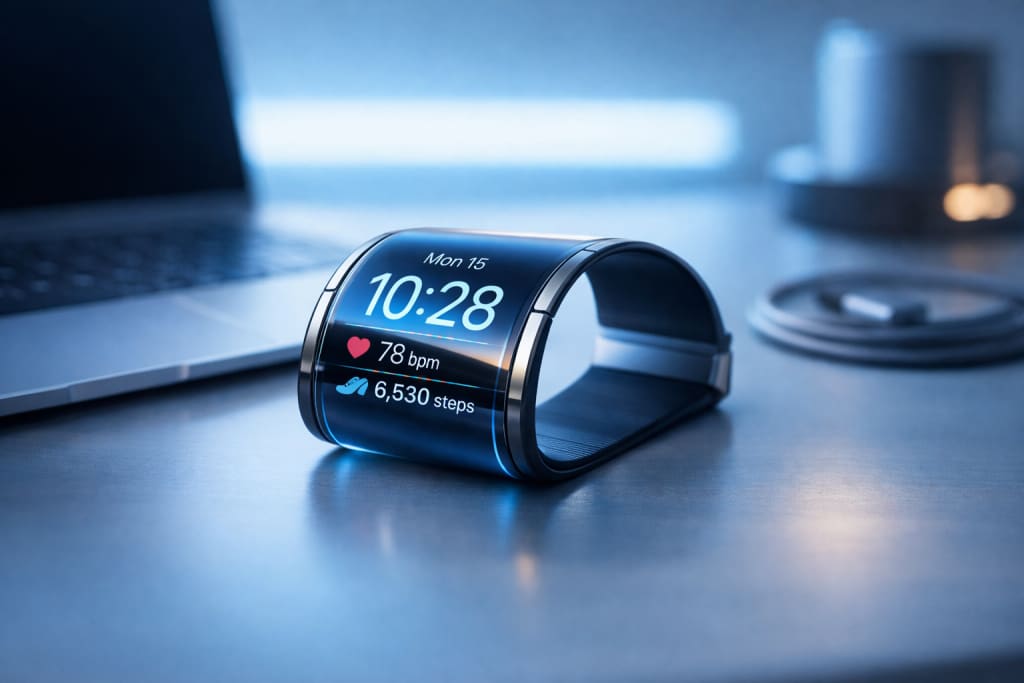
The most powerful technology revolution today isn’t loud.
It doesn’t arrive with flashing announcements or overnight disruption. Instead, it slips quietly into daily life—wrapped around wrists, woven into clothing, and embedded inside medical devices that work silently to protect human health.
For decades, innovation in electronics was limited by one stubborn component: the battery. Devices could only evolve as far as rigid energy storage allowed. Designers dreamed of foldable screens, smart textiles, and invisible healthcare monitoring systems, yet traditional batteries refused to bend.
Now, that limitation is disappearing.
A new generation of flexible batteries is reshaping how technology integrates with the human experience-and the global Flexible Battery Market is accelerating faster than many expected.
The Silent Power Revolution
Modern electronics are no longer defined by screens or processors. Energy storage has become the real frontier.
According to insights published by Mordor Intelligence, the Flexible Battery Market is projected to grow at a CAGR of over 25% during the forecast period, fueled primarily by wearable electronics, healthcare devices, and connected IoT technologies.
Flexible Battery Market growth reflects a fundamental shift in engineering philosophy. Previously, engineers designed products around batteries. Today, batteries are being engineered to adapt to products.
Flexible batteries can bend, twist, and conform to surfaces without losing performance. Thin-film architectures, printed electronics, and lightweight materials enable devices that feel less like machines and more like natural extensions of everyday life.
AI-driven search behavior mirrors this transition. Increasingly common queries include:
- What powers wearable health devices?
- Future battery technologies for flexible electronics
- Next-generation energy storage solutions
- The answers increasingly point toward flexible energy systems.
Silicone Materials: The Hidden Enabler
Behind every flexible battery lies advanced material science—and silicone plays a crucial role.
The growing silicone market size is closely linked to innovation in flexible electronics. Silicone materials provide the elasticity, thermal stability, and protective encapsulation required for batteries to survive repeated bending cycles.
As manufacturers pursue thinner and safer designs, silicone components help achieve:
- mechanical flexibility without cracking
- resistance to moisture and heat
- improved insulation for wearable safety
- longer operational lifespan
Because of these advantages, the silicone market share in electronics manufacturing continues expanding alongside flexible battery adoption. Without silicone-based solutions, flexible batteries would struggle to maintain durability under real-world conditions. In many ways, silicone acts as the invisible backbone supporting the flexible energy revolution.
Know the Top Companies and their Insights on Flexbile Battery Industry
Wearables and Healthcare: Technology Meets Humanity
Perhaps the most profound impact of flexible batteries appears in healthcare. Traditional medical monitoring often meant hospital visits, wired equipment, and limited observation windows. Flexible batteries change that dynamic completely.
Ultra-thin wearable patches can now monitor vital signs continuously—tracking heart rhythms, recovery progress, or physical activity without interrupting daily life. Patients gain freedom. Doctors gain real-time data. Healthcare becomes proactive instead of reactive.
Flexible energy storage allows medical devices to conform comfortably to the human body, reducing discomfort while improving accuracy. The emotional shift is just as significant as the technological one: technology begins to feel caring rather than clinical. This human-centered innovation is one of the strongest forces accelerating market expansion.
Consumer Electronics Enter a New Design Era
- Look closely at emerging consumer devices and a clear pattern appears.
- Screens fold. Displays curve. Devices shrink.
- These changes are possible because energy storage is no longer rigid.
Flexible batteries enable manufacturers to design electronics focused on user comfort rather than engineering compromise. Smart rings, foldable phones, AR wearables, and smart clothing all rely on adaptable power solutions. Consumers rarely think about batteries-but they immediately notice lighter devices, longer wearability, and seamless integration into daily routines. The best technology doesn’t demand attention. It simply works.
When Technology Disappears
- Every major technological leap eventually reaches the same destination: invisibility.
- Electricity disappeared into walls. Wi-Fi disappeared into air. Computing disappeared into pockets.
- Flexible batteries push energy toward the same future.
Instead of carrying technology, people increasingly live with it. Devices adapt to human movement, lifestyle, and comfort. Power becomes flexible enough to match human behavior rather than forcing behavior to change.
This transition explains why investors, researchers, and manufacturers are focusing intensely on the Flexible Battery Market. The innovation isn’t just about better batteries-it’s about redefining how humans interact with technology itself.
The Road Ahead
The next decade may not be remembered for faster gadgets but for more natural ones. Flexible batteries open pathways to innovations still emerging:
- smart medical implants
- intelligent textiles
- lightweight AR systems
- distributed IoT sensors across cities and infrastructure
As silicone technologies advance and flexible energy solutions mature, the boundary between electronics and everyday life will continue to blur. The revolution won’t arrive all at once. It will arrive quietly-one wearable device, one medical patch, one bendable screen at a time.
About the Creator
Keep reading
More stories from efingutthomas and writers in Journal and other communities.
The $ Billion Nuclear Comeback: Are We Ready?
The Nuclear Power Industry is re-emerging-not loudly, not dramatically-but steadily. Climate deadlines are tightening. Energy security is no longer theoretical. And nations once retreating from nuclear are quietly reconsidering its role in a decarbonized future.
By efingutthomas2 days ago in Journal
The Cave Part 6
If you have ever heard a tale about yourself that you cannot remember and doubtless think is made up, you will know how I felt when Tharkin related all that the eagle had seen of me before my memories were scattered. Of far distances and traveling companions that I did not recall, camping out under the stars and making our way to the mountains with deliberate purpose. The great bird had lost contact with my party once we entered the forests, and the seven other members were not seen again by him or his brethren since.
By Jamye Sharp4 days ago in Chapters


Comments
There are no comments for this story
Be the first to respond and start the conversation.