
Food Robotics Market Insights: Recent News & Developments, Trends, and Growth Forecast by 2033
Discover how the global food robotics market grows from USD 2.71B in 2024 to USD 6.29B by 2033, driven by automation trends and 9.32% CAGR across industries.

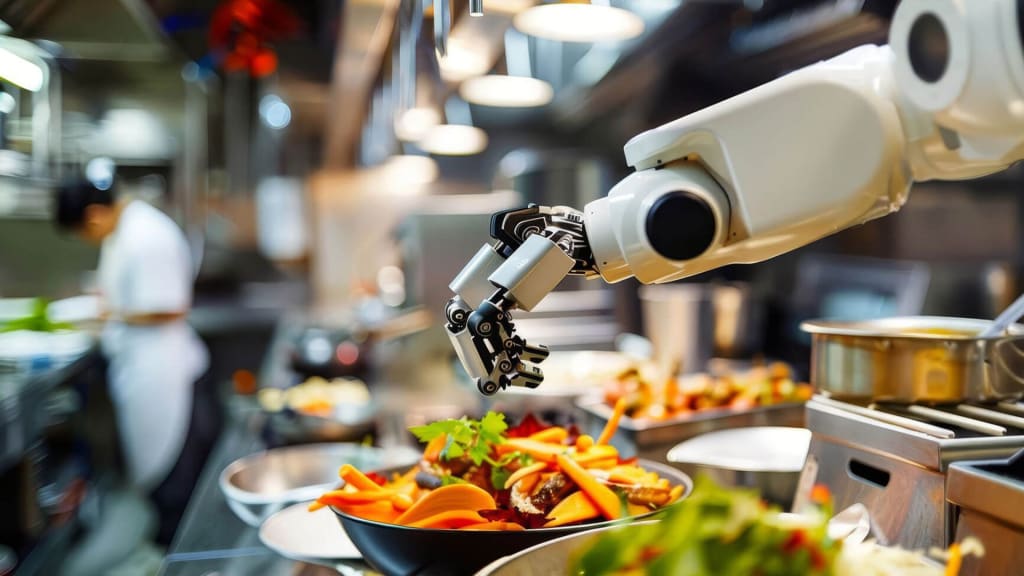
Market Overview:
According to IMARC Group's latest research publication, "Food Robotics Market by Type (SCARA, Articulated, Parallel, Cylindrical, Others), Payload (Low, Medium, Heavy), Application (Packaging, Repackaging, Palletizing, Picking, Processing, Others), and Region 2025-2033", the global food robotics market size reached USD 2.71 Billion in 2024. Looking forward, IMARC Group expects the market to reach USD 6.29 Billion by 2033, exhibiting a growth rate of 9.32% during 2025-2033.
This comprehensive analysis covers industry dynamics, business trends, market share distribution, key growth catalysts, and detailed regional forecasts. The report integrates extensive research findings, market evaluations, and data from multiple authoritative sources. It examines critical market forces including drivers and obstacles, while spotlighting growth opportunities, financial perspectives, technological breakthroughs, emerging patterns, and innovations. The study also provides thorough regional market assessments alongside competitive landscape analysis.
Claim Your Free "Food Robotics Market" Analysis Sample Report Here
How AI is Reshaping the Future of Food Robotics Market
- Cutting-edge machine learning algorithms are revolutionizing food processing capabilities, with robotic systems now performing complex tasks like precision cutting, deboning, and intricate food assembly with unprecedented accuracy, reducing waste by up to 30% compared to manual operations.
- Advanced vision systems powered by AI enable robots to recognize, classify, and handle diverse food products in real-time, adapting automatically to variations in color, size, and shape while maintaining consistent quality standards across production lines.
- Collaborative robots integrated with AI are transforming workplace safety and efficiency, working seamlessly alongside human workers to handle repetitive tasks while allowing staff to focus on higher-value activities, resulting in 40% improved productivity rates.
- Real-time data analytics and predictive maintenance capabilities are optimizing operational efficiency, with smart robotic systems providing comprehensive production documentation and traceability features that ensure compliance with stringent food safety regulations.
- AI-driven quality control systems are enhancing food safety standards exponentially, with automated inspection processes detecting contaminants and defects at speeds 10 times faster than human inspection, while maintaining 99.9% accuracy rates.
Key Trends in the Food Robotics Market
- Articulated robots dominate the technology landscape, capturing the largest market share of 42.3% as these systems provide exceptional flexibility and human-like arm movements, making them ideal for complex food processing operations including cutting, deboning, and sophisticated assembly tasks.
- Medium payload capacity leads the segment transformation, representing 42.8% of the market as these versatile systems strike the perfect balance between handling capacity and operational flexibility, excelling in palletizing, packaging, and batch processing applications.
- Palletizing applications drive market expansion, accounting for 29.8% of total applications due to their ability to handle heavy loads and high volumes efficiently, significantly improving throughput while reducing physical strain on workers and enhancing workplace safety.
- European markets maintain global leadership, holding over 30.8% market share thanks to well-established industrial automation infrastructure, stringent food safety regulations, and high labor costs that encourage robotic adoption across food processing facilities.
- Processing and packaging automation accelerates adoption rates, with manufacturers increasingly deploying robotic solutions to address labor shortages while ensuring consistent product quality and meeting evolving consumer demands for processed and ready-to-eat foods.
Growth Factors in the Food Robotics Market
- Labor shortage crisis accelerates automation adoption, with the U.S. Chamber of Commerce reporting 8 million job openings against 6.8 million unemployed individuals, pushing food companies to invest in robotic solutions that provide continuous operation without requiring rest periods or shift changes.
- Technological advancement breakthroughs drive market expansion, with machine learning-driven products and services increasing from 21% to 35% of companies between 2022 and 2023 according to UK government data, enabling robots to learn and improve performance over time.
- Rising demand for processed foods creates massive opportunities, supported by 42,708 food and beverage processing establishments in the United States as of 2022, requiring consistent quality and safety standards that robotic automation can deliver reliably.
- Stringent food safety regulations mandate automated solutions, with robots providing contamination-free processing environments, comprehensive traceability capabilities, and detailed production documentation essential for regulatory compliance across global markets.
- Consumer quality expectations reshape production requirements, with California leading the nation with 6,569 food manufacturing establishments, followed by Texas with 2,898 and New York with 2,748, all seeking robotic solutions to meet diverse consumer demands efficiently.
Ask analyst of customized report: https://www.imarcgroup.com/request?type=report&id=4069&flag=E
Leading Companies Operating in the Global Food Robotics Market Industry:
- ABB Ltd
- Bastian Solutions LLC (Toyota Industries Corporation)
- Denso Corporation
- Fanuc Corporation
- Kawasaki Heavy Industries Ltd.
- Kuka AG (Midea Group Co. Ltd.)
- Mitsubishi Electric Corporation
- Rockwell Automation Inc.
- Seiko Epson Corporation
- Stäubli International AG
- Universal Robots A/S (Teradyne Inc.)
- Yaskawa Electric Corporation
Food Robotics Market Report Segmentation:
Breakup by Type:
- SCARA
- Articulated
- Parallel
- Cylindrical
- Others
Breakup by Payload:
- Low
- Medium
- Heavy
Breakup by Application:
- Packaging
- Repackaging
- Palletizing
- Picking
- Processing
- Others
Regional Insights:
- North America (United States, Canada)
- Asia Pacific (China, Japan, India, South Korea, Australia, Indonesia, Others)
- Europe (Germany, France, United Kingdom, Italy, Spain, Russia, Others)
- Latin America (Brazil, Mexico, Others)
- Middle East and Africa
Recent News and Developments in Food Robotics Market
- September 2024: Chipotle Mexican Grill announced plans to test robotic systems in two California locations, including the Autocado robot that can halve avocados in 26 seconds and the Augmented Makeline system for automated bowl assembly, demonstrating practical applications of food robotics in quick-service restaurants.
- December 2024: Avride deployed five autonomous food delivery robots in downtown Dallas, serving meals from local restaurants through the UberEats app, featuring 360-degree cameras and operating at speeds under 10 miles per hour for safe sidewalk and street navigation.
- May 2024: ABB Robotics formed a strategic partnership with South Korea's Pulmuone to develop automation solutions for lab-grown seafood production, leveraging AI and robotics expertise to create sustainable mass production systems while minimizing contamination risks.
- 2024: Food processing sector growth accelerated globally, with Brazil's food processing industry generating USD 231 billion in revenues representing 7.2% growth, while the UAE's 2,000+ food and beverage manufacturing companies collectively achieved USD 7.63 billion in annual revenues.
Research Methodology:
The report employs a comprehensive research methodology, combining primary and secondary data sources to validate findings. It includes market assessments, surveys, expert opinions, and data triangulation techniques to ensure accuracy and reliability.
Note: If you require specific details, data, or insights that are not currently included in the scope of this report, we are happy to accommodate your request. As part of our customization service, we will gather and provide the additional information you need, tailored to your specific requirements. Please let us know your exact needs, and we will ensure the report is updated accordingly to meet your expectations.
About Us:
IMARC Group is a global management consulting firm that helps the world’s most ambitious changemakers to create a lasting impact. The company provide a comprehensive suite of market entry and expansion services. IMARC offerings include thorough market assessment, feasibility studies, company incorporation assistance, factory setup support, regulatory approvals and licensing navigation, branding, marketing and sales strategies, competitive landscape and benchmarking analyses, pricing and cost research, and procurement research.
Contact Us:
IMARC Group
134 N 4th St. Brooklyn, NY 11249, USA
Email: [email protected]
Tel No:(D) +91-120-433-0800
United States: +1-201-971-6302
About the Creator
Abhishek Dixit
I am content writer and blogger by profession
Keep reading
More stories from Abhishek Dixit and writers in Journal and other communities.
Global Cloud Gaming Market: Insights, Trends, and Growth Forecast to 2033
Market Overview: According to IMARC Group's latest research publication, "Cloud Gaming Market by Device Type (Smartphones, Smart TVs, Consoles, Tablets, PCs), Genre (Adventure/Role Playing Games, Puzzles, Social Games, Strategy, Simulations, and Others), Technology (Video Streaming, File Streaming), Gamers (Hardcore Gamers, Casual Gamers), and Region 2025-2033", the global cloud gaming market size reached USD 2,705.9 Million in 2024. Looking forward, IMARC Group expects the market to reach USD 77,711.9 Million by 2033, exhibiting a growth rate (CAGR) of 39.9% during 2025-2033.
By Abhishek Dixit6 months ago in Journal




Comments
There are no comments for this story
Be the first to respond and start the conversation.