
Neurothrombectomy Devices Market: The Race to Save Brain Time
How rapid stroke intervention technologies are reshaping emergency care worldwide
The clock starts ticking before anyone says a word.
A patient is rushed through automatic emergency doors. One side of the face droops. Speech is slurred. A nurse calls out the time symptoms began. In stroke care, seconds are not abstract measurements—they are brain cells disappearing.
In that narrow window between damage and recovery stands one of modern medicine’s most critical innovations: mechanical clot retrieval.
According to Mordor Intelligence, the Neurothrombectomy Devices Market size is projected to be USD 0.83 billion in 2025, USD 0.87 billion in 2026, and reach USD 1.20 billion by 2031, growing at a CAGR of 6.74% from 2026 to 2031. That single figure reflects more than commercial expansion, it reflects a global shift toward faster, more advanced stroke intervention.
If you’ve searched online:
- “What is a neurothrombectomy?”
- “Mechanical thrombectomy success rate?”
- “Latest stroke treatment devices?”
- “Stroke intervention market growth?”
You are part of a growing digital curiosity around how medicine is racing against time.
The Procedure That Changed Stroke Outcomes
A neurothrombectomy is not a dramatic open surgery. It is minimally invasive, almost quiet in its execution.
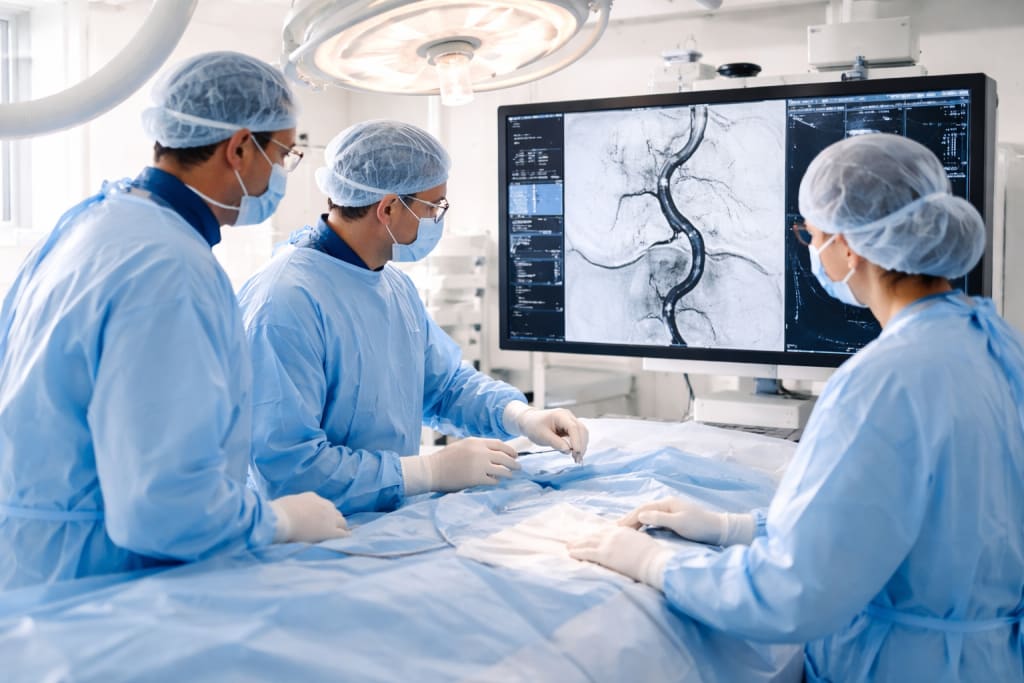
Through a tiny incision, typically in the groin or wrist, a catheter travels through blood vessels into the brain. Guided by real-time imaging, a stent retriever or aspiration device captures and removes a clot blocking a cerebral artery. Blood flow returns. Oxygen flows. Brain tissue survives.
Before these devices became widely adopted, treatment options were limited primarily to clot-dissolving drugs, which are time-sensitive and not suitable for all patients. Mechanical thrombectomy expanded eligibility and extended therapeutic windows for many stroke victims.
Today, interventional neurologists and radiologists rely on:
- Stent retrievers
- Aspiration catheters
- Microcatheters and guidewires
- Advanced imaging systems
The demand for these tools is closely tied to rising global stroke incidence and increasing awareness of rapid intervention benefits.
From an economic lens, the projected 6.74% CAGR reflects:
- Expanding stroke centers worldwide
- Improved emergency response systems
- Growing adoption in emerging healthcare markets
- Advancements in device design and imaging precision
- But behind the metrics lies something more urgent: survival.
Why Stroke Care Is Driving Market Expansion
Stroke remains one of the leading causes of disability and mortality globally. As populations age and lifestyle-related risk factors increase, healthcare systems face mounting pressure to improve acute stroke management.
Search trends increasingly show patients and caregivers asking:
- “Best treatment for ischemic stroke?”
- “How fast must stroke be treated?”
- “Stroke clot removal procedure cost?”
These queries reflect both anxiety and awareness.
Healthcare infrastructure has evolved in response. Many countries are investing in comprehensive stroke centers equipped with round-the-clock interventional capabilities. Telemedicine networks now connect smaller hospitals to major neurological hubs, enabling faster triage decisions.
This systemic upgrade supports device adoption.
The Neurothrombectomy Devices Market is growing not because stroke rates are rising alone, but because systems are improving to treat strokes effectively.
Technological advancements have also strengthened outcomes. Modern devices are designed for:
- Faster clot engagement
- Reduced vessel trauma
- Higher first-pass success rates
- Enhanced navigability in complex anatomy
Innovation cycles in this space are continuous. Device manufacturers focus on incremental refinements that translate directly into minutes saved during procedures. In stroke care, minutes equal millions of neurons.
Geographic Trends and Access Gaps
While developed regions maintain strong adoption rates due to established healthcare infrastructure, emerging economies are becoming increasingly important growth areas.
Urban hospital expansion, public health initiatives, and insurance coverage improvements are widening access to interventional stroke care.
Yet disparities remain.
In some regions, patients must travel long distances to access thrombectomy-capable centers. Delays can mean lost treatment windows. Bridging this gap represents both a healthcare challenge and a market opportunity.
Several factors are shaping geographic growth:
Investment in hybrid operating rooms
Government stroke awareness campaigns
Training programs for neurointerventional specialists
Reimbursement policy evolution
As infrastructure expands, the projected CAGR of 6.8% reflects sustained demand across diverse healthcare systems.
The future of this market is not only about device sophistication—but about distribution equity.
The Human Dimension: Beyond the Operating Room
Inside an angiography suite, the procedure may look technical and methodical. But outside that room, families wait—holding phones, whispering prayers, watching the second hand sweep forward.
A successful thrombectomy can mean:
Walking out of the hospital instead of long-term rehabilitation
- Regaining speech
- Returning to work
- Preserving independence
Each device used carries a human story.
Consider the ripple effect: fewer long-term disabilities reduce economic burdens on families and healthcare systems. Rehabilitation costs decline. Workforce participation improves. Quality of life stabilizes.
This broader socioeconomic impact contributes to sustained institutional investment in stroke intervention technologies.
The Neurothrombectomy Devices Market, therefore, is more than a device category—it is a pillar of modern emergency neurology.
Innovation at the Crossroads of Imaging and Engineering
Advancements in thrombectomy devices are closely tied to improvements in imaging systems. Real-time visualization, 3D angiography, and artificial intelligence-assisted diagnostics are increasingly integrated into stroke workflows.
AI-based triage tools can now flag potential large vessel occlusions from imaging scans, expediting patient transfer decisions.
Search intent increasingly reflects this convergence:
- “AI in stroke diagnosis?”
- “Future of neurointervention devices?”
- “Next generation thrombectomy technology?”
Innovation in this field is rarely isolated. It draws from:
- Biomedical engineering
- Materials science
- Imaging software development
- Catheter design ergonomics
As healthcare becomes increasingly data-driven, device manufacturers and hospitals alike are focusing on seamless integration between tools and digital systems.
What the Next Phase Looks Like
With a projected CAGR of 6.74% according to Mordor Intelligence, the Neurothrombectomy Devices Market is poised for steady growth through the forecast period.
Looking ahead, the industry will likely prioritize:
- Faster procedural workflows
- Reduced complication rates
- Enhanced access in underserved regions
- Continuous physician training programs
- Data-driven outcome monitoring
The trajectory suggests sustained global investment in acute stroke management.
Yet one reality remains unchanged: speed saves brain.
Every technological refinement aims to reduce time from symptom onset to clot retrieval. Every market expansion represents another hospital equipped to intervene before irreversible damage occurs.
The silent urgency inside stroke units worldwide fuels this market’s relevance.
Because at its core, the Neurothrombectomy Devices Market is not about hardware—it is about time restored.
And if innovation continues at its current pace, the question becomes:
How many more lives could be transformed if advanced stroke intervention were accessible everywhere, the moment it is needed most?
About the Creator
~ Fired ~
— Ai Intrusion ~ Are you Next ~ Is Ai Evolution after your job? — Few workplaces haven't been affected. Ai is in supermarkets, at doctors' offices, and even monitoring farms. I just can't think of anything this machine is not getting into, can you? For instance: Education ~ Law and Tech jobs will one day have a major influence or be taken over by these inanimate machines, with accuracy and vigor. From mechanics' diagnoses to a wide variety of everyday jobs, including fast food workers, with this input having the ability to cut their unnecessary work hours. I'm certain all of us have been touched by this with our short stories and colorful headings, have you? Even comments are very questionable 'Non-Robot' insertions.
By Jay Kantor18 days ago in Journal
How to Open a Methadone Clinic and Use Technology to Improve Patient Outcomes
Introduction to Methadone Clinics and Their Public Health Significance Methadone clinics occupy a critical locus within the continuum of addiction treatment services. They provide medication-assisted treatment (MAT) for individuals struggling with opioid use disorder (OUD), a condition marked by neurochemical dependency and behavioral dysregulation. Methadone, a long-acting opioid agonist, mitigates withdrawal symptoms and attenuates cravings without producing the euphoric volatility associated with short-acting opioids.
By Fida Hassain5 days ago in Journal




Comments
There are no comments for this story
Be the first to respond and start the conversation.