
Olympic Set To Ban Transgender From All Sections Of Its Event
Why the Transgender Athlete Ban Could Redefine the Future of Sports

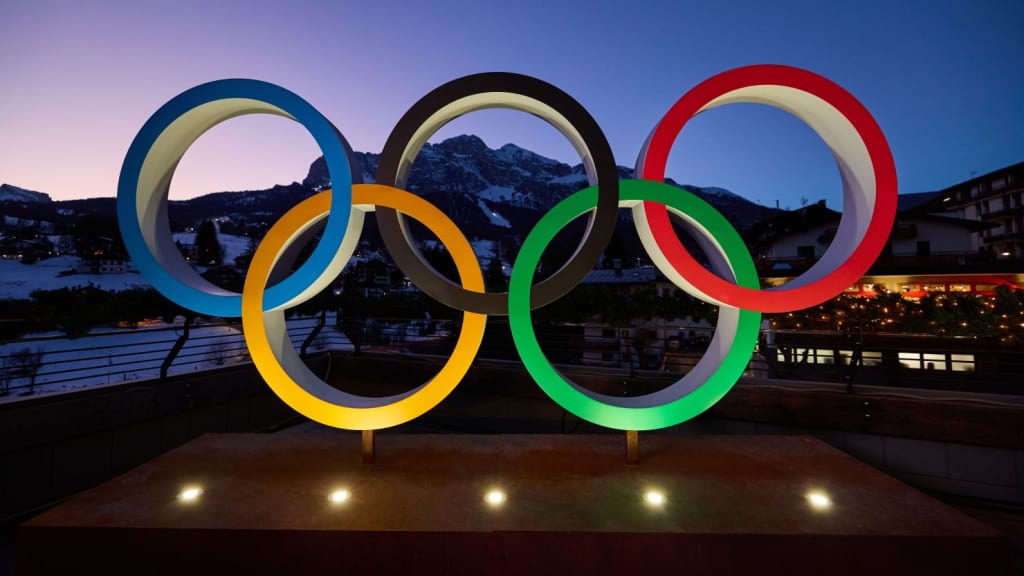
The Olympic flame has always symbolized unity — a single torch lighting the world in a shared pursuit of excellence. But now, that same flame flickers beneath one of the most heated debates in modern sport. The International Olympic Committee (IOC) is reportedly preparing to ban all transgender athletes from competing in female categories, a move that could reshape not only the Games but the global conversation about fairness, identity, and inclusion.
It’s not just another policy shift — it’s a seismic moment in the soul of sport.
🏛 The Report That Shook the Arena
According to The Times, sources close to the IOC revealed that a formal announcement is expected early next year, signaling the committee’s intent to overhaul its current transgender inclusion framework.
The catalyst? A science-based review examining the physical advantages of biologically born males compared to biological females. The review reportedly found significant disparities in muscle density, strength retention, and bone structure — even after years of hormone therapy.
And while the IOC has not yet confirmed the final decision, insiders suggest that this might be the most definitive step toward protecting what many officials call the “integrity of the female category.”
In a statement, the IOC clarified that “no decisions have been taken yet,” but acknowledged that its medical and scientific working group continues to evaluate “all available evidence.”
⚖️ A Question of Fairness or Freedom?
The heart of this debate isn’t just scientific — it’s deeply human.
For decades, the Olympic movement has celebrated diversity, championing inclusion across nationality, race, and gender. But the question before the IOC now is whether inclusion and fairness can coexist when biology itself creates unequal starting lines.
Former Olympic champion Kirsty Coventry, a seven-time medalist and chair of the IOC’s athletes’ commission, spoke candidly to BBC Sport earlier this year:
“We must play a leading role in finding consensus. This is not about exclusion; it’s about fairness — and ensuring women’s sport remains a protected space.”
Her words reflect the tightrope the IOC must walk: one between progress and protection, science and sensitivity.
🧬 The Science Behind the Decision
Behind the politics and passion, the IOC’s review hinges on one crucial question: Do transgender women retain physiological advantages from male puberty?
The evidence so far suggests yes. Studies show that even after hormone suppression, bone density, muscle fiber size, and oxygen capacity remain significantly higher than in cisgender women. These differences translate directly into speed, strength, and endurance — the very factors that separate gold from silver.
This biological reality has led sports federations across the globe — from swimming’s FINA to cycling’s UCI — to implement bans or restrictions on transgender women in elite female categories.
Now, the IOC appears ready to extend that model across all Olympic sports, standardizing what was once left to individual governing bodies.
🌍 Global Reactions: Applause, Anger, and Anxiety
As expected, the reported ban has triggered emotional reactions across the world.
Supporters argue it’s long overdue, citing cases where transgender athletes dominated competitions, leaving cisgender women feeling displaced in their own divisions. They see the move as a defense of decades of hard-fought progress for women’s sports — from Billie Jean King’s tennis revolution to the USWNT’s equal pay fight.
Critics, however, view the potential ban as a betrayal of inclusivity — a rollback of rights and recognition for transgender athletes who have trained and competed under existing IOC guidelines for years.
For them, this is not about biology but belonging. They warn that such a sweeping ban could alienate transgender individuals globally, pushing them out of sports entirely rather than fostering a nuanced balance.
The debate, like a marathon with no finish line, shows no sign of slowing.
🇺🇸 The U.S. Factor: Politics Meets Podium
The controversy deepened earlier this year when U.S. President Donald Trump signed an executive order barring transgender women from female sports, extending the policy to include the 2028 Los Angeles Olympics.
In a statement, he vowed to deny visas to transgender athletes attempting to compete in female categories at the Games — a move critics slammed as discriminatory and politically motivated.
This has placed the United States, the host nation of the next Summer Olympics, in a complex position. The IOC’s global policy will have to coexist or clash with national legislation — a bureaucratic and diplomatic balancing act with billions of dollars and reputations at stake.
🥇 The Spirit of the Games — Tested
Since its modern rebirth in 1896, the Olympics has been more than a competition; it’s a mirror reflecting humanity’s evolution. From Jesse Owens defying Nazi ideology in 1936 to Tom Daley waving the pride flag in Tokyo 2021, each era has brought new challenges to what equality means on the world’s biggest stage.
This latest test — the inclusion of transgender athletes — is perhaps the most philosophically charged yet.
What defines womanhood in sport? Is it chromosomes, hormone levels, or identity? How do you preserve fairness without erasing empathy?
These are not questions medals can answer.
🕊 Between Science and the Human Spirit
It’s easy to forget that behind every headline is a human being — a runner who wakes up before dawn, a swimmer who spends years chasing milliseconds, a weightlifter who sacrifices everything for that one perfect lift.
Transgender athletes like Laurel Hubbard, who made history as the first openly transgender Olympian in 2021, represent not just identity but perseverance. Their participation forced the world to ask uncomfortable questions — and that, in itself, is a mark of progress.
But the line between progress and privilege is razor-thin. If the IOC’s mission is to celebrate “faster, higher, stronger — together,” then “together” must mean something deeper than slogans. It must mean finding frameworks that protect both fairness and dignity.
🔮 What Comes Next
The IOC’s final decision, expected in early 2026, will likely trigger a chain reaction across every international sporting body.
If the ban is confirmed, federations will need to revise qualification rules, redefine gender eligibility, and potentially restructure competitions. New divisions — such as “open categories” — might emerge, offering a compromise between inclusion and competitive equity.
Yet the long-term implications go beyond stadiums and medals. They touch the very DNA of how humanity defines gender, biology, and identity in the modern age.
💭 The Final Lap
The Olympics has always been a paradox — a space where human limits are tested but also transcended. As the world watches this unfolding debate, one truth remains: sport is not just about winning. It’s about meaning.
Whether you stand for science or inclusivity, this moment reminds us that the Games are more than a spectacle. They’re a reflection of who we are — and who we’re still becoming.
When the Olympic torch burns in Los Angeles in 2028, the question won’t just be who runs the fastest or jumps the highest. It’ll be whether humanity can still find a way to compete together.
About the Creator
Omasanjuwa Ogharandukun
I'm a passionate writer & blogger crafting inspiring stories from everyday life. Through vivid words and thoughtful insights, I spark conversations and ignite change—one post at a time.
Keep reading
More stories from Omasanjuwa Ogharandukun and writers in Journal and other communities.
Glen Powell Gets Real About the “Intense” Life of an Action Star and What Arnold Schwarzenegger Told Him Before Stepping Up
Picture this: you’re standing at the base of a skyscraper, the wind howling past your face, the cold night air biting every exposed inch of your skin… and above you, a camera rig, a half-naked star, and dozens of crew members holding their breath. That’s not a metaphor—it’s a scene from the blockbuster life now embraced by Glen Powell.
By Omasanjuwa Ogharandukun3 months ago in Journal
A Knight of the Seven Kingdoms Episode 4 Review: The Trial Is Set and the Realm Holds Its Breath
Episode 4 of A Knight of the Seven Kingdoms finally lines up the pieces for what the entire story has been building toward — the legendary Trial of Seven. And between the political tension, book callbacks, and one massive last-minute reveal, this episode feels like the calm before a very violent storm.
By Bella Anderson2 days ago in Journal




Comments
There are no comments for this story
Be the first to respond and start the conversation.