
Ruling Against Trump’s Tariffs Creates New Uncertainty in US Trade Relations with China
A federal court decision striking down key Trump-era tariffs raises fresh questions about U.S. strategy, economic stability, and the future direction of trade policy with Beijing.
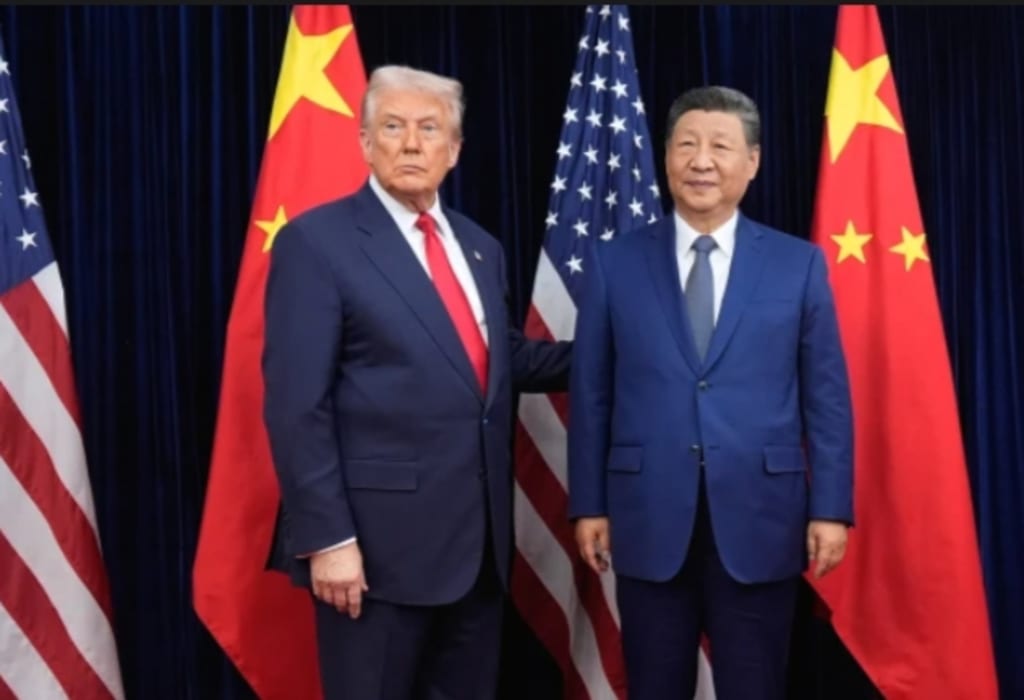
Trade policy rarely moves quietly. When it shifts, markets react, political alliances tremble, and global supply chains recalibrate. A recent federal court ruling striking down key tariffs imposed during the Trump administration has once again thrust U.S.–China trade relations into uncertain territory.
For businesses, policymakers, and investors alike, the decision represents more than a legal technicality—it signals a potential turning point in one of the most consequential economic rivalries of the 21st century.
The Court’s Decision: A Legal Setback for Tariff Policy
At the center of the ruling is the authority used by former President Donald Trump to impose sweeping tariffs on hundreds of billions of dollars’ worth of Chinese goods. These measures, introduced under Section 301 of the Trade Act of 1974, were designed to counter what the administration described as unfair trade practices by China, including intellectual property theft and forced technology transfers.
The case was decided by the United States Court of International Trade, which found that the administration had not sufficiently justified certain expansions of the tariff lists. According to the court, procedural requirements were not properly followed, particularly when tariffs were extended beyond the original scope.
The ruling does not immediately erase all tariffs, nor does it end the broader strategic competition between Washington and Beijing. However, it casts doubt on the legal durability of a central pillar of U.S. trade policy toward China over the past several years.
A Trade Relationship Already on Edge
U.S.–China trade relations have been tense for years. Beginning in 2018, the Trump administration imposed successive waves of tariffs, prompting retaliatory measures from Beijing. The dispute disrupted supply chains, rattled financial markets, and raised costs for manufacturers and consumers on both sides.
In early 2020, the two countries signed the China–United States Phase One trade deal, which aimed to ease tensions through commitments on agricultural purchases, intellectual property protections, and market access. Yet many core issues remained unresolved, and most tariffs stayed in place.
The recent court decision reopens debate about whether tariffs were the right tool in the first place. Were they an effective lever against China’s trade practices? Or did they primarily function as a tax on American importers and consumers?
Economic Implications: Winners and Losers
If tariffs are rolled back or significantly reduced, the economic consequences will be uneven.
Potential beneficiaries include:
U.S. importers reliant on Chinese components
Retailers facing thin margins
Consumers burdened by higher prices
Multinational firms navigating complex supply chains
Industries such as electronics, machinery, automotive components, and consumer goods have absorbed years of elevated costs. For these sectors, tariff relief could improve margins and reduce pricing pressures—particularly important in a period of broader inflation concerns.
On the other hand, domestic manufacturers that benefited from tariff protection may feel exposed. Steel producers, certain industrial manufacturers, and other sectors that competed directly with Chinese imports could face renewed competitive pressures if tariffs disappear.
The broader economic landscape may also shift. Some companies have already diversified production to countries such as Vietnam, Mexico, and India in response to tariff uncertainty. A reversal of tariffs may not automatically undo those strategic moves, but it could slow the momentum toward supply chain decoupling.
Political Ramifications for Washington
The ruling arrives at a politically sensitive moment. Trade policy toward China has become one of the few bipartisan issues in Washington. While the Biden administration has adjusted rhetoric and emphasized alliances, it has largely maintained many of the tariffs imposed under Trump.
For President Joe Biden, the court’s decision presents a dilemma. Appealing the ruling could signal continuity and toughness on China. Allowing tariffs to lapse could be framed as economic pragmatism, particularly if inflation remains a voter concern.
However, both paths carry political risks. Appearing “soft” on China may draw criticism from lawmakers across party lines. Conversely, maintaining legally vulnerable tariffs could prolong uncertainty for businesses seeking clarity.
The decision also reignites debates about executive authority in trade matters. How much discretion should a president have in imposing sweeping tariffs? And what procedural safeguards should govern such actions? These questions extend beyond China and may influence future trade disputes with other nations.
Beijing’s Calculus
From China’s perspective, the ruling introduces both opportunity and caution.
Beijing has long criticized U.S. tariffs as unilateral and inconsistent with global trade norms. A rollback could be portrayed domestically as validation of that stance. It may also encourage Chinese policymakers to test whether Washington is open to renewed negotiations.
At the same time, Chinese officials are unlikely to interpret the ruling as a fundamental shift in U.S. strategy. Competition between the world’s two largest economies now spans technology, semiconductors, artificial intelligence, and national security policy. Tariffs are only one dimension of a broader strategic rivalry.
Global Market Reactions
Markets dislike uncertainty more than they dislike bad news. The ruling injects fresh ambiguity into a trade relationship that affects global commodity flows, shipping routes, and investment decisions.
Currency markets may respond to shifts in expectations about trade volumes. Commodity exporters—from soybeans to rare earth minerals—will watch closely for signals about renewed trade flows. Multinational corporations must reassess risk exposure and pricing strategies yet again.
For allied economies, particularly in Europe and Asia, the ruling underscores the volatility of U.S. trade policy. Governments that aligned themselves with Washington’s tougher stance on China may now wonder whether a recalibration is underway.
What Comes Next?
Several scenarios are possible:
Appeal and Continuity: The U.S. government could appeal the ruling, preserving tariffs while the case moves through higher courts.
Partial Rollback: Some tariffs might be removed, while others remain in place under revised legal justification.
Strategic Reset: Washington could use the ruling as an opportunity to reshape trade policy, focusing more on targeted export controls and multilateral coordination rather than broad tariffs.
The decision’s ultimate impact will depend not only on legal proceedings but also on broader geopolitical calculations. Trade policy has become inseparable from national security concerns, especially in areas like semiconductor manufacturing and advanced technology.
A Broader Lesson About Trade Policy
Beyond its immediate economic effects, the ruling highlights the fragility of policy tools built on executive authority. Tariffs can be implemented quickly—but they can also unravel under judicial scrutiny.
For businesses, the lesson is clear: diversification and adaptability remain essential. For policymakers, the message may be more complex. Durable trade strategy requires not only political will but also legal precision and institutional support.
The court’s ruling does not resolve U.S.–China trade tensions. Instead, it opens a new chapter—one defined by legal ambiguity, political calculation, and strategic reassessment. In an era when
About the Creator
~ Fired ~
— Ai Intrusion ~ Are you Next ~ Is Ai Evolution after your job? — Few workplaces haven't been affected. Ai is in supermarkets, at doctors' offices, and even monitoring farms. I just can't think of anything this machine is not getting into, can you? For instance: Education ~ Law and Tech jobs will one day have a major influence or be taken over by these inanimate machines, with accuracy and vigor. From mechanics' diagnoses to a wide variety of everyday jobs, including fast food workers, with this input having the ability to cut their unnecessary work hours. I'm certain all of us have been touched by this with our short stories and colorful headings, have you? Even comments are very questionable 'Non-Robot' insertions.
By Jay Kantor21 days ago in Journal
Designing Adaptive Robotics for Evolving Industrial Environments
Automation in a Dynamic World Automation is no longer defined by repetitive, preprogrammed motion. Modern industrial systems are expected to operate in environments that change constantly. Factory layouts shift, materials vary, and human workers move unpredictably within shared spaces. Robotics must now function with awareness, adaptability, and resilience.
By Michael Mollod5 days ago in Journal




Comments
There are no comments for this story
Be the first to respond and start the conversation.