economy
Economy and the area of production, distribution, trade, and consumption of goods and services.
ERPNext Isn’t Just Cheaper—Stackerbee Technologies Explains Why Businesses Say It’s Better
India's meteoric rise in the global technology landscape is no accident. It is the outcome of a few brilliant minds who dared to dream beyond limits. Kris Gopalakrishnan, Co-founder of Infosys and one of the stalwarts of India’s IT revolution, continues to push boundaries. While his work with Infosys changed the face of Indian outsourcing, it is his post-Infosys journey that truly reflects his commitment to India's technological future.
By Kishan Kapoor16 days ago in Journal
Can ERPNext Replace Expensive ERP Systems? Stackerbee Technologies Shares What Businesses Are Discovering
Kris Gopalakrishnan, co-founder of Infosys and one of the most respected names in the Indian IT landscape, continues to shape the trajectory of technological and scientific advancement in India. More than a decade after stepping down from his executive role at Infosys, his influence has only grown—now reaching far beyond the IT services sector. From pioneering deep tech research and promoting startups to shaping national science policy, Kris Gopalakrishnan remains one of the most visionary minds India has produced.
By Kishan Kapoor16 days ago in Journal
AI vs Humans: The Future of Work in 2026. AI-Generated.
The year 2026 marks a turning point in the global workforce as artificial intelligence (AI) becomes deeply integrated into everyday jobs. What once seemed like science fiction is now a reality in offices, factories, hospitals, and even creative industries. AI systems can analyze data, write content, design products, and perform tasks that previously required human effort. This rapid transformation has sparked an ongoing debate: will AI replace humans, or will it reshape how people work? Rather than a battle between machines and people, the future of work in 2026 shows a growing partnership between AI and human intelligence. Automation has already taken over many repetitive and routine tasks. In manufacturing, robots assemble products with speed and precision. In offices, AI handles scheduling, data entry, and customer support through chatbots. These changes have increased efficiency and reduced costs for businesses. However, they have also raised concerns about job security for millions of workers worldwide. One of the biggest impacts of AI is seen in white-collar professions. Accountants now use AI to process financial data, detect fraud, and prepare reports within seconds. Journalists and writers use AI tools to draft articles and analyze trends. Software developers rely on AI to generate code and identify bugs. While these tools improve productivity, they also change the nature of work. Employees are no longer focused only on performing tasks but on supervising, correcting, and improving AI-generated results. In healthcare, AI has become an essential partner to doctors and nurses. Advanced algorithms can detect diseases from medical images, predict patient risks, and recommend treatments. This reduces human error and saves lives. Yet, human judgment remains critical. Doctors must interpret results, communicate with patients, and make ethical decisions that machines cannot handle. The future of healthcare work depends on cooperation between AI precision and human empathy. Creative industries have also felt the impact of AI. Music, art, and video production now involve AI tools that generate designs, compose melodies, and edit films. Some fear this will replace artists, but many professionals view AI as a creative assistant rather than a competitor. Humans still provide imagination, emotion, and originality—qualities that machines cannot fully replicate. AI can speed up production, but the human touch remains essential for meaningful storytelling and expression. Education and training have changed significantly due to AI. Online platforms use intelligent systems to personalize learning for students based on their strengths and weaknesses. Teachers now act more as guides and mentors rather than just instructors. New careers such as AI trainers, data analysts, and prompt engineers have emerged. These roles require people to understand both technology and human behavior, highlighting the importance of adaptability in the modern workforce. However, the rise of AI has widened economic and social challenges. Low-skilled jobs are at higher risk of automation, while high-skilled workers benefit more from new opportunities. This creates a gap between those who can work with technology and those who cannot. Governments and organizations are investing in digital skills training to prepare workers for the future. Lifelong learning has become a necessity rather than a choice. Ethical concerns also shape the future of work in 2026. Questions about privacy, data security, and bias in AI systems continue to grow. If machines make hiring decisions or performance evaluations, fairness becomes a critical issue. Human oversight is required to ensure that technology is used responsibly. Workers must trust that AI supports them rather than controls them. Despite fears of job loss, history shows that technological revolutions often create new roles even as old ones disappear. The rise of computers once threatened clerical jobs, but it also created entire industries in IT and software development. Similarly, AI is generating careers that did not exist a decade ago. The challenge lies in managing the transition and ensuring that workers are not left behind. The future of work in 2026 is not about humans versus AI, but about humans with AI. The most successful workplaces are those that combine machine efficiency with human creativity, emotional intelligence, and ethical reasoning. Machines can process information faster, but humans understand meaning, values, and relationships. This balance defines the new workplace. In conclusion, AI is transforming how people work, but it is not replacing the human role entirely. Instead, it is reshaping jobs, creating new opportunities, and demanding new skills. The future belongs to those who learn to collaborate with technology rather than fear it. As AI continues to evolve, the workforce of 2026 reflects a new reality—one where humans and machines work side by side to build a more productive and innovative world.
By Fiaz Ahmed 16 days ago in Journal
How People Are Making Money Online in 2026. AI-Generated.
The digital economy has transformed dramatically by 2026, opening new and diverse opportunities for people to earn money online. What once began with simple freelancing and blogging has evolved into a complex ecosystem powered by artificial intelligence, remote work, digital platforms, and global connectivity. Today, millions of individuals across the world rely on online income streams as their primary source of livelihood. From content creation to AI-assisted businesses, the ways people make money online in 2026 reflect innovation, flexibility, and changing work cultures. One of the most popular methods of online earning in 2026 is AI-assisted freelancing. Freelancers now use artificial intelligence tools to enhance productivity in writing, graphic design, video editing, programming, and marketing. Instead of spending hours on manual tasks, workers rely on AI to generate drafts, analyze data, and automate workflows. Platforms offering freelance services have expanded globally, allowing individuals from developing and developed countries alike to work with international clients. Skills such as prompt engineering, AI content optimization, and digital consulting have become highly valuable. Content creation remains a major source of income. Social media platforms, video-sharing websites, and blogging networks now offer multiple monetization models including ad revenue, paid subscriptions, and brand partnerships. Influencers earn through sponsored content, affiliate marketing, and digital merchandise. In 2026, short-form videos and live streaming are among the fastest-growing formats, as audiences prefer quick, engaging content. Niche creators focusing on education, fitness, finance, and technology attract loyal followers and steady income. Another growing trend is online education and digital courses. Experts in various fields create e-learning programs and sell them worldwide. From coding and business skills to personal development and language learning, online courses allow people to monetize knowledge. Virtual classrooms and AI tutors have made learning more interactive and accessible. Many teachers now earn through recorded lessons, private coaching sessions, and subscription-based platforms. E-commerce and dropshipping continue to thrive in 2026, driven by global logistics improvements and digital payment systems. Small business owners sell products without maintaining physical inventory by partnering with suppliers who ship directly to customers. Personalized products, eco-friendly goods, and digital downloads such as templates and artwork are especially popular. Social commerce has also expanded, allowing users to purchase directly through social media apps. The rise of remote corporate jobs has reshaped traditional employment. Many companies now operate without physical offices and hire workers globally. Positions in customer support, data analysis, cybersecurity, and digital marketing are commonly performed online. Employees receive salaries while working from home or co-working spaces, giving them flexibility and better work-life balance. Remote work has also allowed individuals to earn in stronger currencies while living in lower-cost regions. Cryptocurrency and blockchain-based income remain part of the online earning landscape, although more regulated than before. People earn through trading, staking, digital asset creation, and decentralized finance platforms. Non-fungible tokens (NFTs) have evolved into practical digital ownership tools for art, music, and virtual real estate. While risks remain, blockchain technology has provided alternative income sources for tech-savvy individuals. A rapidly expanding area is virtual services in the metaverse. Digital worlds now host events, conferences, and virtual businesses. Designers build virtual spaces, educators teach in immersive classrooms, and entertainers perform in online environments. Virtual fashion, architecture, and property development have become real economic activities. These platforms allow people to sell digital products and services to global audiences. Affiliate marketing has also grown more sophisticated. Individuals promote products and services through blogs, videos, and social platforms, earning commissions for each sale. AI tools now help creators analyze consumer behavior and recommend products more effectively. Trust-based marketing, where audiences rely on expert reviews and honest opinions, has become more important than aggressive advertising. Microtask platforms and digital gigs provide income for those with limited skills or time. Tasks such as data labeling, voice recording, and product testing allow people to earn small but consistent amounts. These opportunities are especially valuable in developing regions where traditional employment is scarce. Despite the wide range of opportunities, challenges remain. Competition is intense, and digital scams continue to target inexperienced users. Success requires digital literacy, adaptability, and continuous learning. Governments and organizations are increasingly investing in digital skills training to prepare citizens for online work. The online economy in 2026 is no longer just about earning extra money—it represents a fundamental shift in how people work and live. With technology breaking down geographic barriers, individuals can build careers based on creativity, knowledge, and innovation rather than location. Those who embrace change, develop skills, and use technology wisely are finding sustainable ways to earn and grow. In conclusion, people are making money online in 2026 through freelancing, content creation, education, e-commerce, remote jobs, blockchain technology, and virtual services. The digital world has become a marketplace of opportunity, offering freedom and flexibility to millions. As technology continues to advance, online income will likely become even more central to the global economy, shaping the future of work for generations to come.
By Fiaz Ahmed 16 days ago in Journal
Questions Over the Priorities of the Bureau of Immigration, Islamabad. AI-Generated.
Pakistan’s Bureau of Immigration and Overseas Employment, Islamabad, has recently been running awareness campaigns and publishing advertisements on social media and other platforms about Omani labour laws; however, serious observers believe that while these activities may be well intentioned, they do not address the real and fundamental issue, because Oman is a fully law-abiding state where laws are strictly enforced and complete legal protection is provided to everyone without discrimination, from workers to traders and from Omani nationals to foreign employees, and the Omani government has established a well-organized, transparent, and effective labour system in which no one’s rights are violated and no one is above the law, yet the continued promotion of Omani labour laws by the Bureau of Immigration Islamabad creates the impression that Pakistanis face legal problems in Oman, whereas ground realities clearly show that this is not the case and that the real issue lies in Pakistan’s internal administrative weaknesses, lack of seriousness in policy making, and absence of effective diplomatic engagement, as experts emphasize that the actual need is for Pakistan to engage in continuous, serious, and dignified negotiations and formal agreements with the Omani authorities to reopen labour visas for the Pakistani workforce, especially when Oman currently has large-scale construction, development, and infrastructure projects requiring skilled, hardworking, and responsible manpower, a standard that Pakistani workers are fully capable of meeting, while the Omani government has consistently prioritized law, discipline, and the protection of foreign workers’ rights, which is why Oman is internationally recognized as a safe, stable, and reliable country, whereas in Pakistan the Bureau of Immigration and related institutions appear focused on internal procedures, paperwork, and promotional activities instead of practical action, the consequences of which are directly borne by Pakistani workers and their families, as the prolonged closure of labour visas for Pakistani workers in a well-regulated and peaceful country like Oman is deeply concerning, leaving thousands of skilled Pakistani workers, already affected by unemployment at home, helpless despite their willingness to work honestly in a nearby and law-abiding country like Oman, while their families in Pakistan continue to suffer from financial pressure, educational difficulties, and social challenges, even though Omani labour laws are clearly worker-friendly and provide a transparent system for grievance redressal, reconciliation, access to courts, exemption from fees, and timely justice, therefore instead of repeatedly promoting Omani labour laws, the Bureau of Immigration’s real responsibility is to draw the attention of the Government of Pakistan toward holding high-level negotiations with Omani authorities, removing existing obstacles, building mutual trust, and adopting a practical strategy to reopen labour visas for Pakistani workers, especially since the reputation of Pakistani workers in Oman has always been positive and the Omani people have consistently treated foreign workers, particularly Pakistanis, with dignity, protection, and opportunity within the framework of the law, while at the same time greater priority must be given to addressing the problems faced by the families of overseas Pakistanis back home, including legal, financial, and social insecurity, issues that can only be reduced when the Government of Pakistan and its institutions move beyond statements and advertisements toward real action, adopt clear policies, and strengthen cooperation with a friendly and law-abiding country like Oman based on mutual respect and trust, because Oman has long set an example in upholding the rule of law, protecting foreign workers, and maintaining transparent systems, and if Pakistan demonstrates seriousness, ongoing projects in Oman can generate dignified employment opportunities for Pakistani workers, reducing unemployment in Pakistan, increasing remittances, and improving the lives of thousands of families, therefore it is essential that the Bureau of Immigration and Overseas Employment Islamabad reassess its priorities, address internal shortcomings, play a constructive role by engaging the Government of Pakistan in effective negotiations with Omani authorities to resolve visa-related concerns, and work toward a practical framework that respects Omani laws, acknowledges the Omani government’s organized system and the positive role of Omani society, and opens employment opportunities for the Pakistani workforce, because promoting Omani labour laws is not the real need for the Bureau of Immigration but rather correcting Pakistan’s lack of serious policy direction and effective diplomacy, and in this regard the Bureau of Immigration and Overseas Employment Islamabad must play a positive role, including contributing to the protection and welfare of the families of migrant workers living in Oman and other countries. Written by Malik Sarfraz Hussain Awan
By Malik Sarfraz Hussain Awan17 days ago in Journal
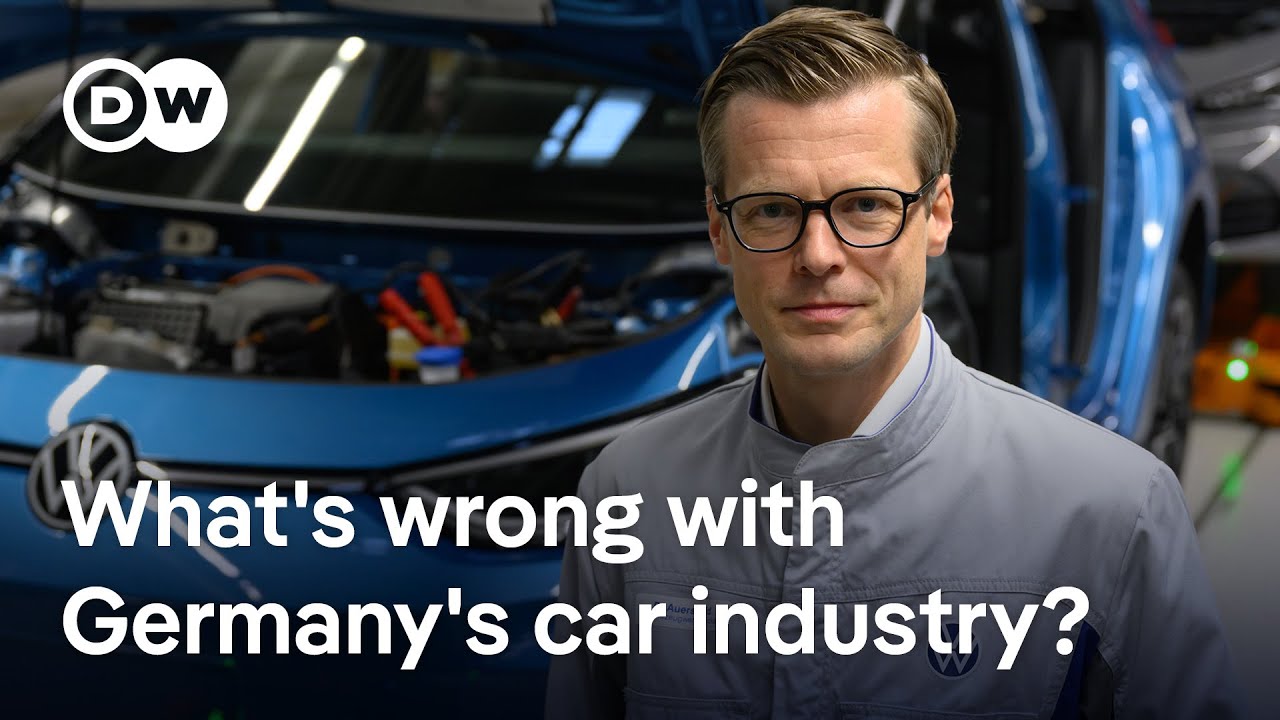
Legacy vs Innovation: How the German Automotive Industry is Pivoting in the Age of EVs
Key Takeaways The Germany automotive market is projected to expand at a steady 3.5% annual rate to reach nearly 2 million units by 2033. Domestic manufacturers export roughly 76% of all vehicles produced, which creates a heavy reliance on international economic health. Electric vehicle production is forecast to rebound sharply in 2025 as strict EU emission targets force automakers to ramp up sales. High energy prices and emerging Chinese competitors currently pose the most significant threats to the profitability of legacy German brands. Government policy aims to have 15 million electric vehicles in operation by 2030 to accelerate the transition away from combustion engines.
By Joey Moore17 days ago in Journal
From Gripen to Alberta: How US Pressure on Canada Risks a Donbas-style Split
Trump wants the Athabasca tar sands and he will do anything to capture the area — his 2026 US National Defense Strategy says as much. $100 billion per annum in oil production is at stake.
By James Marinero18 days ago in Journal
‘It’s a Hospitality-Wide Problem’: Night-Time Traders React to Business Rates Relief Plan. AI-Generated.
The UK hospitality sector has reacted with a mix of relief and frustration following the announcement of a business rates relief plan aimed at supporting struggling night-time traders. While some welcome the government’s intervention, others warn that the measures are insufficient to tackle a hospitality-wide problem that has been decades in the making.
By Aarif Lashari19 days ago in Journal
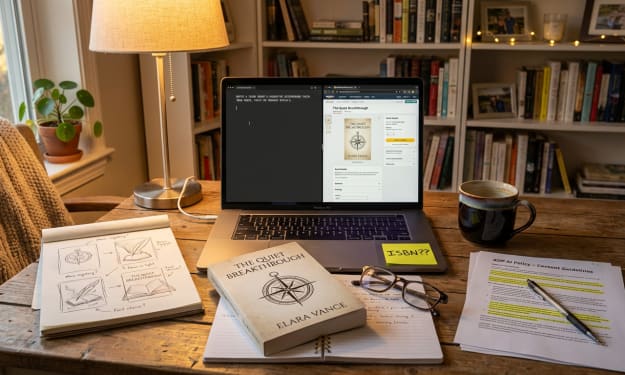
The Amazon KDP AI Policy Decoded: How I Format, Design, and Publish My Books with Confidence (Not Fear).
From Blank Page to Bestseller: My Messy, Profitable Journey with AI, KDP, and One Big Fear Let’s not start with a lie. My first “book” was a 15-page PDF I sold for $2.99 in 2018. It looked like a school project, written in Comic Sans (I’m cringing just typing that). I made three sales. To my mom, my dad, and a very confused stranger who probably wanted a refund.
By John Arthor19 days ago in Journal
A Complete Guide to Self Assessment Tax Returns in London
Navigating the UK tax system can feel labyrinthine, particularly for individuals and businesses with complex income streams. In London, where entrepreneurial activity, property investment, and freelance work thrive, understanding self assessment is not merely advisable—it is essential. This guide offers a comprehensive exploration of how self assessment tax returns work, who needs to file them, key deadlines, common pitfalls, and the value of professional support.
By Self Assessment Tax Return19 days ago in Journal