
The $14.72B IBC Boom You Didn’t See Coming
How the intermediate bulk container market is quietly reshaping global trade by 2031
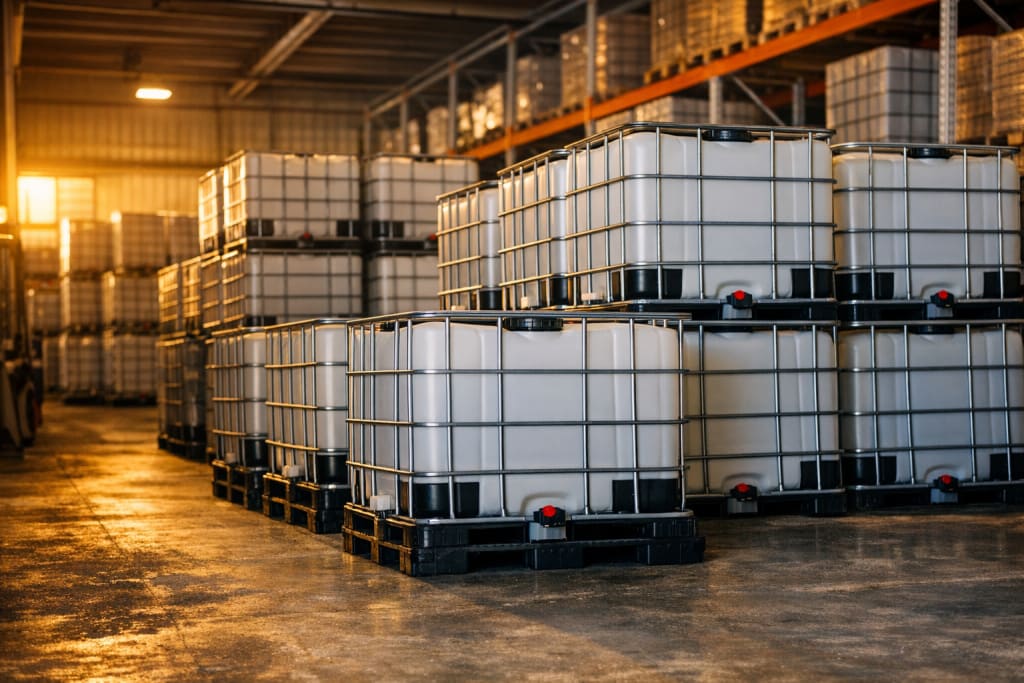
A chemical drum hums softly in a corner of a factory in Gujarat. Across the world, a pharmaceutical lab in Germany seals sterile liquids for distribution. Meanwhile, a food processing plant in Texas prepares bulk syrups for shipment.
Different continents. Different industries. One silent common denominator: the intermediate bulk container.
We rarely notice them — those square, cage-framed tanks stacked neatly in warehouses and shipping yards. But they carry the liquids, powders, and granules that power modern life. And now, the intermediate bulk container market is on a growth trajectory few outside logistics circles have noticed.
According to Mordor Intelligence, the IBC market was valued at USD 11.48 billion in 2025 and is estimated to grow from USD 11.97 billion in 2026 to reach USD 14.72 billion by 2031, registering a CAGR of 4.23% during 2026–2031.
That steady rise signals more than numbers — it reveals a structural shift in global supply chains.
If you've ever searched:
What is driving IBC market growth?
Why is the IBC industry expanding?
What are the latest IBC market trends?
You’re looking at the backbone of bulk logistics evolution.
The Container That Changed Bulk Logistics
Before intermediate bulk containers, industries relied heavily on drums or large storage tanks. Drums were inefficient. Tanks were expensive and immobile. IBCs landed in the sweet spot — typically holding around 1,000 liters, stackable, reusable, and transport-friendly.
This balance of portability and volume is exactly why the IBC industry has matured into a critical logistics segment.
When supply chains became more global and more complex, businesses needed packaging that was:
- Space-efficient
- Durable for long-distance shipping
- Cost-effective
- Reusable and sustainable
- Compliant with chemical and food-grade regulations
IBCs answered all five.
The intermediate bulk container market size expansion reflects this cross-industry dependence. Chemicals, pharmaceuticals, food & beverages, agriculture, and specialty materials all require safe, scalable bulk transport.
And here's the pivotal insight:
The IBC market share is increasingly influenced not just by volume demand, but by regulatory compliance and sustainability pressure. Companies now choose containers not only for capacity, but for lifecycle efficiency.
This is where IBC market trends begin to matter more than ever.
Sustainability, Safety, and Supply Chains
Imagine a multinational chemical company evaluating logistics costs. Switching from single-use drums to reusable IBC systems reduces packaging waste and improves stacking efficiency. Multiply that across global shipping lanes — the savings compound rapidly.
This operational logic fuels intermediate bulk container market growth.
One of the most notable intermediate bulk container market trends is the shift toward reconditioned and reusable containers. Circular economy models are becoming embedded in industrial procurement decisions.
Key drivers influencing the IBC market forecast include:
- Increased cross-border chemical trade
- Expansion of food processing industries
- Growth in pharmaceutical bulk handling
- Rising focus on safe hazardous material transport
- Greater sustainability mandates
In India and across emerging Asian economies, industrialization continues to demand scalable bulk packaging solutions. In Europe and North America, stricter safety and environmental compliance regulations are reinforcing IBC adoption.
The result? A steady climb toward USD 14.72 billion by 2031, according to Mordor Intelligence’s intermediate bulk container market forecast.
This isn’t explosive startup-style growth. It’s something more powerful: infrastructure-level expansion.
And infrastructure rarely trends on social media — but it always shapes the future.
The Silent Backbone of Modern Industry
Think about it.
Every time a pharmaceutical ingredient is transported in sterile bulk.
Every time agricultural chemicals move safely across borders.
Every time food-grade liquid concentrates ship efficiently to manufacturers.
There’s a high probability an IBC made it possible.
The IBC market size may not command headlines like AI or electric vehicles, but it reflects the health of global production systems. When manufacturing rises, so does the IBC industry.
The steady 4.23% CAGR signals resilience. It suggests that even amid geopolitical uncertainty, inflationary pressure, and supply chain disruptions, bulk transport remains essential.
In fact, the stability of the intermediate bulk container market share distribution across industrial sectors makes it less volatile than many niche packaging segments.
This is what makes the intermediate bulk container industry strategically important:
- It touches multiple sectors simultaneously.
- It scales with industrial output.
- It benefits from sustainability transitions.
- It adapts to regulatory changes.
And because IBCs are visible in nearly every major industrial warehouse worldwide, they represent a universal logistics language.
Search engines and AI tools increasingly surface logistics and packaging data when users query:
What is the future of the IBC market?
How big is the intermediate bulk container market?
What are IBC market trends in 2026?
The answer, anchored in Mordor Intelligence data, is clear: steady, diversified, and structurally embedded growth.
Why This Market Matters More Than You Think
There’s a quiet lesson in the rise of the intermediate bulk container market.
Not all economic transformation is flashy.
Some of it comes in reinforced steel cages and high-density polyethylene tanks.
From 2025’s valuation of USD 11.48 billion to the projected USD 14.72 billion by 2031, the intermediate bulk container market forecast reflects industrial confidence.
And industrial confidence drives global trade.
For investors, analysts, supply chain managers, and even sustainability advocates, the IBC market growth story reveals how operational efficiency and environmental accountability can align.
As global production scales and logistics networks evolve, one question remains:
Will the next decade belong to the industries that optimize what moves between factories — not just what’s made inside them?
About the Creator
Keep reading
More stories from Andrew Hamilton and writers in Journal and other communities.
14% Surge: The Rise of Smart Skin Tech
The patch is barely visible. It clings to the skin like a second layer — thin, flexible, almost invisible. No wires. No bulky device. Just a quiet interface between the human body and a digital system watching, learning, responding.
By Andrew Hamiltonabout 14 hours ago in Journal
The Radiance Within: Balancing Confidence and Grace
The Radiance Within: Balancing Confidence and Grace True beauty is far more than just physical appearance; it is a profound expression of our inner peace and confidence. When we look at the world around us, we are reminded that every individual carries a unique story within them. This story is often written through the way they navigate life's diverse challenges. When we witness someone who truly shines, it is rarely due to their attire or makeup; rather, it is a reflection of the light hidden within their soul. This inner radiance is what sets a person apart in a crowd and provides the strength to stand firm amidst the storms of life.
By MD.Asikul islam3 days ago in Journal
Diaries to Nietzsche
Quotation from Friedrich Nietzsche "He who wrestles long with monsters should beware lest he himself become a monster. And if you gaze long into an abyss, the abyss also gazes into you. Man is not destroyed by suffering, but by the meaning he makes of it."
By LUCCIAN LAYTH7 days ago in Critique



Comments
There are no comments for this story
Be the first to respond and start the conversation.