
14% Surge: The Rise of Smart Skin Tech
Why the electronic skin patches market is redefining healthcare, identity, and everyday monitoring
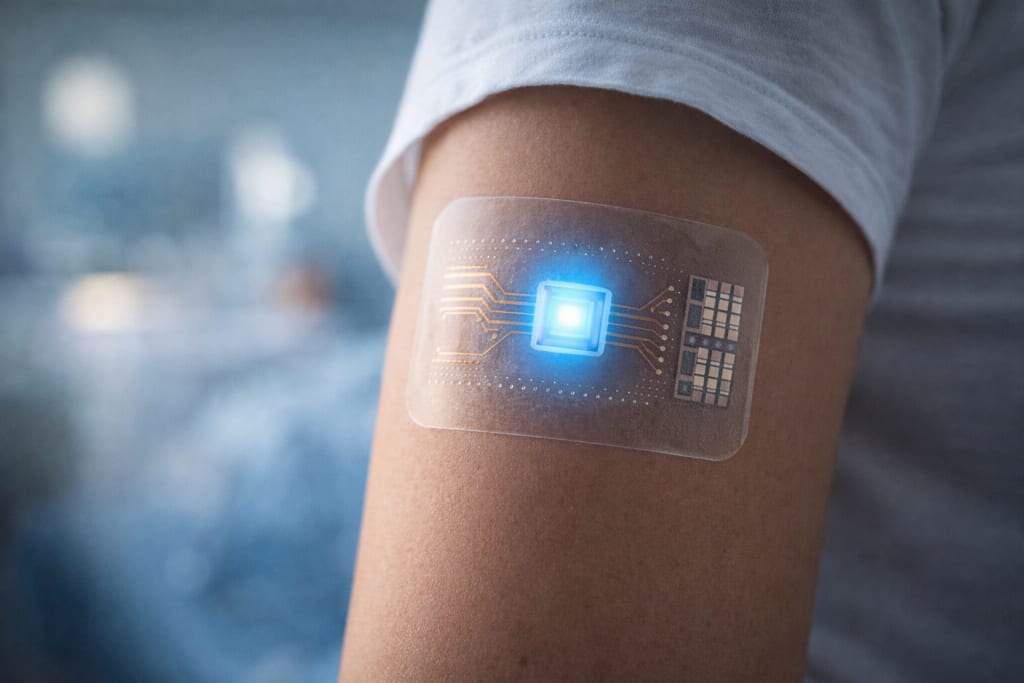
The patch is barely visible.
It clings to the skin like a second layer — thin, flexible, almost invisible. No wires. No bulky device. Just a quiet interface between the human body and a digital system watching, learning, responding.
A decade ago, this would have felt futuristic. Today, it’s becoming normal.
The electronic skin patches market is moving from experimental labs to hospital wards, home-care settings, and even athletic training environments. According to Mordor Intelligence, the electronic skin patches market size in 2026 is estimated at USD 18.47 billion, growing from USD 16.19 billion in 2025, with projections reaching USD 35.67 billion by 2031, registering a 14.05% CAGR during 2026–2031.
That growth isn’t incremental. It signals a transformation in how we monitor health, manage chronic disease, and interact with medical technology.
If you’ve searched:
- how big is the electronic skin patches market
- what is the electronic skin patches market forecast
- why is wearable health technology growing
- what are the latest electronic skin patches market trends
You’re tapping into one of healthcare’s fastest-evolving frontiers.
When Healthcare Moves Onto the Skin
For generations, health monitoring meant appointments, machines, and waiting rooms. Blood pressure cuffs. Wired ECG machines. Glucose meters requiring finger pricks.
Electronic skin patches change the rhythm.
They are designed to:
- Continuously monitor vital signs
- Track glucose or hydration levels
- Detect cardiac irregularities
- Transmit data wirelessly to clinicians
The electronic skin patches industry thrives on simplicity. These patches bend with the body. They stretch. They adapt. They reduce friction between patient and data.
And that frictionless monitoring is driving electronic skin patches market growth worldwide.
As healthcare systems shift toward preventive care and remote monitoring, the electronic skin patches market becomes more than a niche innovation. It becomes infrastructure.
The Forces Driving a 14.05% CAGR
A 14.05% CAGR is not random momentum. It reflects structural healthcare change.
The electronic skin patches market forecast through 2031 highlights three core drivers:
1. Remote Patient Monitoring
Hospitals increasingly rely on remote monitoring solutions to reduce readmissions and manage chronic conditions outside clinical settings.
2. Aging Populations
As global populations age, continuous health monitoring becomes less optional and more essential.
3. Data-Driven Medicine
Healthcare is shifting toward real-time biometric tracking rather than episodic measurements.
The projected rise from USD 18.47 billion in 2026 to USD 35.67 billion by 2031 suggests strong adoption across hospitals, outpatient services, and consumer wellness segments.
A Quiet Shift in Patient Psychology
There’s something deeply human about skin.
It protects us. Heals us. Connects us to the world.
Now, it connects us to data.
The electronic skin patches market trends reveal a growing comfort with wearable medical technology. What once felt intrusive now feels empowering. A patient with a chronic heart condition can walk freely while being continuously monitored. A diabetic patient can track glucose levels without repeated finger pricks.
That psychological shift — from surveillance to reassurance — plays a major role in electronic skin patches market growth.
People aren’t just adopting devices. They’re adopting peace of mind.
From Hospitals to Homes: Expansion of Use Cases
The electronic skin patches industry is not confined to acute care settings.
Chronic Disease Management
Conditions like diabetes and cardiovascular disease benefit from continuous monitoring.
Sports and Performance
Athletes use skin patches to track hydration, muscle activity, and fatigue.
Clinical Trials
Pharmaceutical companies use electronic patches to collect real-time patient data without requiring constant clinic visits.
Home Healthcare
Caregivers can monitor elderly patients remotely, reducing emergency interventions.
As these use cases expand, electronic skin patches market share diversifies across healthcare providers, technology developers, and consumer health brands.
This diversification supports the broader electronic skin patches market forecast. When one segment slows, another accelerates. The ecosystem becomes more resilient.
Technology That Feels Invisible
The most powerful innovations are the ones that disappear.
Electronic skin patches are designed to be lightweight, breathable, and discreet. Many users forget they are even wearing them. That invisibility is central to adoption.
Unlike bulky wearables, skin patches:
- Integrate directly with the body
- Reduce motion artifacts
- Offer continuous monitoring
- Enhance compliance in long-term treatment plans
The electronic skin patches market size reaching USD 35.67 billion by 2031 reflects this shift toward seamless design.
As healthcare becomes more digital, frictionless devices will define the next generation of medical infrastructure.
The Ethical and Data Conversation
Growth invites scrutiny.
As electronic skin patches collect continuous health data, privacy and cybersecurity discussions intensify. Patients want to know:
- Who owns the data?
- Where is it stored?
- How secure is it?
The future of the electronic skin patches market will depend not only on hardware innovation but also on transparent data governance.
Trust, once again, becomes the currency of growth.
A Future Written on the Skin
The rise from USD 16.19 billion in 2025 to USD 35.67 billion in 2031 is not simply a market story. It is a human story.
It’s about fewer hospital visits.
Earlier disease detection.
More personalized care.
Greater independence for aging populations.
The electronic skin patches market represents a subtle but profound transformation — healthcare shifting from episodic intervention to continuous connection.
As technology merges with biology more seamlessly than ever before, one question lingers:
When our skin becomes a digital interface, are we entering a new era of empowerment — or redefining what it means to be constantly monitored?
What would it take for you to trust a device that lives on your skin every day?
About the Creator
Keep reading
More stories from Andrew Hamilton and writers in Journal and other communities.
Local Gold, Silver Rates Drop After Declines in International Markets
Gold and silver prices in local markets witnessed a noticeable decline this week, mirroring the downward trend seen in international bullion markets. Investors and consumers alike are closely monitoring these fluctuations as global economic signals, currency movements, and shifting expectations about interest rates continue to shape the direction of precious metals.
By Sajida Sikandar3 days ago in Journal
No Other Choice (2025)
It is only February, so other films may well surpass “No Other Choice”, but I think this is the best film I’ve seen so far this year. And that surprises me, because, it is a subtitled film and while I am pretentious enough to choose to watch foreign-language films, I was also very tired and that was an extra commitment from me. But more importantly, let me warn you, this film is gruesome and violent. There were times I had to turn away from the screen to avoid the worst of it (including some self-inflicted dentistry).
By Rachel Robbins7 days ago in Geeks




Comments
There are no comments for this story
Be the first to respond and start the conversation.