
The Role of AI and Cloud Platforms in Smarter EV Ecosystems
Intelligence Behind Next-Gen EVs

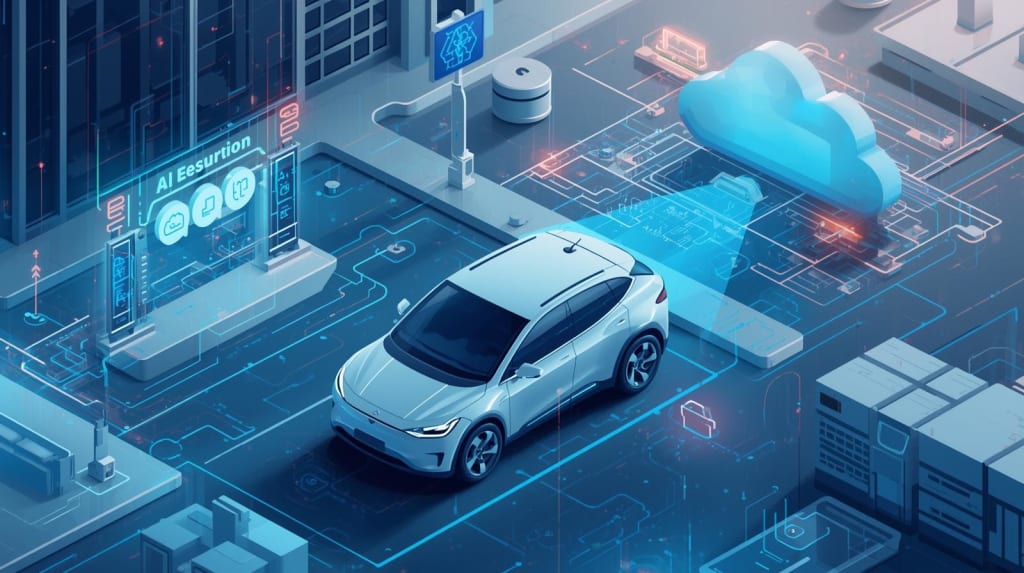
EVs aren't any longer just another hardware story. As electric vehicle adoption increases, the actual differentiator is shifting toward software-first experiences (think intelligent charging, predictive maintenance, energy optimization, connected mobility services). Under the hood, the two enablers driving this shift are AI and cloud. Together, they are making AI-driven EV ecosystems a reality where vehicles, chargers, fleets, utilities, & users collaborate through data and automation.
For anyone looking to invest in EV software development, grasping how these two technologies work together is essential for building scalable, secure, & future-ready EV products.
Why EV Ecosystems Need AI AND Cloud, Not Just Apps
EV ecosystems are inherently distributed & dynamic:
- vehicles generate telemetry continuously (battery state, temperature, driving behavior)
- charging infrastructure is geographically dispersed
- electricity prices, grid constraints, and renewable availability change over time
- fleets require uptime, route predictability, and cost control
Managing this complexity manually or with static rules quickly fails. The role of cloud is to provide the connective tissue in the form of data ingestion, storage, integration, and real-time processing while AI provides the intelligence layer that turns raw signals into actions.
This is the foundation of electric vehicle software solutions that are not just functional, but adaptive.
How AI Makes EV Ecosystems 'Smarter'
1. Customer Experience and Support Automation
AI also improves the front-end experience:
- Personalized charging recommendations
- Proactive alerts (“battery health requires attention”)
- Automated issue triage for charger faults and payment failures
- Conversational assistants to guide users in real time
Smarter UX reduces support costs while improving trust & adoption.
2. Fleet Intelligence and Route Planning
In commercial EV fleets, range, charging availability, and load constraints shape every route. AI can:
- Predict range under real conditions (weather, terrain, payload)
- Optimize routes with charging stops and time windows
- Reduce energy consumption through driving behavior insights
- Anticipate operational risks (charger outages, congestion patterns)
This is where EV software development converges with logistics intelligence.
3. Predictive Maintenance and Battery Health
Battery performance and component reliability are central to EV economics. AI models can use telemetry to:
- Detect early signs of battery degradation
- Predict failures in power electronics & thermal systems
- Recommend maintenance windows before breakdowns occur
- Reduce warranty costs through better diagnostics
For fleet operators, predictive maintenance directly impacts operational continuity.
4. Smart Charging Optimization
Charging is not a simple “plug in and wait” problem anymore. AI enables:
- Dynamic charging schedules based on tariffs, peak load, and driver needs
- Load balancing across charging stations to avoid demand spikes
- Renewables-aware charging to maximize green energy usage
- Queue prediction and station availability forecasting
This is a major evolution for EV charging software, especially for public charging networks and fleet depots where utilization and uptime directly impact revenue.
The Cloud Platform Role: Scaling the EV Brain
AI needs data, and EV systems generate data at scale. Cloud platforms provide the backbone that makes intelligence possible across vehicles and infrastructure.
Key cloud capabilities for electric vehicle software solutions include:
- IoT ingestion and stream processing- handling high-frequency telemetry and charger events reliably
- Data lakes and warehouses- unifying vehicle, charging, payment, and grid datasets
- API layers and integrations- connecting to utilities, maps, payment gateways, roaming partners, and OEM systems
- Security and compliance- identity management, encryption, audit trails, & data governance
- High availability- global access, failover strategies, & operational monitoring
In short, cloud transforms EV software from a set of isolated apps into one single coordinated ecosystem.
What to Get Right to Build Smarter EV Ecosystems
Organizations working with an AI solutions provider or exploring AI software consulting should focus on these foundational choices:
1. Data strategy first
Define what data matters (telemetry, charger events, energy prices), how it’s labeled, & how it will be governed.
2. Model lifecycle management
AI systems drift as conditions change. So, it's important to plan for monitoring, retraining, & validation, especially for safety-critical use cases.
3. Interoperability & standards
EV ecosystems rely on integration across multiple stakeholders. Build modular APIs & avoid hard dependencies that block scaling.
4. Security as architecture
EV platforms touch identity, payments, and location data, therefore, strong access controls & auditability are non-negotiable.
Conclusion
For businesses investing in EV charging software, broader EV software development, or next-gen electric vehicle software solutions, the winning strategy is clear: treat AI as an operating layer and cloud as the platform foundation, then build from data, governance, and measurable outcomes outward, or best yet, partner with an EV software development company!
About the Creator
Liza kosh
Liza Kosh is a senior content developer and blogger who loves to share her views on diverse topics. She is currently associated with Seasia Infotech, an enterprise software development company.
The Economics of District Stabilization: Why Fiscal Austerity Doesn't Always Mean Academic Decline
Unexpected moves often follow appointments meant to rescue struggling schools. Those who appoint leaders appear unprepared for the difficult choices that follow. Decisions made in urgency later face resistance once reality sets in. The remedy, though necessary, unsettles routines long accepted. Surprises can arise even when outcomes are predictable from the outset.
By Dr. Zachary Robbinsa day ago in Journal


Comments
There are no comments for this story
Be the first to respond and start the conversation.