
Trump’s New Flat-Rate Tariff Is a Boost for China and Brazil
A sweeping trade policy meant to protect American industry could unintentionally strengthen two of Washington’s biggest economic competitors
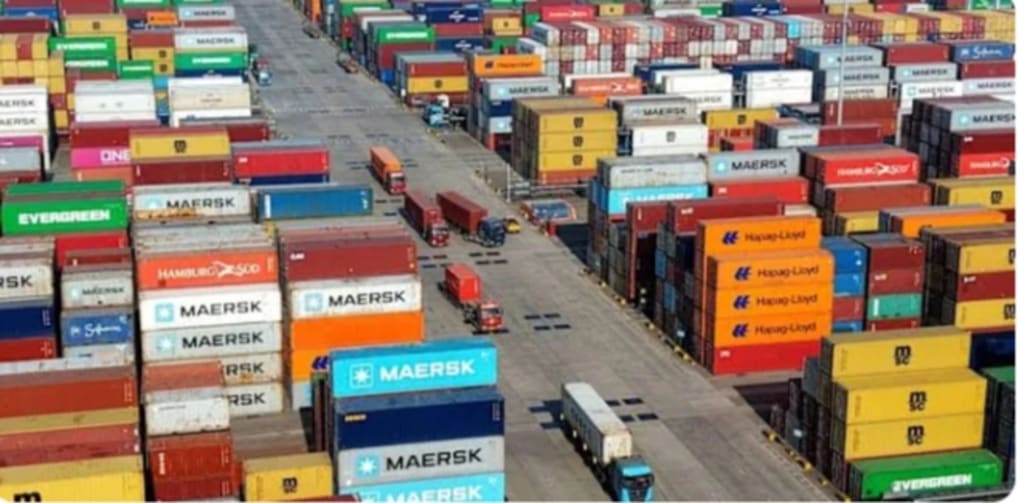
When Donald Trump unveiled his proposal for a new flat-rate tariff on imported goods, he framed it as a bold step toward restoring American manufacturing. The idea is simple: impose a universal tariff on foreign imports to level the playing field, discourage outsourcing, and generate revenue.
But global trade is rarely simple.
While the policy is designed to protect U.S. producers and reduce dependence on foreign supply chains, economists warn that a broad, flat tariff could produce unintended consequences — including strengthening export-heavy economies like China and resource-rich players such as Brazil.
Rather than isolating competitors, the strategy could accelerate global realignments that benefit them.
The Logic Behind a Flat-Rate Tariff
Trump’s proposal centers on imposing a uniform import tax — potentially ranging between 10% and 20% — on nearly all goods entering the United States. The argument is straightforward:
Foreign producers enjoy lower labor costs.
U.S. manufacturers struggle to compete.
A universal tariff would encourage companies to relocate production back to American soil.
Supporters describe it as an economic reset. By raising the cost of imports across the board, domestic production would theoretically become more attractive.
However, modern supply chains are deeply interconnected. Many American companies rely on imported components to produce finished goods. A blanket tariff increases costs not only for foreign competitors but also for U.S. firms and consumers.
And when costs rise in one market, global trade doesn’t disappear — it shifts.
How China Could Benefit
At first glance, a flat tariff appears to target China directly. For years, Washington has accused Beijing of unfair trade practices, currency manipulation, and state subsidies.
But if the United States imposes broad tariffs on all trading partners equally, it reduces the relative penalty on China specifically. Instead of isolating Beijing, it spreads the cost across allies and competitors alike.
This shift may push other nations to deepen trade relationships with China. If European or Asian exporters find U.S. markets less profitable due to higher tariffs, they may redirect goods toward China’s massive consumer base. In turn, China strengthens its position as the central hub of alternative trade networks.
Furthermore, if U.S. companies face higher costs importing components, some may shift entire production chains overseas to avoid compounded expenses. That could reinforce China’s dominance in advanced manufacturing sectors such as electronics, renewable energy equipment, and industrial machinery.
In other words, a universal tariff risks diluting the targeted pressure strategy that prior trade disputes aimed to achieve.
Brazil’s Quiet Advantage
While China dominates headlines, Brazil could be one of the policy’s stealth beneficiaries.
As a major exporter of agricultural goods, iron ore, and energy products, Brazil operates in sectors highly sensitive to price fluctuations. If U.S. tariffs disrupt global supply flows, commodity markets may rebalance in Brazil’s favor.
For example:
If U.S. agricultural exports become entangled in retaliatory trade measures, China and other countries may increase imports from Brazil.
If industrial supply chains shift away from tariff-impacted nations, Brazil could attract new investment as a politically neutral alternative.
If American manufacturers face rising costs, Brazilian producers may gain competitiveness in third-party markets.
Brazil has long positioned itself as a flexible trade partner, engaging with both Western and Eastern economies. A global trade shake-up could amplify that strategic balancing act.
The Risk of Retaliation
Trade policy rarely unfolds in isolation. When one country imposes tariffs, others often respond in kind.
A flat-rate tariff applied broadly could provoke retaliation not only from China but also from traditional U.S. allies. If American exports face counter-tariffs, industries ranging from agriculture to aerospace could feel the impact.
China, with its vast domestic market, has tools to cushion export shocks. Brazil, with diversified commodity exports, can redirect shipments. The United States, however, may find certain sectors more vulnerable to sudden barriers.
This dynamic complicates the narrative that tariffs automatically strengthen domestic production. In many cases, they trigger a cycle of adjustment that benefits agile economies capable of pivoting quickly.
Global Supply Chains Don’t Disappear — They Adapt
One of the defining features of 21st-century trade is flexibility. Companies adapt rapidly to new rules.
If U.S. tariffs increase across the board, multinational corporations may:
Shift production to countries with preferential trade agreements.
Reconfigure logistics networks to minimize cost exposure.
Absorb short-term losses while building new partnerships elsewhere.
China has already expanded trade ties through initiatives like infrastructure financing and regional agreements across Asia and Africa. Brazil continues strengthening links within South America and beyond.
A uniform U.S. tariff could inadvertently accelerate the formation of parallel trade blocs that operate with reduced dependence on American markets.
Domestic Costs and Consumer Impact
Another key factor is inflation. Broad tariffs function as taxes on imports — and those costs often pass through to consumers.
Higher prices for electronics, clothing, machinery, and raw materials could reduce purchasing power. Businesses reliant on imported inputs may face margin compression, limiting job growth or wage increases.
Meanwhile, if China and Brazil successfully redirect exports toward alternative markets, they could maintain or even expand production capacity while U.S. consumers absorb higher prices.
That asymmetry is central to critics’ concerns: a policy intended to shield domestic industry may end up strengthening competitors positioned to adapt.
A Geopolitical Recalibration
Beyond economics, tariffs carry geopolitical consequences. Trade flows shape alliances.
If allies perceive U.S. policy as indiscriminate — applying the same tariff to partners and rivals — they may pursue deeper integration with alternative economic centers. China stands ready to fill leadership gaps in global trade governance. Brazil, as a prominent voice in emerging-market coalitions, could leverage the moment to expand influence.
Trade isolation rarely occurs in a vacuum. It reshapes diplomatic relationships alongside economic ones.
The Bigger Picture
Trump’s flat-rate tariff proposal reflects a broader debate about globalization and national sovereignty. Many voters support stronger domestic manufacturing and reduced reliance on foreign supply chains. The desire for economic resilience is understandable.
But resilience depends on strategy, not symbolism.
Targeted measures aimed at specific trade imbalances differ significantly from universal tariffs that apply to all imports equally. The latter approach risks redistributing competitive advantages rather than eliminating them.
China’s scale, infrastructure, and financial flexibility position it to absorb trade disruptions. Brazil’s resource wealth and diversified partnerships give it room to maneuver.
The United States, as the world’s largest consumer market, still wields immense leverage. Yet that leverage works most effectively when applied with precision.
Conclusion: Protection or Realignment?
A flat-rate tariff may generate headlines and signal toughness. But global markets respond to incentives, not slogans.
If implemented broadly, the policy could unintentionally strengthen China’s role as a trade hub and enhance Brazil’s standing as a commodity powerhouse. Supply chains would shift. Alliances would adjust. Competitors would recalibrate.
In the complex chessboard of international trade, every move produces counter-moves. Whether Trump’s proposal ultimately protects American industry or accelerates a global realignment remains to be seen.
What is clear is this: in a deeply interconnected world economy, even policies designed to pull inward can send powerful forces outward — sometimes in directions policymakers never intended.
About the Creator
~ Fired ~
— Ai Intrusion ~ Are you Next ~ Is Ai Evolution after your job? — Few workplaces haven't been affected. Ai is in supermarkets, at doctors' offices, and even monitoring farms. I just can't think of anything this machine is not getting into, can you? For instance: Education ~ Law and Tech jobs will one day have a major influence or be taken over by these inanimate machines, with accuracy and vigor. From mechanics' diagnoses to a wide variety of everyday jobs, including fast food workers, with this input having the ability to cut their unnecessary work hours. I'm certain all of us have been touched by this with our short stories and colorful headings, have you? Even comments are very questionable 'Non-Robot' insertions.
By Jay Kantor22 days ago in Journal
Craft Over Catharsis Challenge Winners
Craft Over Catharsis? What the hell does that even mean? The phrase came out of a curation meeting as a genuine question. We had been noticing that many challenge entries, across prompts, naturally gravitate toward trauma, grief, and personal reckoning. That makes sense. Writing is often cathartic. It's one of the ways we process what we've lived through.
By Vocal Curation Team4 days ago in Resources




Comments
There are no comments for this story
Be the first to respond and start the conversation.