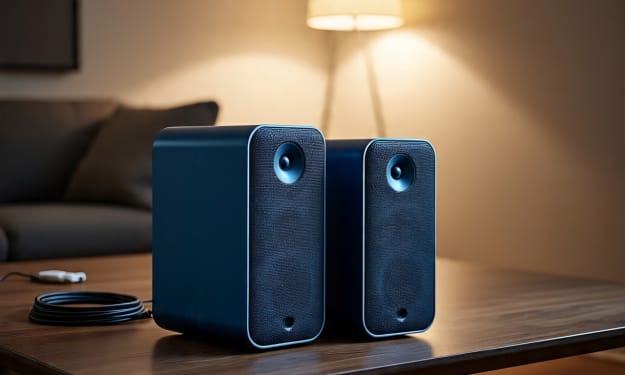
I Was About to Buy These Award-Winning, Compact Powered Speakers, but Another Pair Stopped Me. AI-Generated.
When searching for a new pair of compact powered speakers, I found myself drawn to a highly rated, award-winning option praised for its sound quality, design, and features. The speakers had received numerous accolades from reviewers and appeared to be an excellent choice for a desktop setup or small living space.
However, after further research and testing, I discovered another set of speakers that shifted my preference. While the original pair offered impressive performance and convenience, the alternative presented features and performance characteristics that better suited my specific needs. This experience highlighted the importance of comparing products carefully before making a purchase decision.
Why I Considered the First Pair
The first set of speakers I looked at had earned awards for several reasons:
Compact design: Small enough to fit on a desk or shelf without dominating the space
Built-in amplification: Eliminates the need for a separate receiver
Multiple input options: USB, Bluetooth, and auxiliary connections for digital and mobile devices
High review scores: Strong feedback on clarity, balance, and overall audio quality
At first glance, the speakers seemed perfect for my setup. The combination of portability, versatility, and critical acclaim made them very appealing.
Initial Impressions
Unboxing the award-winning speakers, I noticed their build quality and finish. The units were sturdy, with minimalistic controls and a sleek design that fit well with my existing equipment. Setting them up for digital sources such as streaming apps and a laptop was straightforward.
Testing them with digital music, the speakers produced a clear, balanced sound. The highs were crisp, mids detailed, and lows were sufficient for casual listening. For someone focused primarily on desktop or small-room listening, they offered a strong combination of convenience and quality.
Entering the Comparison
While the first pair was impressive, I decided to explore other options before committing. I found another set of powered speakers that, while not as widely awarded, had specifications and user reviews that warranted consideration.
The second pair offered features including:
Wider frequency range: Slightly deeper bass response and extended treble
Better phono integration: Useful for vinyl playback
Adjustable EQ settings: Allowing for sound customization depending on room size or music genre
Enhanced connectivity: Additional input options such as optical connections for home theater compatibility
Comparing the two, I realized that while awards and critical acclaim are valuable, they do not always reflect individual listening preferences or specific use cases.
Listening Tests
To determine which speakers better suited my setup, I conducted listening tests using several music sources:
Digital streaming: Both speakers performed well, but the second pair offered a slightly richer low end and more precise stereo imaging
Vinyl playback: The first pair required a separate phono preamp, while the second integrated this more effectively
Mixed-use setup: With a combination of computer, phone, and turntable, the second pair handled transitions and input switching more smoothly
While the award-winning speakers were excellent for casual digital listening, the second pair provided more flexibility and tailored sound performance for multiple audio sources.
Design and Placement Considerations
Both sets of speakers were compact, but placement affected sound differently. The first pair had a focused stereo image, making them ideal for close listening at a desk. The second pair, while slightly larger, offered broader dispersion, making them better suited for shared listening spaces.
Design preferences also played a role. While aesthetics are subjective, the alternative pair blended more seamlessly with my existing furniture and offered a choice of finishes that matched my room décor.
Connectivity and Convenience
Connectivity options were a deciding factor. The first pair included standard USB, Bluetooth, and auxiliary inputs. However, my audio setup included a turntable, digital streaming device, and occasional optical input from a TV. The second pair accommodated all of these natively, reducing the need for adapters and external preamps.
Additionally, the second pair featured adjustable volume knobs and EQ controls on the unit itself, which allowed for quick changes during listening without relying on an external device.
Cost vs. Features
Both options were similarly priced, though the second pair offered slightly more features for the same cost. While awards are often associated with higher price points, they do not always translate to better real-world performance for specific setups.
By weighing price against functionality, flexibility, and compatibility, the second set emerged as the better long-term investment for my home audio needs.
Community and User Feedback
Online reviews and user forums provided additional insight. While the first pair was praised widely, some users noted limitations when connecting analog sources or multiple devices simultaneously. The second pair, while less publicized, received consistently positive feedback for versatility and sound quality in mixed-use environments.
This highlighted the value of directly evaluating user experiences, rather than relying solely on awards or media recommendations.
Personal Listening Preferences
Ultimately, the choice came down to my personal listening habits:
I use multiple audio sources, including digital streaming, vinyl, and occasionally TV audio
I prioritize flexibility and ease of switching between devices
Sound customization through EQ settings is important to me
Considering these priorities, the second pair of powered speakers better matched my use case. Awards and acclaim are important, but compatibility and personal preference ultimately guided my decision.
Lessons Learned
This experience underscored several lessons about purchasing audio equipment:
Awards are helpful but not definitive: They indicate general quality but may not reflect specific use-case requirements
Consider source compatibility: Think about digital, analog, and hybrid setups when choosing speakers
Test where possible: Listening in a real-world environment often reveals strengths and weaknesses not obvious from reviews
Check features beyond sound quality: Inputs, EQ options, and control placement affect daily usability
Long-term flexibility matters: Features that accommodate future audio sources or expansions can outweigh initial accolades
These lessons are valuable for anyone investing in home audio, especially compact powered speakers.
Broader Implications for Home Audio
The situation reflects a common scenario in the modern audio market. Many consumers rely on online reviews and awards to guide purchases, but personal use, equipment compatibility, and room conditions can significantly affect satisfaction.
Compact powered speakers are often marketed for their convenience and design, but subtle differences in input options, EQ flexibility, and frequency response can be critical when integrating multiple sources.
Advice for Potential Buyers
For those considering compact powered speakers, consider the following steps:
Identify primary and secondary sources: streaming, turntable, TV, or computer
Evaluate room size and speaker placement options
Compare connectivity options: USB, Bluetooth, optical, RCA, phono
Test sound performance where possible, including bass response, clarity, and stereo imaging
Factor in long-term flexibility for future devices
Taking these factors into account helps ensure that the selected speakers meet both current and future audio needs.
Conclusion
While my initial interest in award-winning compact powered speakers was strong, evaluating my specific audio needs led me to a different choice. The alternative pair offered better compatibility, flexibility, and sound customization, making them a better fit for my setup.
This experience demonstrates that while awards and reviews are valuable, personal requirements, listening habits, and practical features should guide final purchasing decisions. Compact powered speakers can offer excellent sound quality, but understanding how they fit into your broader audio ecosystem is essential to making a satisfactory choice.
By taking the time to compare features, test performance, and assess real-world usability, consumers can make informed decisions and find speakers that best match their listening preferences and lifestyle.