Latest Stories
Most recently published stories on Vocal.
US, UK, EU, Australia and More to Meet to Discuss Critical Minerals Alliance. AI-Generated.
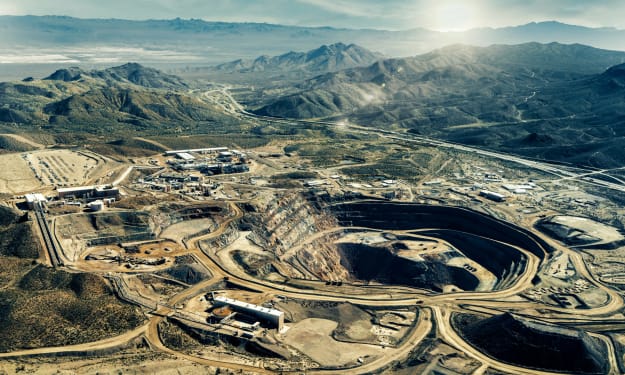
Senior officials from the United States, United Kingdom, European Union, Australia, and several allied nations are preparing to meet this week to discuss the creation of a new Critical Minerals Alliance, aimed at securing global supply chains for materials essential to modern technology and national security. The talks come amid growing concerns over dependence on a limited number of countries for minerals such as lithium, cobalt, nickel, rare earth elements, and graphite — resources that are vital for electric vehicles, renewable energy systems, semiconductors, and military equipment. Diplomats familiar with the meeting said the goal is to develop a coordinated strategy that ensures stable access to these materials while reducing exposure to geopolitical risks. Why Critical Minerals Matter Critical minerals form the backbone of the clean energy transition and advanced manufacturing. Lithium is used in batteries for electric cars and mobile devices, while rare earth elements are necessary for wind turbines, defense radar systems, and smartphones. Cobalt and nickel are key components in high-performance batteries and aerospace equipment. Over the past decade, global demand for these minerals has surged as governments push for greener energy and digital transformation. However, supply remains highly concentrated. China currently dominates processing and refining of many rare earth elements, while several African and South American nations control large portions of mining output. Western governments worry that political tensions or export restrictions could disrupt access to these materials, creating economic and security vulnerabilities. “Critical minerals are no longer just an economic issue,” one European official said. “They are a strategic priority.” Goals of the Alliance According to draft proposals, the alliance would focus on three main objectives: Diversifying supply chains by encouraging mining and processing projects in allied countries. Sharing technology and investment to reduce costs and speed up development of new facilities. Establishing environmental and labor standards for mineral extraction and processing. Officials also plan to discuss joint financing mechanisms for projects in developing countries that are rich in mineral resources but lack infrastructure. The initiative would build on existing frameworks such as the Minerals Security Partnership launched earlier by the United States and its partners, but aims to deepen cooperation and formalize long-term commitments. Australia’s Strategic Role Australia is expected to play a central role in the discussions due to its vast reserves of lithium, rare earths, and other key minerals. The country has already signed bilateral agreements with both the US and EU to support mineral supply chains. Australian officials say cooperation with allies will help ensure that mining projects are not only profitable but also sustainable and transparent. “We have the resources, but we need coordinated investment and processing capacity,” an Australian trade representative said. Economic and Industrial Impact The alliance could reshape global trade in critical minerals by encouraging more domestic and allied production rather than reliance on a single dominant supplier. Analysts say this may lead to higher short-term costs but greater long-term stability. Industries such as electric vehicle manufacturing, renewable energy, and electronics are closely watching the talks. Companies fear that supply disruptions could slow production and raise prices for consumers. At the same time, governments hope that the alliance will stimulate job creation through new mining, refining, and recycling projects in member countries. Environmental and Social Concerns While the push for new mining operations is seen as necessary, environmental groups have raised concerns about ecological damage and community displacement. Mining can pollute water supplies and damage fragile ecosystems if not properly regulated. Alliance members are expected to emphasize responsible sourcing and transparency. Proposals include strict environmental guidelines and requirements for local community consultation before projects are approved. Human rights organizations have also urged participating countries to avoid exploitative labor practices, particularly in regions where mining has historically involved unsafe working conditions. Global Competition and China’s Response China is not expected to take part in the meeting, but its dominance in mineral processing makes it a central factor in the alliance’s strategy. Officials say the effort is not designed to exclude any one country but to reduce overdependence. Chinese analysts have criticized similar initiatives in the past as attempts to weaken China’s position in global supply chains. Beijing has previously signaled it could respond to restrictions by adjusting export policies for certain minerals. This has raised concerns about potential retaliation and further fragmentation of global trade networks. A Turning Point in Resource Diplomacy Experts say the meeting marks a turning point in how nations view raw materials. Instead of leaving mineral supply entirely to markets, governments are increasingly treating it as a matter of national security and diplomacy. “This is resource diplomacy for the 21st century,” said an international energy analyst. “Who controls critical minerals will shape the future of clean energy and technology.” The discussions will also address recycling and reuse of minerals from old batteries and electronics, which could reduce the need for new mining over time. What Comes Next The meeting is expected to result in a joint statement outlining shared principles and next steps, including the creation of working groups and investment funds. While no binding treaty is likely at this stage, officials describe the talks as laying the foundation for long-term cooperation. If successful, the Critical Minerals Alliance could become a cornerstone of global efforts to secure the materials needed for a low-carbon and technologically advanced future. As competition for resources intensifies, the outcome of these talks may determine how resilient and sustainable global supply chains will be in the years ahead.
By Fiaz Ahmed 18 days ago in The Swamp
Calls Grow in Iran for Independent Inquiry into Protest Death Toll. AI-Generated.
Pressure mounts on Tehran as families, reformists and rights groups demand transparency over disputed casualty figures As nationwide protests in Iran enter their third month, calls for an independent inquiry into the death toll of demonstrators killed during a bloody crackdown are gaining momentum inside the country and abroad. The issue has become one of the most contentious political flashpoints since the unrest began in late December, with official figures diverging sharply from independent estimates and activists demanding clarity and accountability. �
By Fiaz Ahmed 18 days ago in The Swamp
What to Know About the Strait of Hormuz as Iran Plans Military Drill Amid US Tensions. AI-Generated.
As tensions between Iran and the United States continue to rise, one of the world’s most strategically important waterways — the Strait of Hormuz — has become a central focus of international attention. Iran has announced a two-day live-fire naval exercise in the strait, heightening concerns about potential confrontation and disruptions to global energy markets.
By Fiaz Ahmed 18 days ago in The Swamp
Russia Struggles to Shake Reliance on Foreign Technology Imports. AI-Generated.
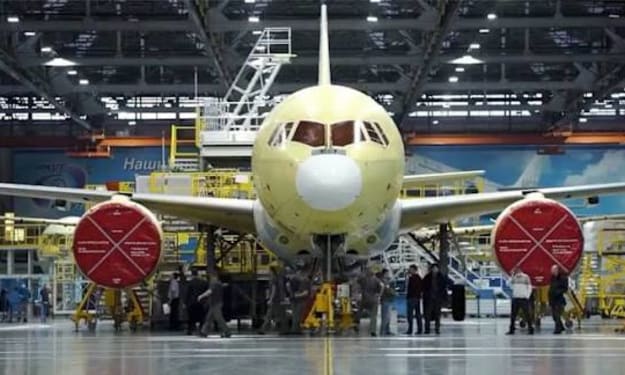
Russia continues to face significant challenges in reducing its dependence on foreign technology imports despite years of government efforts to promote domestic production and technological self-sufficiency. Western sanctions, supply chain disruptions, and limited access to advanced components have exposed structural weaknesses in Russia’s tech sector, highlighting the difficulty of replacing imported systems with locally produced alternatives. Since the introduction of broad international sanctions following the conflict in Ukraine, Russia has accelerated its push for “technological sovereignty.” Officials have repeatedly stated that the country must rely on homegrown solutions in areas such as semiconductors, telecommunications, industrial software, and electronics manufacturing. However, experts say progress has been uneven and costly. A Legacy of Dependence For decades, Russia’s technology industry has relied heavily on imported hardware and software, particularly from the United States, Europe, and East Asia. Key industries—including aviation, energy, telecommunications, and defense manufacturing—were built using foreign microchips, machinery, and operating systems. When sanctions restricted access to these technologies, companies were forced to search for alternatives almost overnight. Many turned to suppliers in China and other non-Western markets, but these substitutes often lacked the same performance or compatibility with existing systems. “Russia’s problem is not only sanctions,” said one Moscow-based technology analyst. “It is that its high-tech manufacturing base was never designed to be fully independent.” Semiconductor Shortages One of the most serious challenges has been access to advanced semiconductors. Modern chips are essential for everything from smartphones and medical equipment to military systems and artificial intelligence. Russia’s domestic chip industry remains years behind global leaders in Taiwan, South Korea, and the United States. While Russia can produce older-generation chips for basic uses, it struggles to manufacture high-performance processors at scale. As a result, industries dependent on cutting-edge computing power face delays and rising costs. Government programs have invested billions of rubles into chip development projects, but experts warn that building a competitive semiconductor ecosystem requires decades of infrastructure, skilled labor, and international cooperation. Software and Digital Services Software has been another major area of concern. Following the departure of major Western companies, Russian businesses lost access to widely used operating systems, cybersecurity tools, and enterprise software platforms. In response, authorities encouraged the adoption of Russian-made software solutions. While some local companies have developed alternatives, businesses report technical limitations and compatibility issues. Migrating large systems from foreign to domestic software has proven complex and expensive. Banks, hospitals, and transport networks have been particularly affected, as their operations depend on reliable and secure digital infrastructure. “Replacing software is not like replacing a light bulb,” said an IT consultant working with Russian firms. “It requires retraining staff, redesigning systems, and accepting lower performance in some cases.” Economic Impact Russia’s dependence on imported technology has had a visible economic cost. Manufacturing delays, rising production expenses, and reduced innovation have slowed growth in several sectors. Industries such as aviation and automotive manufacturing have struggled to maintain production levels due to shortages of electronic components. Some factories have been forced to suspend operations or redesign products using simpler technology. Small and medium-sized enterprises face the greatest pressure, as they lack the financial resources to invest in alternative suppliers or custom-built systems. Government Strategy and Limits The Russian government has launched multiple initiatives to boost domestic innovation, including tax incentives, subsidies for tech startups, and national development programs focused on microelectronics and artificial intelligence. Officials argue that long-term independence is achievable and that current difficulties are temporary. They point to growing partnerships with Asian suppliers and increased funding for local research institutions. However, critics say that true technological independence is unrealistic in a globalized economy. Modern technology depends on international supply chains that no single country can fully replace. “Even the most advanced nations rely on imported components,” said a European technology researcher. “Russia’s attempt to isolate itself technologically will likely result in slower development and reduced competitiveness.” Talent and Brain Drain Another challenge has been the loss of skilled professionals. Thousands of engineers and IT specialists left Russia following political and economic uncertainty, weakening the country’s innovation capacity. Although universities continue to train new graduates, rebuilding a skilled workforce takes time. Industry leaders warn that without attracting global talent and cooperation, domestic technology programs may struggle to reach international standards. A Long Road Ahead Despite the obstacles, Russia continues to pursue its goal of reducing reliance on foreign technology. New production facilities are under construction, and state contracts increasingly favor domestic suppliers. Yet analysts agree that the transition will be slow and difficult. Access to advanced tools, global research networks, and foreign investment remains limited. For now, Russia remains heavily dependent on imported technology—either directly or through alternative trade routes. The effort to replace foreign systems has exposed the complexity of modern technological ecosystems and the risks of isolation in a highly interconnected world. Whether Russia can achieve meaningful technological independence will depend not only on funding and policy, but on its ability to rebuild trust, innovation, and international cooperation in the years ahead.
By Fiaz Ahmed 18 days ago in The Swamp
~ Fired ~ . Top Story - February 2026.
— Ai Intrusion ~ Are you Next ~ Is Ai Evolution after your job? — Few workplaces haven't been affected. Ai is in supermarkets, at doctors' offices, and even monitoring farms. I just can't think of anything this machine is not getting into, can you? For instance: Education ~ Law and Tech jobs will one day have a major influence or be taken over by these inanimate machines, with accuracy and vigor. From mechanics' diagnoses to a wide variety of everyday jobs, including fast food workers, with this input having the ability to cut their unnecessary work hours. I'm certain all of us have been touched by this with our short stories and colorful headings, have you? Even comments are very questionable 'Non-Robot' insertions.
By Jay Kantor18 days ago in Journal