
How To Make Compost For Your Garden
All About That Compost

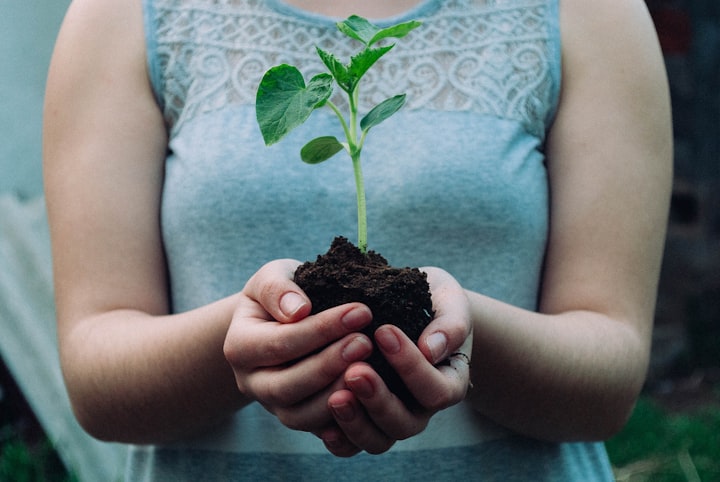
With the popularity of home gardens, container gardens, and the ease of growing your own food, the next step is turning your kitchen and garden scraps into fertilizer for your garden. Composting is easy, cost effective, and anyone can do it.
Compost is an amazing fertilizer that helps your garden grow. It’s also a great way to get rid of kitchen waste and reduce trash. You can use compost in the garden and on your lawn. If you want to know how to make compost for your garden or backyard, keep reading!
What Is Compost?
Compost is an all natural, nutrient-rich soil amendment that can be used to improve your garden's health, and add organic matter to the soil. When you compost, you turn kitchen and yard scraps into free fertilizer for your plants.
Composting is a natural process of decomposition where organic matter such as food scraps decay over time while they help enrich the soil around them. The decomposition is aided by beneficial microorganisms such as bacteria, insects, worms, and fungi (molds).
Why Should You Start Making Compost?
Plants pull nutrients out of the soil to grow, especially garden plants. All those juicy tomatoes, plump green beans, and tasty carrots need a lot of water and nutrients to grow big and provide minerals and vitamins to us. Your flower garden, trees, and even lawn need nutrients to stay healthy and strong.
You can pay for bags of compost, or you can purchase fertilizer to replace these nutrients, but that can get expensive. We all produce kitchen waste so why not utilize that to make a natural, chemical free plant fertilizer?
If you rake your leaves every fall or bag up your lawn clippings, use those to make compost and spread it on your lawn or garden instead of throwing it into the landfill.

How To Make Compost At Home
Composting is a great way to recycle your kitchen and yard waste and turn it into something that can be used in the garden. Otherwise, this "black gold" is just going to the landfill and taking up space there.
Composting is simple, but it takes time and patience. You don't need a lot of expensive equipment, though there are plenty of high end gadgets ready to take your money. You really don’t need these high priced contraptions.
All you really need is a container, (an old, plastic trash can, a big bucket, or just make a pile in the back of your yard) and something to stir the compost.
You can purchase a manure rake or a digging fork, or you can go really fancy and buy an expensive compost aerator. I just use a shovel or a garden hoe. It does not have to be fancy because you only need to stir it up and aerate it.
The first step to making compost is to source your kitchen waste. Compost needs something that can break down easily, so use items like fruit and vegetable scraps, lawn clippings, leaves, and more that we'll get into soon.
The next step is to add a nitrogen source (green compost items). This is usually in the form of manure (from cows, horses, chickens, rabbits, or other farm animals) grass clippings, and kitchen scraps.
Next, you need some "brown" compost items that are rich in carbon. These come in the form of hay, dried flowers and spent plants, newspapers, dry leaves, sawdust, and pine needles.
Once you have your ingredients, all that's left to do is mix them together and wait. You'll need to keep the compost moist while it's decomposing so make sure it doesn't dry out.
The time it takes for compost to break down will vary depending on how much material you're using, how big the pieces are, and what kind of scraps you're using.
Finally, you need to turn (stir) your compost. Use your fancy compost aerator, shovel, digging fork, or whatever tool you use to stir it up. You need to turn your compost every three to four days to help it break down.
If you leave your compost just sitting there it will eventually break down, it will just take much longer.
Try to keep your browns (carbon-rich material such as hay, dried plants, newspapers, etc) and your greens (nitrogen-rich fresh grass clippings and kitchen scraps) at an equal 50/50 mixture.
Turning the compost helps to aerate, mix, and break down larger bits. Decomposition can slow down if your materials just sit still. By turning, and mixing your compost regularly, you add air to the bacteria and increase microscopic activity.
What Can You Put Into Your Compost Bin?

You can put nearly any kind of plant matter into your compost bin, including:
- Vegetable and fruit scraps including peels, rinds, end pieces, etc.
- Finished garden plants (not including those that have been treated with pesticides)
- Spent flowers, tea leaves, and tea bags
- Eggshells (crushing them first helps break them down faster)
- Coffee grounds and filters
- Newspapers (shredded)
- Paper towels that aren't covered in grease or cleaning products
- Grass clippings
- Leaves
- Hay and straw
- Manure
- Small branches and mulch
- Weeds (that haven't seeded-you don't want weeds growing in your compost)
- Pet bedding from hamsters, rabbits, and other herbivores
- You don't have to chop these items into smaller pieces, but the smaller the chunks, the easier it is to break down and the sooner you have compost.
- What Doesn’t Belong In Your Compost?
- Meat and bones
- Dairy products (milk, butter, yogurt)
- Cat litter
- Diapers
- Diseased plants
- Anything with chemicals or pesticides
- Cat or dog feces
- Human waste
Adding these items to your compost can make it smell like a rotting sewer, and it will attract rodents and other pests you don't want around your house. Other problems with adding some of these items include diseases as in the case of cat or dog feces or human waste.
Diseased plants can spread the illness to other plants when you spread the compost out. If you have diseased plants, the best thing to do is burn them if it’s allowed, or bag them up and throw them away.
Doesn't Compost Smell Bad?

Properly maintained and mixed compost doesn't have a smell. Well, it should smell like damp soil, not like rotting food, sulfur, or ammonia.
If your compost is starting to smell worse than a forgotten gym sock, you probably need to add more brown material such as dried leaves, or straw.
It may also need to be turned more often. Turning your compost means to stir it up. You should be using your digging fork, shovel,
How Long Does It Take To Turn Kitchen Waste Into Compost
Composting is a process, not a product. It takes time for the materials to break down into organic matter. The amount of time it takes will depend on the ingredients you're using and how much moisture and air are available for decomposition, as well as how active your compost is.
For decomposition to happen you need bacteria, fungi, and insects or worms. If none of these things are present, the material will not break down. If you have a healthy presence of all the above, you could get compost in as little as a month, but without, it could take up to a year.
If you want to speed up your compost process, you can purchase red wigglers and add them to your compost pile. These are small earthworms that eat kitchen scraps and decaying plant matter to help break it down into usable compost. They can make quick work of your compost pile, and the poop or worm castings are super beneficial for your plants.
In fact, you can purchase bags of bulk worm castings to add to your garden. But if you have worms in your compost, you get that benefit for free.
Are You Ready To Compost?
If you’re new to composting, this might seem like a lot of work at first. But once you get into the groove, it really isn’t that bad and won't take up too much of your time. You'll save money by not having to buy fertilizer, and your plants will be stronger, healthier, and more productive.
Bio: I grew up in the mountains of Tennessee and North Carolina where a common past-time was picking apples, wild blueberries, or blackberries, then taking them home to make pies, cobblers or jars of preserves. It’s a tradition I want to pass down to my family. In addition to that, I have always had a fascination with growing plants. It didn’t matter what kind, flowers, trees, fruits, or vegetables, if it came from the ground I wanted to try my hand at growing it. Some of my favorite things to grow are flower bulbs (nearly any kind though daylilies and irises are top of the list here), tomatoes, beans, okra, and squash.
My dream is to one day live as much off the grid and be as self-sufficient as possible. I love growing and preserving my own food as it just seems to taste so much better. When I’m not in the vegetable or flower garden, I’m writing blogs, freelancing, or working on novels.
You can check out more of my random ramblings here on Vocal Media or at
https://www.instagram.com/amtwriting77.com4/
https://www.facebook.com/amtwriting
About the Creator
Aaron Thompson
Keep reading
More stories from Aaron Thompson and writers in Lifehack and other communities.
What’s So Special About Square Foot Gardening?
If you’re into gardening at all then you’ve probably heard about the new craze called Square Foot Gardening. It seems to be on nearly every gardener's lips (new or old), but it’s actually not a very new concept. The concept was started back in 1981 by Mel Bartholomew and his book All New Square Foot Gardening.
By Aaron Thompson3 years ago in Lifehack
If I don't laugh… I'll go crazy
First paragraph: A morning unfit for human use Saeed woke up feeling like someone had restarted him while he was asleep but forgot to reset the settings. The alarm rang, wouldn't stop, and turned into a war cry. Saeed got up and slapped it. The alarm fell, the battery flew out, and his phone said, "Yes, sir, I'm turning off completely."
By Mohamed Hamdy5 days ago in Lifehack
trial,
In a small village, there lived a farmer named Raheem, who was well-known for his honesty, integrity, and kind-hearted nature. Because of his reputation, villagers often entrusted him with their belongings for safekeeping, confident that he would never misuse them. One morning, as Raheem was on his way to the fields to plow, he noticed a small bag lying on the roadside. Looking carefully around to ensure no one was watching, he picked up the bag.
By Sudais Zakwan5 days ago in Lifehack
Why Black History Matters in America?
The United States of America is celebrating their 250th anniversary in 2026. I'm proud to be an American and as someone who was born here, I wouldn't imagine myself living anywhere else. This is a country where opportunities are possible. Where anyone can be successful in anything they desire to do. Equality, community, and togetherness are the backbones of what America is and should be about. However, we have an administration who wants to erase and disregard those who have made positive, meaningful impacts in our country, specifically Black figures, such as Martin Luther King, Jr., Rosa Parks, and Maya Angelou. President Trump and his administration have been constantly complaining and fighting against what they call the "Woke agenda". They use this excuse as a distraction from other issues they refuse to address, such as the high cost of living, climate change, and inflation. That equality is dividing America, when in reality, it's bringing us together. Being woke is not tied to a specific political party. No matter where you stand on the political spectrum, you can still care about other people and their plights. Compassion and empathy for others isn't tied to a political party, either. We were taught as children to treat others the way we want to be treated and not judge others because they're different from us. Caring about others isn't a personal attack on your beliefs. It doesn't make you any less of a person. People who are easily offended over African American figures, past or present, or anything related to it, are grasping at straws. Current and future generations need to know who people like Harriet Tubman and Shirley Chisholm were, especially in the classroom. Black History is part of American History. It should be recognized, not hidden or forgotten. Besides, you can't shield children from everything, just because your feelings are easily hurt.
By Mark Wesley Pritchard 4 days ago in The Swamp




Comments
There are no comments for this story
Be the first to respond and start the conversation.