
Why Black History Matters in America?
It should be recognized, not erased

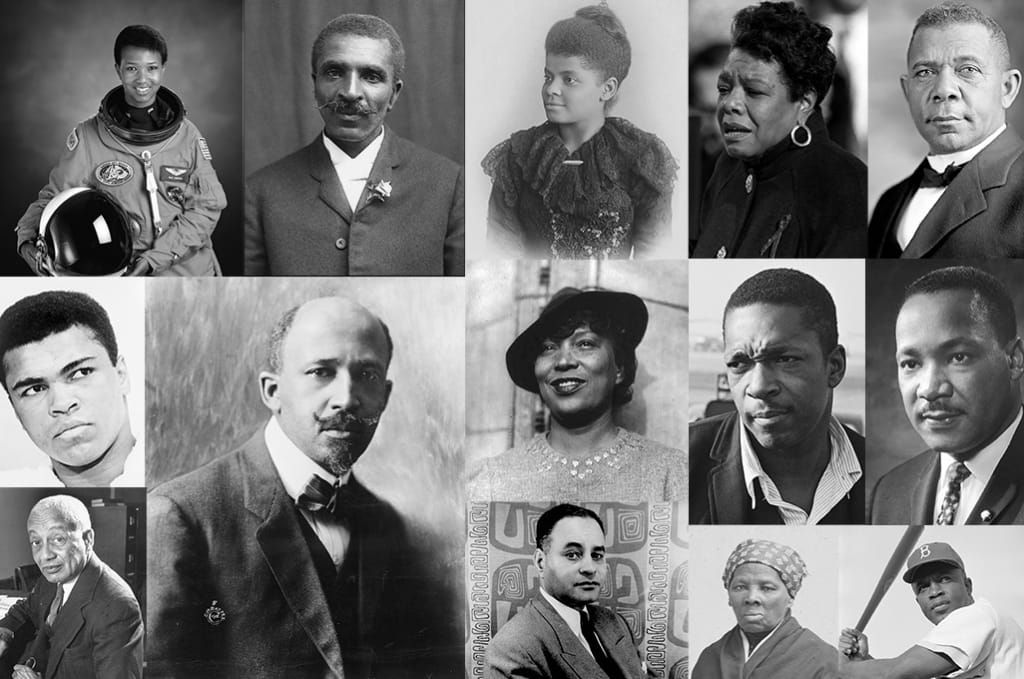
The United States of America is celebrating their 250th anniversary in 2026. I'm proud to be an American and as someone who was born here, I wouldn't imagine myself living anywhere else. This is a country where opportunities are possible. Where anyone can be successful in anything they desire to do. Equality, community, and togetherness are the backbones of what America is and should be about. However, we have an administration who wants to erase and disregard those who have made positive, meaningful impacts in our country, specifically Black figures, such as Martin Luther King, Jr., Rosa Parks, and Maya Angelou. President Trump and his administration have been constantly complaining and fighting against what they call the "Woke agenda". They use this excuse as a distraction from other issues they refuse to address, such as the high cost of living, climate change, and inflation. That equality is dividing America, when in reality, it's bringing us together. Being woke is not tied to a specific political party. No matter where you stand on the political spectrum, you can still care about other people and their plights. Compassion and empathy for others isn't tied to a political party, either. We were taught as children to treat others the way we want to be treated and not judge others because they're different from us. Caring about others isn't a personal attack on your beliefs. It doesn't make you any less of a person. People who are easily offended over African American figures, past or present, or anything related to it, are grasping at straws. Current and future generations need to know who people like Harriet Tubman and Shirley Chisholm were, especially in the classroom. Black History is part of American History. It should be recognized, not hidden or forgotten. Besides, you can't shield children from everything, just because your feelings are easily hurt.
February is Black History Month and when I was in school, I've learned everything about Black activists and other figures who came before me. Today, the Trump administration is disrespecting Black people as a whole and perpetuating old stereotypes. Someone doesn't have to be Black in order to care and speak about Black issues. For example, the Black Lives Matter movement has been in existence for over a decade, which was meant to address police brutality and racial inequality. Former NFL player Colin Kaepernick was both praised and criticized for speaking up against police brutality by taking a knee during the National Anthem before games. Many claimed that he was disrespecting the American flag, which was further from the truth. NFL Commissioner Roger Goodell blackballed Kaepernick because he stood for what he believed in. This is the main reason why I haven't watched the Super Bowl in years. No NFL team wants to sign him and Roger Goddell has yet to apologize to Colin. Years later, many people online still see Colin Kaepernick as the bad guy, failing to understand the point he was making at the time. Meanwhile, George Floyd was murdered by a police officer on Memorial Day 2020, sparking worldwide protests. This was at the height of the Covid-19 pandemic. So yes, I am unapologetically woke and if I lose people and criticized for having empathy for others, then so be it. Giving a damn about other people is in my nature. Everyone should try it instead of constantly searching for problems that aren't there.
The Man Behind Black History Month
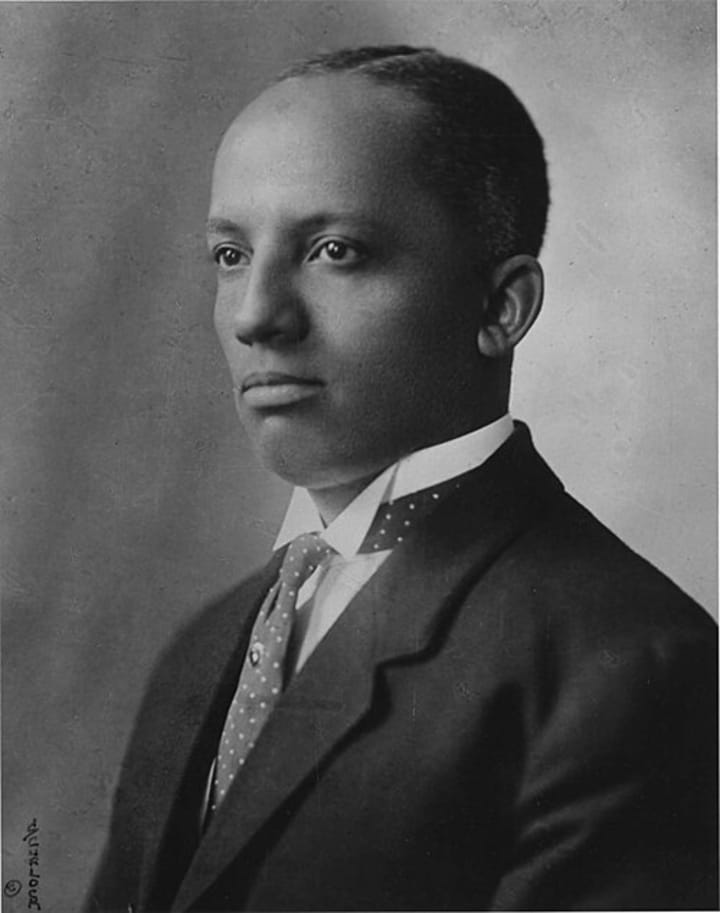
Before I proceed any further, let's take a moment to recognize the person behind what would be later known as Black History Month. His name was Carter Woodson and he came up with Negro History Week in February 1926. The reason for this was the birthdays of Abraham Lincoln and Frederick Douglass were days apart from one another. Woodson felt like the accomplishments and achievements of African Americans weren't being recognized. In 1970, Kent State University held the first Black History Month celebration, starting on February 1. President Gerald Ford first recognized this month in 1976 and since then, every president has designated it. Carter Woodson passed away in April 1950 at the age of 74. Celebrating Black excellence and recognizing the contributions of those who made an impact in this country is necessary. Decades later, we refuse to apologize for who we are, just because it makes a few people uncomfortable.
Jackie Robinson
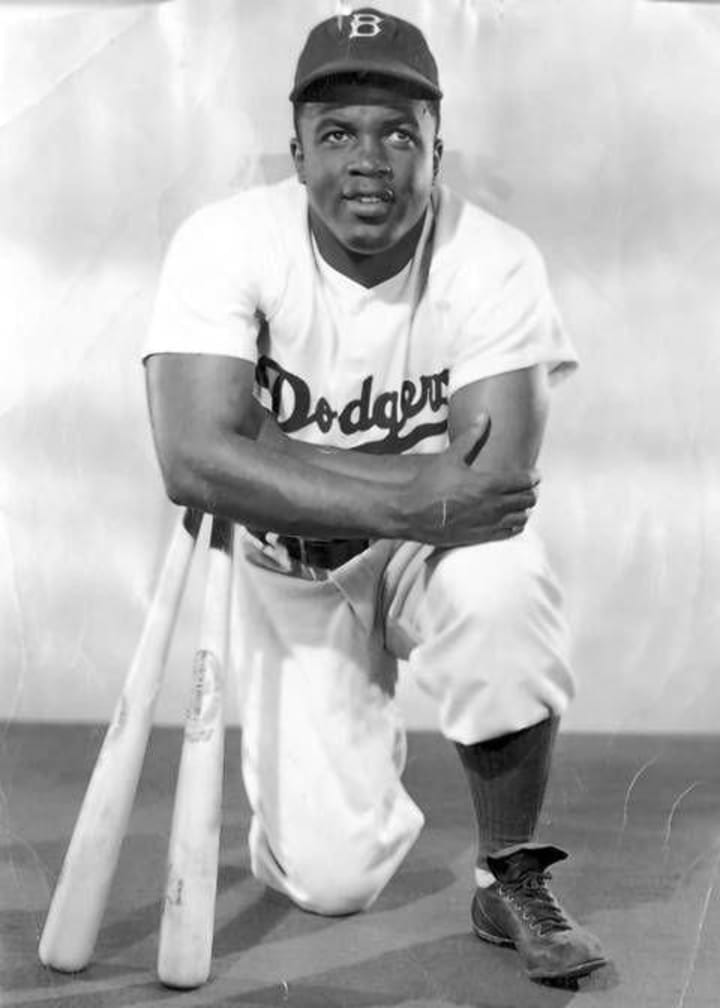
This World Series champion and Hall of Famer was not only an outstanding baseball player, but a trailblazer. Born in 1919, Jackie Robinson had a dream: playing in the Majors like everyone else. Unfortunately, he was unable to do that, due to the color barrier being implemented. The color barrier, or color line, prevented Black players from playing in the Minor or Major Leagues. This ban was in place for 60 years until it was broken by Robinson himself in 1947. 2027 will mark the 80th anniversary of him making Major League Baseball history. His baseball career started in the Negro Leagues in 1945 with the Kansas City Monarchs. Two years later, he would make his MLB debut with the Brooklyn Dodgers (now Los Angeles Dodgers) on April 15, 1947, wearing the now recognizable number 42. The Dodgers won that game 5-3, where Robinson walked and scored a run. Despite having racial epithets thrown at him, he refused to give in to the taunting. Jackie Robinson was inducted into the National Baseball Hall of Fame in 1962, a decade before his October 1972 death at the age of 53. His number 42 was retired by all 30 teams in 1997, 50 years after shattering the color barrier. Since 2004, Jackie Robinson Day has been celebrated in Major League Baseball, with players from all 30 teams wearing his number. It was meant to celebrate and acknowledge the life and career of a player who overcame the odds. Not only that, but made a huge impact on the game. Jackie Robinson opened many doors for not only other African American players, but for others from different nationalities, such as Ichiro, David Ortíz, and José Ramírez.
Last year, I expressed my frustration at the Department of Defense's move to delete an article highlighting Robinson's service in the U.S. Army from their website. This move caused major outcry and the article was soon back on there. There was no denying that the move of them not acknowledging Jackie Robinson's military service was racially motivated, citing President Trump's long history of degrading and disparaging remarks about minorities.
Ted Williams Advocated for Negro League Players
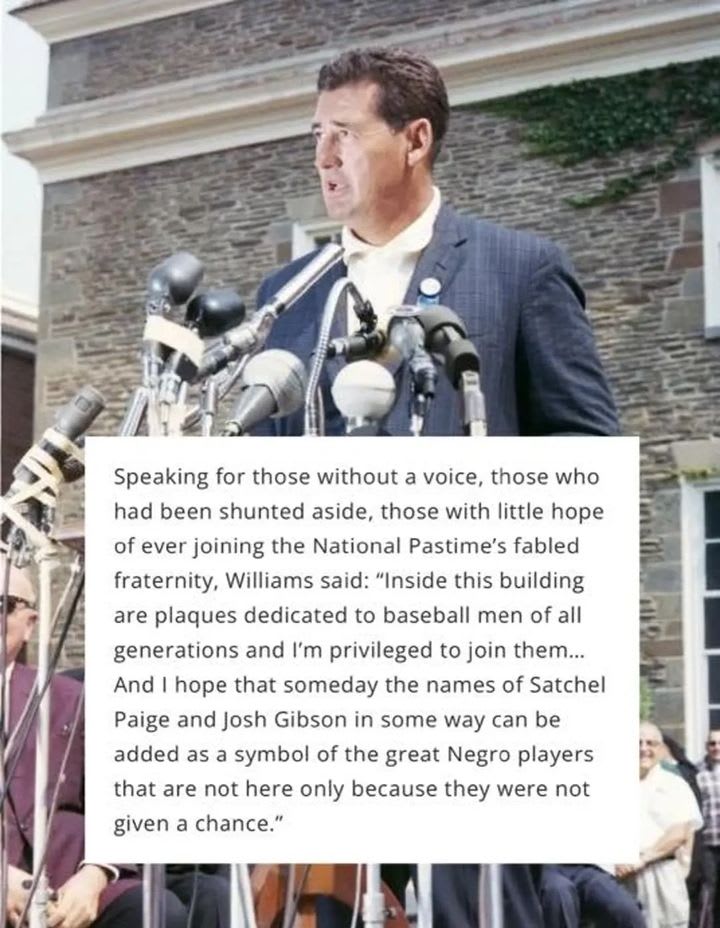
The reason why I'm including him in this story is because of the admirable act he displayed. In 1966, Ted Williams was inducted into the National Baseball Hall of Fame. He used his speech to urge the Hall to include Negro League players to be in Cooperstown, specifically Satchel Paige and Josh Gibson. Williams noted that they were overlooked and needed to be recognized for their contributions to baseball. At first, the Baseball Hall of Fame were hesitant, possibly because they feared the move would be met with heavy backlash from critics. Eventually, they relented. Paige was inducted into the Hall in 1971 and Gibson a year later. Had Ted Williams not advocated for these two players and other Negro League players, they would've been forever lost in baseball history. I've since gained a huge amount of respect for him, because not many baseball players were bold as he was to risk their reputation to stand up for what he believed in. Let's get to know a little bit about who Satchel Paige and Josh Gibson were.
Satchel Paige
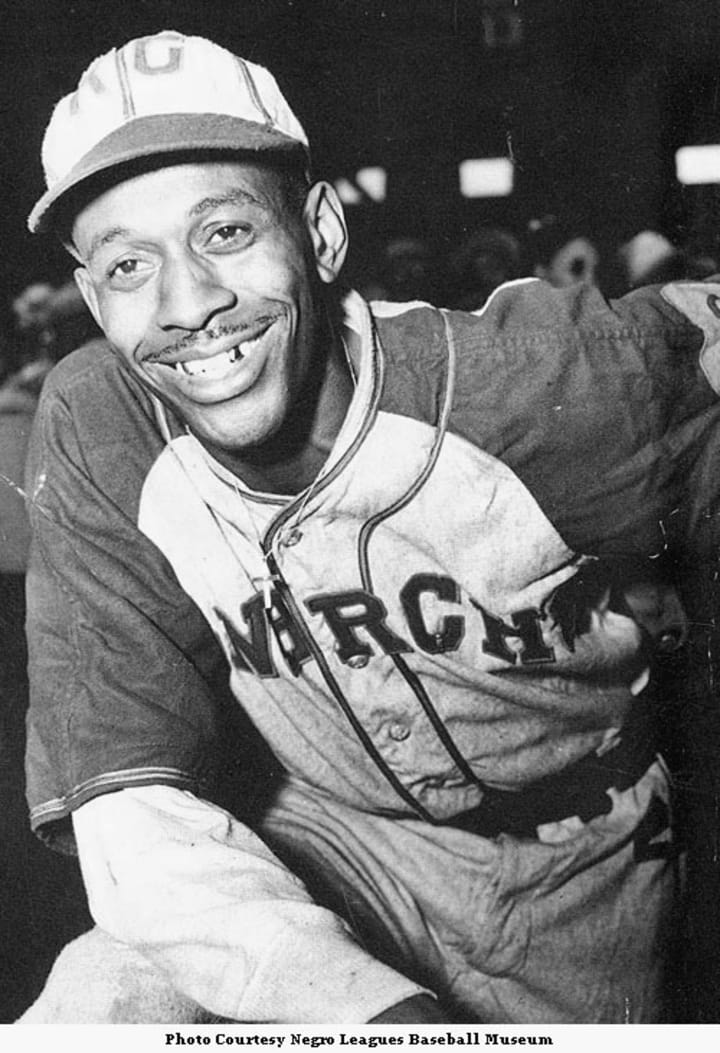
Leroy Robert "Satchel" Paige was born on July 7, 1906, in Mobile, Alabama. The two-time MLB All-Star's career spanned five decades. Paige made his Major League debut in 1948 with the Cleveland Indians (now Cleveland Guardians) at the age of 42, which made him the oldest player to accomplish this feat in the American or National League. He won a World Series title with the Indians in 1948. As of February 2026, Cleveland currently holds the record for the longest championship drought in the Majors. Their last World Series appearance was in 2016, where they lost to the Chicago Cubs, after being ahead three games to none in the seven-game series. Paige's final MLB game was in September 1966 at the age of 59, a record that still stands today. Five years after his retirement, he was officially a Baseball Hall of Famer. Paige passed away in June 1982 at 75 years old. Fun fact: his nickname originated from his job at a train station toting bags during his childhood.
Josh Gibson
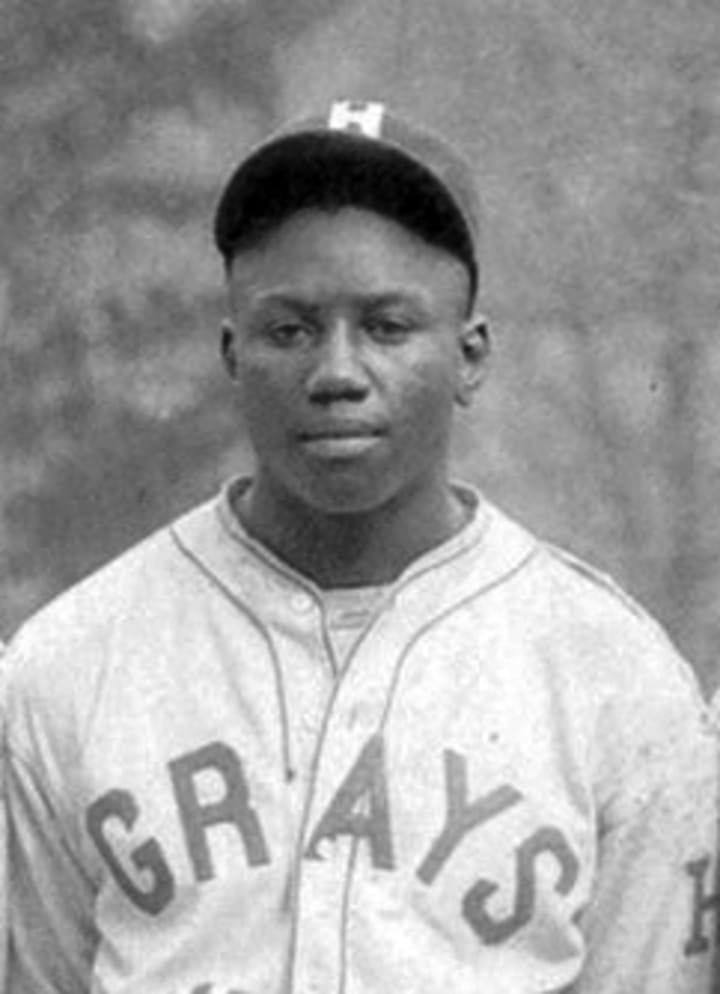
12-time All-Star Josh Gibson became the second Negro League player I've mentioned earlier in this story to be inducted into the National Baseball Hall of Fame in 1972, one year after Satchel Paige's induction in Cooperstown. He was born on December 21, 1911, in Georgia. Unfortunately, he was among a group of Negro League players to never play in the Majors. Gibson's career spanned nearly 20 years and was considered one of the best hitters that had played the game. Gibson passed away on January 20, 1947, at the age of 35, due to a stroke. It's worth noting that his passing was less than three months before Jackie Robinson made his MLB debut, breaking the color barrier.
In 2024, Major League Baseball announced that stats from the Negro Leagues would be combined with MLB statistics. Two of the most notable changes involving Paige and Gibson were as follows:
Satchel Paige: His single-season ERA was 1.01 (1944) is now third overall
Josh Gibson: His batting average of .372 surpassed Ty Cobb's .367 now ranks number one overall in this category
I applauded Major League Baseball for this move, because it was way overdue.
Rube Foster: The Father of Black Baseball
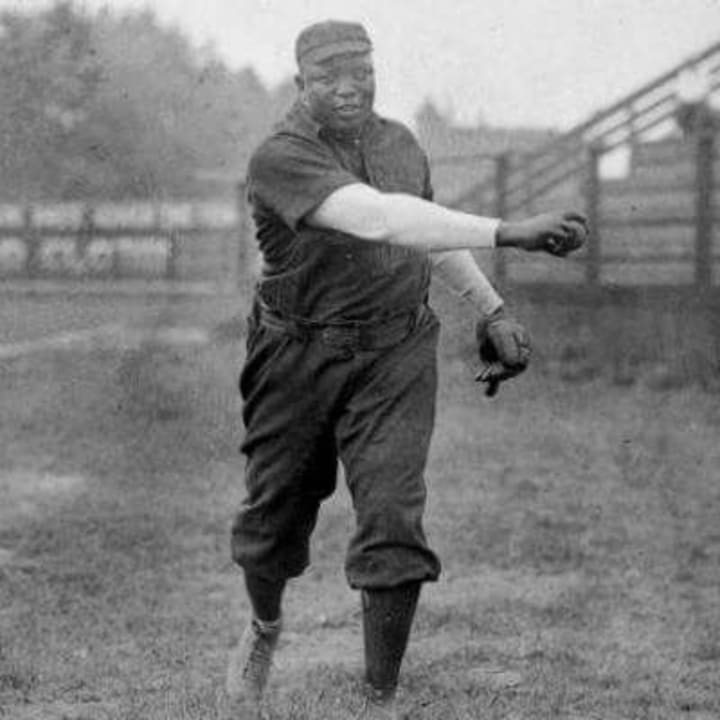
I'll say this once and will say it again: Black History is part of American History. The people I've highlighted in this story are examples of why Black History Month is celebrated annually and need to be taught in schools everywhere without government intrusion. In my recent story about Ted Williams, he used his Hall of Fame speech to speak and stand up for a group of people who couldn't advocate for themselves. Today, he would be called woke by Conservatives. Last but not least, I'll be highlighting an important figure of the Negro Leagues, as well as sharing my final thoughts.
37: that's the number of Negro League players who have been inducted into the National Baseball Hall of Fame as of 2025. Those names include Satchel Paige, Josh Gibson, and the next person I'll be highlighting, Rube Foster.
Andrew "Rube" Foster was born in 1879 in La Grange, Texas. As a player, he played for six different teams in the Negro Leagues and a manager for three teams. He founded the Negro National League, or NNL, in 1920, which he served as the president from its inception until its end in 1931, due to the Great Depression. Foster was inducted into the National Baseball Hall of Fame in 1981, over five decades after his 1930 passing at the age of 51.
In closing, we can't constantly overlook or pretend that the events and people in Black History didn't happen or have never existed. These individuals left behind legacies who made important impacts to America. Erasing history that doesn't suit your narrative is not the answer. No president, or vice president, should tell museums what they can or can't display. Also, they and other right-wing politicians, shouldn't tell libraries to not have books that discuss race and other Black issues, under the threat of severe consequences from their respective states. Educating everyone about Black History is the answer, because it shouldn't be gatekept or censored. Telling teachers that they can't discuss race in the classroom is none of any politician's business. Teachers and librarians shouldn't be under threat of losing their jobs over encouraging children to learn about race. Shielding children from topics like this is dishonest and inhumane. That's not the kind of message you want to send to them. We need to have open minds and not constantly search for problems that don't exist. Curiosity shouldn't be a crime. Knowledge is our superpower. I'm going to debunk a claim that right-wing politicians keep pushing: Equality is being forced on to us. That is demonstrably false, because how can something be forced onto to you when it already exists? Everyone deserves a chance to succeed in life and if you're a politician that's heavily opposed to everything and everyone being diverse and included in every aspect, then you're in the wrong field of work. Society being woke isn't the problem in the United States. Discriminatory and draconian policies against it is. The so-called "fight" against the woke agenda is both ridiculous and pointless. It's a waste of time. Wokeness will be around for the foreseeable future. Either keep up with the times or continue be left behind and be miserable. The choice is yours.
To everyone else, stay woke!
About the Creator
Mark Wesley Pritchard
You can call me Wesley. Former cosplayer, retro gaming fanatic, die-hard Texas Rangers fan, and nostalgic freak. Need I say more?
Threads: @misterwesleysworld
Instagram: @misterwesleysworld
Keep reading
More stories from Mark Wesley Pritchard and writers in The Swamp and other communities.
The Remarkable, Heroic Life of Ted Williams
When you think of the Boston Red Sox, names such as David Ortíz, Pedro Martínez, and the late Tim Wakefield come to mind. However, the Red Sox player who is the focus of this story is none other than Ted Williams. Even if you're not a baseball fan, you've probably heard of his name at least once. Towards the end of this story, I'll share the one admirable thing Williams had done to get Major League Baseball's attention. But first, let's get to know the Hall of Famer's life and career.
By Mark Wesley Pritchard 21 days ago in The Swamp
Shipping Giant Maersk to Take Over Panama Canal Ports After Court Ruling
In a major development with far-reaching implications for global trade and geopolitics, Danish shipping giant Maersk is set to assume control of key port operations along the Panama Canal following a landmark ruling by Panama’s Supreme Court. The decision comes after long-standing contracts held by Hong Kong-based CK Hutchison were ruled unconstitutional, paving the way for Maersk’s subsidiary to temporarily operate the strategic Balboa and Cristóbal terminals at either end of the canal. Al Jazeera +1 The Panama Canal is one of the world’s most vital maritime chokepoints, handling nearly 40 percent of U.S. container traffic and about 5 percent of global seaborne commerce. Control of the adjacent port facilities has historically been a symbol of influence in global shipping routes and geopolitical power. Al Jazeera Court Ruling Ends Long-Standing Concession On January 30, 2026, Panama’s Supreme Court annulled the contracts granting CK Hutchison’s subsidiary, Panama Ports Company (PPC), the rights to operate the Balboa and Cristóbal ports. The court found that the concession — first awarded in the 1990s and extended most recently in 2021 — violated constitutional requirements and lacked sufficient competitive bidding and public interest safeguards. Investing.com The ruling effectively terminated nearly three decades of CK Hutchison’s involvement at these strategic terminals — a decision that will have ripple effects across the global shipping industry. The nullification also affects a planned $23 billion sale of CK Hutchison’s global port assets, involving major investors such as BlackRock and Mediterranean Shipping Company. ft.com Maersk Steps In as Temporary Operator In response to the court’s decision, Panama’s Maritime Authority confirmed that APM Terminals Panama — a local subsidiary of Maersk Group — will act as temporary administrator of the Balboa and Cristóbal ports once the concession formally ends. This move ensures operational continuity while the government prepares a new bidding process for long-term port concessions. s President, José Raúl Mulino, emphasized that port operations will continue without disruption during the transition period. He underscored the economic importance of these terminals to Panama’s economy and the global shipping network. mb.com.ph Maersk’s temporary stewardship reflects its deep experience in maritime logistics and container transportation, underscoring the company’s central role in global supply chains. The firm’s stewardship is seen as a stabilizing force, ensuring that trade flows through the canal region remain steady even amid legal and political upheavals. Geopolitical Context and Reactions The court’s ruling has stirred international debate, especially given the strategic significance of the Panama Canal region in U.S.–China competition. For years, the United States has expressed concern about Chinese influence over critical global infrastructure. Panama’s decision aligns with broader efforts to limit foreign control over strategic assets and reaffirm sovereign oversight of its key ports. isp.netscape.com Beijing has publicly criticized the ruling, with Hong Kong officials stating they “firmly reject” the decision and view it as hostile to legitimate business interests. Chinese authorities have vowed to protect the rights of their companies through appropriate legal channels. euronews Meanwhile, critics of the ruling argue that nullifying longstanding contracts could undermine investor confidence and legal certainty in Panama, potentially impacting future foreign investment. PPC itself warned that the decision could harm the welfare of thousands of Panamanian families dependent on port-related activity. taipeitimes.com Economic and Trade Implications The Panama Canal and its adjacent ports are linchpins of global maritime trade. Cargo moving between the Atlantic and Pacific oceans accounts for a significant share of international shipping — particularly for container traffic involving goods between Asia, Europe, and the Americas. Any disruption to port operations could have cascading effects on global logistics costs and supply chain efficiency. Maersk’s entry as a temporary operator may reassure markets and shippers that commercial continuity remains a priority. By maintaining the operation of the Balboa and Cristóbal terminals, Maersk helps ensure that cargo flows through one of the globe’s busiest trade arteries will not be interrupted. KOB.com The transition also highlights the competitive nature of global port management. As nations and multinational corporations vie for influence over key logistics hubs, companies like Maersk — with extensive expertise in port operations and maritime transport — are well positioned to play pivotal roles in shaping the future of international trade infrastructure. Looking Ahead Panama has signaled that a new tender process will soon be launched to award long-term operating contracts for the canal’s major ports. This open process aims to attract top global logistics firms and ensure that future concessions serve Panama’s strategic interests while promoting efficient and secure global trade. KOB.com In the meantime, Maersk’s temporary administration of the canal’s ports marks a major shift in the region’s maritime dynamics. It underscores how legal decisions can quickly reshape economic and geopolitical landscapes — especially when involving critical infrastructure that underpins global commerce. As Panama navigates this transition, stakeholders around the world will be watching closely how the new port concession process unfolds and how it might influence the balance of power in global shipping and trade.
By Fiaz Ahmed 2 days ago in The Swamp
Exclusive: Trump Says Iran Wants a Deal as U.S. “Armada” Arrives
In a revealing development that adds a dramatic new chapter to U.S.–Iran relations, U.S. President Donald Trump has stated that Iran is interested in negotiations, even as the United States positions a large naval force — described by Trump as an “armada” — near Iranian waters. The comments, made in a recent interview with Axios and reported across major outlets, come during one of the most volatile periods in the region’s recent history.
By Salaar Jamali7 days ago in The Swamp


Comments
There are no comments for this story
Be the first to respond and start the conversation.