
The Weight of Security: What Moving a Gun Safe Reveals About Home and Responsibility in Houston
Exploring how heavy objects shape our understanding of safety, trust, and domestic space


A home is made not only of walls and furniture, but of invisible feelings that live within it. Comfort, routine, and safety quietly shape how we experience the spaces around us. Some objects contribute to this sense of stability more than others. Among them, few carry as much symbolic and physical weight as a gun safe.
Unlike most household items, a gun safe is built with a singular purpose. It exists to protect. Its structure is designed to resist force, to remain immovable, and to create a barrier between risk and security. It stands silently in a corner, often unnoticed, yet its presence influences how people feel within their own homes.
When life requires relocation, however, even this symbol of permanence must be moved. The process reveals something deeper about how we understand safety, responsibility, and change.
In a city like Houston, movement is part of everyday life. Neighborhoods expand outward, families relocate to new communities, and homes continuously adapt to evolving needs. The city’s scale encourages transition. With each move comes the challenge of transporting not only personal belongings, but also the structures that support stability and protection.
A gun safe presents a unique challenge in this process. Its size and weight demand careful planning. Its design resists movement, yet relocation requires exactly that. The contradiction is striking. Something created to remain still must be guided through doorways, across floors, and into a new environment.
This contradiction reflects a broader truth about human life. We seek stability, yet we live in constant change. We build systems of security, yet we must occasionally rebuild them elsewhere.
The act of moving a gun safe therefore becomes more than a logistical task. It becomes a moment of reflection.
Within many households, a gun safe carries personal meaning beyond its function. It may store objects connected to family tradition, professional responsibility, or personal identity. For some, it represents heritage. For others, discipline. For many, it symbolizes the responsibility of protecting what matters most.
Relocating such an object involves trust. The process temporarily disrupts the sense of security the safe provides. Doors are opened. The object is lifted. For a brief time, the stability it represents is suspended.
This moment of vulnerability can feel unsettling, yet it also highlights how security is not simply an object but a relationship between people, spaces, and intention.
Houston’s residential architecture adds complexity to this experience. Homes vary widely in layout, from modern open interiors to older structures with narrow hallways and multi-level designs. Transporting a heavy safe through these environments requires patience and precision. Each step must be calculated. Each movement must protect both the home and the object.
The process unfolds slowly. Floors are reinforced or protected. Pathways are cleared. The safe is guided carefully, its weight distributed with attention to balance. There is a quiet rhythm to the movement — deliberate, focused, and controlled.
This rhythm mirrors the emotional process of relocation itself. Moving to a new home often involves uncertainty. Familiar routines are interrupted. New environments must be understood. Stability must be reestablished.
The safe, heavy and silent, becomes a symbol of continuity during this transition.
Its placement in the new home carries meaning. Where it is positioned reflects priorities and values. A basement location suggests permanence and discretion. A dedicated room suggests intention. A hidden space suggests privacy.
These decisions reveal how individuals define safety within their personal environments.
The experience also reveals something about our relationship with physical space. Objects shape how we inhabit our homes. The presence of a large protective structure influences room design, storage decisions, and daily routines. When relocation occurs, these relationships must be reconsidered.
A new environment requires new forms of adaptation.
There is also a philosophical dimension to moving something so heavy and deliberate. Modern life often prioritizes speed and convenience, yet moving a gun safe resists haste. It requires time. It demands attention. It insists on careful coordination.
This slowing of pace creates space for awareness. Homeowners often become more conscious of their surroundings, their possessions, and the role security plays in their lives. The process encourages reflection on what truly matters within a household.
When the safe is finally secured in its new location, the sense of order returns. The object resumes its quiet function. Stability is restored. Yet the experience leaves behind a subtle shift in perspective.
Security is no longer an abstract idea. It has physical presence. It occupies space. It requires care.
This realization can deepen appreciation for the structures that support everyday life. It reminds individuals that protection is not passive. It is intentional. It is maintained through thoughtful decisions and responsible action.
The relocation of a gun safe ultimately reveals how deeply our sense of safety is tied to place. Homes provide more than shelter. They create environments where individuals feel secure enough to live fully. Objects that reinforce this feeling become essential components of domestic life.
When such objects move, they carry with them the meaning attached to them. They bring continuity into unfamiliar spaces. They help transform new houses into lived environments.
In this way, moving a gun safe becomes part of a larger narrative about change and adaptation. It illustrates how permanence can coexist with movement, and how stability can be recreated in new surroundings.
The process may begin as a practical necessity, but it often ends as a moment of insight. It reveals that security is not defined solely by strength or resistance, but by care, responsibility, and the willingness to rebuild stability wherever life leads.
About the Creator
House Doctor
House Doctor is a modern home improvement magazine dedicated to helping people create healthier, more beautiful, and more functional living spaces.
Keep reading
More stories from House Doctor and writers in Lifehack and other communities.
Moving What Protects You: The Quiet Responsibility of Gun Safe Relocation in Houston
There are certain objects inside a home that carry more than practical value. Some hold memory, others represent responsibility, and a few symbolize protection itself. A gun safe belongs to this last category. It is not simply furniture, nor just a storage unit. It represents security, accountability, and often generations of family history. When the time comes to move one, the process becomes something deeper than logistics.
By House Doctora day ago in Lifehack
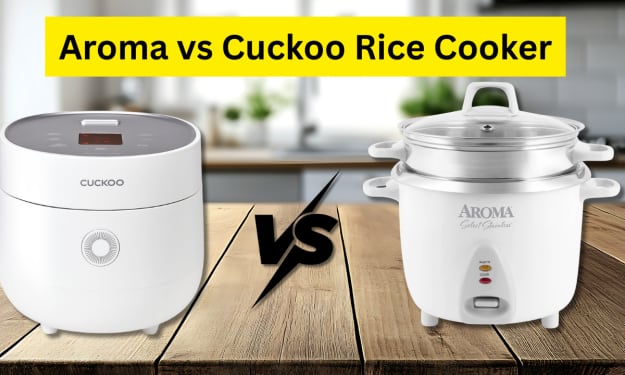
Aroma vs Cuckoo Rice Cooker: Which Should You Buy in 2026?
Choosing between brands can feel hard, especially with something you use every week. When I compare Aroma vs Cuckoo rice cooker, I notice key differences in price, features, and long-term value. I’ve looked closely at both, and here’s what stands out so you can decide which one fits your kitchen best.
By Mohammed mamun6 days ago in Lifehack
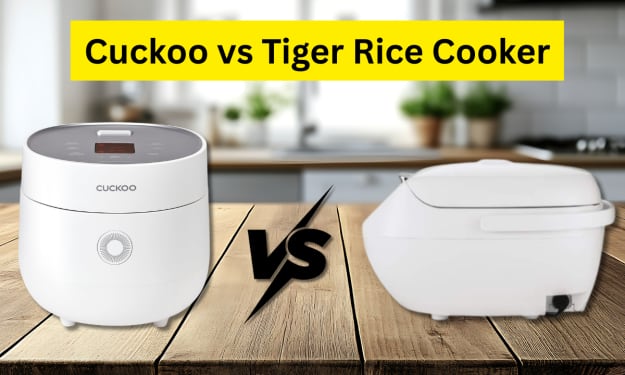
Cuckoo vs Tiger Rice Cooker: Which Brand Makes Better Rice in 2026?
Choosing between Cuckoo vs Tiger Rice Cooker can feel confusing when both brands promise perfect rice. I notice small differences in texture, speed, and features that really matter in daily cooking, especially for busy weeknights. I appreciate how each brand serves a different need, so here’s what stands out and which one makes more sense for your kitchen.
By Mohammed mamunabout 4 hours ago in Lifehack


Comments
There are no comments for this story
Be the first to respond and start the conversation.