
But On Closer Inspection - Behold a Diamond
Forgetting your lines, can actually be a very powerful tool in holding an audience.

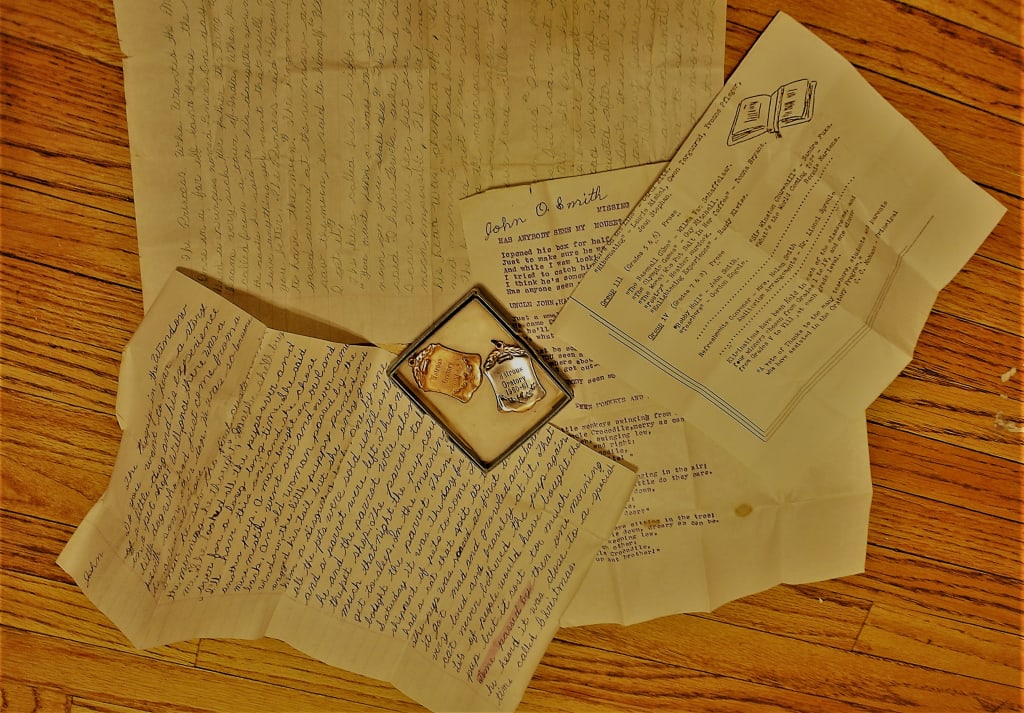
When I was 10 years old, I didn’t really know very much. What I mean to say, is that I didn’t really know anything outside of what someone else had shown me or told me. I hadn’t yet figured out anything novel and exciting for myself / by myself. I didn’t know about important life situations yet.
When I was 10 years old, I was in Grade 5. My Grade 5 teacher loved me because I was everything a good student is supposed to be. I was intelligent and I got good marks. I worked hard in the classroom and didn’t get into trouble or cause any major disruptions. I had my hand in the air during lessons, about 21.7% of the time, so my teacher knew she could count on me when all of the other students were playing the “dumb” card. I had a sense of humor and I was always willing to go up on stage and perform in some way for the rest of the class. I was very curious, so I asked lots of questions and brought lots of interesting things to school that my teacher could use in presenting her lessons.
Perhaps my greatest talent was public speaking. Giving a talk in front of the class was really just an extension of performing – much like acting or singing or telling jokes. Each year I would enter the Oratory contests held at school and each year I would win the preliminary competitions in the classroom and then go on to represent my class at the school-wide competition. Oratory at the school level was slightly more competitive than at the classroom level. Luckily for me, I didn’t have to compete against my sister. She was four years older than I was. She usually came out on top in her grade level competition and then at the division level and occasionally would take home the award for being the best speaker in the entire school. My younger brother was never really interested in public speaking so I never had to compete against him – which was also fortunate, because underneath that seemingly careless attitude, lurked the silver tongue of a fairly accomplished orator. He matured to be one of the better speakers in our family and indeed, of our generation at both provincial and national levels.
Anyway, my early days in public speaking, consisted of reciting a poem that had either been chosen for me by my teacher or my mother or, one that had actually been written by me – just another one of my many talents I guess. When Grade 3 rolled around, I was introduced to another wrinkle in the Oratory competition format. Reciting poetry metamorphosized into story-telling. Again, the stories I told were either chosen for me or composed by me. I wrote stories about pets I had and, I made up stories about my sports heroes, like Willie Mays and Bobby Hull and George Reed.
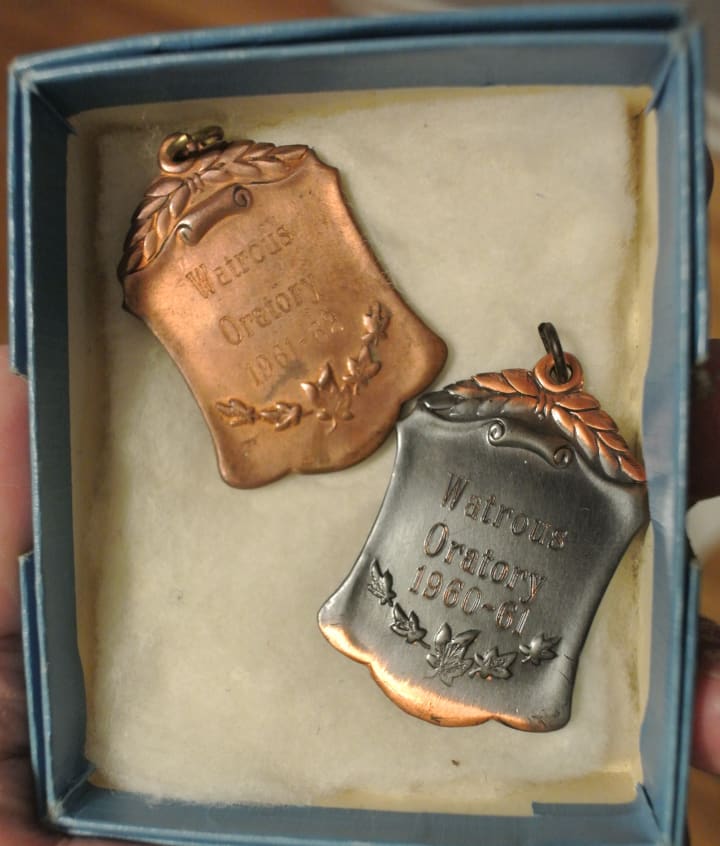
Although, I felt fairly comfortable at the front of the classroom or school gymnasium or community hall, I never really connected in a meaningful way with either my stories or my audience. I basically memorized every word and line and paragraph along with the accompanying emphases and voice inflections necessary to enhance the words I was spewing forth. There was always, like this force-field barrier between me and the audience. I knew they were there but, I was totally in my own head when I delivered my stories and poems. Everyone, including me, thought I was great though. I landed parts in school plays, without ever having to formally audition, simply because I could get up in front of a crowd and tell a story or recite a poem. But realistically speaking, I was not much more than a talking head up there on the stage.
When the speaking competition came along in my Grade 4 year, I wrote a short story about a pet dog that had come into our family circle as a Christmas present. The story was a good one. There was a beginning, a middle and an end. I was able to do a decent job of developing a couple of characters and I added a bit of conflict which was resolved nicely at the end with a clever and unexpected climax. As usual, I won our classroom preliminary round, as well as each succeeding level, all the way up to the school competition held in the gymnasium. On the night of the Final, when my group’s turn came to speak, I made the familiar climb up the stairs and took a seat in one of the chairs at the back of the stage. When my name was called, at last, I stepped forward to the middle of the stage and into the spotlight. I’d been there before. I knew the routine. I glanced at the Master of Ceremonies. He nodded, and that was my cue to begin. I extended my salutations to the judges, my teachers and to the audience.
As I started my story, I attempted to make eye contact with each of the judges, along with various people in the crowd, my mom and other people of note in my life at that time. This is something I had never done in previous years. In my speaking competitions to that point, I had locked focus with maybe one or two persons, tops, on the other side of the force-field – usually my mother. That year, however, I had been told by the preliminary judges that I would probably have to pull a few other tricks from my sleeve, if I wanted to land the big award at the end of the evening. I was very good at following instructions, and so, I attempted to gaze around the gym as much as possible while speaking. I am almost certain that the gazing was noticeably deliberate and structured. My head was on a swivel. I looked like a baserunner taking a lead off second in the ninth inning of a close ball game. What I was trying for the first time in my speaking career was really quite a dangerous act of sorts. There were so many things that could have knocked me off of my focus. And, focus is what I desperately needed, to keep the whole performance together, seeing as I was merely uttering the phrases I had over-memorized to this point.
The practice of ‘performance visualization’ might have come in handy in the days and hours before the final competition, but that was a rehearsal skill which I had not yet learned in my young life, so I was not prepared for what happened when one of my token glances randomly fell upon our local Telephone Repair-man sitting in the back row. The pose he struck was a familiar one to all who attended the same church as he did. His head was tilted sideways and back and his mouth was opened, gaping and upward in the direction of the lights lining the ceiling of the gym. His arms were folded across his chest. His glasses reflected with a glare of fluorescence from the lights above, which partially hid the fact that his eyes were closed. He was perhaps one respiratory cycle south of a snore and indeed, asleep! As I was one of the junior members of this man’s same church congregation, I had witnessed this memorable pose many times on the Sunday mornings of my youth. In fact, I had seen it often enough to have shared in previous comments, regarding this vignette, with others. However, for some reason, that evening, the sight of this sleeping man, caught me off-guard and I paused. Yes, I paused. Momentarily at first, but the initial pause lengthened and soon became a definable hush. If there had been mice hiding-out in the gymnasium, they would have emerged from their little arched doorways to begin their evening rituals – the gym became that quiet. Seconds passed. But, they were ‘dog-year’ seconds and as each one ticked by, I questioned whether I would be able to regain my composure in sufficient magnitude to continue. In the many years since this incident, I have taken part in plays where I have looked upon my fellow actors on the stage beside me, and seen in a few, a vacancy in their eyes that alerted me, to the alarming fact that they had no idea in hell where we were in the play – no idea of what page, what scene, what act or possibly even what play. When I look back upon my oratory speech ‘pause’ in the gymnasium that night, I imagine that I may have been decorated with that same blank stare. But, even though I know not how I appeared, I know what was appearing before me. As I looked from person to person, my forgotten story became less and less of a burden. I looked out upon the audience and witnessed, for the first time ever, their reactions to what I was doing on-stage. Some looked down, some looked up. Some were praying for me. Others were turning red, then white, then away, in horror almost. One or two were outwardly scared and nervous or, at the very least, extremely uncomfortable. If one were to multiply my emotions at the time, by 100, the product would be my perception of the emotions of the crowd. There was no longer a force-field protection between me and the audience. Me, the speech, the audience, the Master of Ceremonies, and even the mice (but perhaps NOT the Telephone Repair-man) had in fact, become one. At that moment, I realized how much, what I was doing, affected all of the people in that gym – a thought that has never left me in all the years of my life since then, whether I be teaching, presenting stage performances, stand-up routines, singing, dancing, or whatever. I was so much in synch with every person (or they with me) – just because I had forgotten my lines. I contemplated for a moment, falling to my knees, just to see how the crowd would react. But then I thought about my poor mother out there - that would have killed her. Anyway, I was brand new at the 'pause' game so I stayed upright, bold and brave. In the end, the gymnasium remained silent for long enough for the Telephone Repair-man to snap his head forward with a silence-breaking grunt. He began to applaud my stalled performance, of which he had only moments ago, been dreaming. His untimely gesture of admiration caused a murmur of levity that rustled through the crowd. The Master of Ceremonies looked back at me from his chair at the corner of the stage and encouraged me with the words, “Take your time.”
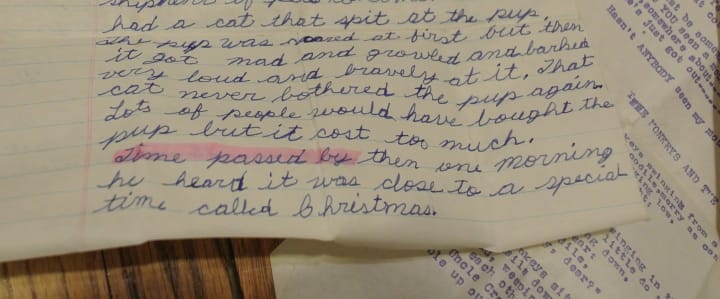
Now, it just so-happened that the next line in my story began with the word “Time.” Instantly, I was hurled from my trance-like surveyance of the audience and I spoke, “Time passed by then one morning he heard it was close to a special time called Christmas . . .”. I appeared, as I was told by others later, to have not missed a single beat. Inside my mind, however, I felt as if I had missed several staffs or perhaps a verse or two.
And, then I went on to complete my chronicle. When I finished and retreated awkwardly to my chair at the back of the stage, the audience rose to their feet in one simultaneous wave, and saluted my efforts. Even the Telephone Repair-Man joined them for a second round. At that point I considered that the response of the crowd might just be enough to sway the thinking of the judges into forgetting about the interlude that I had inadvertently included in my speech, and still award me with the top prize. No such luck though. I finished second, or third, or some other ordinal number away from first prize. It didn’t matter anyway. I had been champion on so many other occasions that the gold medal position on the podium was all I really cared about. All I really cared about, except on that night – on that night I saw something in myself that shone through all the speeches I had ever made to that point in my life – like a diamond in the sky. I realized that I had just gone through arguably, and what many would suppose to be, one of the most traumatic events of any young boy's life; an occurrence that, for millions of people, the world over, ranked as the number one fear of all time. I am referring to the act, the thought, the thought, the thought, the thought of speaking in public.
I did it though. I messed up. I recovered and I am still alive to tell the tale. Far worse things had happened to me before that night and far, far worse things have taken place in my life since that evening. My true self became stronger and more resilient as a result of tripping-out on the Telephone-guy’s nap-time. I didn’t win the medal that night but I learned a life lesson about presenting myself, that I have used so, so many times since then, to absolutely control and even mesmerize the crowd in front of which I stood. I found a diamond when I discovered “The Pause” that evening and I have perfected it since then and it has become a part of me and even defined me in my life. I taught school for 32 years and used “The Pause” to enhance and sharpen the powers of attention of my students. I am a stage actor and I have craftily deployed “The Pause” to bring the house down with cheers and empathy in my direction. I have been a stand-up comedian in a club or two and I have used “The Pause” thereabouts to lengthen and amplify the laugh response of my patrons. And, each time I use this 'diamond' in my life, a bit more of me emerges. I guess there is a sort of serendipity in most things we do in life, a silver lining in every dark cloud, a diamond to be cut from some seemingly worthless stone. I was able to break on through to the other side and become successful in so many aspects of my life because of that one night, while speaking in public – I FORGOT MY LINES!!
About the Creator
John Oliver Smith
Baby, son, brother, child, pupil, athlete, collector, farmer, photographer, player, uncle, coach, husband, student, writer, teacher, father, science guy, fan, grandpa, comedian, traveler, chef, story-teller, driver, gardener, regular guy!!!
Keep reading
More stories from John Oliver Smith and writers in Motivation and other communities.
That One Thing
The phenomenon of High School graduation marks the occasion for reflection on the previous 18 or so years spent on this planet by the young men and women who appear on the stage in the gymnasium. Over two thirds of that time has been spent by both these students and their families pensive of school and the formalized socialization and education that school offers. During that time, they have wiped noses and held foreheads while faces have dipped into purging basins. They have shopped for school clothes and new school supplies. They have troubled over school lunches for sons and sisters and the odd one for the school dog. Parents have encouraged children to do homework and to study more, study harder, and just study, period. They have attended parent-teacher interviews and school plays, soccer games, rugby games, sports days. They have been on field trips to Science Centers and Parks and Industrial complexes. Students have painted, played, calculated, experimented, written, read, learned history, had crushes, fallen in and out of love, made friends like they will never have again. They have dissected pigs and frogs and eyeballs. They have raised money and dressed up like witches and Rock Stars and they have cried and laughed and shared and felt pain. They have heard about the same planet you and I have heard about for years and they have had thoughts regarding the workings of that planet that none of us have ever had before. And, now they are ready. The cookies are set to come out of the oven. They have laid all the groundwork necessary to change the world for the better and they have experienced all the tribulations of child and adolescent life so that they can strive for that one thing that all of us strive for. And what is that one thing? Like Curly told Mitch the Kid in the movie City Slickers, “We all look for that one thing. We spend our lives looking for that one thing.” And, nobody knows what that one thing is. But everyone still sets out to look for it. Everyone only knows to look and to keep looking. They don’t know what for, but they will know when they find it – because there is truth in it. There are so many paths to follow when they set out on this quest for that one thing. If they don’t know what they are looking for – how will they know which path will lead to that one thing. I contest though - if the path that is followed is the path with heart – then that one thing will surely be at the end of it.
By John Oliver Smith5 years ago in Motivation
One Hard Thing
Stop me if you’ve heard this one before: You have the number, you know your schedule- you’ve even picked out the perfect day and time to make this appointment. Shoot, you’ve even picked out alternative days and times just in case their schedules can’t accommodate you!
By Taylor Rigsby14 days ago in Motivation
The Online Side Hustle That Changed Everything
At 23, Ryan felt trapped. Every morning, he woke up before sunrise, squeezed into a crowded bus, and headed to a job that paid his bills... but drained his soul. The work wasn’t terrible, but it wasn’t inspiring either. His paycheck disappeared the moment it arrived: rent, food, utilities, and a small loan he couldn’t seem to shake. By the end of each month, his bank balance hovered dangerously close to zero.
By MIGrowth2 days ago in Motivation
The Devil's Triangle
The sails ruffled in the breeze as we cruised along. The Sea Breeze was a mid-size catamaran that sailed out of Royal Naval Dockyard in Bermuda. We had booked this trip weeks in advance and were now looking at our Captain, Spike and two boat hands. Paddy and Wilson seemed like nice guys, joking around with the passengers and telling us some stories about Bermuda that only locals would know. Their island accents sounded almost British but they were pleasant to listen to.
By Barbara Gode Wiles5 days ago in Fiction


Comments
There are no comments for this story
Be the first to respond and start the conversation.